Intelligence and liberalism

Probably Republican

The Hannibal Blog recently introduced you to Satoshi Kanazawa, a controversial evolutionary psychologist.

A willingness to be controversial, when paired with actual research and intelligence, is a trait The Hannibal Blog applauds. Even so, you guys appropriately rang the alarm bells about some of Kanazawa’s more out-there views in the comments under my post.

That said, those views were not the ones that I found interesting (or had even been aware of). So allow me to re-introduce you to some of Kanazawa’s thinking.

1) The Savanna Principle

Evolutionary psychology starts with the premise that our brain, like our liver or eye or gonads, has evolved. This immediately leads to interesting insights, such as The Savanna Principle, a term that Kanazawa coined.

It states that we (Homo sapiens sapiens), having spent most of our evolutionary time in the African savanna, have adapted to its circumstances. We have not had much time (in terms of generations) to adapt to modern life. Therefore

the human brain has difficulty comprehending and dealing with entities and situations that did not exist in the ancestral environment.

(The word difficulty is important: Dealing with modern circumstances is not impossible, merely difficult.)

Thus, humans will see a banana as yellow (= recognizably edible) under all conditions except in a parking lot at night, because sodium vapor light did not exist in the savanna.

Let’s take another easy example. I recently railed against driving while texting or talking on the phone (the former is worse than drunk driving, the latter is as bad). Why are both activities so dangerous (whether or not you use “hands-free” devices)? Well,because

carrying on a conversation with someone who is not present in front of you is evolutionarily novel. Our ancestors never carried on a conversation with anyone who is not present in front of them or whom they could not see during the conversation. We have had the telephone (which allows us to have such conversations) for more than a century now, but it is still evolutionarily novel. Our brain has not adapted to the telephone in the last century. So it is possible that telephone conversations per se, not necessarily cell-phone conversations, are cognitively taxing and distracting because they are evolutionarily novel.

Everyone (legislatures and publics alike) assumed that what was causing the accidents was the manual and mechanical handling of the device, not the conversations per se. After all, drivers have conversations with fellow passengers all the time, with seemingly no effect on safety. [But] drivers who use hands-free devices are just as likely to cause road accidents as those who use hand-held devices.

2) Relevance to intelligence

More recently, Kanazawa has been thinking about how intelligence might have evolved in the Savanna, given that it would have been mostly useless there.

By intelligence he means general intelligence, as opposed to any set of specific adaptations to address specific threats in the Savanna (such as the specific ability to recognize a cheater in a social setting). Put differently, how and why would Homo sapiens have evolved to deal with any novel threat?

Well, it must have evolved since we left the Savanna. Our departure meant that we started encountering one (evolutionarily) novel situation after another, and those of our ancestors who happened, by mutational chance, to be better equipped to think about these new situations would have had a reproductive edge.

But intelligence can be misunderstood. As Kanazawa says:

more intelligent individuals are better than less intelligent individuals at solving problems only if they are evolutionarily novel. More intelligent individuals are not better than less intelligent individuals at solving evolutionarily familiar problems, such as those in the domains of mating, parenting, interpersonal relationships, and wayfinding (finding your way home in a forest), unless the solution involves evolutionarily novel entities. For example, more intelligent individuals are no better than less intelligent individuals at finding and keeping mates, but they may be better at using computer dating devices. More intelligent individuals are no better at finding their way home in a forest, but they may be better at using a map or a satellite navigation device.

3) Relevance to politics

The controversy starts right about now.

One by-product of this recently evolved general intelligence, according to Kanazawa, is an ability to empathize with people to whom we are not genetically related.

In the Savanna we only cared about kith and kin, because we hardly knew anybody else. (We lived in groups of up to about 150 individuals, the so-called Dunbar number.) Modern cities or countries did not exist.

But they exist today, as evolutionary novelties. Does general intelligence help us to deal with the situation?

Yes, says Kanazawa, by making us “liberal”. He uses not the correct and traditional definition but the modern American definition of liberalism

as the genuine concern for the welfare of genetically unrelated others and the willingness to contribute larger proportions of private resources for the welfare of such others. In the modern political and economic context, this willingness usually translates into paying higher proportions of individual incomes in taxes toward the government and its social welfare programs. Liberals usually support such social welfare programs and higher taxes to finance them, and conservatives usually oppose them.

And indeed, he has found a certain correlation between intelligence and liberalism:

And by the way, Kanazawa considers himself conservative.

So, as he says in a follow-up post, this is not to imply that liberals are “smart” and conservatives “dumb” in the conventional sense.

In fact, it may well be that liberals lack, and conservatives have, “common sense” — if by common sense we mean precisely that more pristine and specific intelligence that allowed our ancestors to survive and reproduce in the Savanna.

Bookmark and Share

The search for simplicity, continued

Almost six years ago, I tried in The Economist to start a movement for simplicity and against complexity. In this Leader (ie, editorial, to everybody but us), which accompanied this Special Report, I wrote:

“LIFE is really simple,” said Confucius, “but we insist on making it complicated.” The Economist agrees. Unfortunately, Confucius could not have guessed what lay ahead. The rate at which mankind makes life complicated seems ever to accelerate. This is a bad thing. So this newspaper wants be the first to lay down some new rules. Henceforth, genius will be measured not by how fancy, big or powerful somebody makes something, but by how simple.

Alas, that was easier said than done.

But ever since then, I have been obsessed with simplicity, as you may have noticed if you have been reading The Hannibal Blog (for instance here and here).

This means that I palpitate with excitement whenever I encounter other people who share my obsession. Well, Alan Siegel, a brand consultant, appears to share it. Watch (less than 5 minutes!):


Bookmark and Share

When a dog is not a Dogge

As you know by now, I am an amateur etymologist (ie, one who is probably wrong most of the time). And when I’m not tracing words from Western languages to Sanskrit, I like to ponder the languages I know best, which are English and German.

And it’s the little quirks that I enjoy.

Thus, for instance, it is no surprise at all that most Anglo-Saxon words in English have the same, or a very similar, root as their German equivalents:

  • arm = Arm
  • finger = Finger
  • (to) begin = begin(nen)
  • (to) bring = bring(en)
  • and so on.

Slightly more interesting is the subtle but cumulatively substantive change in connotation of certain words that once (in the fifth century) were the same:

Thus:

  • come = kom(men), and
  • become = bekom(men)

But (and this has caused much humorous confusion), bekommen in German now means get, not become. Keep this in mind next time you hear a German tourist inquiring of his waiter whether he might please become a hot dog.

And here is the one that really puzzles me. Etymologically, it is obvious that

  • dog = Dogge, and
  • hound = Hund

Except that something strange has happened.

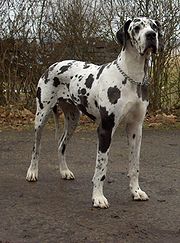
Dog is the generic English word for the entire species. But Dogge is the specific German words for just one breed within that species, the one English speakers call … the Great Dane (thus dragging a third Germanic nation into this).

Hund, meanwhile, is the German word for the species, whereas hound is a somewhat more specific English word for a type of dog used for hunting, such as this one:


Divided by a common language, as Churchill might have said once again, had he also known German.
Bookmark and Share

Managing creativity: Let no side win

Ed Catmull

One of my favorite sessions at our “innovation summit” this week in Berkeley was a talk between Ed Catmull, the president of Pixar and Walt Disney Animation, and my friend and colleague Martin Giles, who took my former beat (“Silicon Valley”) a year ago.

Ed had a soulful, unpretentious, I-got-nothing-to-prove credibility, and Martin did a great job drawing him out but otherwise not interrupting or interfering (that, in essence, is a moderator’s job).

As in any real, good conversation, the chat meandered and is hard to summarize. But the heart of it was about how to “manage” creative types so that they stay creative. Managing creativity, of course, is sort of an oxymoron. But that’s what Pixar, with its unbroken record of box-office successes, seems to be doing.

So, how?

It comes down to many, many extremely subtle gestures and techniques. For example:

Commerce vs art

There is a tension between “commercial” success and “artistic” purity, and Catmull believes that the leader’s job is to ensure that “no side wins”. The tension, in other words, is part of the secret sauce.

Geniuses or teams?

Pixar tries to “protect each film-maker’s vision”, by putting the brain daddy of each project in charge of a team. But Catmull realizes that the notion of one single, over-arching genius idea is “a myth”, and that Pixar’s films are really thousands of ideas, and thousands of problems solved. For that, you need a team.

So everything depends on how well that team functions. Catmull sees one of his main roles as observing teams, and intervening when they are dysfunctional. If the leader loses the confidence of his team, Catmull replaces the leader. He would get rid of a genius, if that genius could not work in a team, he said.

Criticism and power

But even when a team does work, and the leader stays in charge, that director must get honest and hard feedback from his peers. How does one do that? (Finding tough but constructive criticism is also one of the hardest challenges for a writer.)

You put the director in meetings of his peers, but you ensure that nobody has more power than he does. In other words, people may suggest or critique, but cannot order him to make any changes. It is up to the director to absorb the comments and to incorporate or address them in the film. (Again, this is also, in my opinion, the way a writer should relate to his “editor”.)

If the group does this well, Catmull will invite others to make the meetings bigger, so that the newcomers can observe the good dynamic and spread it to other teams and Pixar’s wider culture.

However, he then pays extra attention to see if the original group of critics starts performing, which would kill the magic.

If the group critiques badly — which usually means that they are being too polite — Catmull will take individuals aside and confront them: Why did you not say what you really meant? He calls bullshit on them. So people know that their credibility is on the line.

From fear to context

There was no silver bullet, no single secret or list of “ten steps”. There never is in real life. Instead, the conversation offered a fascinating glimpse into our new, modern work culture.

In the past, workers clocked in and had managers look over them with the tools of power. Bosses ruled with fear, implicit or explicit.

In a creative economy — and Pixar, like The Economist, represents it in the extreme — that would never work. You cannot frighten or threaten people into creativity.

Instead, all you can do is choose people well — for their talent and their teamwork — and then set and maintain a certain context that allows their creativity to come out.

Bookmark and Share

Feast of ideas

In case you’ve been wondering whether I might have disappeared: No, I haven’t altogether disappeared; I’ve merely been deeply immersed for several days in our “innovation summit” at Berkeley’s Haas School.

Somewhat to my surprise, I found it to be easily the best conference by The Economist ever, and one of the best conferences anywhere. More intimate than TED, and just as stimulating. I’m still processing all the ideas I got.

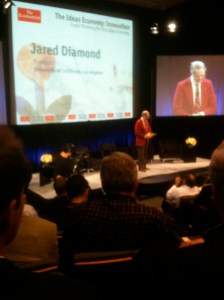
Here is the line-up — from the likes of Jared Diamond (above) and Clay Christensen to Arianna Huffington; from WordPress founder Matt Mullenweg (below) to Pixar’s Ed Catmull.

And even including yours truly: I got to give a 13-minute “Flash of Genius” about … my book.

Matt Mullenweg

My friend Vijay Vaitheeswaran conceived, put together and moderated most of the conference. He did a fantastic job — suave, funny, incisive.

I’ll be decompressing intellectually in several subsequent posts.

Larry Brilliant

Among my personal highlights: I did a “Tea with The Economist” (ie, a short video chat) with Larry Brilliant (above) about the Bhagavad Gita, eradicating smallpox, the worst threats to humanity today and … optimism.

All sessions will be out on video shortly, and I’ll point you to them.

Throughout, the atmosphere was characteristic of The Economist: insightful, thoughfult, intellectual but also humorous, spontaneous, irreverent and quirky. Here, for instance, is our logo, propped up professionally behind Larry as I was interviewing him:


Bookmark and Share

A change to save my neck

From time to time, some of you contact me to find out more about an eccentricity of mine that involves sitting on the floor (ie, on a tatami mat that amounts to my “office”), usually with intention of adopting the same habit.

I first explained why I started doing that in the Yoga Journal seven years ago, and then showed you two (of the many possible) poses in which I sit — ie, Lotus and Virasana.

The original reason I started sitting on the floor was to make and then keep my hip and knee joints supple, and to have better posture.

But I have been noticing an unpleasant side effect: Even as I was keeping my hips open, I was ruining my neck and shoulder muscles.

I should have thought of that: While we did evolve to sit on the ground, not on chairs, we did not evolve to sit on the ground in front of … laptops!

Fortunately, Matthew Gertner has come to my aid, and now deserves a big Thank You. Matthew is one of the many among you whom I only “know” through the blog (ie, we have never met offline). But he has also been trying to get himself down onto the floor (are you down now?).

Matthew advised me to save my neck by investing in three new things (whereas I usually try to avoid accumulating clutter):

  • a laptop stand, to raise my screen to just below eye level,
  • a Bluetooth mouse, and
  • a Bluetooth keyboard.

This week, I followed Matthew’s advice, and already my neck feels a lot better. Once again, Thank You, Matthew, and here is another close-up of what it looks like:


Bookmark and Share

Is or Ought, true or good

Satoshi Kanazawa

I’ve recently discovered the blog of Satoshi Kanazawa, an evolutionary psychologist at the London School of Economics (LSE), which happens to be one of my alma maters (I got my Masters there).

It is called The Scientific Fundamentalist, and for good reason. As he says here,

From my purist position, everything scientists say, qua scientists, can only be true or false or somewhere in between. No other criteria besides the truth should matter or be applied in evaluating scientific theories or conclusions. They cannot be “racist” or “sexist” or “reactionary” or “offensive” or any other adjective. Even if they are labeled as such, it doesn’t matter. Calling scientific theories “offensive” is like calling them “obese”; it just doesn’t make sense. Many of my own scientific theories and conclusions are deeply offensive to me, but I suspect they are at least partially true. Once scientists begin to worry about anything other than the truth and ask themselves “Might this conclusion or finding be potentially offensive to someone?”, then self-censorship sets in, and they become tempted to shade the truth. What if a scientific conclusion is both offensive and true? What is a scientist to do then? I believe that many scientific truths are highly offensive to most of us, but I also believe that scientists must pursue them at any cost.

Well, in this post, The Hannibal Blog would simply like to endorse and celebrate Kanazawa — both his approach and philosophy and his research and style.

Subscribe to his blog! It will do what I secretly hope The Hannibal Blog occasionally does for you:

  • intrigue you,
  • offend you,
  • delight you,
  • enrage you,
  • enthrall you.

How? Because it does not — as so much of the politically correct piffle out there does — try to achieve one half of the above effects without the other half. It has writerly courage. More specifics to come.

Bookmark and Share

Arjuna, our inner hero

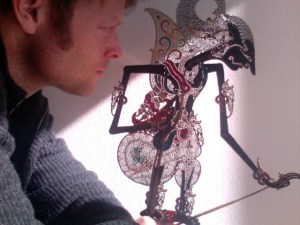
Here I am playing with Arjuna, the greatest hero of the East, in the form of a wayang puppet I bought in Solo, Java.

Wayang is an ancient Indonesian theater tradition in which the shadows of puppets are cast onto a screen. Solo is its historical center, so a few years ago I went there to watch. Here is what a play looks like from the audience side:

And what story do the Javanese, nominally Muslim today, most like to perform?

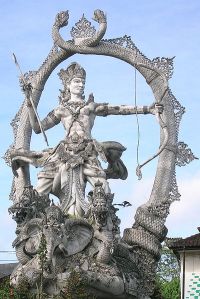
The story of Arjuna and his brothers, the five Pandavas, pictured above. It doesn’t matter that this epic, the Mahabharata, is what we would consider a “Hindu” story. It is for Asia what the Iliad and Odyssey and other Greek myths are for us in the West.

This makes Arjuna the Achilles, the Hercules, the Odysseus, the Theseus, the Jason and the Aeneas of the East.

And what does that say about the East’s view of heroism, which I have been exploring in this thread?

1) Arjuna as warrior

At first blush (and deceptively, as you will see), Arjuna’s heroism looks familiar to us in the West.

He was a great fighter, an ambidextrous and precise archer, indeed an Indian Apollo with arrows. He practiced in the dark, the better to hit his victims during the day time. He won the hand of his wife, Draupadi, in an archery contest remarkably similar to the one Odysseus won against the suitors at Ithaca to regain his wife Penelope.

Arjuna was also the biggest hero in the biggest war of mythological India. What Achilles was to the Greeks at Troy, Arjuna was to the Pandavas at Kurukshetra (Kuru’s Field) in northern India.

The Pandavas were leading a huge army in a righteous cause against their own cousins, the Kauravas, also with a huge army. The Kauravas had stolen a kingdom from the Pandavas in a rigged game of dice, humiliating Draupadi in the process. The Pandavas went into exile, but then came back, seeing their duty as fighting to reclaim their kingdom and honor.

For eighteen days, battle raged. Millions died and fewer than a dozen men survived. Blood turned the field of Kuru into red mud. Arjuna and his brothers shot so many arrows into one of their enemies that the man fell from his chariot and landed not on the ground but on the arrows sticking out from his body like the quills on a porcupine.

But Arjuna also lost his own loved ones. His sons and nephews died in the battle, just as the Greek and Trojan heroes lost their friends and family.

2) Arjuna’s fear and duty

But the part of the story that is most famous — rather as the brief episode of Achilles’ wrath in Homer’s Iliad is the best known part of the story of the Trojan War — is a poem embedded into the Mahabharata just before the fighting began. And that is the Bhagavad Gita, or song of God. (Try one of these translations.)

On the eve of the battle, with the two armies already lined up against each other, Arjuna and his charioteer steered their war chariot into the space between the two armies to contemplate what was about to happen. The charioteer was Arjuna’s friend and adviser, Krishna.

As Arjuna gazed from his chariot at the two armies, he suddenly lost his will to fight. He was afraid. Afraid not only of losing his own life, but also for the lives of his “fathers, grandfathers, teachers, uncles, brothers, sons, grandsons, fathers-in-law, and friends.” Because this was a war within a family. He had loved ones in both armies.

Compare Arjuna’s fear to Aeneas’ despair in Virgil’s Aeneid:

As I see my own kinsmen, gathered here, eager to fight, my legs weaken, my mouth dries, my body trembles, my hair stands on end, my skin burns.

Arjuna dropped his bow and arrows and collapsed on the floor of his chariot, sobbing.

***

And now Krishna began to talk to Arjuna. Gently but firmly, he reminded Arjuna of his duty. The Sanskrit term here is dharma, and it seems (in this context) pretty close to Aeneas’ Roman virtue of pietas (“piety” derives from it but has come to mean something different).

3) Arjuna’s mind

What follows in the Gita is history’s most fascinating dialogue about how to yoke (as in yoga) the human mind into harmony with its situation.

Arjuna tells Krishna (as we all might say every day about our own minds) that his mind is

restless, unsteady, turbulent, wild, stubborn; truly, it seems to me as hard to master as the wind.

Krishna in turn teaches Arjuna how to make his mind calm, as a coach might try to get an athlete into “the zone”. (As it happens, Krishna’s advice is the same as Patanjali’s, which is why those two texts together are considered the foundation of Yoga.)

What, in a nutshell, does Krishna tell Arjuna?

To “let go”. To let go his fears of what might happen the next day, to let go the worries, the anxiety, and also the hopes and anger, and all the rest of it. In fact, Krishna wants Arjuna to

let go of all results, whether good or bad, and [to be] focused on the action alone… [to] act without any thought of results, open to success or failure. This equanimity is yoga.

4) Arjuna in your mind, my mind

And this is the essence of Arjuna’s heroism: He shows us, with the help of his divine “inner voice” of Krishna, how to make our minds calm so that we can go on with life whenever it seems to overwhelm us.

Arjuna’s heroism is, like Aeneas’ but more so, an inner victory.

In fact, this applies at an even higher level. Here is how Mohandas Gandhi explained why he, a proponent of non-violence, saw truth in this story of war:

Under the guise of physical warfare it described the duel that perpetually went on in the hearts of mankind, and that physical warfare was brought in merely to make the description of the internal duel more alluring.

Arjuna, it turns out, is meant to be a part of my mind and your mind and everybody’s mind. It is the clearest and best state of mind, called buddhi (as in: Buddha).

His brothers correspond to other positive states of mind (the ancient Indians were very precise on the subject), And all five were married to Draupadi, whom yogis understand to be Kundalini, the coiled feminine energy at the base of the spine. Freud called it libido, the Greeks called it Eros.

The Kauravas, the evil cousins, are the negative states of mind — anger, hatred, greed, vanity, envy, arrogance, fear and so forth.

So there it is:

  • Kurukshetra is the battlefield of our own minds, every day.
  • Arjuna’s struggle is our daily struggle to let the noble in us prevail over the base, the serene over the angry, the courageous over the fearful.
  • Arjuna is the hero in us.
Bookmark and Share

Alexander meets a yogi: Who’s the hero?

Alexander the Great was busy conquering the known world once, when he saw, on the banks of the Indus river in today’s Pakistan, a naked guy sitting in the Lotus position and contemplating the dirt.

“Gymnosophists” (gumnos = naked, sophistes = philosopher) the Greeks called these men. We would call them yogis — as in: Patanjali, say.

“What are you doing?”, asked Alexander.

“Experiencing nothingness,” answered the yogi. “What are you doing?”

“Conquering the world,” said Alexander.

Then both men laughed, each thinking that the other must be a fool.

“Why is he conquering the world?”, thought the yogi. “It’s pointless.”

“Why is he sitting around doing nothing?”, thought Alexander. “What a waste of a life.”

Devdutt Pattanaik

Thus Devdutt Pattanaik tells the story in the TED talk at the end of this post. (Thank you to Thomas for the link. Was it Thomas?)

Devdutt used to be successful and bored (the two can go together) in the pharma industry until he decided instead to make a living out of his passion, which is comparative mythology, by applying myths and storytelling to business. Wow. That’s exactly what The Hannibal Blog (at least in part) tries to do.

But let’s get back to this specific little anecdote (which echoes another such encounter Alexander was said to have had). It makes a perfect transition in my thread on heroes and heroism from the Greek and Roman heroes of antiquity to the Eastern heroes of antiquity.

As Devdutt says, Alexander grew up with the stories of Hercules, Theseus and Jason, which told him:

  • you live only once, so make it count, and
  • make it count by being spectacular!

The yogi grew up on up on different stories — the Mahabharata (which I love) and Ramayana and so forth. His heroes, such as Krishna and Rama, were not distinct individuals who lived once and made it count, but different lifetimes of the same hero.

The yogi’s stories told him that:

  • you get to live — nay, must live — infinite lives, until you get the point, so
  • stop wasting your time by conquering things that have been and will be conquered countless times, and try to see the point.

To approach this in a slightly different way:

In my last post on Aeneas, I argued that he was “the first western hero whose internal journey is as important as his external journey.” Well, I put the word western in there for a reason: Because I was already thinking of Arjuna, to whom I must turn in a separate post.

Now watch Devdutt:

Bookmark and Share

My humor test in the lift

(This one may not work for you. But try to laugh with me anyway.)

Thirteen years ago, soon after I joined The Economist, I was riding down in the elevator (“lift”, according to our style guide) of our “Tower” at 25 St. James’s Street in London.

There were two or three of us. We were silent. Drab weather. Nothing to say.

Just before the door opened, one of the others turned toward me, with expressively furtive, even dirty or intimidating, body language. Was he about to flash open his trench coat? Confess to a crime? Attack me?

I have doubts about free trade,

he said, and ducked out into the drizzle and its pin-striped shadows.

Bookmark and Share