How the French view my media habits

You might remember that I wrote a post last fall about my own, personal media habits and how they have been changing.

Based on observing only myself, I concluded that, contrary to what you might have read or heard in the media, there is no media crisis for citizens and consumers, who can inform themselves better than ever — and indeed that we may be at the beginning of a second Renaissance.

La Francophonie écoute

Well, somewhat to my surprise, that little post has had quite a career in the French-speaking world. It probably began when Francis Pisani, a respected French blogger in America, picked it up in Le Monde.

A while later, a French-Canadian newspaper, Le Devoir, ran a cover story (picture above) on it. 😯

And now Owni, a cutting-edge website, has not only translated my post but invited two experts to rebut my thesis. (As you know, intelligent rebuttals delight me, because they make me learn and refine my views, which is sort of the point of life, isn’t it?)

Divina Frau-Meigs

The first expert is Divina Frau-Meigs, a media sociologist and professor at the Sorbonne. In her rebuttal, she

  • concedes that access to news and information has become more “democratic” for those who are “intellectually and technologically equipped”, whom she calls the “info-riches”;
  • laments that this does not resolve the economic, social and cultural “divides” — in other words, she worries that people whom she calls “info-précaires” lose out;
  • dismisses the idea (which she believes I espouse) that we can just get rid of journalists, since most citizens don’t have the time to do the hard work of investigating and reporting on the world’s problems;
  • appeals for a wholesale reform of media education, both for the young and for poor adults;
  • sets out principles she believes should guide that reform.

Bruno Devauchelle

The second expert is Bruno Devauchelle, a researcher at a think tank in Lyon. In his rebuttal, he

  • redefines the crisis as one of overinformation;
  • argues that blogger-journalists like me feel good only because we have all the necessary skills to deal with this, whereas most young people today lack those skills;
  • also appeals for better education;
  • calls in particular for teachers to be trained in internet technology and internet culture;
  • calls for new pedagogic techniques.

De quoi s’agit-il?

I will respond to these rebuttals in a separate post. But first, I want to make sure that I do justice to Divina and Bruno. My own French went from passable (circa 1992) to laughable, so the translation was hard work for me. But among you, there may be more proficient speakers of French.

If you’re so inclined, read their rebuttals and put their main points, to the extent that I have not captured them above, in the comments.

And, of course, go ahead and give your own opinion.

Bookmark and Share

The best tax for America

It is Tax Day again in America and some people left their returns to the last minute (as you can see on this photo, which I took in Los Angeles yesterday.) So I’ll take this occasion to muse about the relationship between America’s tax system and freedom.

One year ago today, I offered some “tax day thoughts on complexity in American life.” The gist of that post was that the complexity of America’s tax system, not the rate of taxation, is what harms freedom in this country. Contrary to what you might think if you go to Tea Party rallies, we are not overtaxed, we are badly taxed.

But I did not offer a better — meaning simpler — alternative system. In this post, which I expect to be controversial, I want to do that. (As always, keep in mind that the views expressed on The Hannibal Blog are mine alone, not necessarily those of The Economist.)

There are many proposals out there for a simpler and more efficient tax system: A flat tax, value-added tax, et cetera. I won’t review them all, but instead pick the proposal that I consider simplest, cleanest and boldest.

The Idea

It is the so-called FairTax Plan.

Part of its strength (ie, simplicity) is that I can describe the entirety of America’s proposed tax code in a few short lines:

  • America’s existing income and other taxes would be abolished. (Not cut, but eliminated!)
  • The IRS and America’s other organs of proto-authoritarian oppression would also be abolished.
  • Instead, all Americans would pay a national sales tax, as most Americans already pay state or local sales taxes.
  • In addition, all Americans would get a prebate — ie, at the beginning of each year, everybody gets a check.

And that’s it!

The drafters of the proposal think that the rate of this new national sales tax needs to be about 23% to provide the same revenues that we now get from the income tax. It might be 28% or 19%. I’m not the least bit interested in that.

The idea is that we raise as much money as we would otherwise raise through an income tax. As it happens, we would need to collect quite a bit less than we currently do, because we would no longer incur the enormous costs of the IRS bureaucracy, auditors and accountants!

Now for the discussion of the advantages and alleged disadvantages of this new tax system:

Advantages

I think the advantages are self-explanatory:

  • You would keep your whole pay check. Ie, your take-home pay would spike right away.
  • You would not have to file a tax return.
  • No more record-keeping! You no longer maintain mountains of paper for wages, the cost basis of your investments, mortgage deductions, childcare and nannies, et cetera et cetera.
  • IRAs, 401(k)s, Roth IRAs, Keoghs…..: You can throw them all into the trash, because all your investments are by definition untaxed.
  • Thanks to your annual prebate (which gives you a certain amount of subsequent sales tax “back”), a portion of your consumption is untaxed, too.
  • But beyond that, all your consumption is taxed, thus making you think twice about frivolous and unnecessary consumption, which reduces your carbon footprint and clutter.
  • Whenever you do consume (either goods or services), you can see the tax you pay on the receipt, in the clearest and simplest manner possible.
  • All this amounts to: transparency (replacing opacity) and freedom (replacing anxiety and bureaucracy).

Criticism

There is only one major criticism of this sales tax, but it is a big one, so I want to concentrate on it.

The disadvantage is that this sales tax, like any consumption tax, at first glance appears to be regressive.

In the current system, rich people pay not only absolutely but relatively more of their income than poor people. (There is a reason why I italicized that phrase. Keep reading.) In the new system, poor people (who might need to spend, rather than save, all their income) would seem to pay relatively more of their income than rich people.

And this seems unfair.

Rebuttal

I’ve pondered this for some time. As you may remember, I am a liberal, correctly defined (ie, libertarian but not loony). And I do worry about inequality, which is inevitable in a free society to some extent but in excess (ie, in America) harms freedom.

Part I

My first response to the above criticism is that our current income tax (ie, that which the FairTax proposes to replace) is not fair either!

Warren Buffett has famously explained how he, as a mega-rich investor who does no “tax planning”, pays a lower tax rate than his secretary, who lives off her meager pay check.

Fairness, it turns out, is not about progressive tax brackets. If you have progressive brackets but exceptions to everything (= “complexity”) you get not fair but unpredictable and arbitrary taxation.

So if you do care about fairness, first join me in stipulating that our current system must go.

Part II

My second response is to ask you to re-examine, as Socrates might, what wealth is.

Is it:

  1. to have vast stores of potential spending power (ie, paper statements of bank balances that produce income)?
  2. or to consume vast amounts of resources, human and natural, with your own or others’ (borrowed) wealth?

Our current conventional wisdom says 1. So if income is the definition of wealth, then a consumption tax is regressive.

I propose that the correct definition is 2. So if consumption is the definition of wealth (as it used to be for almost all of human history), then a consumption tax is fair.

Example: Croesus and Diogenes

Let me illustrate that point playfully by reviving two characters who have previously featured on The Hannibal Blog:

  • Croesus, the ancient king of Lydia who gave us the phrase “rich as Croesus”, and
  • Diogenes, the Greek cynic who chose to live in a barrel (and who is a hero of mine).

Let us assume that Croesus and Diogenes are equally rich in our Number 1) definition: Both get huge amounts of income from assets (Croesus from tribute, Diogenes from the equivalent of a trust fund set up by his benefactor, a wealthy Athenian).

Now let’s think about how the FairTax would treat these two rich guys:

Both Croesus and Diogenes would start every year by getting their prebate check. Their basic cost of living, their subsistence, is thereby pre-paid.

Diogenes can buy the few things he needs (dog food, loin cloth, etc) and his prebate covers the sales tax on these items. He pays no net tax at all, in other words.

(Meanwhile, he has millions in his bank account, sitting idle for him, but being lent out to other Athenians to grow the economy.)

Croesus is different. He sneers at his prebate check, which barely covers the sales tax on a single slave, and spends it in a day. Then he keeps spending: Gold, silver, jewels, women, palaces, feasts, galleys, ….

He consumes immoderately and to the detriment of his planet. But he is free to do so (freedom is one of our goals), and nobody even looks askance at him. However, each time he spends, he pays tax, and he knows exactly how much (transparency and simplicity are our other goals).

The years go by, and Diogenes donates his potential (= hypothetical) wealth to an anonymous Athenian. His wealth has been helping the economy all these years, because it was being lent to entrepreneurs. But now the Athenian recipient spends the wealth. And as he does so, he pays tax.

The taxes on Diogenes’ money were therefore only delayed, until such time as his wealth turned from potential into actual consumption. The taxes on Croesus’ money were immediate, because he chose to spend.

Every single dollar in the economy is therefore taxed, but only when it becomes consumption.

At a very fundamental level, this is how it ought to be. We should not calculate equality based on income but on consumption. If I have more than you but live more modestly than you, I should not pay more than you. This is the mental switch I ask you to attempt.

I believe it is fair that Croesus pays lots of taxes all along, but that Diogenes, who never consumes much, does not.

Effect on politics

A final thought about what the FairTax would do to our political discourse and climate.

Our current tax system is as complex as it is because it is the tote bag for our politicians: Any weird political give-away — to owners of gold mines or race horese, homeowners or Prius drivers…. — gets dressed up in Congress as a “tax break” and stuffed into the code. Each time that happens, society as a whole loses, but nobody notices because, well, the tote bag is too messy to see any individual item in it.

Complexity, in short, is the tool politicians and lobbies use to hide things from our attention.

If we switch to the FairTax, the tote bag is dumped and replaced by two and only two numbers:

  1. rate of sales tax, and
  2. the amount of the prebate check

Every American could understand this system and therefore participate in our debates about government, funding and fairness.

Should more people be exempt from all taxation? Fine, raise the prebate amount.

Is government too big? Fine, cut the sales-tax rate.

But what what if we still want to help particular groups of people? Earthquake victims or people whose homes are being foreclosed, for example.

Today, we would stuff more gibberish into our tote bag and nobody would notice the cost.

Under the FairTax, we could still help these people, but we would no longer do it through the tax code. We would pay these groups actual cash.

This, of course, would be transparent and easy to measure. Once again, we could all debate whether home owners in foreclosure actually deserve this cash (perhaps not) or whether earthquake victims do (probably).

We would understand what’s going on in our country as well as in our own finances, and understanding is the beginning of freedom.

A shocking thought, isn’t it?

Bookmark and Share

Me against Gray Davis

Well, this should be fun.

An amicable, edifying and ultimately futile debate (the sort The Hannibal Blog loves) in January, between, on one side:

  • Kevin Starr, the preeminent historian of California (and a preferred source of mine), and (see Update below).
  • Sharon Waxman, distinguished journalist and author,
  • Bobby Shriver, Renaissance man and Kennedy/Schwarzenegger clan member, and
  • me

and, on the other side,

  • Gray Davis, the former governor of California, and
  • Van Jones, Obama’s former “green czar”, and
  • Lawrence O’Donnell, cable-TV analyst and, more importantly, father of The West Wing, the most intelligent TV series ever.

My team will argue that, yes,

California is the first failed state.

The other guys will argue the opposite.

Then the audience will annoint the winners.

Feel free to suggest debate strategies/arguments (for either side!) in the comments.

Bookmark and Share

Einstein’s unfinished thought experiment

Mark Anderson

Mark Anderson

As you know, I am fascinated by many aspects of Albert Einstein, and one of them is his habit of doing thought experiments. We don’t do those enough!

In Einstein’s case, he mused (picture him day dreaming) about things such as elevators falling through space and painters inside of them, about two-dimensional beetles crawling around three-dimensional wires, and so on.

But his most famous thought experiment has always bothered me. So I was delighted that Mark Anderson, a physicist who writes the Strategic News Service, which offers trend-spotting analysis, echoes my frustration in a recent newsletter. Here he goes:

The most famous scientific anecdote of all time remains half-done, unfinished, although countless authors have told the story of Albert Einstein as though it makes sense. Here is how the “thought experiment” goes: when he was 16 or so, Einstein decided that he needed to travel alongside light to understand its nature. (Drum roll.) In this way, he came to understand Special Relativity, a bit later in life. Wow.

There’s only one problem with this apocryphal story: Special (and General) Relativity talk about time and space. They don’t say a word about light, except as it responds to gravitational force.

So, none of us knows what Einstein saw (or did not see) of the light itself, as he (illegally) screamed along at the speed of light, looking sideways…

Well, I have been doing this thought experiment for a while now, without success. (That is not surprising since I opted out of physics as soon as I could in high school.) Here, by the way, is a cool illustration of it.

It always seemed to me that if I were looking sideways at a wave-like quantum of light going at the same speed, it should not even “exist”. Mark seems to think the same thing:

Waves, at their deepest origins, are relative. If you stand at the shore, in they come. But if you fly along with one, like a seagull – say, at the crest of a traveling wave – there is no motion at all; there is no wave.

Having said that, I remind myself, through the haze of my confusion about such matters, that Einstein’s Relativity ended up being about time as much as space.

So perhaps what happens to a light-beam rider is that time … stops. Which is, ironically, exactly what happened when I opened my email inbox this morning.

Bookmark and Share

Was Jesus black, Jewish or female?

Willie Brown

Willie Brown

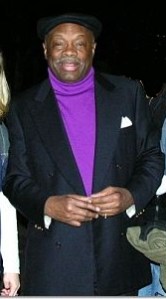
Willie Brown, the only black mayor San Francisco has every had, as well as a California state assemblyman for donkey’s years, many of them as speaker, tells a good joke in his latest column:

There are three good arguments that Jesus was black: He called everyone brother, he liked gospel, and he didn’t get a fair trial.

But then, there are three equally good arguments that Jesus was Jewish: He went into his father’s business, he lived at home until he was 33, and his mother was sure he was God.

But then, there are three equally good arguments that Jesus was Californian: He never cut his hair, he walked around barefoot, and he started a new religion.

But most compelling of all are the three arguments that Jesus was a woman:

He fed a crowd at a moment’s notice. He kept trying to get a message across to a bunch of men who just didn’t get it. And even when he was dead, he had to get up because there was work to do.


Bookmark and Share

Blogging’s raison d’etre

The Hannibal Blog is almost a year old now, so naturally I have pondered this phenomenon of blogging from time to time. I started pondering it long before I had a blog, for my day job. I then kept pondering it last fall, still for my day job, when I declared, tongue-in-cheek and not all that seriously, the “death of blogging“. But really, I was just savoring the irony that just when blogging was ‘dying’, I was starting my own blog.

Well, the New York Times has come to the same conclusion–ie, that blogging is, if not dying, at least moribund or ailing or sickly or something of that sort. But I detect no irony in the piece. It just quotes bloggers or former bloggers saying … absolutely silly things in a very earnest tone.

Thus I am told that

many people start blogs with lofty aspirations — to build an audience and leave their day job, to land a book deal, or simply to share their genius with the world.

Er, hang on. There are actually people who think they are going to leave their day jobs … to blog?

And regarding book deals, isn’t the natural order to do it the other way around? I mean, I got a book deal, and then it occurred to me that a blog might be a good complement.

As to sharing genius with the world, what’s wrong with just sharing thoughts and refining them? No need for genius.

Clearly, I am not on the wavelength of this article. But I plod on and learn that

blogs have a higher failure rate than restaurants [with] 95 percent of blogs being essentially abandoned

Well, isn’t that what you would expect if those blogs were started by people hoping to quit their day jobs, get book deals and share genius? There’s only so much in the way of day jobs, book deals and genius to go around.

One former blogger, “sounding a little betrayed” (!), is quoted saying that

Every once in a while I would see this thing on TV about some mommy blogger making $4,000 a month, and thought, ‘I would like that.’

Sorry, but did you have anything to say? Or are you demanding $4,000  just for simultaneously procreating and having a WordPress account?

And so it continues, with more revelations:

Many people who think blogging is a fast path to financial independence also find themselves discouraged.

What can I say? Except that I clearly see blogging in a very different way. How do I see it?

  • As a scratch pad for my sloppy, chaotic thoughts, before I clean them up and organize them for my day job or my book or something useful.
  • As a hobby or diversion or outlet for thoughts that I would express anyway–just to fewer people, via email or dinner conversations.
  • As a great way to get intellectual stimulation from people like you guys who leave these great comments and emails, with eclectic ideas and book tips that I would never otherwise know about and that make my table groan under the weight of unread texts.

That’s plenty, isn’t it?

Bookmark and Share

Traveling: Light posting, but pondering Clausewitz…

Yes, Clausewitz. You might have heard of him or not. I intend to convince you that he is relevant to your life….

Stay tuned.