Great, if not greatest, thinker: Nietzsche

I vote on values

I vote on values

In this, the fourth, post in The Hannibal Blog‘s search to find the world’s greatest thinker ever, let’s examine another criterion: In order to be the greatest, does the thinker have to be the most expansive–ie, largest–in scope?

My short answer is No, but, as with the previous criterion, there is a catch.

The answer is mostly No because the great is the enemy of the good. Intellectual overstretch is a problem, and most of the great thinkers in history were great precisely because they chose one well-defined are of human interest for their contribution.

The converse is also true. As you will by now have guessed, I am a fan of Einstein’s. But Einstein’s light began dimming at the exact point, in mid-career, when he began to look for a theory of everything, a grand unifying theory, an idea that would explain not just something but all things. Up to that point, he had chosen one thing at a time (light, gravity, time, etc) and had done, ahem, rather well.

So let’s begin a short and explicitly incomplete sub-series of posts on truly great thinkers who shed light on one particular area of interest. Consider these the “honorable mentions” in my search. (There will also be a runner-up, and then of course a winner. If you consider this suspenseful, I feel flattered.) I have no doubt that you will let me have it, as always, in the comments. Today:

Friedrich Nietzsche

Area of interest: The origins of “morality”

Why great: Because he exposed so much of bourgeois “values” as the hypocritical piffle that it is. With highly original and ingenious methods (tracing the evolution of words), Nietzsche described the process in which “healthy” and natural values become inverted and perverted in the process of “civilization”. The masses of the downtrodden feel ressentiment at the strong and healthy, and finally stage a slave revolt in which the high is redefined as low, the good as evil, the strong as cruel; and, conversely, the weak as good, the impotent as chaste, the poor as humble et cetera.

Comment: As with all thinkers, you don’t need to believe it all; but keeping Nietzsche in mind is fantastic armor against some of the glib moralistic bilge that assaults us daily.

Must great thinkers be “right”?

First an apple dropped, then ein Stein

First an apple dropped, then ein Stein

We left off this search for the greatest thinker by laying down one criterion: Simplicity. Now we need to examine another. Is it necessary for a thinker to be right in order to be great?

This is a tough one. The answer, as the Germans would say, is Jein–ie, both Ja and Nein, Yes and No (I guess that would be Yo in English). Let me illustrate what I mean with four examples out of many. These are people whose thought a) simplified enormous complexity and b) turned out to be wrong: Isaac Newton, Plato, Sigmund Freud, and Karl Marx (whom at least one of you has nominated).

Nein (1): The case of Newton

I hardly need to make the case that Isaac Newton was one of the greatest thinkers ever. While the plague ravaged England, this twenty-something went home to the isolation of his farm, used his imagination and reason, and gave us breakthroughs in understanding (wait for it)…. calculus, light and gravity. That’s a lot for one or two years, you will agree. Only Einstein in his “miracle year” of 1905, would come close.

And yet: That same Einstein would, starting in that year, prove Newton wrong. The calculus was fine, but Einstein rocked our understanding of light and (more famously) gravity. It was far, far weirder than even Newton could have imagined.

And yet yet: Nobody, least of all Einstein, would ever entertain a notion as ridiculous as downgrading Newton’s contribution. Who cares if his ideas were incomplete, and thus wrong! Newton himself famously said: “If I have seen further it is by standing on the shoulders of giants.” Newton became the giant whose shoulder Einstein stood on. It is entirely possible that we will discover that Einstein was wrong too. Would that make him any less of a thinker? Hardly.

These thinkers are great because they shed progressively more light into the darkness of our ignorance. Being right in the sense of leaping ahead over all future generations is not part of the job description.
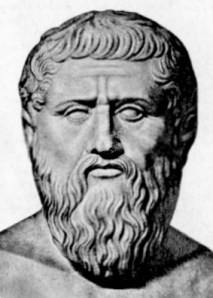
Nein (2): the case of Plato

Alfred North Whitehead, no slouch among philosophers himself, once said that all of western philosophy is but a series of footnotes to Plato. Why would he say such a thing?

Because Plato (or Socrates, if you believe that Plato mostly transcribed the stunning conversations of his teacher) raised pretty much every fundamental and intelligent question that mankind could ask. What is good? What is beautiful? What is just? What … is?

Once again, that is a lot. Coming up with the answers to all those questions was not part of the job description, especially since we have not figured them out yet 2,400 years later.

But Plato has been a lot luckier than, say, Marx, in that nobody ever thought to try his ideas out in practice. I think we can agree that none of us wants to live in a society such as the one in Plato’s Republic. Aldous Huxley’s Brave New World comes close to it. Thank god we never “tried Plato out”.

Tell me about your mother

Tell me about your mother

Ja (1): The case of Freud

Freud gave us some beautifully profound, stirring and simple thinking. Everything has to do with sex! How refreshing, after Marx had put everything down to money, and Nietzsche to power.

Well, the trouble is that these were all oversimplifications. To quote our man Einstein again,”Everything should be made as simple as possible, but not one bit simpler.” If you make things too simple, you end up looking just plain silly.

Which is what happened to Freud, and the one to blow his cover was Carl Jung, his disciple at the time. Promise me to make the sexual theory a “bulwark”, Freud once implored Jung. “A bulwark against what?” asked Jung, disconcerted. “Against the black tide of occultism,” said Freud. Jung realized at that moment that his mentor was no longer looking for truth but power (his own). Sex is a biggie, Jung admitted, but not the only thing that matters. And so he broke with Freud. He was excommunicated from the clique, but in time found his footing and became an infinitely greater thinker (if less famous) than Freud.

Able and needy

Able and needy

Ja (2): The case of Marx

We have already pinpointed Marx’s biggest oversimplification, which was to put everything down to production, and who controls “the means of it.” Tangible wealth and its distribution matter, but they are not the only thing. And this was a tragic flaw in Marx’s thought.

There were others: His theory of value was wrong. (It’s not how much labor went into something that makes it worth what it is, but what somebody else will be prepared to pay for it.) And so on.

And, I would argue, his view of human nature was wrong: Once “From each according to his abilities; to each according to his need” becomes the law of the land, you will very quickly find the ablest people demonstrating impressive “abilities” at proving their own “need”. The entire philosophy spirals downward into a glorification of envy, which is a base, not a noble, instinct.

Still, Marx made a huge contribution to human thought, and if we had not tried him out–who knows?–we might rank him up there with Plato.

Conclusion:

The conclusion is that being wrong must not disqualify a thinker from being nominated for the title of “greatest”. But since that title implies a certain timelessness, being right cannot be entirely irrelevant either. As it happens, the person I am leading up to, I believe, was right.

Bookmark and Share

Greatest thinker NOT: Hegel

hegel_portrait_by_schlesinger_1831

Yesterday I threw down the gauntlet: to look for and find the greatest thinker in world history. Today I want to kick off this series of posts by laying down some criteria for our search, with the aid of a negative example: Georg Wilhelm Friedrich Hegel.

Criterion: Simplicity.

You’ve read my opinion on the importance of simplicity before. We can go one step further and define thinking as simplifying something complex, bringing order to something unordered, uncluttering something cluttered, and thereby making it accessible and meaningful.

So thinking is not wowing everybody by making something simple complex, or something complex even more complex. It is not making long lists of ideas. If you cannot boil down all your thinking into a digestible morsel, you have not actually thought.

Hegel: Archetype of the Teutonic Windbag

So what does Hegel have to do with this? Well, he represents the archetype of every confused and pompous academic or intellectual snob out there who has ever used his students or the pages of his book as a garbage dump for undigested idea-snippets. He apparently once said that in order to understand anything he has ever written one must first read everything he has ever written. That pretty much says it all.

Am I being unfair? No. I did my fair share of suffering through his verbiage, in German and in English. So he tells you that “history is the dialectical process whereby spirit comes to know itself and realizes its Idea,” that “freedom is the idea of the Spirit and Spirit is Reason in-and-for itself,” and so forth. Folks, it is time to call his bluff.

The reason he got away with it for so long is that, like many of his ilk, he intimidates a lot of people. If you’re smoking Gitanes and wearing black turtlenecks in certain cafés, you cannot afford to poopoo Hegel, because you would not get laid again. If that is you, the answer is to get out of that particular café. (I did, thank god.)

White Knights of common sense

Fortunately, windbags cannot fool all of the people all of the time. Eventually, they will run into somebody who is both clever and confident. That’s when you get a refreshing Emperor-has-no-clothes moment. I will let Arthur Schopenhauer do this service (via Wikipedia). Hegel’s “thought”, said Schopenhauer, was

a colossal piece of mystification which will yet provide posterity with an inexhaustible theme for laughter at our times, that it is a pseudo-philosophy paralyzing all mental powers, stifling all real thinking, and, by the most outrageous misuse of language, putting in its place the hollowest, most senseless, thoughtless, and, as is confirmed by its success, most stupefying verbiage…

And so we have established our first criterion: Simplicity. Next time, let’s move on to contemplate another issue: Is it necessary for the winner to have been … right?

Livy and Polybius

I got an email from Fabrizio Dinatale, who is writing a dissertation at the University of Reading (UK) on Polybius and Livy. He asked my opinion on the “qualities/defects” attributed to each of them.

Fabrizio, I replied to your email but I keep getting error messages. (“550 550 unrouteable address (state 14)”)

Here is what I said:

Hi Fabrizio,

your dissertation sounds fascinating. Send me a link once it’s finished and I might link to it. You will be the expert on the topic. I am, as you may have picked up from the blog, not a historian, just a writer who’s having fun with Hannibal and Scipio as the main characters in a book about, well, you and me.

That said, Livy and Polybius are my main ancient sources, so I do have some impressions, as I said here and here.

Polybius took Thucydides as his model, Livy Herodotus. Which is to say: Polybius believed in thorough research, fact-checking, original reporting, less embellishment. He personally interviewed eye witnesses and traveled the routes that Hannibal took, even over the Alps. He had a personal connection in that he was the tutor and friend of Scipio Aemilianus (Scipio Africanus’ adoptive grandson) and stood next to him when the Romans burnt Carthage to the ground.

Polybius was writing for his fellow Greeks to explain how the most momentous event in history up to that time–Rome’s rise to superpower status–could have happened. And the biggest step in that rise was Rome’s near-death experience but ultimate victory over Hannibal.

Livy was completely different: somewhat lazy (he did not travel), and unconcerned about originality (ie, he plagiarized Polybius freely). He embellished liberally. Above all, he was writing less a history than propaganda, as you said. And for Romans, in Latin. His mission was to narrate the past, mythical and actual, in a coherent way that appeared inexorably to lead to … Augustus! Rome as the chosen people, you might say.

In that sense, he was not unlike Virgil, who went one step further in the Aeneid and implicitly tied Augustus to Aeneas as though everything had all been preordained all along.

Have fun. Again, i’ll be interested in what you end up concluding in your dissertation.

Bookmark and Share

The greatest thinker of all time

Man, right elbow on left knee is so uncomfortable. Rodin, you done yet?

Man, right elbow on left knee is so uncomfortable. Rodin, you done yet?

The Hannibal Blog is starting a short series of posts to figure out who the greatest thinker of all time was/is.

This is very tangentially related to my book, because some of the people I will feature–either to dismiss or to anoint them–may have lived lives or produced ideas that come up in my book (although I promise that the book is a very light read!).

But the main point is just to have some fun, and to clarify my own thoughts. It gives us a chance, for instance, to boil various thinkers and their ideas down to a digestible morsel, almost in the vein of the great Shit happens series that explains the world religions.

And, of course, The Hannibal Blog wants to hear from you. Feel free to propose/reject candidates for greatest thinker of all time starting now.

That said, I have already decided whom I will propose as the greatest thinker of all time. Stay tuned. It will surprise you.

Bookmark and Share

The conductor guru

I attended Google’s Zeitgeist conference again last fall, which is my second favorite conference after TED. And there was one session that blew me, and all of us in the audience, away as no other did.

Al Gore later said on stage: “I learned more about leadership in that half hour than in my entire career”.

Michael Pollan and I were raving about it, and I pointed out that the speaker did not even mention the word leadership the entire time. “It would have ruined it,” said Michael.

Who was that speaker? An Israeli conductor named Itay Talgam.

Notice that he encountered some audiovisual difficulties early on in the presentation. It did not matter. He never told us, he just showed us. Watch:


Bookmark and Share

Intelligence: Good servant, bad master

Intelligent? Me?

My favorite quote from B.K.S. Iyengar. (For the Yogis among you, I practice Pattabhi Jois‘ style, but that’s neither here nor there.)

Intellectuals tend to be arrogant. Intelligence, like money, is a good servant but a bad master. When practicing pranayama, the yogi [makes] himself humble and without pride in his intellectual attainments.”

Page 85 in this book.

Beware the Catos in your life

Cato the Elder

This face says it all. It is the misanthropic, miserly, humorless, prurient snout of Marcus Porcius Cato, better known as Cato the Elder.

“Hell is other people,” said Jean-Paul Sartre, and I’m sure he had people such as Cato in mind. Cato showed up in ancient Rome wherever people were having fun to make them feel guilty and sinful. Whenever anybody succeeded and earned fame or wealth or glory, Cato was there to dig up some dirt, spread a rumor, question some expense account (literally), all in order to take that person down a few notches.

If he had been alive in another era, he might have sat on the tribunals of the Spanish Inquisition. Or he might have been Senator Joseph McCarthy, or Kenneth Starr, or anybody who devotes his life to hounding others and destroying reputations.

Cato’s most famous victim was one of my heroes, and one of the main characters in my book, the great Scipio Africanus. Cato envied and hated him. So he filed charge after charge, looking through every receipt in the great Scipio’s accounts, until Scipio was simply fed up and went into exile.

After Scipio died (in the same year as Hannibal), Cato needed a new target for his venom. He chose all of Carthage, which was now a docile and submissive part of the Roman empire. Carthago delenda est! Cato said at the end of every speech he gave, no matter what it was about.

And that is what the Romans eventually did. They ethnically cleansed the entire city of Carthage and razed it to the ground.

The lesson? Many. But one premise of my book is that the same archetypal chracters appear again and again in history and in our own lives. Learn to recognize them, especially the Catos. They might be in the next cubicle, or one row behind you in the auditorium. They might be your boss or your employee, or your ex-spouse or a spurned lover. Somewhere, there is someone who hates to see you happy and successful and will exert all his energy to bring you down.

Bookmark and Share

Uncertainty is worse than disaster

Many mysteries explain why triumph and disaster are impostors, which is what my book is about. Here is just one: Success often introduces uncertainty, whereas failure often removes it. And, as researchers are now discovering, people cope far better with disaster than with uncertainty.

The New York Times recently had a piece on a few of these studies:

Sarah Burgard

Sarah Burgard

Sarah A. Burgard, an assistant professor of sociology at the University of Michigan, has for several years looked at how perceived job insecurity affects people’s health… People who felt chronically insecure about their jobs reported significantly worse overall health in both studies and were more depressed in one of the studies than those who had actually lost their jobs or had even faced a serious or life-threatening illnesses. “Chronic stress is extremely damaging to your health,” Professor Burgard said. “I’m an academic and I’m going up for tenure. I know what uncertainty is. You’re unable to make plans, unable to take action. You’re waiting for the other shoe to drop.”…

Jacob Hirsh

Jacob Hirsh

Jacob Hirsh, a graduate student at the University of Toronto who has studied how different people respond to uncertainty…. found that those considered higher on the neuroticism scale would prefer knowing something for sure – even if it’s negative – than not knowing….

Another psychology professor said that “people who are anxious tend to equate uncertainty with a negative outcome”, even though 85% of the actual outcomes in his studies were neutral or even positive. People also underestimate their ability to deal with bad outcomes.

Bookmark and Share