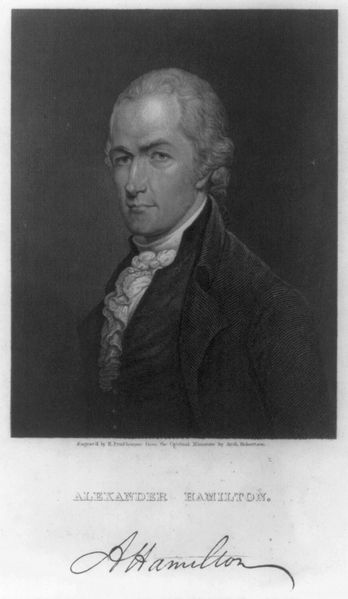
The case for Alexander Hamilton (I)

Alexander Hamilton is “my favorite” Founding Father, as I’ve hinted several times before. But I’ve never actually explained what I meant by that.

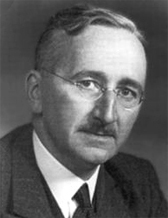
In this and the next post, I will try to unravel which aspects of this complex, visionary and soulful man (just look at that portrait above!) so resonate with me.

  • In this first post, I’ll sketch the man, his temperament, his journey and philosophy about people and life.
  • In the next post, I’ll describe his intellectual contribution to American governance and political philosophy.

You’ll see after the second post that the man can’t be separated from his ideas, nor the ideas from the man. And you’ll see (I hope) how timeless — meaning: relevant today — Hamilton is.

I will give you my interpretation, but my main source is Ron Chernow’s excellent biography of Hamilton. (I am now reading Chernow’s new biography of George Washington as well.)

Now, to Hamilton, the man:

1) He was an outsider who ended up on the inside

Hamilton was the only Founding Father born outside of what became the United States. He was born in a Caribbean hellhole (called Nevis, in the West Indies) that seemed to specialize in tropical diseases, random violence and the slave trade.

And he was born as an ‘outsider’ in another way: he was illegitimate. His mother was not married to his ostensible father, James Hamilton, and even James Hamilton was probably not his biological father (instead, that seems to have been a gentleman by the name of Thomas Stevens).

His childhood was rough. When Hamilton was a teenager, in the space of a few years,

  • his mother died,
  • his father vanished,
  • his aunt and uncle and grandmother also died,
  • his cousin committed suicide, and
  • Alexander and his brother were disinherited and left penniless orphans.

As Chernow puts it:

that this fatherless adolescent could have ended up a founding father of a country he had not yet even seen seems little short of miraculous.

2) He had an open mind

This experience might mark him as, yes, an American archetype: The Immigrant Who Reinvents Himself.

Reinvent himself he certainly would — several times throughout his short life, and in a unique, and uniquely compelling, way.

He began by getting himself to America. Through savvy, wit, charm, chutzpah, and luck, Hamilton found himself on a trading ship to New York, with an allowance from an older mentor and a job that gave him a bottom-up view of international commerce, shipping and smuggling. (Much later, this expertise would serve him well, when he founded the US customs service and Coast Guard.)

Already his mind was expansive, open to new worlds, both of experiences and ideas. Coming from the Caribbean, he was bilingual in English and French (although, unlike Franklin, Jefferson and Adams, he would never set foot in that superpower of the day).

He was, in a word, cosmopolitan. And this would, yet again, mark him as an outsider in America. For America has always had, and continues to have, an ambivalent — nay, schizophrenic — relationship with cosmopolitan types. Yes, Americans sometimes admire and appreciate them and their perspective. But they also distrust cosmopolitans and are ready to exclude them at a whim — by calling them elitist, for example, or insinuating that they are not real Americans.

Hamilton was also unapologetically erudite, immersing himself into the classics, and in particular in Plutarch, one of my favorites. Among the Founding Fathers he was in good company in this respect, for they all valued intellect and learning. But in America at large this erudition would — yet again — make him potentially suspect, for America has always had, and continues to have, the same ambivalence toward intellectuals that it has toward cosmopolitans.

3) He had a romantic sense of honor

His illegitimate and Caribbean background, and his cosmopolitan style, made him vulnerable to attacks on his reputation. Understandably enough, Hamilton was therefore unusually touchy about his good name, and fiercely keen about defending it. He was an Enlightenment man who believe in reason and law, but he simultaneously retained an older, classical, romantic, even Homeric sense of honor.

His thirst to earn and defend his honor — and specifically his American and patriotic honor — made him demand to be in battle, in the line of actual fire. So he fought with extra valor in the war and came to the attention of George Washington. Hamilton was 22 and Washington 43 when the general made the young man his protégé and chief of staff, giving Hamilton not only a perfect view into American history as it unfolded but a role in shaping it.

Washington was tall, imposing, dignified, laconic and kept his emotions bottled up. Hamilton was five foot seven, slim and athletic, elegant, gave his emotions free reign and was so articulate that he talked himself into trouble as much as out of it. The two men, so different and yet like father and son, would form one of the most important relationships in history.

Hamilton yearned to be more than chief of staff. He wanted to become a war hero, by commanding troops and risking his life. At Yorktown, Washington gave him that command and Hamilton became that hero, after fighting as though driven by a death wish.

In this respect, Hamilton was certainly very different than those Founding Fathers who would become his enemies — above all Jefferson, who somehow always found himself where there was no physical danger, and in one case (when he was governor of Virginia) actually fled on horseback from fighting, for which he was accused of dereliction of duty.

(Remember this when we get to the next post, and the hyper-partisan fight between Jeffersonians and Hamiltonians.)

4) He was ethical but all-too-human

The biggest ethical issue of the day was, of course, slavery. And how did Hamilton regard this institution?

As despicable and evil. He was unambiguous and clear about it. He was the first and staunchest abolitionist among the Founding Fathers.

To us this is a no-brainer, but to Americans at the time it was not. Washington, Jefferson, Madison and all the Southern Founding Fathers owned, bought and sold slaves. They may have had qualms, but never enough to free their slaves or to push for abolition (Washington was the only one of them to emancipate his slaves after his death). This, of course, is the founding irony at the heart of the American idea: Thomas Jefferson owned human beings at the very instant in which he wrote the words “… life, liberty and the pursuit of happiness.”

So Hamilton was unusual in that he was ethically on the right side of this issue. Which would make it all the more ironic — in that inevitable American way — that his political enemies, including some of the aforementioned slave owners, would later try to paint him as immoral.

How? The way one does this in America: with a sex scandal. Hamilton, stupidly and unnecessarily, allowed himself to be seduced. It was America’s first public and politicized bimbo eruption, a sort of proto-Lewinsky affair. It is of no interest or consequence to us, but it was in its day.

Hamilton was certainly a charmer and flirt. That episode aside, however, Hamilton was also a devoted husband and father, perhaps because he had never had a father. He and his wife had an intimate bond. And his eight children meant everything to him. When his oldest son, handsome and also sensitive about his honor, died in a duel, Hamilton went to pieces in grief.

5) He had a nuanced grasp of human nature

From his reading of history and the classics, and his own upbringing in the West Indies, Hamilton developed a sophisticated worldview that was somewhat pessimistic about human nature, at least in comparison to the — then as now — reflexive and simplistic optimism that usually wins arguments in America.

Thus he saw the potential evil of tyranny — which, of course, he was actively fighting with Washington in the war against the British crown — but he also saw the potential evil of mobs, of anarchy. There was a lot of violence in those days, much of it directed at Tories or loyalists, who might easily end up tarred-and-feathered or even lynched. But Hamilton, even though he fought for the republic, always remained humane towards individuals on the other side — and wary of mobs on any side.

Our countrymen have all the folly of the ass and all the passiveness of the sheep in their compositions,

he once said. And that would lead him to say things such as this:

We should blend the advantages of a monarchy and of a republic in a happy and beneficial union.

But that will be the segue to the next post.

6) He died as he lived, but too young

But before I hand over to that next post, just one final anecdote that gives a glimpse into his character. Because he guarded his reputation and honor so jealously, he had, on occasion, to duel. He certainly saw the folly of dueling as he got older. He must even have hated it after he lost his beloved son in a duel.

But when, in the ordinary course of bitter partisan politics, certain things were said between him and a vulgar mediocrity named Aaron Burr, Hamilton picked up the very pistols his son had used, rowed across the Hudson to New Jersey (duelling was illegal in New York), and met his challenger in a clearing by the river.

It appears that Hamilton shot first, but “threw his shot away”, in the parlance. In other words, he deliberately missed by firing into air, thus signaling that both parties had satisfied the requirements of honor and could end this business without shedding blood.

Then it was Burr’s turn. But Burr had a different sense of chivalry. He aimed at Hamilton and found his target.

Hamilton, in convulsions, was rowed back to New York, where he died many agonizing hours later, as his family and city grieved over the loss of a great man, who, aged about 47, had already changed the world in ways that would only fully become clear generations later.
Hayek & Keynes rap again

Remember that little rap, literally, by Friedrich von Hayek and John Maynard Keynes?

Well, my colleagues at The Economist got them (ie, Hayek and Keynes) to rap again, for one of our conferences. Afterward, our editor, John Micklethwait, (ie, my boss) interviewed them about how they came up with the idea. Video below.

My slightly more serious treatment of the subject, from the “continental” point of view (which produced Hayek, but not Keynes) is here.

If it’s emotional, flatten the tone

Here is a tip for writers. It is something I knew (“show, don’t tell”) and tried to observe in writing the piece I have just finished. But not enough, apparently.

My editor, one of the best there is in journalism, emailed me this:

I think the emotional pitch of the vocabulary needs to be turned down a little. The subject-matter is so emotionally strong that it will work better if the tone is flatter. It needs fewer words like “pain” and “vulnerable”. I feel the pain and sense the vulnerability more acutely if I’m allowed to discover them by myself.

I did as she said. The piece is much more powerful as a result. Lesson: let the details provide the color, and never interrupt the story they tell.

Steve Jobs as seen through his nemesis


(Credit: Matt Yohe)


As some of you know, I am fascinated by the complex character of Steve Jobs, who is one of the people featured in my forthcoming book (though not at all in his usual context).

So I enjoyed reading this interview with John Sculley, Jobs’ erstwhile nemesis (when Sculley pushed Jobs out of Apple in the 80s).

1)

The interview may be too geeky for some of you, but I like it, first, because of the noble tone in which Sculley speaks. He is not bitter; he does no underhand sniping; he does not furtively try to redeem himself or get even. Sculley simply moves on from what was an extremely painful episode in the two men’s lives to evaluate — and bow to — the genius of his enemy.

(Steve Jobs, from everything I hear, has never got himself to take that same step.)

Sculley speaks, in other words, as Hannibal would speak about Scipio, or Scipio about Hannibal. Great men and women are ennobled by their enemies. Kudos.

2)

Second, I like the interview for this glimpse into the nature of Jobs’ genius. Sculley:

What makes Steve’s methodology different from everyone else’s is that he always believed the most important decisions you make are not the things you do – but the things that you decide not to do. He’s a minimalist… He is constantly reducing things to their simplest level. It’s not simplistic. It’s simplified. Steve is a systems designer. He simplifies complexity.

Simplicity is, of course, a big thread here on The Hannibal Blog. It is interesting that Jobs also admires Einstein, as I do (he is another main character in my book), probably because Einstein had that same yearning for elegance and simplicity. As Sculley recalls:

I remember going into Steve’s house and he had almost no furniture in it. He just had a picture of Einstein, whom he admired greatly, and he had a Tiffany lamp and a chair and a bed. He just didn’t believe in having lots of things around but he was incredibly careful in what he selected.

(Compare this to Feng Shui.)

3)

Third, I like it for what I interpret as Steve Jobs’ instinctive nod to the Dunbar hypothesis.

Named after the anthropologist who came up with it, the thesis says that primates can form effective social groups only to the extent that their neocortex can compute the interactions among the group. The cognitive limit for human groups seems to be about 150. (I once worked with Facebook to find out whether technology might change that. Not hugely, it appears.)

Anyway, listen to Sculley:

Steve had a rule that there could never be more than one hundred people on the Mac team. So if you wanted to add someone you had to take someone out. And the thinking was a typical Steve Jobs observation: “I can’t remember more than a hundred first names so I only want to be around people that I know personally. So if it gets bigger than a hundred people, it will force us to go to a different organization structure where I can’t work that way.”

Spontaneity and order


Hayek


Ten years ago, I began a piece in The Economist about Hong Kong with a paragraph that was, in this particular context, intended to be surprising:

FRIEDRICH VON HAYEK and Walter Eucken parted company over the issue of power formation in the private sector. Hayek, a leader of the Austrian school of liberalism, believed that keeping government small was enough to preserve competition. Eucken, who founded the school’s German branch, felt that anyone with excessive power, whether a government or a company, could threaten economic freedom. It is a pity that neither was alive this week to analyse the case of Hong Kong….


Eucken (click for credits)


Our local readers in Hong Kong quite enjoyed this framing of what they considered their “little” hometown business controversies, since they don’t usually see their city connected to the big debates among Western intellectuals.

I, however, was fascinated by precisely those local controversies, for two reasons:

  1. I consider Hong Kong the freest place in the world (and thus worth studying), and
  2. I have a personal connection to that debate between Hayek and Eucken, which I’ll tell you about at the end of this post.

Liberalism vs Libertarianism

What reminded me of all this was a post the other day by one of my colleagues about the two isms, Liberalism and Libertarianism. He concludes that the difference is basically about the precise role of government and

which approach is likeliest to lead to the most freedom.

So, because I’ve been parsing Liberalism here on The Hannibal Blog for a couple of years now, I thought I’d add a “continental” twist for those of you who are connoisseurs of all things liberal.

Between Freiburg and Vienna


Mises (click for credits)


For a lot of “Anglo-Saxons”, in my experience, the first surprise is that that there is a continental twist at all. Surprise turns into shock when the twist turns out to be specifically Germanic. Could Germans really have much to say about freedom?

Well, yes, a whole lot. The liberal tradition is long and deep in the German-speaking countries. Obviously it suffered a near-death experience during the Nazi years, but then it came roaring back in the post-war years.

More to the point, a lot of what we now tend to think of as “Anglo-Saxon” ideas actually have an intellectual pedigree that goes back to these “Germanic” (mainly German and Austrian) thinkers.

Ludwig von Mises (above) was the first giant of the so-called “Austrian School”, and in turn influenced the even more gigantic Friedrich von Hayek. Hayek in turn influenced Milton Friedman, who in turn influenced Ronald Reagan and Margaret Thatcher, thus re-branding Austrian Liberalism in the minds of many people as an “Anglo-Saxon” thing.


Rüstow


Walter Eucken, on the other hand, founded the so-called “Freiburg School” of Liberalism (after the university town where they hung out), which included liberal thinkers such as Alexander Rüstow (above) and Wilhelm Röpke (below).


Roepke


How spontaneous is order?

The first and most important thing to understand about all these thinkers is that they were friends. They liked each other’s company and liked debating one another. They viewed themselves not on opposing sides of anything, but on the same side: the side of individual freedom (which is what all classical Liberals agree on).

The subtlety that kept them busy (and I deliberately oversimplify) had to do with order. The Latin for order is Ordo, so the Freiburg School eventually even called themselves Ordoliberals.

Order, as opposed to anarchy, is necessary for individuals to be free. The question, however, is whether or not order comes about spontaneously.

Option 1: Yes

If the answer is Yes, as the “Austrians” basically believed, then the conclusion has to be that we simply need to keep government out of the equation entirely.

The “market” (and this could apply to more than material things — ie, ideas, culture, etc) will then “order” itself spontaneously, though competition. The prerequisite is merely the rule of law.

Option 2: Jein

The Ordoliberals did not counter that the answer is No. Instead, I would call their answer Jein (a contraction of Ja and Nein in German). Yes, markets can spontaneously create order. But that order is not always stable. Worse, that order could be of a sort that robs individuals of liberty.

What they had in mind were cartels, tycoons, cabals, and anybody else who amassed an unhealthy amount of power.

So whereas the “Austrians” worried almost exclusively about excessive government power, the Ordoliberals worried about all excessive power, whether in the private or public sector.

This led the Ordoliberals to the conclusion that government must, yes, stay limited, but must also supplement the “spontaneous” ordering of markets with “corrective” ordering. Government had to crack down hard on cartels and monopolies, for example.

My personal interest

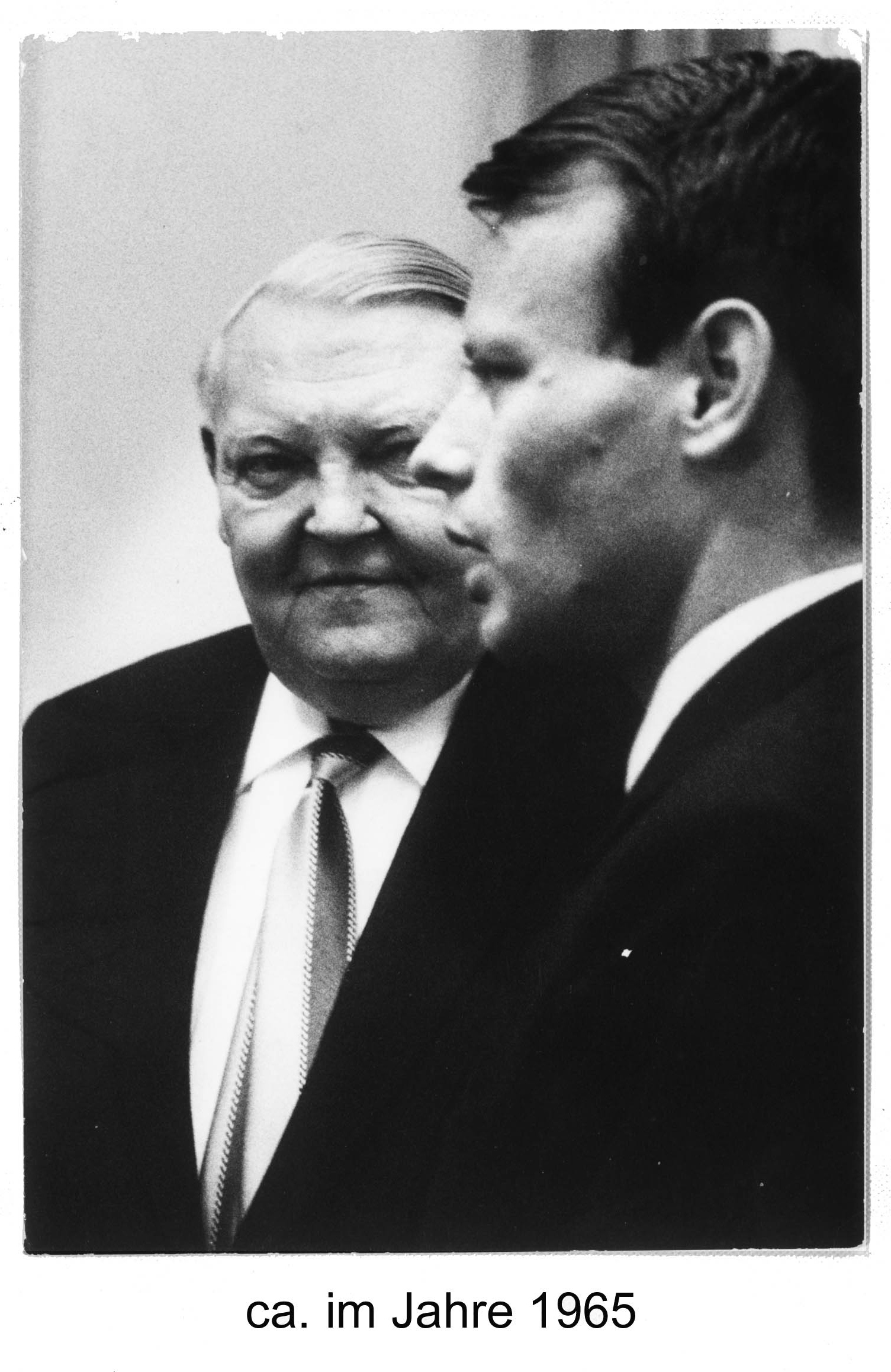
I mentioned a personal connection to the debate. Well, I wrote my Master’s thesis at the London School of Economics about it (or rather, about an obscure aspect of it). My dad had once written his PhD thesis about another obscure aspect of it. And that was probably because his uncle and godfather was somebody by the name of Ludwig Erhard (“Uncle Lulu“). Here they are in the sixties, Lulu on the left, dad on the right:

And if Hayek influenced Ronald Reagan and Margaret Thatcher, and thus “Anglo-Saxon” policy, the Ordoliberals shaped Ludwig Erhard and thus post-war West German policy, for Uncle Lulu was West Germany’s first economics minister and then its second chancellor.

Postscript: Liberal v Libertarian (again)

So back to those two isms.

In essence, I think that Libertarians trace their evolution back to the Austrians featured here, and Liberals to the Ordoliberals.

However, those Austrian and Ordo-Liberals themselves, if we were able to bring them here today, would be puzzled by the debate. They would abhor some of the intellectual excesses committed in both names, and remind us that they were originally almost indistinguishable.

The worst opening phrase in writing

Indulge me, please, in a gripe about bad writing that I just want to put out there so that I can stop suffering from it.

It concerns the most important line, sentence and phrase in any text: the first one.

The opening is where you make contact with your reader. This is when you win or lose him, this is when every word (including the empty-noise words like the and a) matters most.

Here is an example of what appears to be an opening-line trend in “narrative non-fiction“:

On a clear and mild March day in 1993, the Operation Rescue leader Randall Terry spoke at a rally…

On a clear and mild March day? Well, thank god we got that in there. This story, surely, would have been entirely different if said Mr Terry had spoken on an overcast or scorching April day.

One cloudy afternoon last fall….

On a rainy Sunday morning last summer….

I see these phrases in the New Yorker, in The Atlantic, in The New York Times Magazine and every other place that fancies itself as doing “long-form” writing. (Not The Economist, in other words.)

It is the new

Once upon a time

The difference is that Once upon a time was honest about its purpose: Here starts a good story.

On a clear and mild March day, by contrast, is pretentious. It says: I will now give you color, because I’m such a good writer.

Until, within a few paragraphs, we are forced to discover that neither the clarity and mildness of the day nor its position on the calendar had the slightest friggin’ thing to do with anything at all. What a waste of words.

Our greatest tragedy

The human mind — our minds — cannot grasp relative risk. We cannot compare dangers and see them in proportion. Or rather, we constantly do compare them, and constantly get it completely wrong. This is our greatest tragedy.

We cannot overcome this tragedy because it is biological: The human mind (meaning, the nervous system in interaction with the endocrine system, which will be a new thread here anon) did not evolve to compare dangers. It evolved instead to respond effectively and immediately to the proverbial Saber-Toothed Tiger you see above — ie, to a few specific and spectacular dangers that presented themselves in the distant past of our species.

And what a pity, when all we need to do to make good decisions and policy is to do this back-of-the-envelope risk calculation:

 R(\theta,\delta(x)) = \int L(\theta,\delta(x)) f(x|\theta)\,dx

(I am kidding, of course. My point is that most of us cannot wrap our minds around the concept of risk, not to mention this equation, and therefore end up getting it wrong.)

____________________________________

So we get it wrong in ways big and small, disastrous and banal. Often the banal errors are the most disastrous ones.

A few anecdotal examples, chosen for their deceptive banality (with a few details altered or recombined to disguise or protect the individuals in them):

1)

While driving alone to the airport, a teenage girl texts her friend that she is nervous because she is afraid of flying.

2)

We’re at a Californian beach, applying top-notch sunscreen to our children, sunscreen that was shipped in by grandparents from Germany upon request because it is organic this and non-toxic that. But this particular sunscreen, being slightly easier to rub in, is marginally less non-toxic than one other alternative.

A friend therefore refuses our sunscreen, leaving her children completely unscreened, because of the risk of that residual toxicity.

After a fun beach outing, that friend cheerfully drives her children away, pulling out of the parking lot while talking on her cell phone.

3)

The parents at a preschool in Los Angeles, wanting to make the child’s “birthday dream” come true (a school tradition), deliver a truck load of snow to the school. For a couple of days, as the stuff melts under the Californian sun, the kids get to build snowmen, throw snow balls and so on.

Some months later, the family sends out invitations to an unrelated event. The invitations are digital as opposed to printed, and arrive via email rather than through the mail.  This is because the family is “green”.

4)

Sitting beside a tall and beautiful shelf which is not bracketed into a wall stud and which holds, among other things, a large flat-screen TV set, also not secured, a cosmopolitan individual in Los Angeles explains why she has chosen to avoid a particular travel destination for the time being.

The reason is the risk of a terrorist attack in that place.

_________________________

I could go on, but (knowing my readers) I imagine that you are already too busy thinking of your own examples.

Let’s not make the list longer, but instead pause to analyze what we have, and to infer some general themes.

I have not, before choosing these banal examples, “done the numbers”. That is to say: I have not calculated the various risks these people confronted. Instead — and this is open to fine-tuning and correction — I appraised these relative risks the way you estimate how many marbles are in a jar.

Situation 1)

Statistically speaking, even with shoe-bombers in this world, flying is one of the safest things you can do. You are usually safer in a plane than in your own house (especially if that house is the one in Number 4.)

By contrast, driving is surprisingly dangerous, even when your attention is focused on the road. But:

Situation 2)

Here is that risk again: driving distracted. The other risk — toxins from our (organic, imported) sunscreen is infinitesimally small and may not exist at all.

In this case, the two risks are not connected at all, except in the mind of the person perceiving them: She expends mental energy on the non-existent risk, and blithely ignores the large risk.

She also — and this is one aspect of Our Greatest Tragedy — has no sense of irony about the situation.

Situation 3)

This situation does not involve any risks to the children or parents, but represents a collective misperception and another missed opportunity for ironic self-reflection.

The carbon footprint of delivering a truck load of snow to a lawn in southern California is to that of sending out paper invitations as the Eiffel Tower is to a baguette. (Go ahead and calculate your own carbon footprint.)

Situation 4)

Who’s not afraid of terrorism? It is the perfect Saber-Toothed Tiger. All we need to do is think of September 11th.

By contrast, how boring is it to talk about bolting furniture into wall studs in homes near the San Andreas fault?

Well, I believe we’ve got that one backwards again. I looked into this because I once interviewed all sorts of geologists and building engineers when researching a piece for The Economist. The big one is a matter of when, not whether. It is likely to be of magnitude 8.1, or about 1,000 times as strong as the biggest earthquake most Angelenos can remember, with the waves amplified in the soft-rocked Los Angeles basin like those in the water of a swimming pool.

What happens when the Big One ruptures depends on 1) the time of day, 2) the depth and location of the rupture and 3) pure chance. But securing water coolers, TV sets, knife holders and so forth (all of which would turn into lethal projectiles) could make the difference.

______________________

Reflection

Why are we so atrociously bad at assessing danger? Maybe you can help me figure it out in the comments. Here are some observations:

1) Is the risk photogenic or familiar?

A Saber-Toothed Tiger is above all photogenic. It is frightening in a spectacular way. It taps into the neural patterns of our limbic system and mobilizes, hormonally, all our defenses.

Another example of a Saber-Toothed Tiger is the horrendous killing of a 12-year-old girl in California, Polly Klaas, who was kidnapped from her own home during a slumber party and later strangled. It shocked everybody who heard about it, and especially every parent. Californian voters quickly passed a sweeping new law, called “tough on crime”, with huge and unintended consequences.

By contrast, the best example of an un-photogenic and familiar threat, one that is not spectacular because it is commonplace, may be distracted driving. (And yes, I am indeed obsessed by this issue.)

It kills many Polly Klaases every year (about 6,000 people, ie twice as many as died on 9/11) and maims half a million, ie more than 80 times as many again.

But if a distracted driver runs through a Stop sign and over Polly Klaas who is riding her bike, the news report (if there is one at all) will not mobilize society into action. The event is too common, too familiar. It is not a Saber-Toothed Tiger.

So the laws against distracted driving will be lukewarm and ignored.

2) Over-confidence

One factor that seems to distort our risk perception is our perception of whether or not we are “in control”.

When flying, our control ends when we step onto the airplane. But when driving and texting, ‘I can handle it’. Others may run over and kill Polly Klaases but I can drive safely while texting, and I am important, so I must answer my friend’s text, asking ‘Wazzup?’

Well, I cannot. Because my species has brains that have not evolved for this situation. We all face the same cognitive limit.

3) The lack of irony

I already mentioned irony. I mourn its absence not just for aesthetic reasons. Irony actually seems to help us to readjust our relative risk assessments.

The humor seems to coincide with re-calculation, which then leads to insight: ‘I am being ridiculous. Let’s try this again.’

The trouble with writing, continued

Cunningham (Credit: David Shankbone)

I quite like what Michael Cunningham, author of The Hours, had to say in The New York Times on Sunday about writing.

All writing is in effect translation, he opined, whether literally (as when a text is translated into a foreign language) or metaphorically, as when the writer attempts to translate his vision into actual words on a page. The vision is always perfect and large and elegant. The translation is necessarily just a shadow of the vision (like the shadows in Plato’s famous cave).

Writing as automatic frustration

This makes writing a gut-wrenching activity. As Cunningham says,

You have, for months or years, been walking around with the idea of a novel in your mind, and in your mind it’s transcendent, it’s brilliantly comic and howlingly tragic, it contains everything you know, and everything you can imagine, about human life on the planet earth. It is vast and mysterious and awe-inspiring. It is a cathedral made of fire. But even if the book in question turns out fairly well, it’s never the book that you’d hoped to write. It’s smaller than the book you’d hoped to write. It is an object, a collection of sentences, and it does not remotely resemble a cathedral made of fire. It feels, in short, like a rather inept translation of a mythical great work…

A novel, any novel, if it’s any good, is not only a slightly disappointing translation of the novelist’s grandest intentions, it is also the most finished draft he could come up with before he collapsed from exhaustion….

The importance of authority (ie, voice)

With authority (Credit: Jenny Mealing)

Cunningham also gets into a topic I’ve called voice on this blog. He calls it

that most fundamental but elusive of all writerly qualities: authority. As writers we must, from our very opening sentence, speak with authority to our readers. It’s a little like waltzing with a new partner for the first time. Anyone who is able to waltz, or fox-trot, or tango, or perform any sort of dance that requires physical contact with a responsive partner, knows that there is a first moment, on the dance floor, when you assess, automatically, whether the new partner in question can dance at all — and if he or she can in fact dance, how well. You know almost instantly whether you have a novice on your hands, and that if you do, you’ll have to do a fair amount of work just to keep things moving. Authority is a rather mysterious quality, and it’s almost impossible to parse it for its components…

The relationship with readers

This is another topic I’ve pondered here before (most recently when I decided to “shrink” this blog). What exactly is the ideal, and the actual, relationship between a writer and his readers?

Young writers like to say (pretend?) that they are “writing for themselves”. Cunningham answers:

I tell them that I understand — that I go home every night, make an elaborate cake and eat it all by myself. By which I mean that cakes, and books, are meant to be presented to others. And further, that books (unlike cakes) are deep, elaborate interactions between writers and readers… I remind them, as well, that no one wants to read their stories. There are a lot of other stories out there, and … we, as readers, are busy. We have large and difficult lives. We have, variously, jobs to do, spouses and children to attend to, errands to run, friends to see; we need to keep up with current events; we have gophers in our gardens; we are taking extension courses in French or wine tasting or art appreciation; we are looking for evidence that our lovers are cheating on us; we are wondering why in the world we agreed to have 40 people over on Saturday night; we are worried about money and global warming; we are TiVo-ing five or six of our favorite TV shows. What the writer is saying, essentially, is this: Make room in all that for this. Stop what you’re doing and read this. It had better be apparent, from the opening line, that we’re offering readers something worth their while.

“Helen” and the closing tube doors

Quite a while ago, I told you about a mental habit I use to overcome writer’s block and return to my natural voice. I call it the “closing-tube-door-method“.

Cunningham seems to have a version of it, too. In his case, he pictures an actual reader he knows named Helen on the other side of (to use my method) the closing tube doors:

I began to think of myself as trying to write a book that would matter to Helen. And, I have to tell you, it changed my writing. … Writing a book for Helen, or for someone like Helen, is a manageable goal.

Phaedrus, again

And Cunningham seems to have rediscovered the fundamental flaw in the written word per sethe same flaw that Socrates first pointed out to Phaedrus.

One of the more remarkable aspects of writing and publishing is that no two readers ever read the same book. We will all feel differently about a movie or a play or a painting or a song, but we have all undeniably seen or heard the same movie, play, painting or song. They are physical entities. … WRITING, however, does not exist without an active, consenting reader. Writing requires a different level of participation. Words on paper are abstractions, and everyone who reads words on paper brings to them a different set of associations and images….

Socrates concluded that it was better to talk, and refused to write a single word. His student Plato decided to write anyway. So has every writer since, down to Cunningham and you and me.

Quoth the Happiness Engineer

What sort of company has a “happiness engineer”?

Automattic does. (That’s the company that gives us WordPress, and thus this blog.)

His name is Hew, as I just discovered.

To wit: Those of you who have signed up to receive my posts by email did not, for some strange reason, receive the previous two posts. And, naturally, I had no way of even telling you.

(You didn’t miss much. At most this.)

So I asked WordPress Support. After a few days of radio silence, Hew replied:

We had a glitch in our email system for a couple of days around your posts that interfered with sending out emails. We fixed it on 9/30, so you should be good to go on your next post. 🙂

For good measure (Automattic seems to be a company that takes our happiness seriously), I also received a second, separate, reply from somebody else:

Thank you for reporting this issue. We found a small bug in our configuration that prevented the emails from going out correctly around the time you published your last post. It did not affect all blog subscriptions, but your post could have been affected. Unfortunately, those emails cannot be resent. Going forward–the problem has been fully resolved. Your posts should flow again as expected.

So there you are. As soon as I push “publish” I will find out whether this post reaches you. And then we’ll move on with regular blogging.

And those of you who have your own WordPress blogs, beware: Your posts last week might not have reached your subscribers either.

To: Subscribers by email

It appears that those of you who are getting my posts by email did not get the last one.

(That means, of course, that you might not be getting this one either — in which case, you won’t even be able to read this post to know about it. Hmm. How postmodern.)

I asked WordPress Support about this, but they have no answer. Anyway, just letting you know. Perhaps it was a one-off.