Ahem. How many press releases have I, as a journalist, been subjected to? It must be millions. In my circles, we use that term as a pejorative, as in: ‘Tell me what happened, don’t give me the press release.‘
But now there is one about my book. It might be the first press release I read all the way through. And I discovered that it is … well written.
The author is Jynne Martin, a great publishing talent recently arrived at Riverhead/Penguin.
One new twist for regular readers of this blog may be the list of six lessons in my final chapter which she paraphrased and included at the bottom.
___________
FOR INFORMATION, CONTACT:
Jynne Dilling Martin, Director of Publicity
212-366-2947 / Jynne.Martin@us.penguingroup.com
“Kluth, the West Coast correspondent for the Economist, brings a contemporary slant to Hannibal’s military successes…Kluth does superior work in spelling out the elusive values of success and failure… Realistic and timely, Kluth’s book uses historic truths to move us past the frequent traps of success and failure to mold practical, productive lives.” —PUBLISHERS WEEKLY
“Hannibal and Me is a rare blend of military strategy and emotional intelligence that offers a more mature solution for winning life’s battles.” —KIRKUS REVIEWS
“Andreas Kluth’s absorbing exploration of the life of the great military commander Hannibal will inspire you to look beyond simplistic notions of success toward a deeper understanding of what it is to live the good life. This is a book full of lessons both profound and practical.” —DANIEL H. PINK, AUTHOR OF DRIVE
HANNIBAL AND ME
What History’s Greatest Military Strategist Can Teach Us About Success and Failure
________
ANDREAS KLUTH
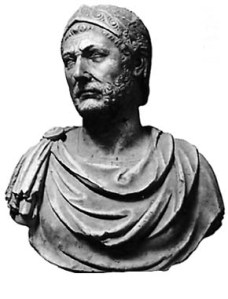
Andreas Kluth, a correspondent for The Economist, presents a fascinating new way to think about winning and losing, and draws powerful life lessons from the story of one of the ancient world’s most famous and enduring figures in HANNIBAL AND ME: What History’s Greatest Military Strategist Can Teach Us About Success and Failure (Riverhead Books; On sale January 5, 2012; ISBN: 978-1-59448-812-2).
Hannibal’s story is one of action, suspense, and romance. After crossing the ice-bound Alps with 50,000 men and 30 elephants, Hannibal decimated Rome’s armies in a series of brilliant battles and seemed poised to dethrone the world’s leading power. Yet at the heart of Hannibal’s tale lies a great mystery. How was it possible, Kluth asks, that this apparently invincible hero ultimately lost everything and, trapped by his enemies, committed suicide?
Kluth plumbs the mystery of this tragic reversal of fortune, providing readers with thought-provoking and useful insights about the seeds of success and failure from the lives of Hannibal and other notable people from the past and present.
A key part of Kluth’s explanation comes from a poem by Rudyard Kipling, which says to “meet with triumph and disaster and treat those two impostors just the same.” Using Hannibal as his central example, Kluth shines a light on each aspect of the lifelong journey that we take with these “impostors,” which we often mistake for one another. He explores youth, when parents influence how we view success and failure; young adulthood, when we pursue our dreams, when we dare, win, or lose; middle age, when we need to reexamine our dreams and identities and our successes and failures; and old age, when success and failure take on altogether different meanings.
As Kluth investigated the paradox of the great general’s life, he discovered an important, and lesser known, piece of Hannibal’s story: two Roman leaders emerged who were his major opponents. Fabius was the cautious elder statesman who enabled the Romans to accept the disaster that had befallen them, to overcome their paralyzing fear of Hannibal, and to wait him out for fourteen long years until they could determine how to fight him effectively. Scipio was the dashing young military genius who studied Hannibal from afar with the appreciative mind of a disciple, felt strangely liberated by Hannibal’s crushing of the Roman army, and ultimately turned it into a dazzling triumph. Taken together, the stories of these men provide valuable lessons about success and failure.
Throughout Hannibal’s narrative, Kluth interweaves the stories of other famous figures, from Pablo Picasso to Tiger Woods to Carl Jung to Steve Jobs to Cleopatra. To help readers draw lessons from the lives of his historical subjects, Kluth presents nine overarching principles that have served men and women well since ancient times:
- Stay balanced when others lose their balance. Outnumbered by the Romans, Hannibal knew that the most immediate kind of success—winning—is not about being stronger than others but about being more balanced and calm, and then letting opponents defeat themselves.
- Never confuse means with ends, tactics with strategy. Hannibal’s most subtle lessons teach us how to think simultaneously large and small so that we can align life tactics with life strategy.
- Have “young” ideas when you’re young and when you’re old. For many people, freshness wilts with age, as it did for Hannibal, Picasso, and Einstein. But it is possible to stay or become fresh in later years, as Carl Jung did after a major crisis led to his greatest successes.
- Start maintaining an “old” self-discipline even while you’re young. To avoid the loss of self-control that young heroes like Meriwether Lewis and Tiger Woods experienced, seek the company and counsel of older mentors, study those who came before you, and take the long view of your success.
- When disaster strikes, try to do nothing at first until you see that the situation has changed and renewed action makes sense. When that occurs, you may, like Scipio, feel a paradoxical and energizing sense of liberation that leads to new heights of achievement.
- Part of success is adjusting your idea of what it is. Over the course of a life, success and failure will mean different things at different times, and it may become necessary to update, refine, or even scrap old definitions.
- See the best in people but protect yourself against the worst in them. Both Hannibal and Scipio were noble personalities who never felt personal animosity toward one another and generally saw the best in others, but each was harassed and damaged by petty and vindictive personalities, whose threat they did not adequately guard against.
- Success means becoming a mensch—a whole, integrated, self-actualizing human being. People who do so, like Eleanor Roosevelt, are the most likely to transcend conventional success and failure by achieving a separate peace with themselves and their world.
- Do your duty with equanimity—the fear of failure will seem less overwhelming and the yearning for success less consuming. You will know it is your duty not by how large or small it is, but by perceiving it to be bigger than you, and beyond you.
Kluth’s unifying insight in HANNIBAL AND ME is that triumph and disaster, success and failure, are not necessarily what they seem—whether in the lives of the great figures of history or in the lives of ordinary people. Thus they show up in their disguises, the ups and downs of life, the turns of good and bad fortune, the whims of the goddess the Romans called Fortuna. “Perhaps they disguise themselves,” Kluth writes, “to bring something out of us and that something is character, our true self, who we really are. This book is about those moments of impact, when triumph or disaster strikes, and about the aftermath, when the shock fades and lives change forever and character reveals itself.”
ABOUT THE AUTHOR
Andreas Kluth has been writing for The Economist since 1997. He is currently the magazine’s U.S. West Coast correspondent, covering politics, society, and the economy in California and the western states. A graduate of Williams College and the London School of Economics, he is a dual citizen of the United States and Germany. He lives in Los Angeles with his family. HANNIBAL AND ME is his first book. His website is http://www.AndreasKluth.org.
HANNIBAL AND ME RIVERHEAD BOOKS ISBN 9781594488122 ON SALE 1/5/12 ISBN: 978-1-59448-812-2 $26.95





 )
)











 Hannibal and Me: life lessons from history