Well, this is frustrating, but it does happen when you write a book. Sometimes you go down one path in your research before discovering that it’s a dead end.
Then you have a choice: You can somehow finagle it into your book and hope that it works. Journalists do that a lot, because they don’t like admitting (to themselves) that they wasted time searching in the wrong place.
Or you cut your losses, say ‘Oh well’, and keep searching for the perfect and sublime.
That’s what I just decided to do, after much agonizing. As you know from several previous posts, I was reading into the life of Casanova as one of my characters for a particular chapter. He led a fascinating life, but it just doesn’t work in my specific context, at least not perfectly.
I considered replacing him with Mata Hari. (In general, I want more female lives in the book.) Also not a perfect fit.
Now I’m onto Cleopatra.
Con: She’s an “ancient”, as are the protagonists in the book (Hannibal, Fabius and Scipio). So there may be too much of that.
Pro: People love her, she’s fascinating, she’s female, and…. she fits!!!
If you’re trying to figure out what these people have in common and why I need one of them in my book, I’ve dropped a veiled hint here. Feel free to guess.
By coincidence, I came across a passage in Giacomo Casanova’s memoirs that seems to sum up perfectly the mystery surrounding a writer’s voice that Cheri and I talked about yesterday.
Casanova, a Venetian, was studying French and visiting a teacher three times a week for an entire year. Once, he composed some poetry and showed it to his teacher.
Teacher: Your thought is noble and very poetic; your language is flawless; your verses are good and quite correctly measured; and yet in spite of all that, your octave is bad.
Casanova: How so?
Teacher: I haven’t any idea. What’s lacking is that certain something. Imagine seeing a man whom you find handsome, well-built, pleasing, full of intelligence and wit: in a word, perfect in your severest judgment. A woman arrives, gives the man a look and after considering him well, tells you, as she leaves, that she doesn’t find him at all attractive. ‘But Madame,’ you say, ‘tell me what you don’t like about him.’ ‘I haven’t the vaguest idea,’ she says. You return to this man, look at him more carefully, and you finally realize that he’s a castrato. ‘Ah,’ you say, ‘now I see why that woman didn’t find him to her liking.’ (page 169 here)
Fortunately for Casanova, he discovered that in his primary field of endeavor in life, which was not writing, he had rather enough of that certain something.
A follow-up to my my post on why truth is in stories: Many of you know about this fascinating theory that there really is only one story, which we tell one another again and again in infinitely many variations.
This is the so-called Monomyth, which I prefer to call the Ur-Story.
To simplify his idea, it is that the same fundamental plot and character types and experiential vocabulary underlie all major myths and movies and novels and, well, stories. From Odysseus to Jesus and the Buddha, from Navajo stories to Chinese ones, from ancient tales to modern ones.
An archetypal hero of some sort receives a call to adventure, often refuses the call before accepting it, sets out on a quest, crosses various thresholds, overcomes adversity and trials, encounters a woman as temptress, atones with his father, obtains a boon to society and attempts to return and bring it back. And so forth.
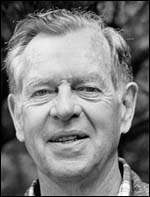
Carl Jung
Campbell was influenced by James Joyce, but the bigger credit, in my opinion, goes to Carl Jung. It was he who came up with the concept of archetypes (which I use in my book). The Hero, the Child, the Great Mother, the Mentor, the Wise Old Man, and so forth.
All this may strike you as odd. Aren’t there infinitely many stories, one for each person? Well, no. There are infinitely many variations and twists. But one fundamentally stable storyline.
This idea has wormed its way into conventional wisdom now. I was chatting about my book with my friend Evan Baily, a teller of children’s stories in film. Evan said that story is always about character, and how pressure is brought to bear down on him until he breaks down or reveals himself. Evan pointed me to Robert McKee’s seminars on story-telling, famous in Hollywood and beyond. Ultimately, this is all about the Ur-Story.
What’s most wonderful about all this is that we never get tired of hearing the Ur-Story. Telling and hearing it is about being human. And we all get to tell our variation of it. Which is why I’m writing a book.
Cheri Block Sabraw, a writing teacher, has an amusing post on her students’ struggle to find their voices as auteurs. Voice, she says, is a “fingerprint, a signature, unique to each writer”. The trouble is that you’re born with a fingerprint, but you have to search hard to find your voice.
The Buddhist insight for her students is this: We’re all in the same boat. Amy Tan is. I certainly am. All of us are, even and especially those who write in the first person, hoping that this automatically takes care of it, which it does not.
Folks, this is an important book. Notice I did not say “riveting” or “thrilling” or “entertaining”. It’s short and academic, not for the beach. But let me say it again: It’s important.
Galenson has looked into the life cycles of creative types. And he has found something. Gaze at this table for a while and try to figure out why these artists are split into two columns:
Painters
Picasso
Cézanne
Munch
Pissaro
Braque
Degas
Derain
Kandinsky
Lichtenstein
Pollock
Rauschenberg
de Kooning
Warhol
Rothko
Poets
Eliot
Frost
Pound
Lowell
Cummings
Stevens
Authors
Fitzgerald
Dickens
Hemingway
Twain
Joyce
Woolf
Melville
James
On the left are what Galenson calls “conceptual” types. They are the “young geniuses”.
They tend to succeed early in life, in their twenties or thirties, with huge breakthroughs of the imagination.
They have a big idea, then execute it boldly.
Their youth and inexperience, rather than hurting them, helps them because they don’t let the complexity of life experience confuse them.
They often cannot follow up later in life with more success.
On the right are “experimental” types, the “old masters”.
They tend to succeed late in life and gradually build toward a legacy.
They don’t have one big idea, but try things out, refine their craft, work hard, learn and discover.
They get better with age and experience, because they incorporate the complexity of life into their art.
They often succeed right up to the end.
By now, you will have figured out how this plays into my book. For some of the young geniuses, early success is an impostor, as Kipling would say, while for some of the old masters, early failure is an impostor.
Voltaire and Frederick the Great were friends and conversed in French, as all European aristocrats did at the time. And they were witty.
One day, Frederick invited Voltaire to come join him at his castle, Sanssouci, in Potsdam, by writing the following note:
_p__ à _ci__
venez sans
Voltaire did not miss a beat and replied with his own note:
G a
And they both began to look forward to their next meeting!
Solution:
Voltaire immediately understood Frederick’s note to mean “venez souper à Sanssouci“–ie, come dine at Sanssouci. The word venez is “sous” (under) the letter p. The word sans is “sous” the word ci.
So he replied by saying J’ai grand appétit: Capital G = “Gé grand”; lower-case a = “a petit”.
What a bizarre article in the New York Times about an alleged crisis of irony, to be blamed in large part on Obama.
As you may recall from my previous thoughts on irony, I’ve never been tempted to consider irony thriving in American life to begin with. But now to mourn its decline because of an outbreak of naive and gushing earnestness about the prospects of imminent world-saving by the new savior?
I briefly suspected that the article was being retro-ironic when it proposed to prove the irony crisis by counting the appearances of the word irony in newspapers, before, several laborious paragraphs later, conceding that this was just plain silly.
Now I suspect that it comes back to that widespread American confusion over what irony is (not). Towards the end of the article, somebody finally attempts to define irony as “the incongruity between what’s expected and what occurs” which “makes us smile at the distance.” How could that be in decline?
Last time, I defined irony as “the non-aggressive savoring of contradictions in life and people (others and yourself) and of turns of phrase that are slightly and adroitly off-key and thus meaningfully surprising. Irony is not merely saying the opposite of what you mean.”
So irony is worlds apart from:
Sarcasm: This really is simply saying the opposite of what you mean. Hence: the lowest form of humor.
Wit: quick, sharp and probably biting associations between dissimilar things.
Humor: an ability find things funny.
Satire: the art of ridiculing somebody in power (possibly using irony, sarcasm, wit or humor as weapons).
My hunch: Irony is alive and well, inherently in situations and naturally in Britons. The rest of us can keep practicing. 😉
This question comes up in nearly every conversation about The Economist. Why don’t we have bylines? And will we ever change? It is one of those quaint eccentricities about us that people either love or hate, or love to hate, but at least they know about it.
(At the bottom of this post you get to vote whether we should have bylines. But just to be clear: this is meant as a bit of good fun. Nobody, as far as I know, is actually considering changing the policy.)
First, just a few examples of the way that this topic comes up. A couple of years ago, I introduced our editor-in-chief, John Micklethwait, and Orville Schell, then dean of Berkeley’s journalism school (where I was lecturing) for this conversation. (You can see Berkeley’s chancellor introducing me, then me introducing John and Orville, and then John and Orville chatting.)
At about minute 24 Orville gets the inevitable question from the audience. Why no bylines? And, Orville teases John, “I understand that there is a good bit of grousing” about it among the journalists. “They feel they don’t exist in a certain sense.”
John gives what I think is the best answer: “We haven’t done anything. We’ve kept the same, and everyone else has changed.” In other words, The Economist is 160+ years old, and back then anonymity was the norm. Then the industry went on a slightly disturbing path toward writer celebrity, and we simply chose not to participate.
But, John goes on, it is more than mere inertia: “Why do we keep it? Firstly, because it’s, I suppose, a brand. But it’s more than a marketing gimmick.” It also, he says, fits our method of collaborative writing. (This, I must say, strikes me as the weaker part of the answer, because most of my writing in the past eleven years has in fact been very individual, very “authorial”, and barely edited. And journalists at other magazines and newspapers also occasionally collaborate in their writing, despite having bylines.)
Orville and John then kid around, using, ahem, me as the guinea pig for their humor.
Another view is this one by Brad DeLong, an economist also at Berkeley. Greg Ip, a blogger and writer for the Wall Street Journal, had just quit both his blog and the Journal (and thus his personal brand) to join us at The Economist in chaste anonymity: “How could Greg Ip leave the WSJ for The Economist? I mean, he’s a brand – and the Economist doesn’t do brands, except its own. (And that it does exceedingly well.)” His commenters then vent on what they think about our policy.
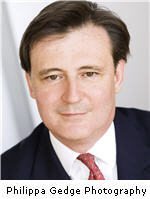
Bill Emmott
Yet another instance: HereBill Emmott, John’s predecessor as editor (and the man who hired me), tells an interviewer that
Journalists are egomaniacs and protective about their own territory and their own work, and not having bylines mitigates against that somewhat. With bylines, you worry more about your own story. With no bylines, you worry more about the whole paper because your reputation depends on the reputation of the whole paper.
So I thought I might chip in.
What our policy is (and is not)
First, our vaunted anonymity has never been absolute. Yes, the vast majority of articles in The Economist have no byline. But there are exceptions.
1) Special Reports
These are huge essays of about 13,000 words around a specific topic, such as a country or an industry. In effect, they are small books. Whereas most other newspapers and magazines throw a team of reporters on these kinds of special sections, The Economist gives each report to one author. This is a great idea. That way, you get coherent, well-structured and individualistic reporting in great depth.
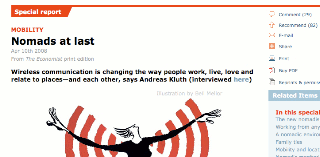
One thing that annoys me is that most readers don’t realize this. They think that the chapters in a Special Report are written by different people. And we don’t really help them with our layout. But we do hide a byline in each Special Report. Not doing so would simply be too cruel. A Special Report is its author’s baby.
So the author’s name shows up in what we call the “rubric” of the opening chapter. It looks like this:
2) The World in 200x.
Another exception concerns our sister publication, The World In [Year]. It’s an annual magazine, and the new one, The World in 2009, just came out. Here is my piece in it. As you see, it has my name at the top and at the bottom.
3) Podcasts and video
This is an interesting category of exceptions, because it is new. We have had audio interviews with the authors of Special Reports for a while, but in 2006, when I wrote this Special Report about the new media, we fittingly experimented with podcasts. Somewhat to our surprise, they became hugely popular, hitting the iTunes charts with almost no effort on our part.
The thing about audio and video, of course, is that these media are extremely intimate and extremely personal. There is absolutely nothing anonymous about them. You hear the author’s “voice,” literally. This did not go unnoted at the time. The door of anonymity was opened ajar by another inch.
4) Reader letters
When you send a letter to the editor, it gets forwarded to the author of the article in question. And I have, I believe, answered every single letter by email for the past eleven years. Like many of my colleagues, I sign my replies, so anybody who wishes to know who wrote a particular piece can simply write a letter and wait.
Ironically, the new-media revolution has had a contrary effect on these exchanges. A while ago we started allowing people to comment on our web site directly underneath our stories. There are still a lot of letters to the editor, but a lot of this traffic now seems to get diverted to the comments sections. And I do not bother to answer those.
5) Extracurricular activities
As correspondents, we have always moderated panels at conferences and such. Each time we do, we are introduced by name and affiliation, and then the audience hears us talk. So they meet us.
Nowadays, several of us have also started personal blogs. Mine is the most recent example. Edward Lucas has for years had his blog about Eastern Europe and his book. Gideon Lichfield wrote a blog about Israel and Palestine while he was posted in the Middle East. Tom Standage has his site, as do all of us who write books.
My views
I won’t tell you. But I will say this: When I joined The Economist in 1997, I loved the anonymity. I had no name, no personal brand, and I felt that from my first day my articles had the same chance of being on the cover as anybody else’s. I expend as much effort on a tiny “box” as on a huge Special Report.
Admittedly, during the past eleven years, there have been moments when I wished that my cumulative work might have given me a personal brand. Writers at the New Yorker eventually become known as writers. We don’t. Writing a book is one way out of that dilemma. That is not why I’m writing a book. Nonetheless, it is quite remarkable how many of us do.
The view that counts
Ultimately, what the writers think ought not to be the decisive criterion. Duh. It is the readers who matter. But this is where it gets really interesting. Anecdotally, I have found that most readers tell me that they would prefer to know the writer’s name. But I wonder whether they actually do. It is also possible that something might get lost along the way. Something je-ne-sais-quoi. There is only one way of finding out, but the problem is that this experiment would be hard to reverse. So, what do readers actually want?
Joe Queenan in the New York Times has an amusing but stirring piece on ridiculously over-the-top book reviews–in short, most reviews:
The least-discussed subject in the world of belles-lettres: book reviews that any author worth his salt knows are unjustifiably enthusiastic. …
the vast majority of book reviews are favorable, even though the vast majority of books deserve little praise. Authors know that even if one reviewer hates a book, the next 10 will roll over like pooches and insist it’s not only incandescent but luminous, too. Reviewers tend to err on the side of caution, fearing reprisals down the road. …
such reviews are unfair to the reader, who may be hornswoggled into thinking that Philip Marlowe really would tip his hat at the author, or that the author has gone toe-to-toe with Joseph Conrad and given the ornery old cuss a thrashing. Books are described as being “compulsively readable,” when they are merely “O.K.”; “jaw-droppingly good,” when they are actually “not bad”; “impossible to put down,” when they are really “no worse than the last three.”
I found myself smirking and cringing all the way through his essay, depending on which of my various “book” hats I was wearing in a given sentence.
The first thing to remember about a book review is that there is not only an author somewhere hoping for a good review but also a reviewer hoping to be told by his editor that he has written a good piece (ie, the review). And how boring is a review full of (to take examples from Queenan’s paragraph above) “O.K.” and “not bad” and “no worse than the last three.” Realistically, the editor would spike the entire piece.
So, the reviewer reverts to standard journalistic methodology: “Simplify and exaggerate.” (Before you foam with anger at all journalists, consider the alternative: “Complicate and obfuscate.” Right. Thought so.)
So now the review being written becomes “stronger”. The book is really good or really bad. Next question: If I make it really bad, can the author or anybody allied to him take revenge, now or later? Maybe? Well, perhaps I’m better off making it really good. But not all the time, because then I would lose credibility. Maybe make it really bad (to use Queenan’s ratio) 1 out of 11 times?
At The Economist we try to get around this in two ways:
1) We don’t have bylines, which protects the writer to a large extent. (Authors could in theory find out who trashed their book, but in practice are too awkward and self-conscious to inquire.)
2) We don’t allow conflicts of interest, and stopped reviewing books written by staff a few years ago. (I’m amazed that not all newspapers do this!) In those situations, the reviewer can only lose, and the author usually too.
I leave it up to you to decide whether this addresses all the subtleties of human nature.
Hat Nr. 2: Aspiring author
As you have noticed, I’m writing a book. And when the time comes, I am hoping that it will get fair and tough glowing and drooling reviews.
Seriously, I already dread the entire process that apparently comes next. Prostituting myself for blurbs (the moratorium I support is unlikely to come soon enough to be helpful), then again for reviews, then again on Jon Stewart (if I’m lucky).
Hat Nr. 3: Reader
God. It’s really annoying when the review does not, quickly and easily, tell me if this book is worth two weeks of my night time or not. I mean, really.
I just came across this quote from Yeats in Robert Greene‘s The 48 Laws of Power. More specifically, in Law Number 30, which says (page 245):
Make your accomplishments seem effortless. Your actions must seem natural and executed with ease. All the toil and practice that go into them, and also all the clever tricks, must be concealed. When you act, act effortlessly, as if you could do much more. Avoid the temptation of revealing how hard you work–it only raises questions. Teach no one your tricks or they will be used against you.
Greene takes us through a Japanese tea ceremony, through Houdini’s vanishing acts and other artistic/aesthetic feats that would be ruined if the effort were visible.
The best word to describe the ideal is sprezzatura. Italians are better at it than most. It is “the capacity to make the difficult seem easy” and “a certain nonchalance which conceals all artistry and makes whatever one says or does seem uncontrived and effortless.”
It’s why Michelangelo, master of sprezzatura, kept his work-in-progress under wraps and would not allow even the pope to sneak a peek. Would have killed the magic.
Ease = Beauty = Power.
Writers strive for it. I do.
Here, by the way, is a sixteen-minute TED talk on “glamor,” where we discover that they key is…. sprezzatura!
 Now I’m onto Cleopatra.


.png)





 Hannibal and Me: life lessons from history