Skip to content

Posts from the ‘success’ Category

Overlapping lessons: Hannibal and Me & The Big Five

Admittedly, this one might be all Greek to you — or rather all German, because that’s what we were speaking.

Uwe Alschner, who evangelizes the “Big Five for Life” concept in Germany (a guide to more purposeful living), had a great Skype chat with me about Hannibal and Me. (And the book’s not even been translated into German yet.)

Thanks, Uwe!

Green-to-tee Strategy, and other fun

“For smart, talented, and ambitious people, winning is sometimes so easy that it makes true success elusive. That’s because victories, easily obtained, can obscure the ultimate goal.”

That’s a quote out of Hannibal and Me, Chapter 6, which is about life strategy. It’s also how I open my latest “teaser” post in the Harvard Business Review. It segues, as one does, from Hannibal in 216 BC to Carl von Clausewitz to, yes, Tiger Woods. ;)

It’s all about strategy, you see — about thinking backwards, from the green to the tee, no matter what the life situation happens to be. (Thank you to Ryan D., who suggested this angle last time.)

Meanwhile, Doug Desalles and I had a great chat on his cool radio station in Sacramento, Radio Parallax. It’s about a half hour long, but we really go quite deep towards the end.

Talking with Fiammetta about Hannibal & Me

Fiammetta Rocco

Here is an 8-minute podcast of a chat between Fiammetta Rocco, our Books & Arts editor at The Economist, and me, about Hannibal and Me.

We were all over the place in our actual conversation, but our colleague Lucy Rohr did a Herculean job of editing it down to 8 minutes.

Topics covered: Tiger Woods and Eleanor Roosevelt, in particular, plus some Meriwether Lewis and the rest of the gang. ;)

(And if you want an amusing visual of how I tape these interviews with London, go back to this old post.)

Thoughts (not mine) over coffee before 7AM

My wife and I just got a heart-warming email from an old friend (who shall remain anonymous), with just the sort of thoughtful, soulful reaction to my book that I was aiming for when writing it:

Wow. Just read the Salon bit. Had me crying and laughing. (I was reading it over morning coffee before 7 am, when I am prone to be emotional.)

I have to admit, for these several years, I never quite “got” what Andreas was on about with this whole Hannibal thing. And now, in those Salon paragraphs, it has all become so damn clear. Through Andreas telling that individual, personal narrative, seeing it reflected in my own life, and then seeing up, with ever greater reverberations, expanding out to the great truths of all lives.

Been thinking a lot about the narratives of my own life these days. A lover of nature. A scientist. Successful conservationist. [...] Failed Buddhist. Living in the heart of a loving community of friends, even if it is a geographically dispersed community of friends. Me not maintaining that community of friends as much as I used to, as much as I should. Me craving romance, yet terrified of sex, terrified of intimacy. Neurotic, bordering on psychotic.

What are my successes? What are my failures? Has one come at the cost of the other?

Chogyam Trungpa once said something about how our brilliance, in that Buddhist, primal human sense, is the direct result of our neuroses. It is not despite our neuroses that our most beautiful and generous properties come, but because of them. In Kipling’s terms, “brilliance” and “neurosis” are two imposters, to be treated the same…

Hannibal & Me: The excerpt in Salon.com

What a very, very strange experience it is to see an excerpt of my own book on a famous website.

Salon.com has just posted exactly that.

Thank you, Salon!

Genius through observation: Alexander & Bucephalus

The other day, I was reading to my kids from a children’s book about Alexander the Great, which caused much merriment and took much time because, as you would expect, I had to embellish every sentence with the real or the full story.

But honestly, what inadequate storytelling! Here is how that book delivered the famous anecdote about Alexander taming his horse Bucephalus:

There is a story about a black stallion that one day started running wildly through the courtyard. Five trainers chased it but were unable to mount it. All of a sudden the horse stopped short. Not a soul dared to approach except young Alexander, who moved swiftly, mounting and mastering the steed. Henceforth the proud horse belonged to Alexander and was called Bucephalos, which means “The One with the Head of an Ox.”

I had to intervene. So I closed the book and said, “OK, kids, here is what really happened, and it is much more interesting.” (And the next day, I checked my memory against Plutarch, as you can do here.)

The real story, and the lesson

Alexander was only 12 or 13 at the time, and he had quite a tense relationship with his father, a bit as Hannibal and Hamilcar later did, and as most successful sons and fathers do.

In any case, Alexander’s father, Philip, was given a splendid horse. But nobody could tame it, and everybody, including Philip, was making rather a fool of himself.

Alexander, meanwhile, was just watching. Really observing. Because that’s what the adults were not doing. They were too busy being brave to observe the horse.

And so Alexander noticed that the horse was not angry, and was not even fighting against the Macedonian men. No, the horse was afraid and panicking. It was scared of its own shadow.*

So Alexander stepped up and dared his dad to let him try to tame the horse. He looked precocious and arrogant, and the men had a good laugh.

Alexander then took the stallion by its bridle (much more gently than the painting above suggests) and turned him to face into the sun, so that their shadows were now behind them. At this, the stallion calmed down a bit. Alexander then (and I quote from Plutarch now), let

him go forward a little, still keeping the reins in his hands, and stroking him gently when he found him begin to grow eager and fiery, he let fall his upper garment softly, and with one nimble leap securely mounted him, and when he was seated, by little and little drew in the bridle, and curbed him without either striking or spurring him.

Philip and his friends

all burst out into acclamations of applause; and his father shedding tears, it is said, for joy, kissed him as he came down from his horse, and in his transport said, ‘O my son, look thee out a kingdom equal to and worthy of thyself, for Macedonia is too little for thee.’

So, you see, the story is really about Alexander’s finesse and, more, about his genius of observation. (And kids get that! They can handle the real story.)

In this sense, I believe Plutarch chose this anecdote for the same reason he chose the other famous vignette about Alexander: his untying of the Gordian Knot. As I argued in this post, that story, too, was proof of Alexander’s superior powers of observation. In that case, Alexander espied a simple solution to a complex situation.

But we can, as Plutarch would urge us to do, extend this much further. What made Alexander so great?

In his major battles, Alexander was usually the last to arrive at the battlefield. His enemy was already waiting, and had prepared his army for a particular battleplan. Alexander, by arriving late and keeping his mind supple, could observe that situation and infer his enemy’s plan, thereby devising his own, superior, plan on the fly.

In his administration of the conquered lands, from Egypt to Mesopotamia, he again observed the locals and their customs. He observed how they differed from Macedonian and Greek customs. And he observed how the Macedonians and Greeks were reacting to his observation. So Alexander ruled Egypt as a divine Pharaoh, the former Persian Empire as a Persian king, the Greek city states as a Philhellenic “first among equals”, and his own Macedonians as a brother in arms.

The man’s greatness — and the lesson in all these anecdotes — is found in his powers of observation.

Oh, and Bucephalus became Alexander’s beloved charger. When the stallion died from battle wounds (in what is today Pakistan), Alexander named a city after him, Bucephala, and died three years later.

___

* A famous autistic woman, Temple Grandin, has vividly described how cows and other animals, like autistic people, do sometimes get frightened by such things, whether a colored piece of plastic or a moving shadow.

My other posts about Alexander so far:

The story of Cicero, told well

I just devoured Robert Harris’s Imperium, the first book in what will be a trilogy of historical fiction, or fictional biography, about Cicero. I read it in a couple of sittings, hardly able to put it down. It may be the best way to learn about that great man and that fascinating time, a turning point in world history. I’ve just ordered the second book in the trilogy, and I can’t wait for the third to come out.

In terms of themes that show up a lot here on this blog:

  1. Storytelling: Wow. Harris has Cicero’s slave and confidante Tiro tell the story from his point of view, which works well. All the details of Roman life and of the characters (Crassus, Pompey, Caesar etc etc) come to life.
  2. The “impostors triumph and disaster”: Cicero embodies them (though not quite as perfectly as Hannibal and Scipio do, which is why I myself chose them to tell my own story. ;) )
  3. The tension between mobs and elites, republican and democratic power sharing, what ought to be and what is.

Among other things.

In any case, if you like The Hannibal Blog, you’re likely to like not only Hannibal and Me in January but also Imperium right now.

The Alexandrian–nay, Gaussian–Solution

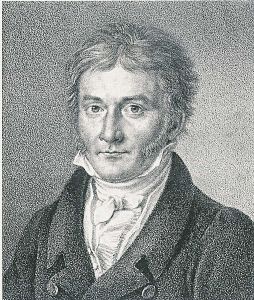
Carl Friedrich Gauss

A year ago, I wrote about “the Alexandrian solution” to the Gordian Knot. I saw this as a metaphor for all instances in which genius lies in espying the simplicity hiding in a complex situation.

It just occurred to me that Carl Friedrich Gauss was, at the age of 10, just such an Alexander the Great. (Alexander was young, too, of course. In espying simplicity, it seems to help to be young — ie, intellectually daring, unspoiled by the complexity of life, et cetera.)

In about 1787, the young Carl Friedrich sat in class when the teacher told the kids to find the sum of the numbers 1 through 100. In other words:

1 + 2 + 3 … + 100 = ?

Think of this as the Gordian Knot. The teacher assumed that the kids would be busy for a long time, practicing their addition skills. Gauss reacted just as Alexander would have (I take poetic license):

This is too f***ing boring. There must be a simpler way.

Did Gauss get nervous as the other kids pulled ahead adding numbers, while he was still at 1, searching for simplicity? I don’t know. But he found it:

He realized that the numbers came in pairs:

1 + 100 = 101
2 + 99 = 101
3 + 98 = 101

(and so on until:)

50 + 51 = 101

So the sum of the numbers is simply (simply!)

50 x 101, or 5,050

You might, if you’re a regular on The Hannibal Blog, be guessing that I’m much less interested in sums of numbers than in, shall we say, Gordian Knots and Alexandrian Solutions in general — meaning in other, preferably surprising, walks of life.

If you can think of any instances in which daring simplicity blasted through mind-numbing complexity, drop me a line.

What Mendel tells us about thinking

Find quietude. Observe whatever is around you. If it seems banal, discover it to be fascinating and mysterious. Ignore distractions, otherwise known as ‘everybody else’. Ask simple questions that puzzle you. Be patient in pondering them.

That is how I imagine Gregor Mendel might answer us today if we asked him: How  – I mean how! — did you achieve your stunning intellectual breakthroughs, on which we today base our understanding of biology?

Put differently: Let’s pretend that Gregor Mendel were alive today instead of in the 19th century, and that he were not an Augustinian monk in the former Austrian Empire but a wired and connected, über-productive modern man with an iPhone, a Twitter account, cable television, a job with bosses who email him on the weekend, etc etc.

Would this modern Mendel be able to achieve his own breakthrough in those circumstances?

So far in my rather long-running thread about the greatest thinkers in history, I’ve featured mostly philosophers and historians, with the odd scientist and even one yogi. But it occurred to me that Mendel belongs into that pantheon — not only for his thought but also for his thinking. I think he offers us a timely life-style lesson, an insight that fits the Zeitgeist of our hectic age.

So: First, a brief recap of his breakthrough. Then my interpretation how his life style and thought process made that breakthrough possible (and why ours might make such breakthroughs harder).

1) Mendelian genetics

Mendel was an Augustinian monk in what used to the Austrian Empire (and what is now the Czech Republic). He had an open and inquisitive mind and, as a monk, wasn’t all that busy, so he had plenty of spare time. He liked to breed bees. Then he began breeding peas. That’s right. Peas.

Peas intrigued him. (Would they intrigue you? What else does not intrigue you?) He found peas interesting because they had flowers that were either white or purple and never anything else. (Would you find that interesting?)

Mendel contemplated what peas could therefore teach him about how parents pass on traits to their offspring, ie what we would call genetics.

At the time, conventional wisdom held that the traits of parents are somehow mixed in their children. If parents were paint buckets, say, then a yellow dad and a blue mom would make a green baby bucket, and so on. (It’s interesting that nobody spotted how implausible this was: After several generations every bucket, ie every living thing, would have to end up mud-brown. Every creature would look the same. Instead, nature is constantly getting more colorfol, more diverse, with more and stranger new species.)

So Mendel, in the late 1850s and early 1860s, started playing with his peas. Pea plants fertilize themselves, so Mendel cut off the stamens of some so that they could no longer do that. Then he used a little brush and fertilized the castrated pea plant with pollen from some other pea plant. He thereby had total control over who was dad and who was mom.

He was now able to cross-breed the peas with purple flowers and the peas with white flowers. So he did. Then he waited.

Surprise #1:

Already in the next generation, Mendel could rule out the prevailing “paint-bucket-mixing” theory. No baby pea plants had lighter purple (or striped or dotted) flowers. Instead they all had purple flowers.

So he took those new purple-flowered pea plants and cross-bred them again. And again, he waited.

Surprise #2:

In the next generation, most pea plants again had purple flowers. But some now had white flowers. Wow! How did that happen?

Moreover, the ratio in this generation between purple and white flowers was exactly 3:1. Hmm.

Mendel kept doing these experiments, and kept thinking, and then inferred the simple but shocking conclusion:

  1. Each parent had to be contributing its version of a given trait (white vs purple, say) to the offspring.
  2. Each baby thus had to have both versions of every trait, but showed in its own appearance only one version, which had to be dominant.
  3. The other (“recessive“) version, however, did not go away, and when these pea plants had sex again, they shuffled the two versions and randomly passed one on to their offspring (with the other coming from the other parent), so that their baby again had two versions.

This looks as follows:

In the second generation, every pea plant has a purple (red, in this picture) and a white version, one from each parent, but since the purple is dominant, every flower looks purple.

In the next generation,

  • one fourth will have a purple from dad and a purple from mom (and look purple),
  • one fourth will have a purple from dad and a white from mom (and still look purple),
  • one fourth will have a white from dad and a purple from mom (and still look purple), and
  • one fourth will have a white from dad and a white from mom (and look white).

The rest, you might say, is history. With all our amazing breakthroughs in biology in the 20th century, we merely elaborated on his insights, in the process explaining the mechanism of evolution (Darwin, coming up with that idea at the same exact time, had no knowledge of Mendel’s breakthrough.)

In today’s language, Mendel

  • showed the difference between genotype and phenotype. (Your genotype might be white/purple, for example, but your phenotype would be purple.)
  • understood the basic idea of meiosis (the division of a cell into two haploid gametes — a sperm cell or egg with half of the mother cell’s chromosomes, randomly chosen),
  • described how two gametes then merge sexually to form a diploid zygote (ie, a cell with all chromosome paired up again, one member of each pair coming from each parent),
  • explained how some versions of the gene pairs, called alleles (such as purple or white), are expressed and some not, even as those not expressed can re-emerge in the phenotype in the next generation.

DNA, RNA, ribosomes and all that were merely detail.

2) How was it possible?

Let’s make ourselves aware, first, of what it must have been like for Mendel during these years (this is purely conjecture):

  • He got up.
  • He prayed.
  • Had breakfast.
  • Went into the garden.
  • Looked at the pea flowers for a long time.
  • Watered them.
  • Took a break.
  • Watched the peas some more.
  • Thought about them.
  • Dozed off for a nap.
  • Woke up and had an idea, still inchoate in his mind.
  • Went to bed.
  • Thought about it some more….

You get the idea. Not exactly stressful. Few interruptions. Lots of waiting (how long is one generation of peas anyway?).

He was, we would say, switched off. He was not multi-tasking, he did not have adrenaline coursing through his veins as he answered a text message while watching a video stream while writing a Powerpoint …

Compare his time with his pea plants to Einstein‘s time at the Bern patent office, where he was utterly underemployed and could easily have been bored, but instead did thought experiments and had his “miracle year”.

Or compare it to Isaac Newton‘s time after had to leave the action of Cambridge (because plague broke out) and returned to the isolation of his family farm with nothing to do except watch apples drop from trees….

Or compare it to the time when Gautama Siddhartha (aka the Buddha) withdrew from all action and sat, just sat, under a tree, with the birds pooping on his head until there was a pile of guano on his hair, with his flesh melting from his bones because he was too deep in concentration to eat…..

Lesson #1:

Good stuff can happen during downtime (even if you didn’t volunteer for it).

Corollary: Can good stuff happen during uptime? You may have to take time out to be creative.

Lesson #2:

Be amazed.

Corollary: Don’t assume the things and people in your daily life are boring.

Lesson #3:

Turn the devices off.

Corollary: Distraction not only kills people, it also kills thought.

Lesson #4:

Be patient.

Corollary: You can’t breed peas in internet time. Nor novels, scripts, songs, paintings…

Lesson #5:

Look for the simple.

Corollary: The more bewildering the complexity observed, the simpler the solution.

(See also: Gordian knot.)

Lesson #6:

It doesn’t have to be complete to be original.

Corollary: It took us a century to explain the process Mendel grasped; an idea is good even if it “merely” starts something.

(See also: Incompleteness theorem. Mr Crotchety’s favorite — need I say more?)

Lesson #7:

Don’t expect the world to get it right away.

Corollary: If it took us a century to understand Mendel’s breakthrough, we might take a while even for yours. ;)

Steve Jobs as seen through his nemesis


(Credit: Matt Yohe)


As some of you know, I am fascinated by the complex character of Steve Jobs, who is one of the people featured in my forthcoming book (though not at all in his usual context).

So I enjoyed reading this interview with John Sculley, Jobs’ erstwhile nemesis (when Sculley pushed Jobs out of Apple in the 80s).

1)

The interview may be too geeky for some of you, but I like it, first, because of the noble tone in which Sculley speaks. He is not bitter; he does no underhand sniping; he does not furtively try to redeem himself or get even. Sculley simply moves on from what was an extremely painful episode in the two men’s lives to evaluate — and bow to — the genius of his enemy.

(Steve Jobs, from everything I hear, has never got himself to take that same step.)

Sculley speaks, in other words, as Hannibal would speak about Scipio, or Scipio about Hannibal. Great men and women are ennobled by their enemies. Kudos.

2)

Second, I like the interview for this glimpse into the nature of Jobs’ genius. Sculley:

What makes Steve’s methodology different from everyone else’s is that he always believed the most important decisions you make are not the things you do – but the things that you decide not to do. He’s a minimalist… He is constantly reducing things to their simplest level. It’s not simplistic. It’s simplified. Steve is a systems designer. He simplifies complexity.

Simplicity is, of course, a big thread here on The Hannibal Blog. It is interesting that Jobs also admires Einstein, as I do (he is another main character in my book), probably because Einstein had that same yearning for elegance and simplicity. As Sculley recalls:

I remember going into Steve’s house and he had almost no furniture in it. He just had a picture of Einstein, whom he admired greatly, and he had a Tiffany lamp and a chair and a bed. He just didn’t believe in having lots of things around but he was incredibly careful in what he selected.

(Compare this to Feng Shui.)

3)

Third, I like it for what I interpret as Steve Jobs’ instinctive nod to the Dunbar hypothesis.

Named after the anthropologist who came up with it, the thesis says that primates can form effective social groups only to the extent that their neocortex can compute the interactions among the group. The cognitive limit for human groups seems to be about 150. (I once worked with Facebook to find out whether technology might change that. Not hugely, it appears.)

Anyway, listen to Sculley:

Steve had a rule that there could never be more than one hundred people on the Mac team. So if you wanted to add someone you had to take someone out. And the thinking was a typical Steve Jobs observation: “I can’t remember more than a hundred first names so I only want to be around people that I know personally. So if it gets bigger than a hundred people, it will force us to go to a different organization structure where I can’t work that way.”

Follow

Get every new post delivered to your Inbox.

Join 411 other followers