Matron saint of storytellers: Scheherazade

So let’s take our journey into and through the world(s) of story-telling.

In the great comments under this post, you guys convinced me that we have to go about it differently than we did in our search for the greatest thinker (where I staged a mock contest, in which Patanjali narrowly edged out Darwin, after the early ejection of Hegel.) When it comes to story-telling, there can’t be a winner. But that doesn’t mean that we can’t discover a whole lot of things about story-telling!

So let’s turn things upside down and start by declaring, not a winner, but a matron saint of story-tellers:

Scheherazade

Scheherazade must have been rather gifted at story-telling because that is how she saved her life!

A Persian king was livid at women everywhere (and who isn’t?) because his wife had cheated on him. He had her executed and then went one step further, to collective punishment. Every night he had himself one virgin, whom he then executed the next morning. This was not sustainable because he ran out of virgins. The vizier, who was in charge of managing supply issues, got nervous because now it was the turn of his own daughter: Scheherazade.

Scheherazade did not seem very concerned. She joined the king for her, ahem, night and then …. told him a story. Only, she left him hanging in the morning. How did the story end? The king wanted to know. So he didn’t kill her.

The same thing happened the next night. And the next night. Indeed for a total of (wait for it) One Thousand and One Nights. By that point, the king (in some versions he and Scheherazade are now papa and mama) pardoned Scheherazade permanently. The story had won.

The inevitability of story

So Scheherazade is exactly the metaphor that suits me in this post. Which is: story is life. Story is human. Story is inevitable. We cannot help ourselves. All we do is to tell stories.

A while ago I quoted Isabel Allende saying: “what’s truer than truth? Answer: The Story.” In the same post, I also quoted Dan McAdams, a psychologist who believes observes that even our identities are stories.

So today, let me just anoint Scheherazade and plant that thought. For the rest of the series, let’s all figure out what stories are, and why some are good and others not.

Bookmark and Share

And the manuscript is… off!

last-chapter-sent

The bits are zipping through the internet to Riverhead, my publisher, as I write this. That feels good.

I can’t wait to get my editor’s reactions.

So it took me one year (of writing part-time, since I never took a book leave) from the proposal to the first draft, and another four months to finish this second draft. I went about it rather as Khaled Hosseini does: one run through to have a working blueprint, then another to add the beauty.

Allow me to indulge for one moment in a short meditation on success. The book is about success and failure and how each constantly wants to turn into the other, so this is appropriate.

When I started writing, I defined for myself two layers of success: In the first layer, I would simply write exactly the book that had conceived in my head, a book that I would be proud of. I’m really happy to say that this is how it turned out. So I’ve succeeded.

The second layer is conventional success–ie, good reviews and sales. That, obviously, is something over which I have absolutely no control once I bid my manuscript adieu. So I have decided, for the time being, not to worry about it.

Zen Anecdote

Which reminds me of a story that a professor of Japanese history once told me in college, long ago. He was visiting a Japanese artist and walking around the artist’s house, admiring the paintings. The professor stopped before one and said ‘Why, this one is just stunning!’

The Japanese artist said ‘Thank You’, then took the painting off the wall and tore it to shreds.

Had this guy gone nuts? the professor asked rhetorically years later when he told me about this. No! For this artist, Zen-inspired, painting was something that he did for its own sake. He was not being rude or weird by ripping it up. He was simply showing, or reminding himself, that the praise of others was not necessary, that the painting had already brought him all the joy it could, and that he was now detached from it.

Don’t get ideas. Nobody gets to rip up my manuscript. But I like the story.

Bookmark and Share

Oh evolve!

Apropos of our recent discussions about Charles Darwin, I find this on our site.

If I may say so, this looks like sliding scale of [insert bias]. The US is down there with Turkey. “Old Europe” clustered at the top.

Bookmark and Share

My mentors

Aristotle_tutoring_alexander_by_j_l_g_ferris_1895

Mentor was the wise old man whom Odysseus left behind to look after his son Telemachus while Odysseus went off to fight the Trojan War. Odysseus, of course, would be gone for twenty years in total, so Mentor played an important role in pointing Telemachus in the right direction.

Carl Jung later believed that Mentor was one of the archetypes in our collective unconscious, a character that appears in our dreams and in any good story. Think Obi-Wan Kenobi for Luke Skywalker.

Socrates mentored Plato; Plato mentored (well, at least taught) Aristotle; Aristotle mentored Alexander the Great (pictured above).

So I’ve been thinking about Mentors as I feel myself into the characters in my book. What roles does a Mentor have to play? What makes a bad mentor? And, of course, who were my mentors?

Good and bad mentors

Contrary to the Hollywood image, I don’t think that a good mentor necessarily needs to spend a lot of time with a young person. Instead, he or she is just somebody who shows up at crucial moments, takes a genuine and benevolent interest, and gives a fillip or advice where it is needed.

I am reminded of how David Williams, the first Westerner to study Yoga with Pattabhi Jois (in the 1970s!), once explained to me (as we were practicing yoga in David’s garage in Maui, with his Bernese Mountain Dogs running around us) the concept of guru. Gu means darkness in Sanskrit, Ru means light. So a guru is someone who “lights your candle” but then lets you go, indeed sends you off. An older person who passes himself off as a guru but tries to keep control over you, who lingers, is a fake guru.

My three mentors

Speaking only in the context of my writing career, I had three mentors, I believe.

Clive Crook

Clive Crook

1) Clive Crook

I first met Clive when I was twenty-two or so. I was out of work and confused about life and flew to London on a whim to “interview” with The Economist and the FT, even though I don’t recall having set up any actual appointments. I had the flu, and it was raining. I was down and out. Somehow I got into “the Tower”, as we call our 50s-style building in St. James’s Street, and into Clive’s office. He was perhaps economics editor at the time. He sat in a tiny office with stacks of books all around him that I thought would come crashing down on him any minute. To my shock, he didn’t call security but … talked to me.

Nothing immediate came of that, but many years later I was in some god-awful investment bank and fed up. I wanted out, and into journalism. I wrote Clive a letter. To my renewed shock, he remembered me and was now deputy editor. He invited me to sushi. Again, nothing came of it, but he said something might open up. He advised me to get out of that stupid bank and go to a small sweatshop magazine that was known to take young journalists with no experience. I did. Five months later, he took me out to sushi again. Then I joined The Economist. He saw something in me, and that’s why I have my job today.

Marc Levinson

Marc Levinson

2) Marc Levinson

As I said earlier, the job of a guru is not to stick around forever but to let go at the right moment. Once I arrived at The Economist–rather clueless, I should say–Clive stepped back and another editor, Marc Levinson, stepped up as a new mentor. He was very New York in a very British place. He had recently taken over the job of editing the finance section in the magazine, and was controversial. Some people said he was “dumbing the paper down” (he would have said that he was making it comprehensible and unintimidating.) And he was, by the occasionally evasive standards of British toffs, brash.

He certainly put me through the wringer. On Wednesdays, which are our deadline days (London time), I was occasionally close to tears as he made me re-write the piece I had just filed. He minced no words. “This anecdote is flat, take it out!” “You’re not ready to write this piece yet; go out and find something out!”

Over time, three things occurred to me. 1) He was tough in my face but supported me like a rock behind my back. This is the inversion of normal. People like that are a certain kind of nobility. Over time, I saw actual tenderness in his toughness. 2) While he often re-wrote my copy, he also often forced me to re-write my own. Again and again. He could have saved himself time by just doing it himself. He didn’t want to. He wanted me to learn. 3) I got… better!

Marc left The Economist and went home to New York, where he is the author of a fantastic book called The Box. And thus we parted ways. But if Clive discovered my potential, Marc made me fulfill it.

Orville Schell

Orville Schell

3) Orville Schell

Years later again, I arrived in California from Asia. One of the Sinologists I had always heard about in China was Orville Schell, who was now dean of the Journalism School at UC Berkeley. I sent him an email to see whether he might like to meet some time, and, to my surprise, immediately got a message back in which Orville invited me to lunch at the Faculty Club.

Some time after that, he invited me to … teach! This was amusing to me, because I considered (and will always consider) myself a learner. But hey. If Orville Schell asks me to teach a class, who am I to say No? I said Yes.

For two years, I was a teaching fellow at his school. Just as Clive and Marc had no reason to take an interest in me but did, Orville inexplicably included me in all sorts of events. Interesting people were always coming through, and Orville liked to take them to Chez Panisse for dinner. Very often, he invited me to come along. (My greatest regret is that the night that he took David Halberstam to Chez Panisse and was looking for me to invite me along, I was somehow not to be found. Halberstam died in a car crash the next day.)

As a good mentor, Orville also knew just when to step in forcefully with advice and when to bow out. Three years ago, before I had the idea for the book that I am now writing, I was approached with an unusual offer/opportunity. A literary agent who had researched me and liked my writing asked me to write a book about an extremely large and interesting organization (one that you all use every day). The money was good and to spice it up he had already arranged for exclusive and intimate access to the key individual, whose co-operation might make the book great. I was taken aback but very tempted. But something bothered me. I didn’t know what.

I went into Orville’s office and he immediately made time for me (!). He listened to the situation. Where I was unsure and hesitant, he was forceful and sure. “Don’t,” he said. “If you want to write a book about BLANK, then write it, but don’t take this deal. It will compromise you forever.” And if I didn’t want to write this particular book, well, why was I even contemplating it?

I knew that he was right on the spot. But Orville then grabbed me and led me into the courtyard, where Michael Pollan, author of the Omnivore’s Dilemma and other bestsellers, was mingling. Orville explained the situation, asked Michael to give his opinion, then walked away so that he would not influence the conversation. Michael said exactly the same thing.

And so, I learned a great deal about character, ethics, books, writing and life in one day.

Here is to Clive, Marc and Orville, to Mentor and to Aristotle. May every Telemachus find one at the right time!

Bookmark and Share

The great story-tellers?

Well, I’ve taken this week “off”, so to speak, to finish writing my book. Yes, I do expect to send off the manuscript by the end of this week!

That won’t mean that it’s done, but it does mean that we will move on to the next stage, once my editor at Riverhead takes a look. And then I hope to get a publication date and … title! (Here is why the book doesn’t have one yet.) I’ll keep you posted, of course.

In the meantime, I thought our recent inquiry into the great thinkers of world history was fun. The whole thing was really just an excuse for me to think about what ideas had influenced me the most, and for you to point me to some thinkers that I might have been overlooking, which you did in the comments. Gödel, Salk …

In fact, it was so much fun that I’m thinking of starting new inquiries. Since my mission in life is to tell stories, perhaps a search for the world’s greatest story-teller ever?

Bookmark and Share

My magazine vs. all magazines

Play with this interactive barometer of ad pages inside the major magazines.

The overall picture is grim, grim, grim. Fortunately, we at The Economist are still going strong. (I wonder how we do that. ;))

But lest you hypothesize about a “flight to quality”, note that the New Yorker is also down, really down. Breaks my heart.

Bookmark and Share

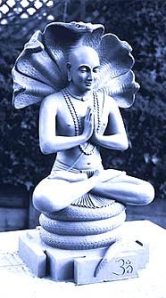
Greatest thinker ever: Patanjali

patanjali

And so: the winner. The Hannibal Blog‘s search for what makes great thinkers great, and what does not, took ten posts. My nominee is Patanjali.

Pa-Who?

Those of you who have been checking in regularly might have had your suspicions that something yogically-themed would come up again. But do not make the mistake of thinking that Patanjali is “only” about Yoga! Yes, he wrote (or so we think) the Yoga Sutras, which is, along with the Bhagavad Gita and the Hatha Yoga Pradipika, one of the three great texts of Yoga. But what he said–with masterly economy, in 196 aphorisms that form a single logical thread (sutra)–qualifies not only as the earliest but also as the greatest thinking yet on the human mind.

Mind matter

And that says it all: This is about the mind, or psyche in Greek. So he was, with the Buddha (who might possibly have been a contemporary), one of the first psychologists. That said, the ancient Indians put our psychologists to shame.

We Westerners have one word for mind (not counting breath or spirit, which the ancients conflated), just as we have one word (give or take) for snow. The Yogis had hundreds of words for mind, just as the Eskimos have many words for snow. That is because they observed it with so much more nuance. For example, the Bhagavad Gita is about a war between the five Pandava brothers against their cousins, the one hundred Kaurava brothers. The five Pandavas represent the five positive minds, including Arjuna, who represents buddhi, or clear intelligence. The one hundred Kauravas represent all the negative minds (fear, anger, envy,….)

Stillness and …

Let’s cut to the chase. The first sutra simply says Now we start this exposition on Yoga. But in the second sutra Patanjali essentially says it all. (Talk about simplicity!) It is famous, so here is the Sanskrit:

Yogah cittavrtti nirodhah

This is the E=MC² of the mind. It means (using Iyengar’s translation):

Yoga is the cessation of movements in the consciousness.

There is a lot of important precision in that slightly clunky-sounding phrase, but we would be oversimplifying only slightly by reducing it to my phrase:

Yoga is a still mind

A reader who grasps all the ramifications could stop reading there. Most of us do not. So Patanjali elaborates…

… Motion

The trouble is that the mind is almost never still. It moves, pulled by thoughts as wild as bucking broncos. And this is what confuses and torments us. Patanjali’s greatest (and most overlooked) contribution is his analysis of these naughty ones that we call thoughts or emotions.

You know them all: anger, fear, envy, greed, lust, anxiety and so on. They show up and take your mind captive. You think they are you, and you suffer and make others suffer.

Patanjali proves that they are not you. You can, with the techniques that he describes, let them go. A naughty one shows up in your mind stage left, you say, ‘Oh Hi, Mr Anger’ and label him, then allow him to exit again stage right. And you keep doing that.

Over time, you make a discovery. Who is saying Hi and doing the labeling and letting go? It can’t be Mr Anger. So anger is not me, it’s just some schmuck passing through. See you!

I am therefore something else. Patanjali calls this I the seer. As the seer sees more clearly, the mind comes to rest.

And for all those who are still with him at that point, he sketches out how to unite (=Yoga) with this seer in order to feel whole and free. Non-trivial, as I’m sure you’ll agree.

Bookmark and Share

Ramping up for Darwin’s 200th b-day

And (at least) one more follow-up to my post on Darwin: As we ramp up to his 200th birthday on February 12th, my beloved book-publishing industry is flooding the meme pool with books that, however tangentially, celebrate the great man.

In today’s NYT Book Review alone, books about:

All of which confirms that he was a safe choice as runner-up for my nomination as greatest thinker ever.

I say that with some embarrassment, since intellectual safety is hardly what readers of The Hannibal Blog show up expecting and demanding! So I will try to rescue my reputation, later today, by finally nominating my overall winner–plucking him out of what I believe is relative obscurity.

Bookmark and Share