Hannibal and Me: contents & dramatis personae

Here is my table of contents, which gives you a sense of the structure of the book: For the most part we “age with” Hannibal, and also with Scipio, in the main storyline, so that we face the issues that arise at each stage of life.

In bullet points, I’ve put some of the people that come up in each chapter. You can try to figure out the context in which they appear, and why.

One. HANNIBAL AND ME

  • Hannibal
  • Me
  • (A bit of Carl Jung, tiny bit of Scipio and Fabius)

Two. THE INFLUENCE OF PARENTS

  • Hamilcar, Hannibal, Hasdrubal, Mago
  • Theseus
  • Barack Obama
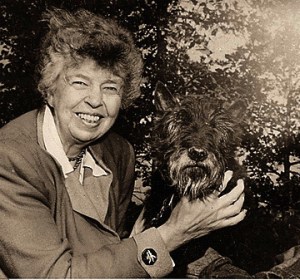
  • Eleanor Roosevelt
  • Amy Tan
  • (Gerhard Kluth)

Three. DO YOU NEED A GOAL?

  • Hannibal
  • Meriwether Lewis (and Thomas Jefferson, William Clark)
  • Harry Truman
  • Ludwig Erhard

Four. TOWERING PEAKS

  • Hannibal
  • Pablo Picasso
  • Paul Cézanne
  • Meriwether Lewis

Five. THE ART OF WINNING

  • Hannibal
  • Morihei Ueshiba
  • Cleopatra (and Julius Caesar

)

Six. TACTICS AND STRATEGY IN LIFE

  • Hannibal (and Sosylus)
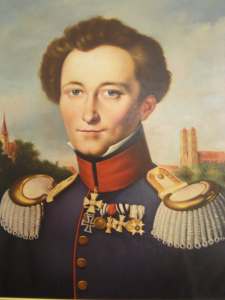
  • Carl von Clausewitz
  • Steve Miller and Tiger Woods
  • Cleopatra
  • Douglas MacArthur and Harry Truman
  • Pyrrhus and Cineas

Seven. DEALING WITH DISASTER

  • Quintus Fabius Maximus
  • Elizabeth Kübler-Ross
  • Lance Armstrong
  • Lao Tzu and Sun Tzu
  • Eleanor Roosevelt
  • Ernest Shackleton

Eight. THE PRISON OF SUCCESS

  • Hannibal
  • Tennessee Williams
  • Amy Tan
  • Eliot Spitzer
  • Albert Einstein

Nine. THE LIBERATION OF FAILURE

  • Publius Cornelius Scipio
  • Steve Jobs
  • Eleanor Roosevelt

Ten. THE THRESHOLD OF MIDDLE AGE

  • Hannibal and Scipio
  • Carl Jung (and Sigmund Freud)
  • Ernest Shackleton

Eleven. POLITICAL DEATH

  • Scipio and Marcus Porcius Cato
  • Ludwig Erhard (and Konrad Adenauer)
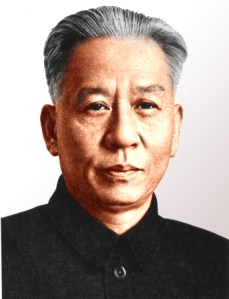
  • Liu Shaoqi (and Mao Zedong)

Twelve. AGING AND TRANSCENDING

  • Hannibal and Scipio
  • Abraham Maslow
  • Ludwig Erhard
  • Eleanor Roosevelt
  • Albert Einstein

Thirteen. THE LESSONS OF HANNIBAL

  • All of the above
  • (plus Arjuna)

Audacity, Freedom, Captivity

Thank you to Jim M., a regular reader here, who emailed me a link to something that I had written but completely forgotten. It is this, which is itself part of this.

Here is how that came about: About a year ago, my publisher asked me to meditate, in less than 500 words total, on people in the news at that time, in the style of Hannibal and Me. The idea was not to regurgitate anything from the book, but to extend the approach as one might in casual conversation. The exercise was meant as a teaser for book professionals.

So I banged out three haikus, each with a theme, a person in the news, and a person from the book:

  • Audacity – Sarah Palin – Sempronius/Flaminius/Varro
  • Freedom – Hillary Clinton – Eleanor Roosevelt
  • Captivity – Larry Page – Albert Einstein

(Just to be completely clear: Sarah Palin, Hillary Clinton and Larry Page are not in the book. My publisher and I were just having a bit of fun.)

Here goes:

Audacity

The best defense is a good offense, and Sarah Palin has adopted this principle as her own. Wherever she appears, she attacks. When she feels cornered, she attacks harder. Palin might want to study the Roman generals Sempronius, Flaminius, and Varro. Each was ruined by this strategy when he met a shrewder opponent, the Carthaginian Hannibal. All three had only one approach: audacious attack. All had a history of success. But this made them inflexible. Hannibal turned this inflexibility against them. In three separate battles, Hannibal goaded them into attacking, then waited until their forces, through their own momentum, lost their balance. When they did, Hannibal fell upon them.

Freedom

In one of her debates with then-candidate Barack Obama, Hillary Clinton said, “Everyone here knows I’ve lived through some crises.” She could only have been referring to the Monica Lewinsky scandal. That humiliation could have shattered her marriage to Bill Clinton, his presidency, and her own life. That it didn’t and instead helped launch her onto a new path suggests that Clinton’s psychological journey paralleled that of another former first lady, Eleanor Roosevelt. In 1918, Mrs. Roosevelt discovered love letters between her husband, Franklin, and her secretary, Lucy Mercer. She plunged into a deep depression. But in her rage and sorrow, she discovered a feeling of liberation. The Mercer affair freed her to redefine her life’s meaning and her options. It also freed her to view her husband honestly, and the two formed a new, very different but ultimately stable bond.

(Click for credits)

Captivity

At age thirty-eight, Larry Page takes over as chief executive of Google. He cofounded it with Sergey Brin when they were both twenty-five and students at Stanford, after Page invented his revolutionary PageRank search algorithm. In 2001 they hired an older man to be CEO, but ten years later the apprenticeship is over: It is Page’s turn to run the company. He might want to review what happened to Albert Einstein at the equivalent juncture in life: At twenty-six, Einstein had produced four short but revolutionary papers that transformed physics. Einstein then kept refining his insights until he was thirty-eight, when he discovered general relativity. Although he did not know it then, this was a turning point. His imagination became a prisoner of its very success. A perplexing conservatism seized Einstein’s mind and never let go. Page must make sure that this does not happen to him—or to Google.

Hannibal and Me: The press release

Ahem. How many press releases have I, as a journalist, been subjected to? It must be millions. In my circles, we use that term as a pejorative, as in: ‘Tell me what happened, don’t give me the press release.

But now there is one about my book. It might be the first press release I read all the way through. And I discovered that it is … well written.

The author is Jynne Martin, a great publishing talent recently arrived at Riverhead/Penguin.

One new twist for regular readers of this blog may be the list of six lessons in my final chapter which she paraphrased and included at the bottom.

___________

FOR INFORMATION, CONTACT:

Jynne Dilling Martin, Director of Publicity

212-366-2947 / Jynne.Martin@us.penguingroup.com

“Kluth, the West Coast correspondent for the Economist, brings a contemporary slant to Hannibal’s military successes…Kluth does superior work in spelling out the elusive values of success and failure… Realistic and timely, Kluth’s book uses historic truths to move us past the frequent traps of success and failure to mold practical, productive lives.” —PUBLISHERS WEEKLY

“Hannibal and Me is a rare blend of military strategy and emotional intelligence that offers a more mature solution for winning life’s battles.” —KIRKUS REVIEWS

“Andreas Kluth’s absorbing exploration of the life of the great military commander Hannibal will inspire you to look beyond simplistic notions of success toward a deeper understanding of what it is to live the good life. This is a book full of lessons both profound and practical.” —DANIEL H. PINK, AUTHOR OF DRIVE

HANNIBAL AND ME

What History’s Greatest Military Strategist Can Teach Us About Success and Failure

________

ANDREAS KLUTH

Andreas Kluth, a correspondent for The Economist, presents a fascinating new way to think about winning and losing, and draws powerful life lessons from the story of one of the ancient world’s most famous and enduring figures in HANNIBAL AND ME: What History’s Greatest Military Strategist Can Teach Us About Success and Failure (Riverhead Books; On sale January 5, 2012; ISBN: 978-1-59448-812-2).

Hannibal’s story is one of action, suspense, and romance. After crossing the ice-bound Alps with 50,000 men and 30 elephants, Hannibal decimated Rome’s armies in a series of brilliant battles and seemed poised to dethrone the world’s leading power. Yet at the heart of Hannibal’s tale lies a great mystery. How was it possible, Kluth asks, that this apparently invincible hero ultimately lost everything and, trapped by his enemies, committed suicide?

Kluth plumbs the mystery of this tragic reversal of fortune, providing readers with thought-provoking and useful insights about the seeds of success and failure from the lives of Hannibal and other notable people from the past and present.

A key part of Kluth’s explanation comes from a poem by Rudyard Kipling, which says to “meet with triumph and disaster and treat those two impostors just the same.” Using Hannibal as his central example, Kluth shines a light on each aspect of the lifelong journey that we take with these “impostors,” which we often mistake for one another. He explores youth, when parents influence how we view success and failure; young adulthood, when we pursue our dreams, when we dare, win, or lose; middle age, when we need to reexamine our dreams and identities and our successes and failures; and old age, when success and failure take on altogether different meanings.

As Kluth investigated the paradox of the great general’s life, he discovered an important, and lesser known, piece of Hannibal’s story: two Roman leaders emerged who were his major opponents. Fabius was the cautious elder statesman who enabled the Romans to accept the disaster that had befallen them, to overcome their paralyzing fear of Hannibal, and to wait him out for fourteen long years until they could determine how to fight him effectively. Scipio was the dashing young military genius who studied Hannibal from afar with the appreciative mind of a disciple, felt strangely liberated by Hannibal’s crushing of the Roman army, and ultimately turned it into a dazzling triumph. Taken together, the stories of these men provide valuable lessons about success and failure.

Throughout Hannibal’s narrative, Kluth interweaves the stories of other famous figures, from Pablo Picasso to Tiger Woods to Carl Jung to Steve Jobs to Cleopatra. To help readers draw lessons from the lives of his historical subjects, Kluth presents nine overarching principles that have served men and women well since ancient times:

  1. Stay balanced when others lose their balance. Outnumbered by the Romans, Hannibal knew that the most immediate kind of success—winning—is not about being stronger than others but about being more balanced and calm, and then letting opponents defeat themselves.
  2. Never confuse means with ends, tactics with strategy. Hannibal’s most subtle lessons teach us how to think simultaneously large and small so that we can align life tactics with life strategy.
  3. Have “young” ideas when you’re young and when you’re old. For many people, freshness wilts with age, as it did for Hannibal, Picasso, and Einstein. But it is possible to stay or become fresh in later years, as Carl Jung did after a major crisis led to his greatest successes.
  4. Start maintaining an “old” self-discipline even while you’re young. To avoid the loss of self-control that young heroes like Meriwether Lewis and Tiger Woods experienced, seek the company and counsel of older mentors, study those who came before you, and take the long view of your success.
  5. When disaster strikes, try to do nothing at first until you see that the situation has changed and renewed action makes sense. When that occurs, you may, like Scipio, feel a paradoxical and energizing sense of liberation that leads to new heights of achievement.
  6. Part of success is adjusting your idea of what it is. Over the course of a life, success and failure will mean different things at different times, and it may become necessary to update, refine, or even scrap old definitions.
  7. See the best in people but protect yourself against the worst in them. Both Hannibal and Scipio were noble personalities who never felt personal animosity toward one another and generally saw the best in others, but each was harassed and damaged by petty and vindictive personalities, whose threat they did not adequately guard against.
  8. Success means becoming a mensch—a whole, integrated, self-actualizing human being. People who do so, like Eleanor Roosevelt, are the most likely to transcend conventional success and failure by achieving a separate peace with themselves and their world.
  9. Do your duty with equanimity—the fear of failure will seem less overwhelming and the yearning for success less consuming. You will know it is your duty not by how large or small it is, but by perceiving it to be bigger than you, and beyond you.

Kluth’s unifying insight in HANNIBAL AND ME is that triumph and disaster, success and failure, are not necessarily what they seem—whether in the lives of the great figures of history or in the lives of ordinary people. Thus they show up in their disguises, the ups and downs of life, the turns of good and bad fortune, the whims of the goddess the Romans called Fortuna. “Perhaps they disguise themselves,” Kluth writes, “to bring something out of us and that something is character, our true self, who we really are. This book is about those moments of impact, when triumph or disaster strikes, and about the aftermath, when the shock fades and lives change forever and character reveals itself.”

ABOUT THE AUTHOR

Andreas Kluth has been writing for The Economist since 1997. He is currently the magazine’s U.S. West Coast correspondent, covering politics, society, and the economy in California and the western states. A graduate of Williams College and the London School of Economics, he is a dual citizen of the United States and Germany. He lives in Los Angeles with his family. HANNIBAL AND ME is his first book. His website is http://www.AndreasKluth.org.

HANNIBAL AND ME RIVERHEAD BOOKS ISBN 9781594488122 ON SALE 1/5/12 ISBN: 978-1-59448-812-2 $26.95

Lo, the novel arrived, fully formed, in Sirsasana

How bittersweet. My first book, of narrative nonfiction, is about to be published, and I should be thinking only about that.

And yet, about 2 years ago, I had a great idea for a novel. I ignored it, but the idea kept coming back. (As it happens, that is how I winnow idea wheat from idea chaff: I pay serious attention to ideas only once they reassert themselves.)

So yesterday, I was in Sirsasana (headstand) when the entire novel arrived. In my head, as though shaken down by gravity. All at once, fully formed, with idea, characters, plot and twists. Title. Beginning. End. The whole dang thing.

I like it. Love it, actually. And I reckon, now that it has presented itself, I could write the thing in a few good weekends.

But as I said: I should be talking only about Hannibal and Me. And yet, my imagination really wants to go that new place already….

A pretty long chat about Hannibal and Me

So now at last (with two months to go until launch on January 5th), I can start to open up a bit about what’s actually in the book.

The other day, my publisher and I had a conversation about some of the ideas. I’ve put a transcript of that chat up on this page.

We were just scratching the surface in that conversation. And that is becoming my chief difficulty in this process: Whenever anybody asks me anything about the book (such as: “What is it about?”), I want to answer with the whole book. Can’t do that.

So, if you feel so inclined, you might do me a favor: Tell me which bits of the conversation hit, move, stimulate, enrage or otherwise interest you.

That would be enormously helpful: From your reactions, I will try to figure out what the various “elevator pitches” might be. You know: my 10-second answer when some radio host interviews me about the book. As in:

Host: So, Andrew, you wrote a book about success and Caesar, is that right?

Andreas: Both success and failure, actually, and the main character is Hannibal.

Host: Lecter?

Andreas: No, the other one….

Hannibal’s lifetime path: the map

Copyright David Lindroth

Look at this beautiful map. It depicts the dramatically simplified life path that Hannibal probably took. And you’ll find it in the beginning of my book.

The mapmaker and copyright owner is David Lindroth, a cartographer who seems to specialize in historical, educational, fictional and other unusually interesting maps.

I first came across David’s name when I saw a different version of this map by him in The Ghosts of Cannae, a great book about Hannibal by Robert O’Connell. (It came out last year, after I finished my manuscript, so it was unfortunately too late to be one of my sources.)

So I called David and he made this map for me. We put in some of the battle sites and other places of interest in the book, including Hannibal’s sketchy meanderings in the eastern Mediterranean in his final years.

Anyway, you know I like maps. Enjoy.

The second review (in Kirkus Reviews)

Last week, the first review of my book came out, by one of the two major trade publications, Publishers Weekly. Now the other one, Kirkus Reviews, has followed with its review of my book. The folks at Kirkus call themselves “the world’s toughest book critics,” which is great, because they also seem to like the book.

Here is the link.

Unfortunately, it’s behind a subscriber wall (although articles become free a few weeks before publication of the books reviewed in them).

Excerpts:

… The author narrates Hannibal’s story with precision, but his analysis extends beyond the highlights of the battlefield. In this retelling of the ancient drama, the major players become archetypes whose motivations, triumphs and failures mirror those of more recent historical figures. The influence of Carl Jung pervades as the narrative as Kluth digs into their psyches—examples include author Amy Tan’s teenage rebellion, Eleanor Roosevelt’s loneliness and Albert Einstein’s dark side—to create a plausible formula for surviving disaster or even sudden, explosive success. Though brief, the contemporary examples bridge the gap between modern readers and the ancient world. …

I especially liked this passage:

[Kluth’s] desire for a balanced life (and European disdain for ostentation) makes his voice unique among others who analyze the nuances of greatness. Kluth follows each character beyond the key moments that defined their places in history to determine the value of their lives as a whole, from the rise and fall of their careers to their evolving relationships with families and friends. The result is a study of the ephemeral nature of power that grapples, often very effectively, with the meaning of true happiness.

Meatier than the average self-help book, Hannibal and Me is a rare blend of military strategy and emotional intelligence that offers a more mature solution for winning life’s battles.

Also, I’m very intrigued indeed by the “Books Similar to Hannibal and Me” they have chosen. (Follow the link and look.) The first one: “Man’s Search for Ultimate Meaning,” by Viktor Frankl.

Frankl is not in my book (he was at one point, but I had to cut). But Frankl has, of course, featured prominently here on The Hannibal Blog:

What excellent company to be in. Thank you, Kirkus!

The first review (in Publishers Weekly)

Well, it appeareth that the first review of my book is out. That might seem surprising, given that Hannibal and Me won’t be published until January 5th. But the review is in Publishers Weekly, a trade journal aimed at book sellers, book agents and other booky types who need to, uhm, book ahead.

Here it is. Excerpts:

Several books on the legendary achievements of Hannibal have dwelled on one or two aspects of the ingenious general’s life, but none has tackled the tricky mix of the impact of his life choices on and off the battlefield as well as this new analysis. Kluth, the West Coast correspondent for the Economist, brings a contemporary slant to Hannibal’s military successes.

Here is the middle:

… Kluth does superior work in spelling out the elusive values of success and failure …

And here is the end:

Realistic and timely, Kluth’s book uses historic truths to move us past the frequent traps of success and failure to mold practical, productive lives.

I can’t argue with that. 😉

Thanks, PW.

Genius through observation: Alexander & Bucephalus

The other day, I was reading to my kids from a children’s book about Alexander the Great, which caused much merriment and took much time because, as you would expect, I had to embellish every sentence with the real or the full story.

But honestly, what inadequate storytelling! Here is how that book delivered the famous anecdote about Alexander taming his horse Bucephalus:

There is a story about a black stallion that one day started running wildly through the courtyard. Five trainers chased it but were unable to mount it. All of a sudden the horse stopped short. Not a soul dared to approach except young Alexander, who moved swiftly, mounting and mastering the steed. Henceforth the proud horse belonged to Alexander and was called Bucephalos, which means “The One with the Head of an Ox.”

I had to intervene. So I closed the book and said, “OK, kids, here is what really happened, and it is much more interesting.” (And the next day, I checked my memory against Plutarch, as you can do here.)

The real story, and the lesson

Alexander was only 12 or 13 at the time, and he had quite a tense relationship with his father, a bit as Hannibal and Hamilcar later did, and as most successful sons and fathers do.

In any case, Alexander’s father, Philip, was given a splendid horse. But nobody could tame it, and everybody, including Philip, was making rather a fool of himself.

Alexander, meanwhile, was just watching. Really observing. Because that’s what the adults were not doing. They were too busy being brave to observe the horse.

And so Alexander noticed that the horse was not angry, and was not even fighting against the Macedonian men. No, the horse was afraid and panicking. It was scared of its own shadow.*

So Alexander stepped up and dared his dad to let him try to tame the horse. He looked precocious and arrogant, and the men had a good laugh.

Alexander then took the stallion by its bridle (much more gently than the painting above suggests) and turned him to face into the sun, so that their shadows were now behind them. At this, the stallion calmed down a bit. Alexander then (and I quote from Plutarch now), let

him go forward a little, still keeping the reins in his hands, and stroking him gently when he found him begin to grow eager and fiery, he let fall his upper garment softly, and with one nimble leap securely mounted him, and when he was seated, by little and little drew in the bridle, and curbed him without either striking or spurring him.

Philip and his friends

all burst out into acclamations of applause; and his father shedding tears, it is said, for joy, kissed him as he came down from his horse, and in his transport said, ‘O my son, look thee out a kingdom equal to and worthy of thyself, for Macedonia is too little for thee.’

So, you see, the story is really about Alexander’s finesse and, more, about his genius of observation. (And kids get that! They can handle the real story.)

In this sense, I believe Plutarch chose this anecdote for the same reason he chose the other famous vignette about Alexander: his untying of the Gordian Knot. As I argued in this post, that story, too, was proof of Alexander’s superior powers of observation. In that case, Alexander espied a simple solution to a complex situation.

But we can, as Plutarch would urge us to do, extend this much further. What made Alexander so great?

In his major battles, Alexander was usually the last to arrive at the battlefield. His enemy was already waiting, and had prepared his army for a particular battleplan. Alexander, by arriving late and keeping his mind supple, could observe that situation and infer his enemy’s plan, thereby devising his own, superior, plan on the fly.

In his administration of the conquered lands, from Egypt to Mesopotamia, he again observed the locals and their customs. He observed how they differed from Macedonian and Greek customs. And he observed how the Macedonians and Greeks were reacting to his observation. So Alexander ruled Egypt as a divine Pharaoh, the former Persian Empire as a Persian king, the Greek city states as a Philhellenic “first among equals”, and his own Macedonians as a brother in arms.

The man’s greatness — and the lesson in all these anecdotes — is found in his powers of observation.

Oh, and Bucephalus became Alexander’s beloved charger. When the stallion died from battle wounds (in what is today Pakistan), Alexander named a city after him, Bucephala, and died three years later.

___

* A famous autistic woman, Temple Grandin, has vividly described how cows and other animals, like autistic people, do sometimes get frightened by such things, whether a colored piece of plastic or a moving shadow.

My other posts about Alexander so far:
Make your charty blog posts chartier

The Hannibal Blog is not really a charty blog. It’s more mappy and wordy and facey. But I know some of you guys do have charty blogs. And for you there is something new and potentially cool: the Data Collective.

It’s a nonprofit, currently in “alpha” (ie, not yet fully released), that wants to improve public discourse by making it less truthy and more fact-based. The idea, as one of the creators, David Joerg, explained it to me, is

  1. that you make interactive, rather than static, charts on your blog,
  2. that readers can click on the underlying data and play around with it,
  3. that anybody can share the chart, as you might share a YouTube video, so that it can go viral.

As David emailed me,

The linkage to underlying data is especially nice because it allows curious readers to play with the data in new ways — making their own charts, verifying a chart’s correctness, pointing out alternative / better data sources, and so on.

And David has an offer:

We are in a private alpha at this point, which means that if you or a friend would like some charts, we’ll happily take your data or your research requests and make a bespoke chart. Later on, we’ll make a website where you can make your own charts.