The great story-tellers?

Well, I’ve taken this week “off”, so to speak, to finish writing my book. Yes, I do expect to send off the manuscript by the end of this week!

That won’t mean that it’s done, but it does mean that we will move on to the next stage, once my editor at Riverhead takes a look. And then I hope to get a publication date and … title! (Here is why the book doesn’t have one yet.) I’ll keep you posted, of course.

In the meantime, I thought our recent inquiry into the great thinkers of world history was fun. The whole thing was really just an excuse for me to think about what ideas had influenced me the most, and for you to point me to some thinkers that I might have been overlooking, which you did in the comments. Gödel, Salk …

In fact, it was so much fun that I’m thinking of starting new inquiries. Since my mission in life is to tell stories, perhaps a search for the world’s greatest story-teller ever?

Bookmark and Share

My magazine vs. all magazines

Play with this interactive barometer of ad pages inside the major magazines.

The overall picture is grim, grim, grim. Fortunately, we at The Economist are still going strong. (I wonder how we do that. ;))

But lest you hypothesize about a “flight to quality”, note that the New Yorker is also down, really down. Breaks my heart.

Bookmark and Share

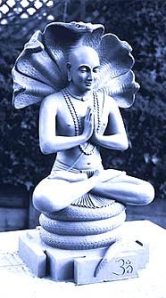
Greatest thinker ever: Patanjali

patanjali

And so: the winner. The Hannibal Blog‘s search for what makes great thinkers great, and what does not, took ten posts. My nominee is Patanjali.

Pa-Who?

Those of you who have been checking in regularly might have had your suspicions that something yogically-themed would come up again. But do not make the mistake of thinking that Patanjali is “only” about Yoga! Yes, he wrote (or so we think) the Yoga Sutras, which is, along with the Bhagavad Gita and the Hatha Yoga Pradipika, one of the three great texts of Yoga. But what he said–with masterly economy, in 196 aphorisms that form a single logical thread (sutra)–qualifies not only as the earliest but also as the greatest thinking yet on the human mind.

Mind matter

And that says it all: This is about the mind, or psyche in Greek. So he was, with the Buddha (who might possibly have been a contemporary), one of the first psychologists. That said, the ancient Indians put our psychologists to shame.

We Westerners have one word for mind (not counting breath or spirit, which the ancients conflated), just as we have one word (give or take) for snow. The Yogis had hundreds of words for mind, just as the Eskimos have many words for snow. That is because they observed it with so much more nuance. For example, the Bhagavad Gita is about a war between the five Pandava brothers against their cousins, the one hundred Kaurava brothers. The five Pandavas represent the five positive minds, including Arjuna, who represents buddhi, or clear intelligence. The one hundred Kauravas represent all the negative minds (fear, anger, envy,….)

Stillness and …

Let’s cut to the chase. The first sutra simply says Now we start this exposition on Yoga. But in the second sutra Patanjali essentially says it all. (Talk about simplicity!) It is famous, so here is the Sanskrit:

Yogah cittavrtti nirodhah

This is the E=MC² of the mind. It means (using Iyengar’s translation):

Yoga is the cessation of movements in the consciousness.

There is a lot of important precision in that slightly clunky-sounding phrase, but we would be oversimplifying only slightly by reducing it to my phrase:

Yoga is a still mind

A reader who grasps all the ramifications could stop reading there. Most of us do not. So Patanjali elaborates…

… Motion

The trouble is that the mind is almost never still. It moves, pulled by thoughts as wild as bucking broncos. And this is what confuses and torments us. Patanjali’s greatest (and most overlooked) contribution is his analysis of these naughty ones that we call thoughts or emotions.

You know them all: anger, fear, envy, greed, lust, anxiety and so on. They show up and take your mind captive. You think they are you, and you suffer and make others suffer.

Patanjali proves that they are not you. You can, with the techniques that he describes, let them go. A naughty one shows up in your mind stage left, you say, ‘Oh Hi, Mr Anger’ and label him, then allow him to exit again stage right. And you keep doing that.

Over time, you make a discovery. Who is saying Hi and doing the labeling and letting go? It can’t be Mr Anger. So anger is not me, it’s just some schmuck passing through. See you!

I am therefore something else. Patanjali calls this I the seer. As the seer sees more clearly, the mind comes to rest.

And for all those who are still with him at that point, he sketches out how to unite (=Yoga) with this seer in order to feel whole and free. Non-trivial, as I’m sure you’ll agree.

Bookmark and Share

Ramping up for Darwin’s 200th b-day

And (at least) one more follow-up to my post on Darwin: As we ramp up to his 200th birthday on February 12th, my beloved book-publishing industry is flooding the meme pool with books that, however tangentially, celebrate the great man.

In today’s NYT Book Review alone, books about:

All of which confirms that he was a safe choice as runner-up for my nomination as greatest thinker ever.

I say that with some embarrassment, since intellectual safety is hardly what readers of The Hannibal Blog show up expecting and demanding! So I will try to rescue my reputation, later today, by finally nominating my overall winner–plucking him out of what I believe is relative obscurity.

Bookmark and Share

Lee Kuan Yew on Darwin and breeding

Lee Kuan Yew

Lee Kuan Yew

Just one quick follow-up to the last post on Darwin: I was reminded of a controversy from my days in Asia, involving Lee Kuan Yew, the “founding father” of Singapore. (Most Asian controversies seem to involve Lee Kuan Yew, if you look closely enough.)

He had once opined on the truly bizarre situation that humans have created today. Biologically and historically, the “fittest” (most adapted) members of a population are the ones whose genes (alleles) are most represented in future generations. Lee Kuan Yew, perhaps contemplating his own daughter, who was then a neuroscientist as intellectually impressive as she was single, observed that

our brightest women [are] not marrying and [will] not be represented in the next generation. The implications [are] grave.

Some of the fittest among us, in short, are voluntarily opting out of evolution. A biologically suicidal strategy, and thus worthy of study.

Bookmark and Share

Greatest thinker, runner-up: Darwin,

So here we are in the ninth and penultimate post of The Hannibal Blog‘s search for the world’s greatest thinker ever. And the runner-up is…. Charles Darwin.

Darwin’s thought fits all the criteria The Hannibal Blog has laid out so far: his insight was simple and yet non-obvious and subtle (and thus still frequently misunderstood). He appears to have been right. And for good measure, his insight is also extensible, explaining far more than “just” speciation.

Simple:

Even though the details are still being debated, the core insight is so simple that I always think it borders on tautological. Those genes whose vehicles (phenotypes) are relatively better at making it to the next generation and the next and the next … are the ones you see around you today. Duh. Those genes that manifested themselves in phenotypes that kicked off too early to reproduce, or that reproduced but created offspring that couldn’t repeat the performance … are not the ones you see around you today. Duh.

Subtle:

As Geoff Carr, our science editor at The Economist, once reminded me, people often get the implications of natural selection and evolution (which is what I described above) wrong. I’m not even talking about the fire-and-brimstone creationist types. What many people infer is that evolution is somehow about improvement. (This is the seed of an entire genre of cartoons.) It is not. Instead, evolution is about adaptation. It would merrily go on if we humans were to wipe ourselves out tomorrow with a nuclear war. The bacterial slime in thermal vents would carry on unperturbed.

The other thing that people get wrong is to overemphasize the survival part. It’s the reproduction part that drives the process. Somebody once explained it to me best by saying it’s about which organisms have the most grandchildren. Ie, think of a strapping stallion and a purdy donkey. Both are great at surviving, and great at reproducing, but something in their genotype makes them choose each other. They will have lots of sterile mules. Two generations later, their genes will be gone.

Extensible:

I think the expansion of the concept really kicked off in earnest with Richard Dawkins and his idea that even non-biological systems evolve. Culture is such a system, and the equivalents of genes are idea snippets called memes. Some memes (ideas, fads, fashions) adapt, travel and spread, others do not.

The basic concept also explains so amazingly much else. Why grandmothers tend to be closer to their daughters’ children than to their sons’. Why women show a bit more skin at one time of the month than during the rest of the month. Why humans are sometimes altruistic and sometimes not. Why so many of us are religious. And on and on and on. In short, why we are who we are….

Next time: the overall winner. Once again, I promise a surprise.

Bookmark and Share

Great, if not greatest, thinker: Kuhn

I’ll make this the last post in my sub-series on “honorable mentions” for the prize of the world’s greatest thinker ever. We could of course go on forever, but I don’t want it to get tedious. So, the next post will present the runner-up, and the one after that, well, the world’s greatest thinker ever. And I promise that you’ll be surprised.

But today: Thomas Kuhn.

(Remember, the honorable mentions have all gone to great thinkers who made a simple yet non-obvious contribution to a circumscribed area of human endeavor.)

Area of Interest: The progress of human knowledge

Why great: Because he showed that (scientific) knowledge does not accumulate in a steady (linear) way, as common sense has it, but rather that it leaps ahead in sporadic upheavals or “revolutions”. This means that at any given time, society can be in one of three phases: before a crisis/revolution, when the world seems stable; during the crisis/revolution, when it appears to be anything but stable; and after, when the world looks completely changed.

Comments:

It’s a pity that the sort of crisis/revolution/upheaval that Kuhn described has since become known as a paradigm shift, which must be the ugliest and corniest piece of jargon out there (along with leverage and core competency). But that shouldn’t distract from Kuhn’s amazing insight.

The default assumption for most people is that every scientist (thinker?) pushes ahead independently into new territory. Kuhn says No. Most scientists are “puzzle solvers” that try, conservatively, to corroborate whatever theory they have been taught. If evidence shows up that contradicts the theory, the scientist producing that evidence is blamed for getting it wrong.

But eventually, the contradictory evidence accumulates, and everybody panics. Then, some people start thinking outside of the box. A breakthrough occurs. We shift to a new understanding. Nothing is ever the same again. And a whole new set of gray mice in white coats gets busy corroborating the new theory.

This reminds me of the old debate in the field of evolution between the “creeps” and the “jerks”. In this context, Kuhn says, knowledge advances in jerks. Lesson: Don’t assume you’re wrong just because everybody else says so. (But don’t assume you’re right either.)

Incidentally, this also dovetails with Galenson’s theory about “young geniuses” and “old masters”: As Kuhn said,

Almost always the men who achieve these fundamental inventions of a new paradigm have been either very young or very new to the field whose paradigm they change.

(I don’t know why he said “men” instead of “scientiests” or “thinkers”. Applies to women just as well.)

Anyway, I could go on forever with the honorable mentions: Hayek, Burke, Aristotle, Laozi, …. But, as I said, just two more posts. Runner-up, then winner. The former will not be surprising, the latter most assuredly will.

Bookmark and Share

Non-profit newspapers

Orville Schell

Orville Schell

Orville Schell, formerly the dean of the graduate school of journalism at Berkeley (where I used to teach) and one of my mentors (of which more another time), has for years been saying that the future, if there is one, of the news business is as a non-profit public service.

In the last couple of years, I’ve been sensing that this is becoming conventional wisdom. Today, David Swenson, a legendary fund manager of Yale’s endowment, makes exactly this case in the New York Times. Given his credibility in matters of analysis–especially when the subject is endowments–this might lead to actual and big change soon.

Note that The Economist, though officially called a “newspaper”, is in a very different position than the kind that you used to wrap your fish in. Still, after years of chaos in the wider news industry, the thinking is at last getting clearer…

Bookmark and Share