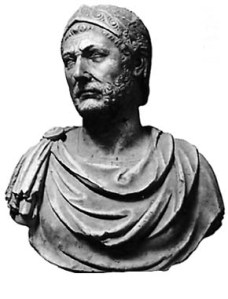
Why I chose to write the book I’m writing

Here is David McCullough, author of fantastic biographies and histories including Truman, which is in my bibliography, speaking words that might have come out of my own mouth verbatim.

So, when somebody asks why I chose Hannibal, Fabius, Scipio (and Cleopatra, Ludwig Erhard, Truman, Eleanor Roosevelt, Carl Jung and the rest of them)–as the characters for a book about success and failure today, I could just play this clip:


Editing as “desophistication”

Every writer has stories about editors–the great ones and the other ones. But I wanted to share what Johnny Grimmond, our doyen of style at The Economist and author of our Style Guide, has to say on the matter. I have already quoted Johnny on the vital issue of like versus as (never to be confused!). Here now is what he says about editing (British spelling, of course):

It is quite easy to rewrite an article without realising that one has done much to it at all: the cursor leaves no trace of crossing-out, handwritten insertions, rearranged sentences or reordered paragraphs. The temptation is to continue to make changes until something emerges that the editor himself might have written. …

The moral for editors is that they should respect good writing. … A writer’s style, after all, should reflect his mind and personality. … Editors should exercise suitable self-restraint. … Bear in mind this comment from John Gross:

Most writers I know have tales to tell of being mangled by editors and mauled by fact-checkers, and naturally it is the flagrant instances they choose to single out–absurdities, outright distortions of meaning, glaring errors. But most of the damage done is a good deal less spectacular. It consists of small changes (usually too boring to describe to anyone else) that flatten a writer’s style, slow down his argument, neutralise his irony; that ruin the rhythm of a sentence or the balance of paragraph; that deaden the tone that makes the music. I sometimes think of the process as one of “desophistication”.

Look who reads Plutarch

I’ve told you about Plutarch, the father of biography, who has an important place in my bibliography. A lot of people of course love Plutarch. J.K. Rowling does, Truman did. And so does Sam Donaldson, who recommends the Parallel Lives here:

Plutarch’s Lives is simply the biographies of people back in an ancient era, Caesar and the Antonines. You study how they lived and what they did, and how they thought. I can’t tell you I came away from it saying, “Now I’ll pattern myself after this guy, and this guy.” But I came away with the sense that some of the people who were very ordinary when they started out could make something of themselves. … But lives, what is it about various people’s lives who are successful, who make something of themselves, who make a mark on history and on the world? That book influenced me.


Creativity vs effort

Thousand-fold failure

Edison, a thousand-fold failure

I recently mentioned the role that impudence played in liberating Einstein’s prodigious imagination and creativity. Well, it helps to have tenure when you’re impudent.

I bring this up because I am re-reading a paper by Gustavo Manso at MIT’s Sloan School about Motivating Innovation. It’s a little bit too geeky to make it into my book, but aspects of it rhyme with my thesis that success and failure–in this case failure–are Impostors.

Gustavo Manso

Gustavo Manso

Let’s define, for the moment, innovation as success. Innovation, says, Manso

is the result of the exploration of untested approaches that are likely to fail, and failure is usually associated with low wages and termination.

So, to enourage innovation and thus success,

the optimal compensation scheme that motivates exploration exhibits substantial tolerance (or even reward) for early failure and and reward for long-term success.

Examples: Academic tenure, debtor-friendly bankruptcy laws, golden parachutes in business. If the professor, entrepreneur or boss fails, he still gets paid.

This is a controversial topic, given the current anti-CEO tenor (which I share, as would my great uncle). But it helps to understand Manso’s distinction between things that “merely” require effort and things that require creativity.

A for effort

Whenever the main ingredient is effort, pay-for-performance might be the best form of compensation. More effort = more money. Manso points to a study in the Phillipines which found that agricultural workers paid at piece-rates burn up more calories than others paid fixed salaries. Studies of workers installing windshields on cars and Canadian tree planters had similar results.

A+ for “failure”

As soon as the main ingredient becomes creativity, Manso says, pay-for-performance seems to hurt, rather than help. In Academia, for instance, tenure is important:

Knowing they will not lose their jobs, these researchers are willing to take risks on research directions that are likely to fail, but may lead to breakthroughs.

Who might personify this sort of failure-driven success? Manso starts with a quote from Thomas Edison:

Results? Why, man, I have gotten lots of results! I know several thousands of things that won’t work.


Kafka vs Hosseini: writing vs re-writing

Listen to Khaled Hosseini, author of The Kite Runner and A Thousand Splendid Suns, both best sellers, talk about his writing process, and in particular the role of first and subsequent drafts:

Excerpts:

Writing is largely about re-writing…  So I use the first draft purely as a frame… I understand that it’s going to be lousy…. the heart of the story has to be there in the first draft… I abhor writing the first draft, I love writing subsequent drafts.

This is the exact opposite of the way that Franz Kafka apparently did it:

… it took a single night. On Sunday, Sept. 22, 1912, the day after Yom Kippur, the 29-year-old Kafka sat down at his desk and wrote “The Judgment,” his first masterpiece, in one all-night session. “Only in this way can writing be done,” he exulted, “only with such coherence, with such a complete opening out of the body and the soul.”

My first reaction is to place Hosseini into the catagory of “old masters” and Kafka into that of the “young geniuses”, using David Galenson’s theory. Remember what that means: Some writers see the creative process as a search, as discovery, as learning; others see it as a finding,  as the execution of a bold idea. Cézanne was the first, Picasso the second, and so forth.

And my second reaction? Well, it was to wonder, once again, whether I am more of a searcher or more of a finder. I certainly could not do a Kafka and write my book in one single night. But I did start with one simple idea and the book is hewing closely to it. As I approach the end, it turned out pretty much exactly as planned.

On the other hand, I proceeded exactly as Hosseini did, by racing through a sloppy first draft in order to erect a skeleton which I have since been putting flesh on. And, of course, there were plenty of discoveries along the way.

So perhaps Galenson’s categories are better thought of as poles, with a spectrum between them.

Incidentally, in the same interview, Hosseini talks about how he first got started selling the book.

I cold-called a bunch of agents through mail. I just sent them three or four chapters with a query letter and a synopsis, … I got rejected more than 30 times … I still have the manila folders of all of the rejections that I received from agencies. I didn’t take it personally, I knew that you have to have a thick skin, that rejection is part of the game…

The rest, of course, is history. He ended up being published by Riverhead, which happens to be my own publisher. Let that be an omen!


Eleanor Roosevelt’s Liberalism

A major character in one chapter of my book, as hinted in the synopsis, will be Eleanor Roosevelt, who knew a thing or two about Triumph and Disaster being Impostors. So a few biographies about her are in my bibliography. The best is this one.

She is such a fascinating and engaging personality, that I’ve got loads overmatter of stuff that has nothing to do with the part of her story that I’m telling in my book. Take, for instance, this quote (from page 20) about the word Liberalism, which rhymes verbatim with my post on the matter:

But for the future to be “more rewarding,” she concluded, the United States needed to resurrect with conviction and daring the good American word “liberal,” “which derives from the word free… “We must cherish and honor the word free or it will cease to apply to us.”

Or this comment on intellectual rigor, honesty and diligence (on page 5):

“Argue the other side with a friend until you have found the answer to every point which might be brought up against you.”

Always better to do so with a friend first, because your enemies will oblige very quickly. This also dovetails with Amy Tan’s advice to writers about seeking criticism, but from friends or sources they trust to be honest.

Highly recommended book.


Mark Twain on honest writing … from the grave

Honest soon, as you can see

Honest soon, as you can see

Adrian Monck resurrects, as it were, some wisdom by Mark Twain about writing: The best is done by dead people.

Meaning: While they are alive, even the best writers (such as Mark Twain) are afraid to say what they really think. There is a cost for total honesty, counted in the currency of real-world consequences–offending people, upsetting them, causing outrage etc. (This dovetails with my earlier post on Einstein, who succeeded because he cared so much less than others about incurring this particular cost.)

Posthumous publication, by contrast, avoids this to some extent. So, says Twain, only the dead writer can be said to have free speech:

The living man is not really without this privilege-strictly speaking-but as he possesses it merely as an empty formality, and knows better than to make use of it, it cannot be seriously regarded as an actual possession. As an active privilege, it ranks with the privilege of committing murder: we may exercise it if we are willing to take the consequences.

And what is lost?

There is not one individual who is not the possessor of dear and cherished unpopular convictions which common wisdom forbids him to utter. When an entirely new and untried political project is sprung upon the people, they are startled, anxious, timid, and for a time they are mute, reserved, noncommittal.

And thus, power to the dead:

Free speech is the privilege of the dead, the monopoly of the dead. They can speak their honest minds without offending. We may disapprove of what they say, but we do not insult them, we do not revile them, as knowing they cannot now defend themselves.

And then we discover:

If they should speak, it would be found that in matters of opinion no departed person was exactly what he had passed for in life. They would realize, deep down, that they, and whole nations along with them, are not really what they seem to be-and never can be.

To which Adrian, a cutting-edge blogger, adds:

Certainly, for all the words about transparency in blogging I forever think of the stuff I don’t write about, whether through wordly wisdom or moral cowardice. Probably you do too.

Well, in fact, yes. I do too.


Brancusi, Einstein, simplicity and beauty

If non-conformity and “impudence” are the first ingredients in the astonishing creativity of a man such as Einstein, as I said here, are there yet other ingredients? Of course. And the most important, in my opinion, is an appreciation of simplicity.

More than most people I know, I yearn for simplicity in my life–on my desk, in my file folders, in my home decoration, in my writing, my sentences and of course my thoughts. Quite probably, that is because there is far too much complexity in all of these.

When I approach a new topic, as I did a years ago when I, who was a technophobe, took over the tech beat at The Economist, I first run it through my complexity/simplicity filter. At that time I came up with this.

If I had to choose a favorite sculptor, it might be Brancusi, who grasped simplicity as well as anybody. It is at heart an uncluttering. In Brancusi’s case, he strips a thing of all unnecessary detail in order to reveal its underlying form.

Simplicity is thus also a form of honesty. Once the underlying form of a thing is revealed, you know whether it has beauty or, in the case of writing, also substance. Some of you may recall my idiosyncratic way of reading, by copying and pasting a long document into my word processor, then deleting all extraneous detail as I go along. In effect, I force simplicity onto, say, a research paper. Often, this is how I realize that the boffin in question was a windbag and had nothing to say, hiding behind verbose complexity. Other times, I realize I have hit a treasure trove.

Back to Einstein. Isaac Newton in his Principia had already said that

Nature is pleased with simplicity.

Einstein extended his hunch, saying that

Nature is the realization of the simplest conceivable mathematical ideas.

and

I have been guided not be the pressure from behind of experimental facts, but by the attraction in front from mathematical simplicity.

What goes for sculptors, inventors, physicists and other forms of homo sapiens goes especially for writers.

Amy Tan on praise and criticism

Just a little bit more from Amy Tan, from this interview with her. The topic is close to home for me as a writer, as for anybody who tries to be creative and thereby takes the risk of humiliation. (Isn’t that what creation is?)

As a writer or creative type, you need good and honest feedback to see whether you are/are not connecting with other minds. But it gets complicated:

“The question for me is, “How am I affected by praise?” I am more fearful of praise these days because I don’t want to depend upon it. In the world of book publishing, there is never a comfortable balance point where you either have enough praise or enough criticism. If you get this kind of review then you worry about what’s going to happen with the next. So there’s never any comfort point.
On the other hand, I welcome criticism when I’m writing my books. I want to become better and better as a writer. I go to a writer’s group every week. We read our work aloud. They’re old friends, and they treat me as an equal in the group, meaning they tear my stuff apart like anybody else’s.


Hannibal: The limerick version

When I said "poetry" I mean epic, not Limerick!

When I said "poetry" I meant epic, not Limerick!

Loyal readers of the Hannibal Blog will by now be familiar with the wit of one Mr Crotchety, who visits regularly. He has, in this comment, expressed the epic life of the main character of my book–why yes, he has indeed–in the following limerick.

There once was a General named Hannibal,
‘til the Romans found his army untenable.
His tactics were dodgy and favored by chance:
like his father, he walked behind elephants and never wore pants.

Subsequently, Mr Crotchety discovered that the correct rhyme scheme of a limerick is apparently AABBA, and the syllable count 9-9-6-6-9.

With that intelligence, I crafted my own initial response to this impertinence, which was this:

There once was a lad named Hannibal
and I don’t mean that one, the cannibal,
The Alps this one crossed,
then Romans he tossed,
As though he were staging a carnival.

Since that entirely omits the central thesis of my book, I then decided to have another crack at it:

From Carthage he came, the Alps he crossed,
Romans he routed in Trebia’s frost,
he seemed to have won,
at Cannae again,
until it was clear he had instead lost