The brain: sources

For over a year now, I’ve been studying the brain. Why? Because neuroscience might be the single most exciting area of science — nay, of knowledge in general — today. Just the other day, I found myself in a conversation with an 18-year-old cousin and heard myself saying that, if I were to enter university again today, I would choose any discipline that might lead me to neuroscience. (One feels old when spouting such counterfactuals to the young.)

So, given that my own brain is now teeming with newly-acquired insights into the brain and — much more importantly — with newly acquired insights into what is not yet known about the brain, I might amuse myself with a few posts here on the subject.

Just to be clear: This has nothing whatsoever to do with my forthcoming book, nor with my day job at The Economist (where I cover very different things). It’s just one of my little intellectual hobbies.

In this post, I’d simply like to tell you about some of my main sources. The two big ones are:

Robert Sapolsky

1) Robert Sapolsky: Biology and Human Behavior: The Neurological Origins of Individuality

This is a great course in 24 lectures by a very entertaining character, whom you’ve already met on this blog here and here.

Sam Wang

2) Sam Wang: Neuroscience of Everyday Life

Another good course, in 36 lectures, organized totally differently from Sapolsky’s (as you can easily see by glancing at the lecture titles). The two are very complementary.

I also seem to be reading about specific aspects of neuroscience everywhere these days. The articles are too numerous to link to.

Here is one, by David Eagleman in The Atlantic, on how understanding the brain might or might not affect our notions about criminal justice.

Here is another, by John Tierney in the New York Times, on “decision fatigue”. Like Eagleman’s, it looks at one of many, many topics covered in the lectures by Sapolsky and Wang.

That should give you enough infrastructure to hold me to account as I pen my indubitably outrageous and provocative posts on the brain. Bye for now.

Cross-posting: My 9/11 etude

(Throughout the day today, The Economist’s Democracy in America blog will be sharing various impressionistic thoughts and recollections on 9/11 by us, the correspondents. Mine is here, and again below:)

ON SEPTEMBER 11th, 2001, I had already been a correspondent for The Economist for four years and, as we are wont, had moved around for the publication, just then finding myself living in Hong Kong and covering Asia. It was already evening in Hong Kong and I had just returned, somewhat tired from a long day, to my flat on the 25th floor of a skyscraper in “Mid-Levels”, with a view of Hong Kong, the harbour and Kowloon. Just then my assistant called and said simply: “Turn on the TV.” For the rest of my night, which for America was that endlessly long morning and day, I watched.

The next morning, I walked to my office and stopped by my usual coffee bar in Lan Kwai Fong, Hong Kong’s expat playground. All the regulars were there, and in each conversation, people of various nationalities were trying to make sense of what this world was now to become—now, as of September 12th, as of the day after. Anger, worry, confusion, fear—all these emotions were mixed together. I knew right away that the main significance of this dreadful event lay in what would happen next, not in what had already happened. How would America react? China? Muslims? Everybody?

There was a lot of nonsense said in those early days, as always when people must talk about something but have little new to say. I was suddenly getting lots of eager advice to cancel a trip to Indonesia. A Muslim country, you see. I went, and it was my favourite trip ever to that mystical place, easier for the lack of other travelers and just as welcoming as ever. The Schadenfreude of many mainland Chinese was harder to stomach. The unfocused jingoism of some Americans (“nuke’em back to the stone age”) even harder.

The first casualty of war is truth, it is often said. Instead, it is nuance. Every individual flees to his in-group and becomes susceptible to its caricatures of the respective out-group, to what the Germans call a Feindbild, a perception of The Other as enemy. This is already an act of de-humanisation. Bad laws, more oppressive bureaucracy (at borders, in courts, in daily life), distrust in interpersonal relations invariably follow, just as one apocalyptic horseman inevitably rides close behind the one before.

Did September 11th teach us about the risks of terrorism? It should not have. The existential threat of a suitcase bomb, a rogue nuclear event, already existed before and exists still. On the other hand, September 11th itself killed about as many Americans as die each year as a result of texting while driving. Homo sapiens are bad at understanding risks relative to one another, and worse at responding proportionately. The world became a worse place on that day. In part because the terrorists made it that way. In part, because the rest of us then did the same.

__

For the regulars here, some of these thoughts might strike you as “in-character”, such as those on

Interview tips for ships that pass in the night

Henry Wadsworth Longfellow

Ships that pass in the night, and speak each other in passing, only a signal shown, and a distant voice in the darkness; So on the ocean of life, we pass and speak one another, only a look and a voice, then darkness again and a silence.

These words by Henry Wadsworth Longfellow popped into my mind this week, as I read an internal email from The Economist‘s “brand communications manager” that landed in my inbox. It began:

As more and more of you are doing broadcast interviews now, I thought it might be useful to re-circulate these hints and tips…

I have indeed, over the past 14 years, been doing more and more broadcast interviews, and made more than my share of mistakes. So I began perusing these tips with an open mind. Many were about the mechanics (wear plain shirts on TV, no patterns, no black; don’t fiddle with your hands; etc). But the important ones were about content. And, as I kept reading, I grew somewhat pensive.

That’s because, as I see it, the tips were simultaneously

  1. good — ie, anybody doing media interviews is well advised to heed them — and
  2. awful — ie, heeding them is what makes our political, public and personal conversations increasingly pointless and frustrating.
I shall explain, in two parts:

1) The tips

I was slightly suspicious of the Powerpoint-style pseudo-acronyms (this email came from the “business side”, after all), but could not argue with the advice:

Prepare beforehand – decide what it is you really want to get across, having stats to hand will usually be useful. Know your:

  • Audience
  • Messages (focus on three key things to say)
  • Evidence (third party endorsement is good e.g. quotes or research)
  • Negatives (what’s the “worst” question they could ask?)

(AMEN, get it? Oh dear.)

Then:

Get in early with your messages/evidence – don’t wait for the perfect question, it may never come

Translation: Ignore the question, just say whatever the heck you want to say, which is probably whatever you said in your last article in The Economist.

More tips:

Avoid being question-led so the interviewer gets a neat segment that fits their preconceptions but you don’t get to say anything really interesting or useful.

Add value. Don’t feel forced to answer a question at length that you feel is unclear or irrelevant. You are the expert, talk about what you think is most significant.

If you are asked a difficult question:

1. Acknowledge it (“I understand that view…” / “we need to look at this issue in the light of..”)

2. Bridge back and communicate what you want to say.

3. Don’t repeat any negative language – if the audience is only half-listening, that’s all they will hear.

4. Don’t fake it if you don’t know, bring the conversation back to where you feel comfortable.

Translation: In case you didn’t get the first translation, ignore the question (but be suave about it) and say whatever the heck you want to say….

2) The consequences

I did say, right up front, that I had contradictory reactions to this advice. I know too well how utterly demoralizing it is to be on the radio or on TV, and to go off on that tangent that might become so very sophisticated in just a few minutes but dies suddenly and ignominiously when the interview is … over.

‘Wait, you mean, you don’t want to hear all my complex thoughts on this issue?’

No, they don’t.

If you don’t seize the conversation, they, or it, will seize you.

On the other hand, what kind of “conversations” are we talking about?

The worst kind: the eristic kind, as Socrates would say, the kind that obstructs communication and discovery of truth.

And so we all — journalists, politicians, consultants, pundits — become “media-trained”, talking right past one another, just like ships that pass in the night.

Minard’s map of Hannibal’s crossing

As you know, I love maps, especially historical maps, and I like to play with them to make points.

For instance, in this post, I turned a map of Hannibal’s invasion of Italy upside down to illustrate the arc of his and his enemy’s lives.

And in this post I paid my respects to Charles Minard, a Frenchman who, in the 19th century, launched the field of data visualization by producing a new kind of map — one that graphically as well as geographically shows Napoleon’s invasion of Russia.

Now I get an email from one Jonnie Lappen, a senior at Arizona State University who is studying geography and considering doing his honors thesis on a different map by Minard.

I didn’t even know about that map until Jonnie showed it to me. Which is shocking: On it, Minard depicts Hannibal’s crossing of the Alps.

If it’s not famous, that’s probably because it is not nearly as good as the Napoleonic map: Minard gives us an angle of the Riviera we’re not used to seeing, and the shrinking line of the Carthaginian army is not as striking as in the Napoleonic map. (Still, look at that Alpine crossing: suddenly the line shrinks by half. That’s a lot of human beings dropping into gorges, slipping off ice sheets, dying of dysentery…)

Anyway, Jonnie is now engrossed in Livy to improve upon this map and give it its proper drama. A great idea. Good luck, Jonnie!

The benefits of a blogging holiday

Without even having planned it, I have just taken a one-month blogging holiday. By which I mean: a holiday from blogging, not a holiday spent blogging. And what a healthy thing that turned out to be. I recommend it.

That the hiatus occurred during the dog days of August was pure coincidence. It was neither heat nor languor (in excess of the usual dose) that kept me from logging on. Instead, it was that larger category of reasons which we might call “life happens”. When life does happen offline, it’s sometimes best to stay there (ie, offline).

Only twice in the past month was I tempted to break this online fast by posting:

Once, when I read something that so outraged and offended and mystified me that I at once unsheathed my blogging sword to slice and stab and slay. This resulted in a long draft saved in my WordPress account that will probably never see the light of day. For I showed it to a family member or two, and these confidants — though agreeing with, and liking, my polemic — asked sensibly whether I needed to pick this particular battle just now, just so, or indeed at all. No, I didn’t, I realized. After all, picking one’s battles well is the secret to strategy as opposed to tactics (which, in a way, is the thesis of my book in one nugget.) So this particular battle will not be fought. (Except perhaps posthumously, as Twain might say.)

The second instance when I was tempted, I produced another draft, less controversial and quite entertaining. But I now felt that it was — in comparison to the polemic just left unpublished — banal. Why bother? Back to life.

So here I am again. The break allowed me to reflect where I want to take this blog in the coming months.

Recall: I started the blog rather prematurely three years ago, to write about my book. My editor subsequently urged me rather passionately not to divulge much from the book before publication. That left my blog without a purpose. So I began goofing off intellectually, with threads on:

and so forth. None of those had much to do with my book at all. I was just amusing myself.

So, in a couple of months, I’d like to return to this blog’s original purpose: as a journal in support of, and about, the stories in my book.

In the meantime, I might just tie up a few of the loose “threads” from the past three years. And I might just indulge myself with one new one.

(That’s because, for the past year or so, my new hobby has been to study the brain — human and animal, male and female, old and young, happy and depressed, criminal and healthy, et cetera. So the new thread would be about brain science and its implications for life, justice, love and everything else.)

But then, at the latest in December, it’s all book, all the time, for any of you who will still be around for the fun.

The virtue matrix: Elitism and Populism

American history moves in various cycles. For example:

  • isolationist ↔ interventionist (in foreign policy)
  • prudish/puritan ↔ permissive/liberal (sex)
  • progressive ↔ conservative (attitudes toward change)

But perhaps the most striking and consequential cycle is the one between elitism and populism.

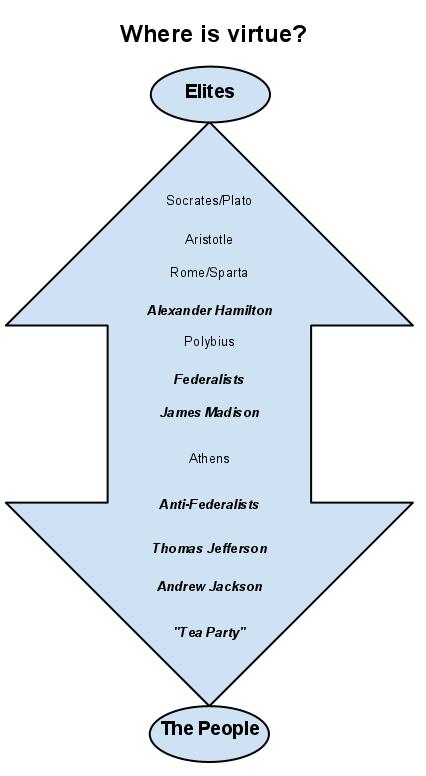
The question here is about virtue. Who is most likely to be virtuous/corruptible? The common people, or the elites?

This question has an ancient pedigree. The answer a society gives at any given time in effect determines the kind of democracy it will practice and the kind of institutions it will build: It will shift power (or pretend to shift power) to the pole it considers more capable of virtue.

I’ll say more about all this in future posts (especially in response to a great biography of Andrew Jackson I just finished reading). But for now I just wanted to amuse myself with another little diagram. As ever, I’m not taking it too seriously, just trying to order my thoughts and invite yours.

Below, I’ve placed some of the figures that have appeared here on The Hannibal Blog over the past two years (each one has a Tag, or you can search for his name) along a spectrum.

Classical thinkers are in normal font, American ones in bold italics.

(Notice the centrality of James Madison, the primary architect of the Constitution. His answer was, in effect, to be agnostic on the question. Therein lies his genius and the strength of the constitution. So he represents the neutral value, 0)

So weigh in. You can also suggest where to place other thinkers, such as John Locke or Montesquieu, or modern pols such as presidential candidates, or foreign politicians.

The clothes and slippers on Wilshire Boulevard

I was sitting in a cafe on Wilshire Boulevard in Santa Monica when, diagonally across the intersection, the firetrucks, police cars and ambulances pulled up from all sides, sirens ablaze.

Another accident, said a customer near me.

One of my children goes to a little school on Wilshire, not far.

Often, as I sit in this cafe, I look up from my book and just look at the drivers zipping by. About half of them, maybe more, seem to be on their phones as they propel their heavy metal killing machines through this human hive. It’s so booooring to have to drive. Must talk or text to pass the time.

Later I walked to the ATM, then home. The ambulances were gone now. Only some clothes and slippers and what looked like a pair of sunglasses were left in the intersection, now guarded by cops.

Why did they not clean it up? I don’t know. Evidence, perhaps. The paramedics had cut the clothes from the two bodies, the better to try to save the lives.

I learned that a driver, aged 28, had plowed through two people, a man aged 61 and a woman aged 62 — perhaps a couple — at a crosswalk. They were walking on the zebra stripes, and the driver simply did not stop.

Was he texting or on the phone? I asked the cop. He couldn’t, or wouldn’t, say.

Did that matter? I wondered. Perhaps only insofar as the answer might, just might, make others change their behavior (ie, put their phones away in the car) and save lives not yet lost or shattered.

More than two lives had just been lost or shattered right here, while I was drinking a double latte across the street. Not just the two whose clothes I was seeing. All the lives they had touched. I walked home to my kids.

Ordinary words → extraordinary thoughts

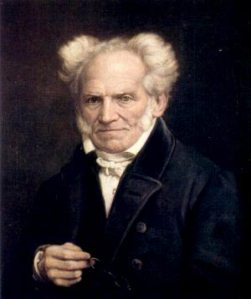
One of my favorite quotes is by Arthur Schopenhauer. In German:

Man gebrauche gewöhnliche Worte und sage ungewöhnliche Dinge.

That could be translated several ways:

Take common words and say uncommon things.

Or:

One should take usual words and say unusual things.

Or:

Use ordinary words and say extraordinary things.

Doesn’t this say it all, for us writers and storytellers?

_________

PS: This could become a motto for The Hannibal Blog, especially in conjunction with Walt Whitman’s quote and Albert Einstein’s quote:

  1. Whitman gives us license to let our intellect roam freely without fear of the (inevitable) contradictions we bump into along the way;
  2. Einstein reminds us to search for the simplicity hiding beneath all that bewildering complexity, (as Alexander the Great and Carl Friedrich Gauss do, too);
  3. Schopenhauer reminds us to express what we found on Whitman’s journey with words of Einsteinian simplicity.

PPS: Schopenhauer is famous but not widely read anymore. I once had a little Schopenhauer phase. And since I did the work, you shouldn’t have to: All Schopenhauer did was to translate what we would consider Buddhism or Upanishadic Hinduism into German. So now you, too, know Schopenhauer.

PPPS: I can’t help but wonder what feedback my own publisher would have given Schopenhauer apropos of … his author photo!

The evolution of my author photo

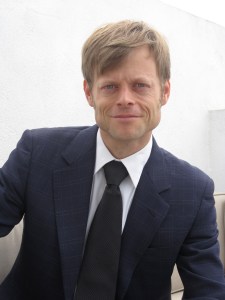
As part of readying my book for its launch on January 5th, my publisher asked me for an author photo for the inside flap of the jacket’s backside.

The resulting email exchange (which has been edifying and hilarious but must remain private, at least until publication) made me reflect on some larger issues:

  • identity,
  • image,
  • authenticity,
  • message,
  • style etc.

In meditating on these, it helps that the stakes are low — very, very low.

Suffice it to say that my publisher made us go three rounds (“us” = my wife, who took the photos, and me).

I will show you all three, but in no particular order. And I won’t say (yet) which one the publisher chose. (Yes, it’s the publisher, not I, who did the choosing.)

And then, at the bottom of this post, you get to vote. And if you’re so inclined, you can comment more fully below.

Herewith:

Now vote:

The sociological breakthrough of Google+

My last Facebook update said:

Too busy playing on Google+ to check FB

And that was five days ago.

The truth is that I’ve long been too busy doing anything to check Facebook. I’ve secretly, and increasingly, loathed Facebook since I joined it, which was relatively early (beginning of 2007, I believe), because my beat at The Economist back then was Silicon Valley, and it was simply part of my job to be fiddling with stuff like this. (I’m not the only one loathing FB, apparently.)

Ah, 2007. That seems like a distant era now. I still recall meeting Mark Zuckerberg, who was not yet used to meeting anybody, much less the heads of state and glitterati that surround him now, and who was awkward even by the standards of Silicon Valley’s skewed autism spectrum. (Here is the profile I wrote about him soon after that meeting.)

So anyway, I was and remained “on Facebook”, the way one just is. How could I not be? But I was almost entirely passive (observing incoming updates without sending outgoing ones). And I was proud of my wife, who is savvy in such matters and simply said ‘I’ll sit this one out’. She never signed up.

Why this skepticism?

Because Facebook is fundamentally (=unalterably) indiscreet.

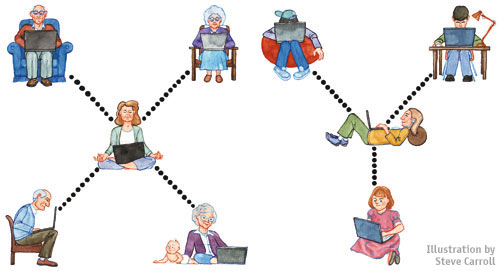
And it is fundamentally indiscreet because it is architecturally indiscrete. (Forgive me that word play.) Meaning: you cannot distinguish easily between different degrees of intimacy among the people in your social graph. The various relationships are not discrete, not separate.

Mark’s vision (as he told it to me back then, and as I described it in my early profile) was to be a “mapmaker” (like the heroic explorers of the Renaissance) of human connections. To him that was an algorithmic challenge. I always knew that his premise was unsound sociologically.

Tell me: In real life, how often do you walk up to somebody and request to be “friends”, then begin “sharing” pictures of your naked baby?

How wonderfully warm and fuzzy do you feel when somebody (oh yes, wasn’t he on my soccer team 30 years ago? Or perhaps I vomited on him at that keg party in 1989?) stops you on the street, asks to be “friends”, then shares his baby pictures with you?

Mark has been asking us all to do exactly this sort of thing. I thought it was strange back then, and I said so in our pages. (The picture at the top of this post is from that old piece.) But — did I mention? — that was in 2007. A different era, as I said.

Facebook then put us all on a roller coaster of “privacy” policies. (We’ve discussed some of them on this blog.) It got more and more confusing, and simultaneously boring. Who wants to put in the time to learn what Mark is up to now?

Plus: the page started to look like Times Square in the 1970s. (Remember, aesthetics really, really matter to me.)

So now we have Google+. It has not even officially been launched yet, but seems to have passed 18 million users today. We all thought that sheer fatigue would keep all of us from filling out yet another profile. But lo, everyone I know is already there, and we’re playing happily. Even my wife is trying it out.

Google+’s crucial innovation (among many others existing or planned) is Circles. You can make as many of them as you like. They can contain 1 person, 2 people, the Dunbar number, or the entire web. Because there are things you want to share with just one person, or with 2, or with lots, or with everybody (as on WordPress).

Ergo: Discrete → discreet

You also don’t have to ask anybody to be your “friend”. Nor do you have to reply to anybody’s “friend request”. You simple put people into the discrete/discreet spheres they already inhabit in your life.

Quite a few of us — Nick Bilton at the NYT, for example — seem to be optimistic that this is the beginning of a good trajectory. (Nothing new should be evaluated by what it is today. What matters is what it will become tomorrow.)

Now, if you had asked me which company I considered least likely to come up with such a sociologically simple and elegant solution, I might well have answered: Google.

Its founders and honchos worship algorithms more than Mark Zuckerberg does. (I used to exploit this geekiness as “color” in my profiles of Google from that era.) Google then seemed to live down to our worst fears by making several seriously awkward attempts at “social” (called Buzz and Wave and so forth).

But these calamities seem to have been blessings. Google seems to have been humbled into honesty and introspection. It then seems to have done the unthinkable and consulted not only engineers but … sociologists (yuck). And now it has come back with … this.