Skip to content

Posts from the ‘Biography’ Category

Dealing with disaster

Shackleton

Chapter 7 in Hannibal and Me is titled “Dealing with disaster”. So, how does the Hannibalic story tell us to deal with it?

First, a reminder about the premise of my book: I use stories of real people to make universal points. Put differently, I use the people in the stories to personify lessons (but you, the reader, ultimately have to adapt the lessons to your own life.).

The first personification of responding to disaster in life is named Quintus Fabius Maximus. (From the picture above, you may have guessed that by the end of the chapter he will have a “twin” in Ernest Shackleton, as I explain below).

As I introduce Fabius on page 144 ff., he

came from one of the oldest and noblest families of Rome, the Fabii, who claimed they could trace their ancestry back to Hercules. But Hercules was not exactly the first image that came to mind when looking at Fabius himself. When he was a boy, one of his nicknames was Verrucosus — “Warty” — because he had a big wart on his lip. Another nickname in his youth was Ocivula, “Lamb,” because he had an unusually mild temper for an aristocratic Roman boy. He did everything slowly. He spoke slowly, walked slowly, learned slowly. He was bad at sports in a society that was all about athletic, virile, and martial games. Young Fabius was in almost every way the exact opposite of young Hannibal. …

And yet the Romans gradually changed their minds about the warty, lamblike Fabius. As the boy grew into a man, that same slowness began to look like steadiness and prudence…

He was already in his forties when [the Romans] first elected him consul. As senator or elder statesman, five times as consul and twice as elected “dictator,” Fabius remained one of the republic’s leaders for the rest of his life.

By the time the young and dashing Hannibal crossed the Alps into Italy, Fabius was already in his sixties. … Fabius had never encountered such an enemy. What, Fabius reflected in his slow and methodical way, should he, and Rome, make of Hannibal?

And then, of course, the disasters began. Battle after battle in which Hannibal routed Roman armies that outnumbered him. Rout is the wrong word. Hannibal exterminated Roman armies, he depleted the Roman population of men, of senators, of sons, of fathers. From the Roman point of view, Hannibal represented the extinction of Rome.

How Hannibal did that — how he won those battles — I deal with in the preceding two chapters. But in Chapter 7, I’m looking at these events purely from Fabius’s side, so that we can understand how to deal with disaster.

And Fabius offers us a psychologically layered answer. Page 146:

… The younger Roman leaders found this hard to admit, but Fabius simply accepted that Hannibal was superior on the battlefield. That premise led Fabius to a simple but shocking conclusion: if going to battle against Hannibal meant losing, it was clearly not a good policy to go to battle against him at all. …

In these extreme circumstances, Fabius decided, the strategic definition of success was no longer victory but stalemate. In his slow and methodical way, Fabius thus determined that Hannibal’s stunning triumphs on the battlefield might yet lead to nothing. They might be impostors.

So what were the elements of his response, of “the Fabian response” in the language of my archetypes?

Page 153:

There are two aspects to a Fabian character that make it resilient and that you might remember if ever disaster should strike you. The first is the ability to accept reality for what it is. The second is the ability to stop resisting reality and instead to flow with it until circumstances begin to change.

1) Acceptance

From page 154:

Shock, denial, anger, bargaining, depression, and finally acceptance: these are the stages that make up the human “grief cycle” described by Elisabeth Kübler-Ross, a twentieth-century Swiss doctor who spent her time caring for dying people…

Losing your job, losing your house to foreclosure, being diagnosed with cancer, getting divorced — any bereavement, failure, or other disaster triggers the psychological responses of the grief cycle. But people move through the grief cycle in different ways. Some progress swiftly, others get stuck at one stage, and yet others cycle back and forth through them. …

Page 157:

Eventually, however, some grief-stricken individuals will arrive at a state of acceptance. As Kübler-Ross puts it, “Acceptance should not be mistaken for a happy stage. It is almost devoid of feelings.” But it is the stage where the person is ready to move on…

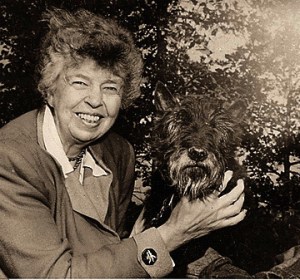
I illustrate this wrenching process in this chapter by looking at Eleanor Roosevelt, who suffered through the grief-cycle after discovering the love letters between her husband and their secretary, Lucy Mercer. Roosevelt literally cried and raged it out, while sitting for hours and days and weeks in a park, gazing at the female face of a statue called … Grief.

2) Flowing (or “non-doing”)

As Fabius himself said (to a consul who would soon be killed because his co-commander refused to heed this advice): “Can you then doubt that inactivity is the way to defeat an enemy?”

Page 158:

One translation of Minucius’s [a Roman rival to Fabius] taunt about Fabius’s do-nothing tactics into Chinese is wu wei, which means “nondoing” or “doing by not doing.” Wu wei happens to be a central concept of “the way,” the Tao, in Chinese philosophy. This Taoist notion of wu wei, nondoing, is often mistaken for passivity, which it is not. Instead, nondoing is really a very active way of letting inevitable things happen without wasting energy resisting them, instead bringing one’s own position into harmony with this flow of nature. The principle of wu wei might say, for instance, that is is better to use a rushing stream to spin a wheel and transfer its energy than to block the stream and try to make it stop flowing. Or it might say that a skipper is better off tacking through the wind than trying to go against it, which would be futile. Indeed the best skippers often look, as Fabius did, as though they were “doing nothing”….

I then illustrate this point by looking at Ernest Shackleton, who (page 161),

decided to cross the entire Antarctic continent on foot. It was as daring in 1914 as it had been in 218 BCE for Hannibal to Cross the Alps…

But, as you all know, Shackleton failed at his quest, when his ship, the Endurance, got stuck in the ice.

Page 162:

Shackleton’s first reaction was to order his crew to do what heroes normally do: fight. The men climbed onto the ice and hacked away at it with picks, trying to open a sea-lane. But it was useless…

They now spent the Antarctic winter on their ship, which was frozen into its ice pack. No light, eternal darkness. All the stages of Kübler-Ross’s Grief Cycle.

Then the ice crushed the Endurance, and the men watched as their ship sank. Page 164:

Suddenly, the men were all alone, floating on ice somewhere near the South Pole.

Shackleton announced new plans of daring and heroic resistance: they would march, while dragging their own life boats, across the ice toward an islet, covering roughly the distance from San Francisco to Loas Angeles. Page 164-165:

After three hours of hard toil, they had moved one mile. It began to snow. The next day they tried again, but the snow was like glue. … The next morning they tried again. Shackleton went ahead and scanned the ice. He saw pressure ridges where colliding ice floes had formed mountains that looked as forbidding as the Alps.

Shackleton turned around and walked back to the group. He took deep breaths of the icy air and prepared to announce his decision, which he knew was probably the weightiest of his entire life. At first, he had thought that attacking the enemy was the best thing to do, both for morale and for their chances of survival. But he now thought that he might have been in denial. During the night, he had accepted reality, and seeing the endless ice mountains around them had confirmed it. Instead of attacking and wasting caloric energy to make at most a mile  a day toward who knew where, they would instead … do nothing.

And to understand why this saved him, why this turned his disaster into one of the greatest triumphs in human history, you have to know something about the ice. For that, you’ll have to read the book.

The ice … the Tao.

Fabius, Roosevelt, Shackleton … you. 

To be continued.

Hannibal and Me: contents & dramatis personae

Here is my table of contents, which gives you a sense of the structure of the book: For the most part we “age with” Hannibal, and also with Scipio, in the main storyline, so that we face the issues that arise at each stage of life.

In bullet points, I’ve put some of the people that come up in each chapter. You can try to figure out the context in which they appear, and why.

One. HANNIBAL AND ME

  • Hannibal
  • Me
  • (A bit of Carl Jung, tiny bit of Scipio and Fabius)

Two. THE INFLUENCE OF PARENTS

  • Hamilcar, Hannibal, Hasdrubal, Mago
  • Theseus
  • Barack Obama
  • Eleanor Roosevelt
  • Amy Tan
  • (Gerhard Kluth)

Three. DO YOU NEED A GOAL?

  • Hannibal
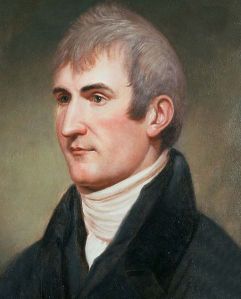
  • Meriwether Lewis (and Thomas Jefferson, William Clark)
  • Harry Truman
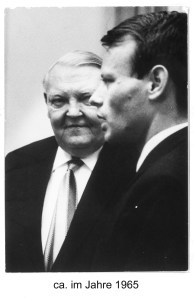
  • Ludwig Erhard

Four. TOWERING PEAKS

  • Hannibal
  • Pablo Picasso
  • Paul Cézanne
  • Meriwether Lewis

Five. THE ART OF WINNING

  • Hannibal
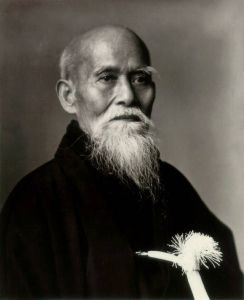
  • Morihei Ueshiba
  • Cleopatra (and Julius Caesar

)

Six. TACTICS AND STRATEGY IN LIFE

  • Hannibal (and Sosylus)
  • Carl von Clausewitz
  • Steve Miller and Tiger Woods
  • Cleopatra
  • Douglas MacArthur and Harry Truman
  • Pyrrhus and Cineas

Seven. DEALING WITH DISASTER

  • Quintus Fabius Maximus
  • Elizabeth Kübler-Ross
  • Lance Armstrong
  • Lao Tzu and Sun Tzu
  • Eleanor Roosevelt
  • Ernest Shackleton

Eight. THE PRISON OF SUCCESS

  • Hannibal
  • Tennessee Williams
  • Amy Tan
  • Eliot Spitzer
  • Albert Einstein

Nine. THE LIBERATION OF FAILURE

  • Publius Cornelius Scipio
  • Steve Jobs
  • Eleanor Roosevelt

Ten. THE THRESHOLD OF MIDDLE AGE

  • Hannibal and Scipio
  • Carl Jung (and Sigmund Freud)
  • Ernest Shackleton

Eleven. POLITICAL DEATH

  • Scipio and Marcus Porcius Cato
  • Ludwig Erhard (and Konrad Adenauer)
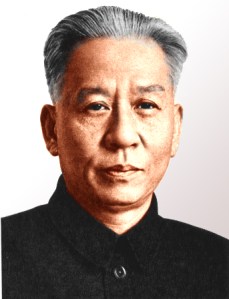
  • Liu Shaoqi (and Mao Zedong)

Twelve. AGING AND TRANSCENDING

  • Hannibal and Scipio
  • Abraham Maslow
  • Ludwig Erhard
  • Eleanor Roosevelt
  • Albert Einstein

Thirteen. THE LESSONS OF HANNIBAL

  • All of the above
  • (plus Arjuna)

A pretty long chat about Hannibal and Me

So now at last (with two months to go until launch on January 5th), I can start to open up a bit about what’s actually in the book.

The other day, my publisher and I had a conversation about some of the ideas. I’ve put a transcript of that chat up on this page.

We were just scratching the surface in that conversation. And that is becoming my chief difficulty in this process: Whenever anybody asks me anything about the book (such as: “What is it about?”), I want to answer with the whole book. Can’t do that.

So, if you feel so inclined, you might do me a favor: Tell me which bits of the conversation hit, move, stimulate, enrage or otherwise interest you.

That would be enormously helpful: From your reactions, I will try to figure out what the various “elevator pitches” might be. You know: my 10-second answer when some radio host interviews me about the book. As in:

Host: So, Andrew, you wrote a book about success and Caesar, is that right?

Andreas: Both success and failure, actually, and the main character is Hannibal.

Host: Lecter?

Andreas: No, the other one….

The story of Cicero, told well

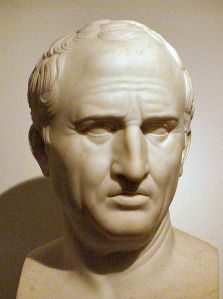
I just devoured Robert Harris’s Imperium, the first book in what will be a trilogy of historical fiction, or fictional biography, about Cicero. I read it in a couple of sittings, hardly able to put it down. It may be the best way to learn about that great man and that fascinating time, a turning point in world history. I’ve just ordered the second book in the trilogy, and I can’t wait for the third to come out.

In terms of themes that show up a lot here on this blog:

  1. Storytelling: Wow. Harris has Cicero’s slave and confidante Tiro tell the story from his point of view, which works well. All the details of Roman life and of the characters (Crassus, Pompey, Caesar etc etc) come to life.
  2. The “impostors triumph and disaster”: Cicero embodies them (though not quite as perfectly as Hannibal and Scipio do, which is why I myself chose them to tell my own story. ;) )
  3. The tension between mobs and elites, republican and democratic power sharing, what ought to be and what is.

Among other things.

In any case, if you like The Hannibal Blog, you’re likely to like not only Hannibal and Me in January but also Imperium right now.

The mob in the White House: Jacksonian populism

Recall that I placed Andrew Jackson near the “populist” (as opposed to “elitist”) pole in the spectrum. Here, from Jon Meacham’s excellent biography of Jackson, is a little anecdote that shows how easily such populism veers into mob rule.

I) Background

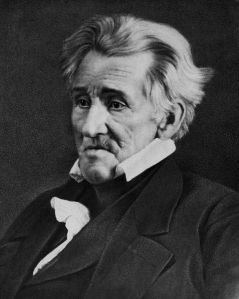
The seventh president, six foot one but only 140 pounds — “gaunt but striking, with a formidable head of white hair, a nearly constant cough, a bullet lodged in his chest,” according to Meacham — was orphaned at 14 and never knew his father (rather, if not quite, like Hamilton,  Obama/McCainClinton/NewsomVillaraigosa and other presidents).

He also never had biological children of his own. In this respect, he was similar to George Washington. Both Jackson and Washington, in the popular mind, made good “fathers of the nation” because, childless, they regarded the people as their children.

But above all, Jackson was the first president to come from “the common people,” from what we would call the lower classes. The six presidents before him had all been members of an educated, classically trained elite. This contrast became Jackson’s salient feature. He would spend his two terms fighting against what he perceived as elites.

As Meacham puts it (emphasis mine):

Before Jackson, power tended toward the elites, whether political or financial. After Jackson, power was more diffuse, and government, for better and worse, was more attuned to the popular will….

The [debates among the Founders had] largely concerned how the new nation might most effectively check the popular will. Hence the Electoral College, the election of senators by state legislatures, and limited suffrage. The prevailing term for America’s governing philosophy was republicanism–an elegant Enlightenment-era system of balances and counterweights that tended to put decisive power in the hands of elites elected, at least in theory, by a country of landowning yeomen. The people, broadly defined, were not to be trusted with too much power. This creed, best articulated by James Madison and Alexander Hamilton, lay at the heart of presidential politics in the first decades of the nineteenth century, years in which a small establishment in the capital essentially decided on its own who would have the chance to live in the White House.

Jackson had reason to regard this elitism as his personal enemy. In the election of 1824 he won the popular vote but was tied in the electoral college and lost in the House of Representatives. In his mind, the people had chosen him, but the elites had robbed him of the office. So in the next two rounds, which he won, he took his fight directly to the people, even going on the first presidential campaign tour.

Meacham:

The force driving Jackson after 1824: a belief in the primacy of the will of the people over the whim of the powerful, with himself as the chief interpreter and enactor of that will…. “the republic is safe, and its main pillars — virtue, religion and morality — will be fostered by a majority of the people”… Democracy was in; elitism was out.

(Notice his explicit mention of virtue as residing in the common people — that, ie the putative location of virtue, was what I attempted to trace across time in that diagram post.)

II) Inauguration Day

On the day in 1829 he was sworn in, Jackson (apparently without prior planning) opened the White House to “the people”. They gladly obliged by piling in. As one contemporary lady of letters described it:

no police officers placed on duty and the whole house [was] inundated by the rabble mob…. The Majesty of the People had disappeared, and a rabble, a mob, of boys, negroes, women, children, scrambling, fighting, romping [replaced it] …. the carpets and furniture are ruined …. The armies of democracy were pitching their tents in Andrew Jackson’s White House. …

Supreme Court Justice Joseph Story, who was at the White House that day, declared the “the reign of King Mob.”

Two other takes on Socrates + a lesson

Prostitutes could confidently ply their trade by slipping on customised little hobnail boots and casually strolling up and down the alleyways. In the dust their shoe-nails would spell out akolouthei – ‘this way’, or ‘follow me’.

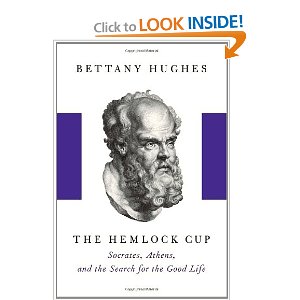
Isn’t that a great little detail? When strung together densely in one single narrative, these details transport you to a place and a time, to Athens during the life of Socrates. Kudos to Bettany Hughes for achieving such intensity in The Hemlock Cup: Socrates, Athens and the Search for the Good Life.

And oh, what an Athens it was. This is the Athens of aromas and stink; of sweat, blood and sperm; of tanners pissing on their hides and Adonises oiling themselves for war games; of parades, assemblies and battles; of sex, slavery and domesticity; of democratic group-think, individual liberty and massacre; of humanity at its highest and simultaneously its lowest; of strutting health and vile disease.

Regarding disease, for example, is it not obvious that a plague such as the one that fell on war-torn Athens during Socrates’ prime must have influenced the subsequent events and the worldview of Socrates and his compatriots?

[W]ithin a year the disease danced its way through the caged population of Athens and across the hot streets; 80,000 died. At a cautious estimate, at least one-third of the city was wiped out. It had started in 431 BC.

Imagine one third of Americans, 100 million, dying in one year from a plague.
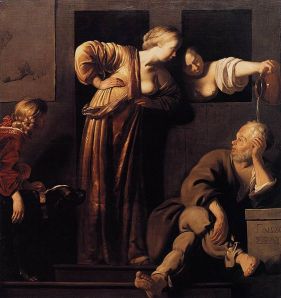
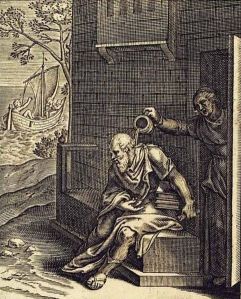
But we also need the lighter moments. For example, that time (beloved by artists, as above and below) when Socrates’s wife doused him with piss:

Xanthippe, raging after one argument with her maddening philosopher spouse, pours the contents of a bedpan over Socrates’ head; ‘I always knew that rain would follow thunder,’ sighs the philosopher, resignedly mopping his brow.
So Hughes accomplished something big: She brought that world-historical character, Socrates, to life. It’s a scandal how dull ‘philosophers’ (as opposed to historians) usually make Socrates. We needed this ‘biography’. She makes reading about Socrates easy and fun and personal. That is what I tried to do with Hannibal and the other characters in my own book.

(And, by the way, a reminder: Don’t ever assume that a thread on The Hannibal Blog has ended just because it slumbers for a few months. Both the series on Socrates and that on the Great Thinkers will continue. I have big plans for them.)

Another recent book on Socrates and the great philosophers is Examined Lives: From Socrates to Nietzsche by James Miller. It tackles a selection of thinkers, one per chapter:

  • Socrates
  • Plato
  • Diogenes
  • Aristotle
  • Seneca
  • Augustine
  • Montaigne
  • Descartes
  • Rousseau
  • Kant
  • Emerson
  • Nietzsche

Since three of my own favorites were on the list, I bought the book. (The three, each with his own tag here on The Hannibal Blog, are Socrates, Diogenes and Nietzsche.)

Miller, too, sets out to write a biography (as opposed to a philosophical essay). His conceit, if I may paraphrase it, is to examine the lives of those who examined their lives.

Put differently, he wants to see how various philosophers lived and whether they just ‘talked the talk or also walked the walk’. Did their lives reflect their love of wisdom (= philo-sophy), or where they hypocrites?

Socrates, in this exercise, comes off splendidly. He embodied the love of wisdom and lived accordingly, searching for the good and treasuring simplicity. From Miller:

Socrates prided himself on living plainly and “used to say that he most enjoyed the food which was least in need of condiment, and the drink which made him feel the least hankering for some other drink; and that he was nearest to the gods when he had the fewest wants.” … Abjuring the material trappings of his class, he became notorious for his disdain of worldly goods. “Often when he looked at the multitude of wares exposed for sale, he would say to himself, ‘How many things I can do without!’ ” He took care to exercise regularly, but his appearance was shabby. He expressed no interest in seeing the world at large, leaving the city only to fulfill his military obligations.

And, of course, he died for his principles.

Diogenes, whom I admire so much for his extreme simplicity/freedom, arguably became the caricature of this Socratic lifestyle:

While Diogenes regarded Plato as a hypocrite, Plato saw Diogenes as “a Socrates gone mad”—and by Plato’s standards, he certainly was.

Masturbating in public and living in a barrel can give you that kind of reputation.

Plato and Aristotle arguably started that other trend, that of the hypocrite philosopher, talking/writing sophisticated words while, one way or another, selling out in private life. By the time you get to Rousseau, the hypocrisy becomes hard to stomach (I’ll leave that for another post some day.)

Storytelling lesson: unity vs fragmentation

But that’s not what I was mainly pondering after reading these two books, one after the other. Instead, I was reflecting why one author succeeded in a big way, and the other possibly failed in a small way.

Hughes, in The Hemlock Cup, succeeded big. She tackled an intimidating subject (intimidating because Socrates is not exactly an under-covered subject) in an innovative way and rose to the challenge by presenting one single, unified tale, no part of which a committed reader would dare to omit or skip.

By contrast, Miller, in Examined Lives, put forth a list, then broke his narrative into discrete chapters for each person on the list.

There is a problem with such lists: Why this list, and not some other list? Why Augustine and not Aquinas? Why Descartes and not Spinoza? Why Montaigne and not Montesquieu? Et cetera.

The result is that the reader, as he progresses, is increasingly tempted to skip the chapters that don’t interest him to speed ahead to those chapters that do interest him. I confess that I did that. Life is short, and I was a bit bored on some pages.

A good author reins in his readers as a charioteer steers his horses. He has readers asking the questions he, the author, is asking, not some other question (such as: where is Hegel?).

What could Miller have done differently? He could have woven the various lives together so that each chapter was about a theme, not an philosopher, and the various philosophers that interest him reappear at the right places.

My choice

You should take this with a grain of salt, because I have a reason to be thinking such thoughts.

A few years ago, when I first contemplated the book I wanted to write, I also envisioned it as a collection of chapters about various individuals that interested me (around the theme of triumph and disaster being impostors). (Hannibal was to have one chapter, Scipio one, Einstein one, Roosevelt one, et cetera.)

When I pitched that to an agent, he suggested that a better (but also more challenging) book would thread the lives together into one unfolding story, so that readers would not be tempted to disassemble the book and cherry-pick among the chapters. That structure would also force me to do the hard work of actually teasing out the themes concealed in these lives.

I took that advice. You can soon (on January 5th) decide whether I succeeded at it or not. For now, I simply observe with fascination how other authors approach this choice.

Alcibiades: cad, charmer, hero, foil to Socrates

359px-Bust_Alcibiades_Musei_Capitolini_MC1160

I’m finding myself intrigued in the extreme by a figure from antiquity as colorful as Hannibal: Alcibiades. He is such a good character, he might be worth another book.

Why? Mostly because he was a (bad) student of Socrates‘, and indeed the perfect foil for the great old man:

  • Socrates: ugly. Alcibiades: gorgeous.
  • Socrates: wise, deep, profound, intellectual, curious. Alcibiades: confused, cynical, shallow, but clever!
  • Socrates: interested in justice. Alcibiades: interested in himself.
  • Socrates: tried to teach Alcibiades inner values. Alcibiades: tried (and failed) to sleep with Socrates

Let me give you an abbreviated and simplified biography of this man. (One reason why many people never learn to appreciate history is that many teachers get bogged down in boring detail. So let’s not make that mistake today.)

Alcibiades, his father having died young, was raised in the home of his uncle, Pericles, the greatest statesman of Athens, which was in turn the greatest power of Greece. Alcibiades was thus a rough equivalent of, say, a Kennedy heir in the 60s and 70s–a party boy in a powerful family.

On the eve of Alcibiades’ own entry into Athenian politics, Socrates took an interest and, using his customary Socratic irony (in which Socrates pretends to be less than he is), got Alcibiades to talk about what he wants Athens to do, in the process exposing him to be the confused young man that he was.

Alcibiades, being good-looking (and very much the ladies’ man, of which more in a minute) and charming, rose politically. He became a general in the Peloponnesian War, one of two to take a huge invasion army to Sicily in what was to be one of the dumbest pre-emptive strikes in history.

Just after they sailed, however, the Athenians discover that somebody had, apparently as a prank, broken off all the erect phalluses on the statues of Hermes, which was sacrilege. This was exactly the sort of thing that Alcibiades got up to when he was drunk, so he was presumed guilty. (Then again, he was such an obvious culprit that he may have been framed.) So the Athenians sent another ship after the invasion fleet to arrest their general and bring him home for trial.

Alcibiades did not like that idea and defected to … Sparta! The enemy. Because he was so charming, the Spartans accepted him, and Alcibiades helped them defeat the Athenians. But then it was found out that Alcibiades was sleeping with the wife of one of the Spartan kings, so he made a hasty exit.

Next he went to Persia, Athens’ other enemy. He charmed them, advised them …. (you get the pattern).

Such was his charm and charisma that, after having been a traitor to his native country so long, he then persuaded the Athenians to take him back! For a while, he became their general again. But then he fell out again and crossed back over the Hellespont to another kingdom.

He was sleeping with a girl there one day when his political enemies (he had amassed a few by then) surrounded the house. Alcibiades grabbed a dagger and, possibly naked, attacked. He died in a hail of arrows.

Bookmark and Share

Writing a great draft (by crucifying my darlings)

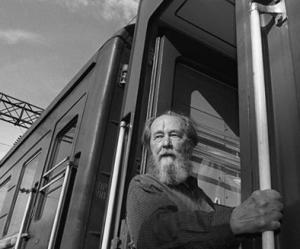
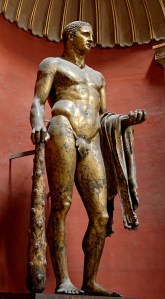
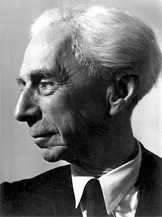
What do the people below have in common?

solzhenitsin

John McCain

Jk rowling

Heracles

Bertrand_Russell_1950

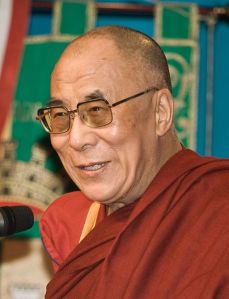
Dalai Lama

In other words: Aleksandr Solzhenitsyn, John McCain, J.K. Rowling, Hercules, Bertrand Russell and the Dalai Lama.

Answer: They are people whose “lives” or stories I have cut from the second draft of my book manuscript.

Now, I am entirely aware that seeing these people on the same list is bizarre to begin with. What could they possibly have done in the same book–my book-in the first place? Why would I cut them out now? And who might be left?

I’m not at liberty to answer these questions right now, but I will say this:

Good writing and editing is in part about “crucifying your darlings,” as Ed Carr, one of my editors at The Economist, once said to me. And I have decided–boldly and without regret–that my book will be better with fewer lives.

Less is more, in other words. The total word count has stayed the same, but I have gone much deeper into the characters I have chosen, and have done a much better job weaving them together into precisely the narrative about success and failure that I am trying to produce.

I am very happy with the story that’s emerging. This, to me, is the fun part. How absurd that must sound to everybody else.

Bookmark and Share

Tactics vs Strategy: MacArthur vs Truman

Tactician

Tactician

  • Knowing means from ends
  • Knowing tactics from strategy
  • Understanding why the first must always be subordinate to the second

These, as I argued in the previous post, are the greatest and most enduring lessons of Carl von Clausewitz, and the reason why I include him in my pantheon of great minds.

Where I have most fun in my forthcoming book is in fleshing out his ideas in contexts other than war, to show that strategy applies to all areas of life. But today I want to make his ideas a bit more concrete in the obvious context: war.

So allow me to introduce the two archetypes:

  1. Douglas MacArthur and
  2. Harry Truman
Strategist

Strategist

Here is their story (from one of the best biographies ever written):

Nuke to win, nuke to lose

In June of 1950, Communist forces from North Korea poured south across the 38th parallel in an all-out attack on South Korea. Harry Truman, having come to power late in life, was the American commander-in-chief and had already made history by dropping the first and only two atomic bombs on Asian cities just five years earlier. He knew immediately and instinctively that this Communist attack had to be reversed or contained. And there to execute this purpose, in theory, was Douglas MacArthur, the commander of the United Nations forces in the region, as well as a certified American Hero from World War II and a notorious prima donna.

MacArthur began true to form, with a swashbuckling landing at Inchon in South Korea. He took the enemy by surprise, liberated Seoul in eleven days and, by October 1st of 1950, brought UN forces—primarily composed of Americans—back to the 38th parallel that the North Koreans had crossed. MacArthur now wanted a “hot pursuit” , and Truman authorized him to cross the 38th parallel.

Truman, however, added a crucial strategic condition: Do not to provoke the Chinese to enter the war, lest that should spark World War III and possible nuclear Armageddon!

Right around then, things began going wrong, not only in the war effort but also in the relationship between MacArthur and Truman.

When the two men met–for the only physical meeting of their lives–on  a tiny coral islet in the Pacific, MacArthur tellingly greeted his commander-in-chief but failed to salute. The two men then met alone, before inviting others to join them. Truman made clear his overarching concern, one that Clausewitz would have approved of: to keep this a “limited” war,  meaning a war to meet one single objective—rebuffing Communist aggression in Korea—without risking an escalation into what Clausewitz would have called an “absolute” war.

But the following month, Truman’s fears came true and the Communist Chinese attacked with huge force. Suddenly, MacArthur, who had been dreaming of another glorious military victory, was trying to avoid a humiliating defeat. He demanded:

  • huge reinforcements,
  • a wholesale naval blockade of all of China and
  • immediate bombing of the Chinese mainland.

MacArthur wanted to broaden the war and to burst any remaining “limits” on it. For MacArthur, there was only one objective: victory. At all costs!

Truman thought the exact opposite. His first fear had already come true, and he now worried that the Chinese were the advance guard of a Soviet Russian intervention, what he called “a gigantic booby trap”  that could lead to the explosion of World War III.

Truman and MacArthur started issuing competing press releases. MacArthur began publicly blaming Washington for everything that was going wrong. He disobeyed specific orders. He called on Truman

  • to drop thirty to fifty atomic bombs on the cities of China (!) and
  • to “sever” Korea from China by laying down a field of radioactive waste all along the Yalu River.

MacArthur appeared to have lost his mind. He even issued his own ultimatum to the Chinese government, as if he were president.

Big Man vs Little Man

At last, Truman took the inevitable measure and fired MacArthur. This was an obvious step, but not an easy one. MacArthur, to ordinary Americans, was still a war hero, whereas Truman’s approval was at an all-time low of 26%. (Hard to remember today, but true.) Time Magazine wrote that “Douglas MacArthur was the personification of the big man” whereas “Harry Truman was almost a professional little man.”  In a poll, 69% of the country backed MacArthur. There were calls to impeach Truman. (Never underestimate the capacity of a democracy, whether Athenian or American, to run amok!)

In time, minds cleared. Truman settled for a stalemate in Korea that continues to this day and is as tense and unsatisfactory this week as ever. He chose a “defeat” of sorts that has brought lasting peace. Communism would be contained for another four decades and then crumble, leaving American as the only superpower. Parts of East Asia, like Western Europe, would prosper in relative safety.

Had MacArthur prevailed, America might well have achieved “victory”, at the cost of another world war, nuclear annihilation of millions, and perhaps nuclear counterstrikes on America from the Soviets, who were fast catching up to the Americans in the technology. It would have been the ultimate impostor of a triumph, with nobody left to march in the victory parade through the radioactive planet.

Bookmark and Share

In praise of wonderment

Amazing, isn't it?

Amazing, isn't it?

Cheri’s comment about my use of the word wonderment made me … wonder. And so, a brief paean.

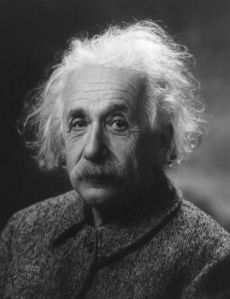
Einstein (on page 387 of this biography), once said:

The most beautiful emotion we can experience is the mysterious. He to whom this emotion is a stranger, who can no longer wonder and stand rapt in awe, is as good as dead, a snuffed-out candle.

I’ve talked before about Einstein’s love of simplicity and his non-conformity as keys to his astonishing creativity. But I should have started with his famously child-like ability to wonder.

Wonderment is the origin of every creative act. The natural flow of Hmms leads to questions and inquiries that are usually never quite answered but become signposts on a great journey, a great story.

People sometimes ask journalists how we get our ideas for stories and I’ve never had a good answer. There is no shortcut, no ten-steps process, no secret vault. Instead, it always starts with simple–and yes, child-like–curiosity and wonderment.

An ability to wonder is of course also what the reader/listener/viewer of a story needs. If you don’t find your own life and its ups and downs somewhat mysterious, you probably won’t enjoy my book when it comes out.

So here’s to wonderment, and its official inclusion in our thread on story-telling. Every good story begins and ends with it.

Bookmark and Share

Follow

Get every new post delivered to your Inbox.

Join 455 other followers

%d bloggers like this: