So Viktor Frankl says in the video above, summarizing his theory of logotherapy, which I’ve read at greater length in his book Man’s Search for Meaning. In other words, if people suffer but see meaning in their life, and even in their suffering, they do not despair, as he himself did not despair when he was in Auschwitz and other concentration camps.
He is therefore, as he also says in this video, the anti-Sartre. Sartre and the other existentialists believed that we have to accept the meaninglessness of our existence. I, in my black-turtleneck and Gauloise phase (everyone has one), used to think that was cool. But Frankl thinks it is nonsense.
Or rather, he thinks that it is unhealthy and unhelpful. Hence logotherapy, which
focuses rather on the future, that is to say, on the meanings to be fulfilled by the patient in his future. (Logotherapy, indeed, is a meaning-centered psychotherapy).
He calls it logotherapy because
Logos is a Greek word which denotes “meaning.” Logotherapy, or, as it has been called by some authors, “The Third Viennese School of Psychotherapy,” focuses on the meaning of human existence as well as on man’s search for such a meaning.
According to logotherapy,
this striving to find a meaning in one’s life is the primary motivational force in man. That is why I speak of a will to meaning in contrast to the pleasure principle (or, as we could also term it, the will to pleasure) on which Freudian psychoanalysis is centered, as well as in contrast to the will to power on which Adlerian psychology, using the term “striving for superiority,” is focused.
Speaking of the will to power, Frankl likes to quote Nietzsche:
“He who has a why to live for can bear almost any how.” I can see in these words a motto which holds true for any psychotherapy. In the Nazi concentration camps, one could have witnessed that those who knew that there was a task waiting for them to fulfill were most apt to survive.
Those people who do see meaning in their lives, says Frankl, are able to
transform a personal tragedy into a triumph, to turn one’s predicament into a human achievement.
I want to agree with Frankl, but the trouble starts when he describes how he applies his approach to actual therapy. To me it sounds like semantic trickery. He meets desperate people and tries to change their attitude, but really he only does some conceptual gymnastics and calls that meaning.
Once, an elderly general practitioner consulted me because of his severe depression. He could not overcome the loss of his wife who had died two years before and whom he had loved above all else. Now, how could I help him? What should I tell him? Well, I refrained from telling him anything but instead confronted him with the question, “What would have happened, Doctor, if you had died first, and your wife would have had to survive you?” “Oh,” he said, “for her this would have been terrible; how she would have suffered!” Whereupon I replied, “You see, Doctor, such a suffering has been spared her, and it was you who have spared her this suffering—to be sure, at the price that now you have to survive and mourn her.” He said no word but shook my hand and calmly left my office. In some way, suffering ceases to be suffering at the moment it finds a meaning, such as the meaning of a sacrifice.
I don’t doubt that the old man, out of love for his wife, preferred to bear the pain of being the survivor so that she did not have to. But his wife was still gone. His job (surviving her) was done. Pointing out that he had saved her pain did not give him meaning for his life from that point forward.
So my critique of logotherapy is really the same as my critique of religion: Sure, it might be helpful to see meaning (= believe in God), but that does not mean that there actually is meaning (=God). Sartre might be right after all.
I’m happy with it. But of course I am again on tenterhooks, and feeling quite vulnerable, as I await the reactions of my editor.
The improvement was dramatic. I am reminded again of what Khaled Hosseini, also a Riverhead author, said about writing and rewriting: the first draft is purely a frame. The book happens in the subsequent drafts.
Still, I can’t help but wonder also about the law of diminishing returns: Would I be able to make such a dramatic improvement again in a third draft? Or is this where the book wants to be? Am I perhaps … done?
For my piece in the current issue of The Economist, I had the pleasure of talking to, among other people, the equivalent of Meryl Streep in the porn industry: Nina Hartley. She is 50 and says she loves sex more than ever, on camera or off. She has been at it (the camera part) since 1984.
A somewhat unfortunate part of my job, as I am increasingly discovering, is that the most interesting parts of my research and my conversations often fall well outside the realm of what can make it into my articles. Yes, of course, readers might care about how the porn industry is doing. But they’re human so they must also be curious about, well, sex. After all, it’s not everyday that you get to talk to somebody who does it for a living.
In my case, I was just a tad shy for the first few moments. It helped that I have never “consumed” Nina’s “content” so I had no visuals to distract me. Still: How would I talk to somebody who views having sex as I view writing?
It turned out that Nina was very easy and very interesting to talk to. The conversation ranged just as it would have ranged with anybody else. Our health care debate drives her “mad.” California can’t govern itself. That sort of thing.
Performing sex on camera, she said, is
a highly paid form of blue-collar work… sort of like farm labor.
Everybody is an independent contractor and there are no benefits. No benefits. It’s important in such a conversation not to reach for the double entendres.
About the porn industry, Nina was somewhat nostalgic and sentimental. In the 80s, when she started, it was apparently a glamorous sort of thing. The product was hard to get and had rarity value, the production took place in a subculture that considered itself revolutionary. There was a frisson, a pioneer spirit, a certain excitement.
Now it’s seedy, cheap, everywhere. She wouldn’t start again today if she were young now.
So why is she still in it?
In large part because she actually likes the sex, she told me. She thinks that women increase their sensitivity in middle age. At least that is happening to her.
My enjoyment of sex has increased, but for most [performers] it goes down, especially the men.
I asked her if she meant that doing it on camera makes people “numb.” Sometimes, she says. Many performers stop having sex in their private lives altogether. The men basically have to, since they couldn’t have private sex, then perform as well the next day on camera, and any hint of “having trouble” might kill their career. But they also genuinely lose interest.
Nina sees her role now as “mentor” as well as actress, so she counsels the young performers not to let that happen.
Frankly, it amazes me that it–burning out–hasn’t happened to her. She must be a modern Aphrodite.
This appears to be a hot topic of research. Jag Bhalla (to whom The Hannibal Blog increasingly outsources the more intensive research into matters linguistic and narrative ;)) now points us to new theories by anthropologists who have apparently constructed the equivalent of genealogical family trees for humanity’s oldest stories.
Jamie Tehrani
Dr Jamie Tehrani, a cultural anthropologist at Durham University, studied 35 versions of Little Red Riding Hood from around the world. Whilst the European version tells the story of a little girl who is tricked by a wolf masquerading as her grandmother, in the Chinese version a tiger replaces the wolf. In Iran, where it would be considered odd for a young girl to roam alone, the story features a little boy. Contrary to the view that the tale originated in France shortly before Charles Perrault produced the first written version in the 17th century, Dr Tehrani found that the varients shared a common ancestor dating back more than 2,600 years.
He said: “Over time these folk tales have been subtly changed and have evolved just like an biological organism.” …
Dr Tehrani … identified 70 variables in plot and characters between different versions of Little Red Riding Hood…. The original ancestor is thought to be similar to another tale, The Wolf and the Kids, in which a wolf pretends to be a nanny goat to gain entry to a house full of young goats. Stories in Africa are closely related to this original tale, whilst stories from Japan, Korea, China and Burma form a sister group. Tales told in Iran and Nigeria were the closest relations of the modern European version.
(And once again, permit me to add paranthetically but immodestly that I am attempting in my forthcoming book to narrate just such an archetypal storyline about success, failure & reversal in life.)
First, for those of you who have not read the book, a quick overview:
The book is short and easy to read. It has two parts:
In Part I, Frankl talks about his own survival in Auschwitz and several other concentration camps, and his psychological observations about himself and others during that time.
In Part II, Frankl gives an overview of his psychiatric theory, which is called logotherapy, and which his observations about camp life were meant to prove/affirm.
As for Part I, I recommend it for everybody. I believe it is a timeless piece of writing, all the more so for its brevity and simplicity. In a compassionate, measured and compelling writer’s voice, Frankl gives us a view of what it was like. His tone is the opposite of shrill or sensationalist. He makes especially the “ordinary” details of this extraordinary experience unforgettably vivid.
And he gives order to his account. In particular, he describes the mental stages that inmates like himself went through.
Shock
First there was shock. Frankl particularly emphasizes how he found it hard to part with a manuscript that he was carrying with him when he was being admitted to Auschwitz. It already contained his complete logotherapy theory–and thus a large part of what he considered to be the meaning of his life–and having to surrender it was his first big shock.
Apathy
Then there was apathy. Apathy is usually a bad word nowadays, but Frankl shows us how it was a necessary reaction for survival. Consider this passage (Kindle locations 388-93), in which he is looking out of a window in his cottage at a dead man:
The corpse which had just been removed stared in at me with glazed eyes. Two hours before I had spoken to that man. Now I continued sipping my soup. If my lack of emotion had not surprised me from the standpoint of professional interest, I would not remember this incident now, because there was so little feeling involved in it. Apathy, the blunting of the emotions and the feeling that one could not care any more, were the symptoms arising during the second stage of the prisoner’s psychological reactions, and which eventually made him insensitive to daily and hourly beatings.
Meaning
And then there was the issue of meaning. Inmates had one of two reactions:
Some inmates saw no meaning in their suffering and in their lives anymore. Those inmates eventually gave up. They might one day be seen smoking the cigarette butt they had been hoarding while lying in their feces on the bunk, not intending to get up again, consuming their last pleasure while resigned to dying.
Other inmates, including Frankl, saw or found meaning in their suffering and had a chance at survival. Frankl found meaning, for instance, in the ideas that had been contained in the manuscript that was now lost, and that he now had a duty to resurrect by surviving the camps. And he found meaning in the idea that his wife, also in the camps and perhaps dead, might still be alive and need him.
In Frankl’s words (locations 1168-70):
A man who becomes conscious of the responsibility he bears toward a human being who affectionately waits for him, or to an unfinished work, will never be able to throw away his life. He knows the “why” for his existence, and will be able to bear almost any “how.”
Here he talks about one moment when he felt his wife’s presence (locations 632-41):
I was again conversing silently with my wife, or perhaps I was struggling to find the reason for my sufferings, my slow dying. In a last violent protest against the hopelessness of imminent death, I sensed my spirit piercing through the enveloping gloom. I felt it transcend that hopeless, meaningless world, and from somewhere I heard a victorious “Yes” in answer to my question of the existence of an ultimate purpose. At that moment a light was lit in a distant farmhouse, which stood on the horizon as if painted there, in the midst of the miserable grey of a dawning morning in Bavaria. “Et lux in tenebris lucet”—and the light shineth in the darkness. For hours I stood hacking at the icy ground. The guard passed by, insulting me, and once again I communed with my beloved. More and more I felt that she was present, that she was with me; I had the feeling that I was able to touch her, able to stretch out my hand and grasp hers. The feeling was very strong: she was there. Then, at that very moment, a bird flew down silently and perched just in front of me, on the heap of soil which I had dug up from the ditch, and looked steadily at me.
Captivity in liberation
And then, for the lucky ones like himself, there was the challenge–yes, challenge–of liberation. Most inmates found it very hard to be set free at last. Many had lost their moral fiber, their personality, their optimism, their humanity in the camps and were now at a loss, unable to enjoy freedom.
Here are just a few insights worth pondering:
Humor: It’s necessary.
From locations 670-73 and 681-85:
Humor was another of the soul’s weapons in the fight for self-preservation. It is well known that humor, more than anything else in the human make-up, can afford an aloofness and an ability to rise above any situation, even if only for a few seconds. I practically trained a friend of mine who worked next to me on the building site to develop a sense of humor.
The attempt to develop a sense of humor and to see things in a humorous light is some kind of a trick learned while mastering the art of living. Yet it is possible to practice the art of living even in a concentration camp, although suffering is omnipresent. To draw an analogy: a man’s suffering is similar to the behavior of gas. If a certain quantity of gas is pumped into an empty chamber, it will fill the chamber completely and evenly, no matter how big the chamber. Thus suffering completely fills the human soul and conscious mind, no matter whether the suffering is great or little. Therefore the “size” of human suffering is absolutely relative.
Humanity: Not guards versus inmates but decent men versus indecent
This is surprising, perhaps, but Frankl did not observe the camp as Nazis versus Jews, or guards versus inmates, but as decent versus indecent.
Among the guards he saw some decent men along with the indecent. And among the prisoners, he saw some of the most indecent, in particular the ones they called the “capos”–inmates who had made themselves complicit with the guards for personal favor and who were often the most sadistic men in the whole camp.
The primacy of attitude
What made some prisoners resilient and others not? In a word, attitude.
Loc. 973-74 and 981-82
Everything can be taken from a man but one thing: the last of the human freedoms—to choose one’s attitude in any given set of circumstances, to choose one’s own way.
The sort of person the prisoner became was the result of an inner decision, and not the result of camp influences alone.
With the wrong attitude, a prisoner saw life as pointless, meaningless:
Loc. 1056-61
It became easy to overlook the opportunities to make something positive of camp life, opportunities which really did exist. Regarding our “provisional existence” as unreal was in itself an important factor in causing the prisoners to lose their hold on life; everything in a way became pointless. Such people forgot that often it is just such an exceptionally difficult external situation which gives man the opportunity to grow spiritually beyond himself. Instead of taking the camp’s difficulties as a test of their inner strength, they did not take their life seriously and despised it as something of no consequence. They preferred to close their eyes and to live in the past. Life for such people became meaningless.
But with the right attitude, prisoners saw a positive opportunity even in a concentration camp:
Loc. 1065-67
Most men in a concentration camp believed that the real opportunities of life had passed. Yet, in reality, there was an opportunity and a challenge. One could make a victory of those experiences, turning life into an inner triumph, or one could ignore the challenge and simply vegetate, as did a majority of the prisoners.
Obviously, there is a lot more to say about Frankl and logotherapy, but let’s pick that up in another post.
I’ll have much more to say about Viktor Frankl’s book Man’s Search for Meaning, which I recently finished reading. But today just one little story that Frankl, a psychotherapist who survived Auschwitz, tells in the book.
He calls it Death in Tehran (Kindle locations 846-51) and uses it to suggest that we are often our own worst enemies, that our very fear of something can make it come about:
A rich and mighty Persian once walked in his garden with one of his servants. The servant cried that he had just encountered Death, who had threatened him. He begged his master to give him his fastest horse so that he could make haste and flee to Teheran, which he could reach that same evening. The master consented and the servant galloped off on the horse. On returning to his house the master himself met Death, and questioned him, “Why did you terrify and threaten my servant?” “I did not threaten him; I only showed surprise in still finding him here when I planned to meet him tonight in Teheran,” said Death.
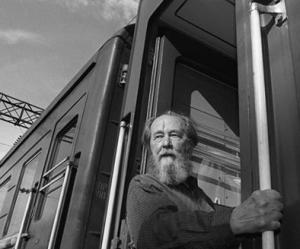
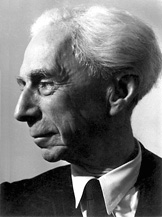
In other words: Aleksandr Solzhenitsyn, John McCain, J.K. Rowling, Hercules, Bertrand Russell and the Dalai Lama.
Answer: They are people whose “lives” or stories I have cut from the second draft of my book manuscript.
Now, I am entirely aware that seeing these people on the same list is bizarre to begin with. What could they possibly have done in the same book–my book-in the first place? Why would I cut them out now? And who might be left?
I’m not at liberty to answer these questions right now, but I will say this:
Good writing and editing is in part about “crucifying your darlings,” as Ed Carr, one of my editors at The Economist, once said to me. And I have decided–boldly and without regret–that my book will be better with fewer lives.
Less is more, in other words. The total word count has stayed the same, but I have gone much deeper into the characters I have chosen, and have done a much better job weaving them together into precisely the narrative about success and failure that I am trying to produce.
I am very happy with the story that’s emerging. This, to me, is the fun part. How absurd that must sound to everybody else.
Since success and the ways of losing as well as gaining it are one half of the manuscript I’m currently re-writing, I found myself pondering the famous Tall Poppy Syndrome.
I always assumed that all English-speaking people used the term, which refers to the quasi-socialistic perversion–or egalitarian instinct, depending on how you look at it–of cutting down anybody who stands out for merit, success and achievement. But apparently it’s mainly a UK, Aussie and Kiwi thing. Nick Faldo, for instance, has been tall-poppied.
Americans instead have the crab mentality. I like that metaphor because it’s vivid: Crabs really do pull other crabs back down if one of them tries to claw himself out of a bucket.
Scandinavians apparently have the Jante Law, after a fictional town called Jante in which the rules were:
Don’t think that you are special.
Don’t think that you are of the same standing as us.
Don’t think that you are smarter than us.
Don’t fancy yourself as being better than us.
Don’t think that you know more than us.
Don’t think that you are more important than us.
Don’t think that you are good at anything.
Don’t laugh at us.
Don’t think that anyone of us cares about you.
Don’t think that you can teach us anything.
So why the metaphor tall poppy?
Surprisingly, it turns out that two of “my guys,” Aristotle and Livy, were involved.
Aristotle (Politics, V.10) has the following passage:
Periander [a tyrant of Corinth] advised Thrasybulus [a tyrant of Miletus and his friend] by cutting the tops of the tallest ears of corn, meaning that he must always put out of the way the citizens who overtop the rest.
This is probably where Livy got the idea for his passage in Book I, 54 about the Roman tyrant Tarquin, who was asked by his son for advice on how to rule:
The king [Tarquin senior] went into the palace-garden, deep in thought, his son’s messenger following him. As he walked along in silence it is said that he struck off the tallest poppy-heads with his stick. Tired of asking and waiting for an answer … the messenger returned to [the land the son was now ruling] and reported what he had said and seen, adding that the king, whether through temper or personal aversion or the arrogance which was natural to him, had not uttered a single word. When it had become clear to Sextus what his father meant him to understand by his mysterious silent action, he proceeded to get rid of the foremost men of the State by traducing some of them to the people, whilst others fell victims to their own unpopularity. Many were publicly executed, some against whom no plausible charges could be brought were secretly assassinated.
A purge, in other words.
So the meaning has evolved. Whereas it used to refer to the powerful cutting down potential rivals, it now refers to the envious cutting down those whom they consider uppity. Quite a big shift. Disgusting all the way through. Worth contemplating.
One of the most important dialogues in all of literature, all of history is the so-called “Melian dialogue.” Its subject is power.
Its author was Thucydides, whom I’ve introduced before. He was a contemporary of Socrates, a general in the Peloponnesian War between Athens and Sparta, and of course the preeminent historian of that war. He is also considered the world’s first Realist.
I’m using that word in the context of International Relations and Political Science, as distinct from Idealism. All later Realists, from Thomas Hobbes to Machiavelli and Henry Kissinger, owe an intellectual debt to Thucydides.
1) Background
The dialogue is supposed to have taken place in 416 BCE, roughly in the middle of the long war between Athens and its allies (mostly the islands and ports around the Aegean) and Sparta and its allies (mostly the land-locked cities of the Peloponnese).
One life time earlier, the Athenians, Spartans and other Greeks together had kicked out several huge Persian invasion armies. This was the beginning of Athens as a superpower. Democratic and idealistic at first, Athens quickly became nakedly self-interested and arrogant and dominated its allies as though they were vassals. That alliance was called the Delian League, but it was really an Athenian Empire. Here is a map of it, before the outbreak of the Peloponnesian War:
If you click through to enlarge the map, you will see the tiny island of Melos in the southern Aegean, just outside the line demarcating the Athenian Empire. Melos was a Spartan colony but otherwise neutral. It was sort of a tiny Switzerland. It wanted to stay out of the troubles.
The premise of the dialogue is simple: The Athenians send a fleet to Melos and flatly demand that Melos bow to Athenian power and become a vassal or else be ethnically cleansed.
The Melians appeal to higher ideals (hence Idealism) such as justice.
In the course of the dialogue, excerpts of which I am about to give you, the Athenians and Melians use all the arguments that Realists and Idealists have been using ever since.
And then, Thucydides ends with one of the most abrupt–but, I believe, intentional and genius–codas in literature. But let’s wait till we get to that.
2) The dialogue
Notes:
You can read the full version here, but I have cut it for ease of use
Glossary: Lacedaemon = Sparta. (Laconia is the area around Sparta, whence “laconic”, since the Spartans didn’t apparently say more than necessary.)
Athenians: … we shall not trouble you with specious pretences … and in return we hope that you, instead of thinking to influence us by saying … that you have done us no wrong, will aim at what is feasible, holding in view the real sentiments of us both; since you know as well as we do that right, as the world goes, is only in question between equals in power, while the strong do what they can and the weak suffer what they must.
Melians: … you should not destroy what is our common protection, the privilege of being allowed in danger to invoke what is fair and right….
Athenians: … We will now proceed to show you that we are come here in the interest of our empire, and that we shall say what we are now going to say, for the preservation of your country; as we would fain exercise that empire over you without trouble, and see you preserved for the good of us both.
Melians: And how, pray, could it turn out as good for us to serve as for you to rule?
Athenians: Because you would have the advantage of submitting before suffering the worst, and we should gain by not destroying you.
Melians: So that you would not consent to our being neutral, friends instead of enemies, but allies of neither side.
Athenians: No; for your hostility cannot so much hurt us as your friendship will be an argument to our subjects of our weakness, and your enmity of our power.
Melians: Is that your subjects’ idea of equity, to put those who have nothing to do with you in the same category with peoples that are most of them your own colonists, and some conquered rebels?
Athenians: As far as right goes they think one has as much of it as the other, and that if any maintain their independence it is because they are strong, and that if we do not molest them it is because we are afraid; so that besides extending our empire we should gain in security by your subjection…
Melians: … if you debar us from talking about justice and invite us to obey your interest, we also must explain ours, and try to persuade you, if the two happen to coincide. How can you avoid making enemies of all existing neutrals who shall look at case from it that one day or another you will attack them? …
Athenians: … it is rather islanders like yourselves, outside our empire, and subjects smarting under the yoke, who would be the most likely to take a rash step and lead themselves and us into obvious danger.
Melians: … it were surely great baseness and cowardice in us who are still free not to try everything that can be tried, before submitting to your yoke.
Athenians: Not if you are well advised, the contest not being an equal one, with honour as the prize and shame as the penalty, but a question of self-preservation and of not resisting those who are far stronger than you are.
Melians: … to submit is to give ourselves over to despair, while action still preserves for us a hope…
Athenians:Hope, danger’s comforter, may be indulged in by those who have abundant resources … [But] you, who are weak … hang on a single turn of the scale…
Melians: You may be sure that we are as well aware as you of the difficulty of contending against your power and fortune, unless the terms be equal. But we trust that the gods may grant us fortune as good as yours, since we are just men fighting against unjust…
Athenians: When you speak of the favour of the gods, we may as fairly hope for that as yourselves; neither our pretensions nor our conduct being in any way contrary to what men believe of the gods, or practise among themselves. Of the gods we believe, and of men we know, that by a necessary law of their nature they rule wherever they can. And it is not as if we were the first to make this law, or to act upon it when made: we found it existing before us, and shall leave it to exist for ever after us; all we do is to make use of it, knowing that you and everybody else, having the same power as we have, would do the same as we do…
Melians: … we now trust to [the Lacedaemonians’] respect for expediency to prevent them from betraying the Melians, their colonists, and thereby losing the confidence of their friends in Hellas and helping their enemies.
Athenians: Then you do not adopt the view that expediency goes with security, while justice and honour cannot be followed without danger; and danger the Lacedaemonians generally court as little as possible.
Melians: But we believe that they would be more likely to face even danger for our sake … as our nearness to Peloponnese makes it easier for them to act, and our common blood ensures our fidelity.
Athenians: Yes, but what an intending ally trusts to is not the goodwill of those who ask his aid, but a decided superiority of power for action; and the Lacedaemonians look to this even more than others. … now is it likely that while we are masters of the sea they will cross over to an island?
Melians: But they would have others to send…
Athenians: … we are struck by the fact that, after saying you would consult for the safety of your country, in all this discussion you have mentioned nothing which men might trust in and think to be saved by. Your strongest arguments depend upon hope and the future, and your actual resources are too scanty, as compared with those arrayed against you, for you to come out victorious. … Think over the matter, therefore, after our withdrawal, and reflect once and again that it is for your country that you are consulting, that you have not more than one, and that upon this one deliberation depends its prosperity or ruin.
With that the Athenians left the Melians to make their decision. Let’s just summarize the dialogue briefly:
A: Cut through the crap: might makes right. Don’t waste our time. M: We have a right to invoke justice!
A: We would prefer to let you live, so submit! M: How exactly would submitting be in our interest?
A: Were you not listening? Because you would live!M: Why can’t we be neutral? We would not bother you.
A: Somebody somewhere might think we are weak. M: If you exterminate us, all other neutrals will hate you.
A: Let us worry about that. M: We are not cowards and we want to stay free.
A: For you it’s not about freedom but survival. M: We still have hope.
A: Hope is for the powerful. And you are not. M: The gods are on our side because our cause is just.
A: The gods are just like you and us: They do what power lets them. M: The Spartans will come to our aid.
A: No, they won’t. They know they would lose at sea. M: We think they would send somebody.
A: Enough of this silly nonsense. You make up your mind. Submit or die.
The Melians decided not to submit and to fight. Thucydides then describes at some length the Athenian siege. Eventually, the Athenians overpower the Melians.
And then, in perhaps the most abrupt final sentence in literature, Thucydides simply informs us that the Athenians
put to death all the grown men whom they took, and sold the women and children for slaves, and subsequently sent out five hundred colonists and inhabited the place themselves.
3) Analysis
Style: Thucydides writes the dialogue (admittedly, with my cutting I have accentuated this) a bit as Hemingway does: This is a staccato back-and-forth, not a treatise. We are not teasing out a subtlety of argumentation here. We simply have two sides who are talking past each other, and one side has power whereas the other does not.
Style: Any modern editor would have forced Thucydides to provide more “color” at the end, to make the true horror of the extermination more vivid. Thucydides has none of that. He wants the atrocity to be a mere afterthought. This is the way the world is, he is saying.
Content: Does Thucydides approve of the Athenians? We have no idea. Probably not. Who cares?, he is saying. This is reality.
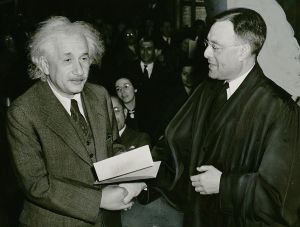
So, as I mentioned, I am currently refining the characters in my book as I write the second draft. One of the characters is Albert Einstein, one of my idols. I’ve mentioned how I admire his love of simplicity, his ability to wonder and be amazed, his irreverence and impudence. Here is another thing that I like about him (and that I happen to empathize with): his quintessential cosmopolitanism.
History’s first cosmopolitan ever, you recall, was Diogenes, the man who lived in a barrel and who, when asked where he was from, said that
I am a citizen of the world (cosmopolites in Greek).
Well, consider Einstein, who was:
Born German
Became Swiss, dropped German nationality
Became Austro-Hungarian (to get job in Prague)
Became German again (to get job/live with lover in Berlin)
Became American
was asked to be president of Israel
That’s six or so changes or “elaborations” on his nationality. He treated passports the way I treat them: as documents to be kept, discarded or renewed depending on either convenience or morality (eg, when he dropped German citizenship when the Nazis rose to power).
Einstein went a step further and supported a “world government.” I consider that naive but that is neither here nor there. The point is that the great man always saw
our great overarching humanity as well as
our colorful individuality,
and did not get distracted by the various forms of tribalist or nationalistic perversion/delusion.
Others might accuse me of not being “patriotic” about any particular passport-issuing entity. I say to them: I’m feeling just as powerful a connection to other people as you do, just one level above (humanity) or one level below (individuality) the one that you happen to be interested in.









 Hannibal and Me: life lessons from history