The clothes and slippers on Wilshire Boulevard

I was sitting in a cafe on Wilshire Boulevard in Santa Monica when, diagonally across the intersection, the firetrucks, police cars and ambulances pulled up from all sides, sirens ablaze.

Another accident, said a customer near me.

One of my children goes to a little school on Wilshire, not far.

Often, as I sit in this cafe, I look up from my book and just look at the drivers zipping by. About half of them, maybe more, seem to be on their phones as they propel their heavy metal killing machines through this human hive. It’s so booooring to have to drive. Must talk or text to pass the time.

Later I walked to the ATM, then home. The ambulances were gone now. Only some clothes and slippers and what looked like a pair of sunglasses were left in the intersection, now guarded by cops.

Why did they not clean it up? I don’t know. Evidence, perhaps. The paramedics had cut the clothes from the two bodies, the better to try to save the lives.

I learned that a driver, aged 28, had plowed through two people, a man aged 61 and a woman aged 62 — perhaps a couple — at a crosswalk. They were walking on the zebra stripes, and the driver simply did not stop.

Was he texting or on the phone? I asked the cop. He couldn’t, or wouldn’t, say.

Did that matter? I wondered. Perhaps only insofar as the answer might, just might, make others change their behavior (ie, put their phones away in the car) and save lives not yet lost or shattered.

More than two lives had just been lost or shattered right here, while I was drinking a double latte across the street. Not just the two whose clothes I was seeing. All the lives they had touched. I walked home to my kids.

Ordinary words → extraordinary thoughts

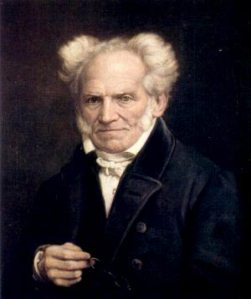
One of my favorite quotes is by Arthur Schopenhauer. In German:

Man gebrauche gewöhnliche Worte und sage ungewöhnliche Dinge.

That could be translated several ways:

Take common words and say uncommon things.

Or:

One should take usual words and say unusual things.

Or:

Use ordinary words and say extraordinary things.

Doesn’t this say it all, for us writers and storytellers?

_________

PS: This could become a motto for The Hannibal Blog, especially in conjunction with Walt Whitman’s quote and Albert Einstein’s quote:

  1. Whitman gives us license to let our intellect roam freely without fear of the (inevitable) contradictions we bump into along the way;
  2. Einstein reminds us to search for the simplicity hiding beneath all that bewildering complexity, (as Alexander the Great and Carl Friedrich Gauss do, too);
  3. Schopenhauer reminds us to express what we found on Whitman’s journey with words of Einsteinian simplicity.

PPS: Schopenhauer is famous but not widely read anymore. I once had a little Schopenhauer phase. And since I did the work, you shouldn’t have to: All Schopenhauer did was to translate what we would consider Buddhism or Upanishadic Hinduism into German. So now you, too, know Schopenhauer.

PPPS: I can’t help but wonder what feedback my own publisher would have given Schopenhauer apropos of … his author photo!

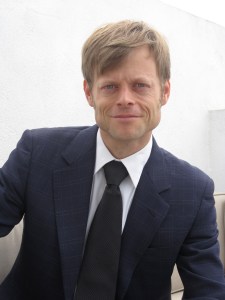
The evolution of my author photo

As part of readying my book for its launch on January 5th, my publisher asked me for an author photo for the inside flap of the jacket’s backside.

The resulting email exchange (which has been edifying and hilarious but must remain private, at least until publication) made me reflect on some larger issues:

  • identity,
  • image,
  • authenticity,
  • message,
  • style etc.

In meditating on these, it helps that the stakes are low — very, very low.

Suffice it to say that my publisher made us go three rounds (“us” = my wife, who took the photos, and me).

I will show you all three, but in no particular order. And I won’t say (yet) which one the publisher chose. (Yes, it’s the publisher, not I, who did the choosing.)

And then, at the bottom of this post, you get to vote. And if you’re so inclined, you can comment more fully below.

Herewith:

Now vote:

The sociological breakthrough of Google+

My last Facebook update said:

Too busy playing on Google+ to check FB

And that was five days ago.

The truth is that I’ve long been too busy doing anything to check Facebook. I’ve secretly, and increasingly, loathed Facebook since I joined it, which was relatively early (beginning of 2007, I believe), because my beat at The Economist back then was Silicon Valley, and it was simply part of my job to be fiddling with stuff like this. (I’m not the only one loathing FB, apparently.)

Ah, 2007. That seems like a distant era now. I still recall meeting Mark Zuckerberg, who was not yet used to meeting anybody, much less the heads of state and glitterati that surround him now, and who was awkward even by the standards of Silicon Valley’s skewed autism spectrum. (Here is the profile I wrote about him soon after that meeting.)

So anyway, I was and remained “on Facebook”, the way one just is. How could I not be? But I was almost entirely passive (observing incoming updates without sending outgoing ones). And I was proud of my wife, who is savvy in such matters and simply said ‘I’ll sit this one out’. She never signed up.

Why this skepticism?

Because Facebook is fundamentally (=unalterably) indiscreet.

And it is fundamentally indiscreet because it is architecturally indiscrete. (Forgive me that word play.) Meaning: you cannot distinguish easily between different degrees of intimacy among the people in your social graph. The various relationships are not discrete, not separate.

Mark’s vision (as he told it to me back then, and as I described it in my early profile) was to be a “mapmaker” (like the heroic explorers of the Renaissance) of human connections. To him that was an algorithmic challenge. I always knew that his premise was unsound sociologically.

Tell me: In real life, how often do you walk up to somebody and request to be “friends”, then begin “sharing” pictures of your naked baby?

How wonderfully warm and fuzzy do you feel when somebody (oh yes, wasn’t he on my soccer team 30 years ago? Or perhaps I vomited on him at that keg party in 1989?) stops you on the street, asks to be “friends”, then shares his baby pictures with you?

Mark has been asking us all to do exactly this sort of thing. I thought it was strange back then, and I said so in our pages. (The picture at the top of this post is from that old piece.) But — did I mention? — that was in 2007. A different era, as I said.

Facebook then put us all on a roller coaster of “privacy” policies. (We’ve discussed some of them on this blog.) It got more and more confusing, and simultaneously boring. Who wants to put in the time to learn what Mark is up to now?

Plus: the page started to look like Times Square in the 1970s. (Remember, aesthetics really, really matter to me.)

So now we have Google+. It has not even officially been launched yet, but seems to have passed 18 million users today. We all thought that sheer fatigue would keep all of us from filling out yet another profile. But lo, everyone I know is already there, and we’re playing happily. Even my wife is trying it out.

Google+’s crucial innovation (among many others existing or planned) is Circles. You can make as many of them as you like. They can contain 1 person, 2 people, the Dunbar number, or the entire web. Because there are things you want to share with just one person, or with 2, or with lots, or with everybody (as on WordPress).

Ergo: Discrete → discreet

You also don’t have to ask anybody to be your “friend”. Nor do you have to reply to anybody’s “friend request”. You simple put people into the discrete/discreet spheres they already inhabit in your life.

Quite a few of us — Nick Bilton at the NYT, for example — seem to be optimistic that this is the beginning of a good trajectory. (Nothing new should be evaluated by what it is today. What matters is what it will become tomorrow.)

Now, if you had asked me which company I considered least likely to come up with such a sociologically simple and elegant solution, I might well have answered: Google.

Its founders and honchos worship algorithms more than Mark Zuckerberg does. (I used to exploit this geekiness as “color” in my profiles of Google from that era.) Google then seemed to live down to our worst fears by making several seriously awkward attempts at “social” (called Buzz and Wave and so forth).

But these calamities seem to have been blessings. Google seems to have been humbled into honesty and introspection. It then seems to have done the unthinkable and consulted not only engineers but … sociologists (yuck). And now it has come back with … this.

Storytelling and invidualism

I’ve long described myself as a classical liberal on this blog, and I’ve tried on occasion to define what that means — for example, with this doodle (above). Its point was to locate the unit of analysis of liberals in the individual, not in any groups that individuals might belong to. That’s always made intuitive sense to me, and it still does.

So consider that Premise 1.

I’ve also expressed my appreciation of storytelling here over the years, with what has (to my surprise) turned out to be the longest-running thread on this blog. My intuition tells me that humans make sense of the world and of themselves through stories, that we form identity from narratives.

So consider that Premise 2.

I was therefore delighted to be disturbed by a suggestion that Premise 1 and Premise 2 might actually contradict each other. (Perhaps that’s the definition of ‘intellectual’: somebody who delights in seeing his contradictions uncovered, espying an opportunity to learn.)

The suggestion struck me, roughly, between minutes 5 and 10 of the lecture below, by Michael Sandel, a Harvard professor of philosophy. (I recommend the entire course, which covers some of my favourites, from Rawls to Aristotle and beyond, in a very entertaining way.)

In this segment, Sandel introduces the British philosopher Alasdair MacIntyre.

  • MacIntyre also starts from the premise that identity (‘the self’) is a product of narrative (ie, my Premise 2).
  • But he then concludes that individualism (ie, my Premise 1) is impossible, because narrative necessarily leads to a communitarian identity.

Specifically, Randel quotes MacIntyre saying:

Man is … essentially a story-telling animal. That means I can only answer the question ‘what am I to do?’ if I can answer the prior question ‘of what story or stories do I find myself a part?’

I am never able to seek for the good or exercise the virtues only qua individual. … We all approach our own circumstances as bearers of a particular social identity. I am someone’s son or daughter, a citizen of this or that city. I belong to this clan, that tribe, this nation.

Hence what is good for me has to be the good for someone who inhabits these roles. I inherit from the past of my family, my city, my tribe, my nation a variety of debts, inheritances, expectations and obligations. These constitute the given of my life, my moral starting point. This is, in part, what gives my life its moral particularity.

So: anti-individualist (and thus implicityly anti-liberal) and pro-communitarian. Right? Liberalism says: I am free and thus I am responsible for myself, but I don’t answer for parent, country, tribe, or history. MacIntyre says that is self-deception:

The contrast with the narrative view of the self is clear. For the story of my life is always embedded in the story of those communities from which I derive my identity. I am born with a past and to try to cut myself off from that past is to deform my present relationships.

It’s made me think a lot. Watch the entire lecture. (But first, read this update regarding this post’s title.)

Declaration of bad writing

When in the Course of human Events, it becomes necessary for one Writer to parody the Words which are written by most others, and to assume among the Powers of the Earth, the separate and equal Station to which the Laws of Nature and of Nature’s God entitle him, a decent Respect to the Opinions of Mankind requires that he should produce a representative Sample of the Words which impel him to the Mocking. He holds these Truths to be self-evident:

  • that what follows is bad writing indeed and will make you cringe or smirk,
  • that it is bad not in an egregious (and thus unrepresentative) way but in a small, ordinary, quotidian, commonplace (ie, representative ) way,
  • that it serves as partial proof to the thesis advanced in the previous post about Writing with Fear (although the role of fear as the cause deserves to be developed in a later post).

I) The run-of-the-mill press release/PR email

Below I reproduce, the first PR email I saw in my inbox this morning. It is chosen for being the day’s first, not for being the day’s worst.

Hi, Andreas –

I’m reaching out with a new executive leadership announcement from [COMPANY]. [COMPANY] is continuing its expansion into the [OMITTED] sector with the addition of several new members to its key management team. … [COMPANY] announced today that it has added several key members to its senior management team. …

Exegesis:

  1. For heaven’s sake, stop “reaching out” already. You can ask me, remind me, alert me, tell me, or you can simply … tell me without telling me that you will tell me, but keep your hands to yourself. Reaching out is in 2011 what proactive leveraging was circa 1995. (My colleague on The Economist’s language blog has covered this adequately.)
  2. How is “continuing an expansion” different from “expanding”?
  3. Since you mention the company’s “key management team”, please clarify which management team(s) is (are) non-key.
  4. Thanks for repeating the phrase, thus adding depth. I notice that the “key members” are now being added to the “senior management team”. Are they key but junior? Or key and senior? Are any of the senior ones non-key?

II) Examples chosen by Johnny

The subsequent examples are taken from our Style Guide, which is written by Johnny Grimmond, who has long been both a key and a senior editor of The Economist.

(Johnny has made three other explicit appearances here on The Hannibal Blog — when he clarified like vs as, when he decried bad editing as ‘desophistication’,  and when he busted me for using “co-equal” — and one veiled appearance, when he was just being British as an after-dinner speaker.)

Herewith:

1) Pompous blather

From the Style Guide’s entry for Community (a concept to which I also devoted a post):

If further warning is needed, remember that community is one of those words that tend to crop up in the company of the meaningless jargon and vacuous expressions beloved of bombastic bureaucrats. Here is John Negroponte, appearing before the American Senate:

“Teamwork will remain my north star as director of national intelligence–not just for my immediate office but for the entire intelligence community. My objective will be to foster proactive co-operation among the 15 IC elements and thereby optimise this nation’s extraordinary human and technical resources in collecting and analysing intelligence. We can only make the United States more secure if we approach intelligence reform as value-added, not zero-sum….”

This short passage might be the motherlode of bad expression (“foster”, “proactive”, “optimise”, “resources”, “value-added”, “zero-sum”,…). And yet it is actually ordinary enough still to be representative.

Here is another example, this one from the entry for Jargon:

The appointee … should have a proven track record of operating at a senior level within a multi-site international business, preferably within a service- or brand-oriented environment…

Johnny seems to have found this in a job advertisement by … The Economist Group! I’m guessing that gave him a frisson.

Next example:

At a national level, the department engaged stakeholders positively … This helped… to improve stakeholder buy-in to agreed changes…

This phrase came out of a report from the British civil service.

In the next passage, an esteemed think tank, Chatham House, explained that

The City Safe T3 Resilience Project is a cross-sector initiative bringing together experts … to enable multi-tier practitioner-oriented collaboration on resilience and counter-terrorism challenges and opportunities.

In the next passage, some British policy maker tried to say that teachers who agree to test their students will get money from the government. Here is how:

The grants will incentivise administrators and educators to apply relevant metrics to assess achievement in the competencies they seek to develop.

Try to guess what this phrase was supposed to express:

A multi-agency project catering for holistic diversionary provision to young people for positive action linked to the community safety strategy and the pupil referral unit.

Answer: Go-karting lessons sponsored by the Luton Educational Authority (London).

2) Political correctness

Political correctness has it own entry in our Style Guide, but I will instead quote from the entry for Euphemisms, because I think Johnny just says it all here:

Avoid, where possible, euphemisms and circumlocutions, especially those promoted by interest groups keen to please their clients or organisations anxious to avoid embarrassment. This does not mean that good writers should be insensitive of giving offence: on the contrary, if you are to be persuasive, you would do well to be courteous. But a good writer owes something to plain speech, the English language and the truth, as well as to manners. Political correctness can go.

Female teenagers are girls, not women. Living with mobility impairment probably means wheelchair-bound. Developing countries are often stagnating or even regressing (try poor) countries. The underprivileged may be disadvantaged, but are more likely just poor (the very concept of underprivilege is absurd, since it implies that some people receive less than their fair share of something that is by definition an advantage or prerogative). Enron’s document-management policy simply meant shredding. The Pentagon’s enhanced interrogation is torture …

Writing with fear, continued

Two years ago, I wrote a post called Fear and the English language. It was my twist on George Orwell’s essay Politics and the English Language, in which Orwell, in his timeless way, indicts and mocks modern writing.

“The whole tendency of modern prose is away from concreteness,” Orwell said.

But why is this so? Because we are afraid, I concluded (after interrogating my own brain as it writes). We are afraid of the consequences of our words — of being misunderstood or attacked — so we make the words less clear. We use our words to erect barriers to meaning so we can hide behind those barriers.

This is cowardice. And it leads to bad writing, and bad speaking.

That covers most of verbal communication: the corporate memo, the annual report, the government publication, the politically correct academic thesis, the conference call with dial-in numbers, etc etc.

Well, that old post seems to have resonated, especially with those of you who also write for a living.

One of you, Eliot Brockner, emailed me this:

… I just read a post of yours from a few years ago titled “Fear and the English Language” and felt compelled to write you because of its relevance and timeliness in my own thoughts and struggles to grow as a writer. I think part of the problem is that what I write on a day-to-day basis by nature involves writing with fear. The company I work for covers operational threats to our clients’ businesses (I cover Latin America). To account for any possibility or event, I must use words that make for bad writing – ‘may’, ‘possibly’, ‘likely’. Even though our content is event driven, very little of what we write is concrete

My problem is that because this type of writing takes up most of my time, my own freelance work – my blog, my writing for other digital publications, even my own personal writing – is suffering. Having to account for so many possibilities in my professional writing is clouding my clarity of thought, and without clarity of thought, clarity of writing is impossible

How do you break this mold? If you are writing with fear, how do you stop? I’m having trouble reconciling the professional and personal writing worlds.

So Eliot poses the obvious next question: How do you stop writing with fear?

I gave Eliot the honest answer, which is that I have no good answer. (Remember, this is a blog, and most of the time I post stuff that is on my mind, unresolved, not stuff that I have already resolved.) But I promised that I would open it up here, to “crowd-source” it. So weigh in below.

As I ponder Eliot’s challenge, I follow a chaotically dialectical mental trajectory as follows:

1) Arise, inner Hero

Psychologically, writing usually begins as a Quest.

I capitalize Quest to remind you of the archetypes in the thought of Carl Jung and Joseph Campbell. In a writerly Quest, the (usually youthful) writer necessarily sees him or herself as a Hero/Heroine. I had a long-running thread on heroism here on The Hannibal Blog, so let me just pluck from that series two very clean and simple kinds of hero:

One kind of writer, after reading Orwell’s Politics and the English Language, seethes with bravery and becomes Theseus after he moves the boulder and finds his father’s sword: He wants to go out and prove himself, to slay villains on the way to Athens and then the Minotaur.

Another kind of young writer becomes The White Rose and decides to challenge evil with courageous words, by telling truth to power, by not shutting up, risk be damned.

To pick, somewhat arbitrarily, two analogous examples from our time:

In Hitchens’s case, we see a self-conscious hero dazzling us with his word prowess right from the first line of anything he writes. He knows he will have enemies (the whole point is to make enemies!), so he tilts at them with a cavalier smirk, with utterly gratuitous bravado, and says “bring it on.” Whatever you think of him, whether or not you agree with him, he regularly overcomes his fear and writes well. Orwell would approve.

In Krugman’s case, he sees (in much less intense form) in American Conservatism what the White Rose saw in Nazism: a curse to be opposed with relentlessly clear polemical writing. He does not hedge, he does not mince, he does not dilute or duck or hide. Whatever you think of him, whether or not you agree with him, he regularly overcomes his fear and writes well. Orwell would approve.

So Eliot, you could try to be a Hitchens/Theseus or a Krugman/White Rose. To hell with clients, employers, editors, readers: excise those hedge words, make those tenses active, replace those Norman words with Saxon ones, make those thoughts as clear as they want to be.

2) Sit down, you’re no hero

But wait, Eliot: What if you’re not a Theseus or a White Rose?

Oh, and by the way, when Theseus became unpopular in Athens, somebody threw him off a cliff. And the members of the White Rose were beheaded. So what if you pick a heroic fight and … lose? You’ll still have to pay the bills and rent or mortgage.

So let’s remember that good writing is rare precisely because it is dangerous. Somebody who leaps to mind is Satoshi Kanazawa, the scientist we debated so passionately in the previous post. In our discussion, we mainly argued about his academic freedom, his integrity as a scientist, his rights and privileges in the pursuit of truth. Those are the appropriate questions.

But I also see in him the struggle we are talking about in this post. He did not want to dilute his hypotheses into the usual term-paper bilge. He wanted to make the words simple and clear. As ever, simplicity and clarity in writing make the words stronger and more powerful. And that’s what sealed his fate when he wrote the title of the blog post that suspended his career:

Why Are Black Women Rated Less Physically Attractive Than Other Women, But Black Men Are Rated Better Looking Than Other Men?

Give Eliot or me five minutes, and either of us could edit Kanazawa’s original post in such a way that nobody would take offense. How? By hiding the hypothesis behind hedges, passive tenses and qualifiers so deep that you wouldn’t even be able to find it. Kanazawa’s post would then be titled:

Preliminary implications of factor analysis on the aesthetic variance observed among gender and race phenotypes

(This sort of thing happens all the time, by the way: Coincidentally, I found another old post of mine in which I lament the New York Times doing this, with another topic vaguely mixing science, sex and race.)

The writing would be awful, yes. Orwell would not approve, except in his ironic Orwellian way. But Orwell does not own Psychology Today or run the LSE. Satoshi Kanazawa might still be blogging. This could all have turned out differently.

So maybe, Eliot, you and I are right to be circumspect. Let’s write, you know, fine, not too well. Let’s save the good stuff for later, for a special day. We would be in good company: Even Mark Twain concluded that you can only write honestly when you’ve got nothing left to lose:

Free speech is the privilege of the dead, the monopoly of the dead. They can speak their honest minds without offending.

3) If you can’t be a Hero, don’t write at all

But that’s not satisfying. I didn’t become a writer to write badly. If this is the way it is, Eliot, let’s rather not write at all.

And again, Eliot, you and I would be in excellent company: Socrates refused to write anything at all, because the written word cannot defend itself, whereas the spoken word (in his opinion) can. As soon as you write something down, said Socrates, the words will be misunderstood or distorted, by the dumb or the malicious, and your words

must remain solemnly silent.

4) If you must write, at least pick your battles
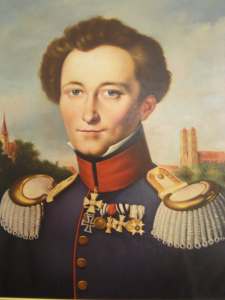
Clausewitz

But that’s not satisfying either. We became writers because we love writing, and because we do occasionally have something to say.

So perhaps, we must integrate all these strands into something practical. This brings to mind Clausewitz and the distinction between tactics and strategy.

Let’s distinguish between means and ends, between important battles and distractions and diversions, between the individual words and the intended meaning, between each instance of writing and an entire writing career.

I suspect, Eliot, that we would then:

  • sometimes follow Socrates and choose not to write at all,
  • sometimes follow Twain and choose not to write yet,
  • sometimes compromise and choose words that make smaller targets but retain power,
  • sometimes go heroic and stumble, as Kanazawa did, then get up again and keep going, and
  • sometimes revert to our inner Theseus or White Rose, decide that now is the time for our arete — all consequences be damned — and write really fucking well.

The agony of Kanazawa

Satoshi Kanazawa

In my peripheral web vision, I’ve been watching the unfolding drama of Satoshi Kanazawa, an evolutionary biologist at the London School of Economics of whom you’ve probably never heard until now. He writes a daredevil blog, on which he practically asks for trouble. And recently he got a bit more trouble than even he expected. Now I find myself contemplating deeper questions, as I will explain in a moment.

1) Background:

I first mentioned Kanazawa here, more than a year ago, by way of … endorsing him! Or rather, endorsing not him but his philosophy as I understood it, which claims to distinguish between

  • ought and
  • is.

Kanazawa, if you ask him, will say that he forges ahead valiantly in search of the is (truth) even when it conflicts with the ought (what is good).

I like that. In this context, I even compared that attitude to Friedrich Nietzsche’s, as expressed in his letter to his sister. I might also have compared it (the attitude, not the man) to that other gadfly, Socrates. I might even have drawn a line from Kanazawa all the way back to the first recorded conversation (Callicles v Socrates) about the tension between ought and is.

As it happens, I find myself sympathizing with specific aspects of these men — Kanazawa, Nietsche, Callicles, etc. Each is part thinker but also part court jester, boat-rocker, pot-stirrer — whatever metaphor you want to choose. They live for the piquant headline. They run toward controversy, not away from it. They dare you to bring it on. They’re a tiny bit mad, possibly megalomaniacal, occasionally profound, and — this is the crucial bit — necessary.

2) The controversy:

The last post that Kanazawa wrote on his blog — now deleted, although it lives on in my RSS reader and is being preserved here — was titled:

Why Are Black Women Rated Less Physically Attractive Than Other Women, But Black Men Are Rated Better Looking Than Other Men?

You see the problem already.

In the post, Kanazawa did what he always does: dig for some interesting data, whether those data are good or not, then grind the data for nuggets of insight, or hypotheses to be tested. In this post, he did “factor analysis”, which seems to have become the term that, with its pomposity, sets everybody off.

And then, the tornado. Protests at the LSE, an “investigation” by the LSE, jihad in the blogosophere, and so forth.

Psychology Today, which publishes his blog, deleted the post and apologized.

Everybody agreed that Kanazawa’s “racist nonsense should not be tolerated.”

Case closed. Society saved.

3) The meta-issue

There were some reactions, such as this, that also attempted to answer Kanazawa’s post the traditional scientific way: By reexamining his data, his methodology, and his logic. And it does seem that Kanazawa was:

  • sloppy, and indeed
  • wrong.

Usually, this is is how science (which is just Latin for knowledge) progresses:

Research → Falsifiable hypothesis → Replication and scrutiny → corroboration, refutation or refinement → more research and hypotheses …

Thus, scientists with integrity are equally proud of hypotheses that are corroborated as of those that are disproved: Both push humanity, in tiny steps, to higher levels of ignorance. In free societies, people are free to ask any question and form any hypothesis they like, and knowledge advances faster. In unfree societies, we censor the questions and hypotheses people are allowed to formulate, and knowledge stagnates.

Thus a few questions:

  1. Why was Kanazawa’s post deleted (as opposed to updated, refuted etc)?
  2. Where is the evidence that Kanazawa is racist (as opposed to wrong)?
  3. Why has he not posted since then? (It’s been over a month, and he usually posts weekly.)
  4. Has he been shut up? Fired? Lynched? Censored?
  5. Or is he on boycott, hunger strike?

Speak up, Satoshi. If ever there was a time to hear from you, it’s now. A lot is at stake.

Lesson from Athens: Democracy ≠ Freedom

Click for credits

One of the recurring themes here on The Hannibal Blog is the tension between two distinct concepts that we (in the West) usually conflate nowadays:

1) democracy and

2) freedom.

They often appear together, but they are not the same, and indeed they can on occasion become enemies. America’s founders understood this, and they distilled this insight in large part from their meticulous study of ancient (Attic and Roman) history.

Athens, as the first and to this day the “purest” democracy (James Madison’s term), offers one lesson about how democracy can threaten freedom: through the “tyranny of the majority”. (That is also Madison’s term, although Madison, with his incredible acuity, foresaw an even greater greater danger from the mixture of democracy with “factionalism”, which ancient Athens did not yet have.)

So here are my notes from Bettany Hughes’s The Hemlock Cup that pertain to this paradoxical relationship between democracy and freedom in ancient Athens. (The Hemlock Cup is the excellent biography of Socrates I recently reviewed here.)

1) Ostracism

It seems that whenever members of the species Homo Sapiens congregate, the groups they form tend to ostracize individual members. In the context of this dynamic, democracy is merely a way to administer the resulting injustice, as is evident from the word ostracism itself.

The ostraka (see picture above) were shards of pottery which the Athenians used as ballots to vote individual citizens out of their city, ie to exile them. The victims (among them illustrious ones, such as Aristides and Cimon) need not have done anything wrong or bad. It was enough that a plurality (with a minimum of 6,000 votes, according to some sources) were sufficiently pissed off at them.

The exile lasted ten years. Hughes (emphasis mine):

… ostracism came to be a handy way of eliminating the unsuccessful, or unpopularly successful, individuals. The piles of scratched ostraka in the Agora Museum in Athens are hard evidence of lives ruined; ‘Kallias’ is ostracised in c.450 BC, ‘Hyperbolus’ in 417–15 BC and another ‘Sokrates’, ‘Sokrates Anargyrasios’, in 443 BC….

An interesting twist is that the practice of ostracism was most popular during Athen’s most “enlightened” period, ie its Periclean Golden Age. Once Athens started losing the war against Sparta and flirted with oligarchic juntas — roughly from 415 BCE onwards — the practice gradually disappeared.

As Hughes says (emphasis mine):

… shamed by their defeats in war, confused by the freedom their own political system gave them, the Athenians from around 415 BC onwards chose oppression over liberal thinking. After c.415 BC there was no further need for ostracism – because now the state could harry and censor at will. Socrates’ death came at the end of more than a decade of intellectual and political persecutions. We must never forget that although Socrates is the most famous victim of Athenian oppression, there would have been scores – perhaps hundreds – more like him whose names have escaped the historical record.

2) Scapegoating

When something went wrong (plague, defeat, etc), the Athenians also picked some compatriots for permanent expulsion. (The word for such a victim was pharmakos, which is the root of our pharmacy. Go figure.)

This practice subsequently became known as scapegoating.

Scapegoating, democracy and religion formed a potent cocktail of institutions in Athens. Hughes:

I think it was no coincidence that Socrates was killed in May/June – the ancient month of Thargelion. Every year at this time, in an obscure ritual known as the Thargelia, two people – either male and female, or representing the male and the female by wearing a necklace of black and green figs respectively – were exiled from the city as scapegoats. Flogged outside the city walls, their expulsion was a symbolic gesture. The Athenians believed their sacrifice would prevent pollution and stasis from seeping through the city-state.

3) Demagogy

Our word democracy (= people power) is closely related to our word demagogy (= people leading). The two concepts were indeed very close in Athens. And the Athenians were quite aware that in a democracy it is not necessarily the best argument that wins, but the best oratory.

Thus Hughes quotes Thucydides (one of my ‘great thinkers’, for his ruthless depiction of Athenian “realism”), who reports a speech by one Cleon in the Assembly (emphasis again mine):

In speechifying competitions of this sort the prizes go to the spin-doctors and the state is the loser. The blame is yours, for stupidly encouraging these competitive displays … If something is to be done in the future, you weigh it up by hearing a good speech on the subject, and as for the past, you judge it not from your own first-hand, eye-witness experience but from what you hear in some clever bit of rhetoric … You all want to be the first to make a speech, and if you can’t do that, you try to sit there looking as though you are one step ahead of the speaker … you demand changes to the conditions under which you live, and yet have a very dim understanding of the reality of those conditions: you are very slaves to the pleasure of the ear, and more like the audience of a paid public speaker than the council of a city.

4) Leadership

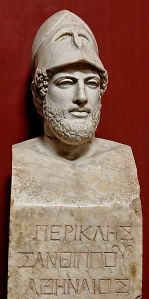
When democracies are unlucky, they fall prey to demagogues. When they are lucky, they have leaders. Athens, for a while, had such a leader: It was Pericles. Although he was technically no more than one among equals in the Assembly (this was a pure democracy, after all), his opinions held sway.

Pericles

Hughes (emphasis mine):

Pericles, because of his position, his intelligence, and his known integrity, could respect the liberty of the people and at the same time hold them in check. It was he who led them, rather than they who led him, and, since he never sought power from any wrong motive, he was under no necessity of flattering them: in fact he was so highly respected that he was able to speak angrily to them and to contradict them. Certainly when he saw that they were going too far in a mood of over-confidence, he would bring back to them a sense of their dangers; and when they were discouraged for no good reason he would restore their confidence. So, in what was nominally a democracy, power was really in the hands of the first citizen.

5) American parallel: populism vs elitism:

It is tempting, of course, to compare ancient Athens with America today. Try, for instance, to swap the words America/American with Athens/Athenian in this passage from Hughes:

This tension between oligarchs and democrats, between aristocrats and the people, charged Athenian politics and culture, and infected its very atmosphere. And Socrates would be both an exemplar and a victim of Athens’ great dilemma: in a true democracy, where power and responsibility are shared equally amongst all citizens, what is the place not just of the good, but of the very great? …

… Socrates goes further, he suggests that tyranny is spawned by the liberty of all in the demos. Here he is the first to suggest that liberty is an illusion fostered by the great to keep the many happy. Come then, tell me, dear friend, how tyranny arises. That it is an outgrowth of democracy is fairly plain….

More reasons not to trust your mind

Count those guys above. I mean, you can count, can’t you?

Now pay attention as we swap heads and feet.

Oops.

Are there 12 or 13?  You are paying attention, aren’t you? 😈

That little bundle of fun comes to The Hannibal Blog via Jim M., a regular reader here. Jim emailed me this and a few other links apropos of my recent rumination on human perception and memory — or rather the laughable fallibility thereof.

Here is a classic video clip that you’ve probably seen. Even if you have, watch it again. You might be surprised again:

Plus, for the masochists among you, a little puzzle to ruminate on, and another little illusion.

Thanks, Jim!

Conclusion: Never trust the human mind, your mind. (And thus be humble behind the wheel … by switching that gadget off.) 😉