Being a nomad again

Andreas in the airport lounge

Here I am, with my gal Cleo, in the airport lounge. I am reclining on a fake chaise longue, underneath a palm-ish plant, gazing at … a bunch of Qantas and Cathay and BA planes being loaded. My flight is delayed and I’ve suddenly got too much time–not usually a problem I encounter in my life.

So, once again, I contemplate the nomadism of modern life. I have my parents (on another continent) on Skype Video in front of me. I am emailing the people at my destination that I’m delayed. I am working on my presentation, blogging, checking in with my editor about my piece in the upcoming issue ….

Is there anything I am not doing? Oh, right. Thinking.


Bookmark and Share

Travel week: Light posting ahead

I’m on my way to the airport, so posting will be a bit light for a couple of days. But I’ll try to check in, because the thing I’m going to is interesting….

From Casanova to Cleo

Well, this is frustrating, but it does happen when you write a book. Sometimes you go down one path in your research before discovering that it’s a dead end.

Then you have a choice: You can somehow finagle it into your book and hope that it works. Journalists do that a lot, because they don’t like admitting (to themselves) that they wasted time searching in the wrong place.

Or you cut your losses, say ‘Oh well’, and keep searching for the perfect and sublime.

That’s what I just decided to do, after much agonizing. As you know from several previous posts, I was reading into the life of Casanova as one of my characters for a particular chapter. He led a fascinating life, but it just doesn’t work in my specific context, at least not perfectly.

I considered replacing him with Mata Hari. (In general, I want more female lives in the book.) Also not a perfect fit.

Now I’m onto Cleopatra.

Con: She’s an “ancient”, as are the protagonists in the book (Hannibal, Fabius and Scipio). So there may be too much of that.

Pro: People love her, she’s fascinating, she’s female, and…. she fits!!!

If you’re trying to figure out what these people have in common and why I need one of them in my book, I’ve dropped a veiled hint here. Feel free to guess.


Bookmark and Share

Revolution: Satire ends tyrannical reign of Steve Jobs

The other day I opined on the difference between irony, sarcasm, wit, humor and satire.

I defined satire as “the art of ridiculing somebody in power (possibly using irony, sarcasm, wit or humor as weapons).”

Well, a great cultural moment–dare I say a backlash, an insurrection, a turning point (insert your own metaphor)?–has just arrived. It is the fall from cool of Apple and of Steve Jobs. How? By satire, naturally. Watch:

And:


Bookmark and Share

When Casanova didn’t find his writer’s voice

By coincidence, I came across a passage in Giacomo Casanova’s memoirs that seems to sum up perfectly the mystery surrounding a writer’s voice that Cheri and I talked about yesterday.

Casanova, a Venetian, was studying French and visiting a teacher three times a week for an entire year. Once, he composed some poetry and showed it to his teacher.

Teacher: Your thought is noble and very poetic; your language is flawless; your verses are good and quite correctly measured; and yet in spite of all that, your octave is bad.

Casanova: How so?

Teacher: I haven’t any idea. What’s lacking is that certain something. Imagine seeing a man whom you find handsome, well-built, pleasing, full of intelligence and wit: in a word, perfect in your severest judgment. A woman arrives, gives the man a look and after considering him well, tells you, as she leaves, that she doesn’t find him at all attractive. ‘But Madame,’ you say, ‘tell me what you don’t like about him.’ ‘I haven’t the vaguest idea,’ she says. You return to this man, look at him more carefully, and you finally realize that he’s a castrato. ‘Ah,’ you say, ‘now I see why that woman didn’t find him to her liking.’ (page 169 here)

Fortunately for Casanova, he discovered that in his primary field of endeavor in life, which was not writing, he had rather enough of that certain something.
Bookmark and Share

The Ur-Story

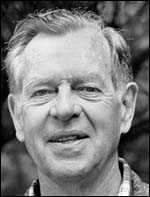
Joseph Campbell

Joseph Campbell

A follow-up to my my post on why truth is in stories: Many of you know about this fascinating theory that there really is only one story, which we tell one another again and again in infinitely many variations.

This is the so-called Monomyth, which I prefer to call the Ur-Story.

The man who popularized the idea is Joseph Campbell, whose book, The Hero with a Thousand Faces, is naturally on the bibliography of my own book.

To simplify his idea, it is that the same fundamental plot and character types and experiential vocabulary underlie all major myths and movies and novels and, well, stories. From Odysseus to Jesus and the Buddha, from Navajo stories to Chinese ones, from ancient tales to modern ones.

An archetypal hero of some sort receives a call to adventure, often refuses the call before accepting it, sets out on a quest, crosses various thresholds, overcomes adversity and trials, encounters a woman as temptress, atones with his father, obtains a boon to society and attempts to return and bring it back. And so forth.

Carl Jung

Carl Jung

Campbell was influenced by James Joyce, but the bigger credit, in my opinion, goes to Carl Jung. It was he who came up with the concept of archetypes (which I use in my book). The Hero, the Child, the Great Mother, the Mentor, the Wise Old Man, and so forth.

All this may strike you as odd. Aren’t there infinitely many stories, one for each person? Well, no. There are infinitely many variations and twists. But one fundamentally stable storyline.

This idea has wormed its way into conventional wisdom now. I was chatting about my book with my friend Evan Baily, a teller of children’s stories in film. Evan said that story is always about character, and how pressure is brought to bear down on him until he breaks down or reveals himself. Evan pointed me to Robert McKee’s seminars on story-telling, famous in Hollywood and beyond. Ultimately, this is all about the Ur-Story.

What’s most wonderful about all this is that we never get tired of hearing the Ur-Story. Telling and hearing it is about being human. And we all get to tell our variation of it. Which is why I’m writing a book.

Bookmark and Share

Thinking of Mumbai

To Abhishek, who occasionally reads this blog from Mumbai: Condolences and sympathies for this week’s events!

Abhishek, of course, is the podcaster who has had me on his show a few times, and who contributed this very witty video reportage to The Economist as part of my Special Report on Mobility. (Unfortunately, I can’t link to his video, but search for Abhishek on our video page. Sorry!)

Abhishek, in time, whenever you’re ready, I’m sure we’ll hear what your experience was during these past couple of days.

For now, here is an elegy to Mumbai, by Suketu Mehta.
Bookmark and Share

Writers looking for their voices

Cheri Block Sabraw

Cheri Block Sabraw

Cheri Block Sabraw, a writing teacher, has an amusing post on her students’ struggle to find their voices as auteurs. Voice, she says, is a “fingerprint, a signature, unique to each writer”. The trouble is that you’re born with a fingerprint, but you have to search hard to find your voice.

The Buddhist insight for her students is this: We’re all in the same boat. Amy Tan is. I certainly am. All of us are, even and especially those who write in the first person, hoping that this automatically takes care of it, which it does not.


Bookmark and Share

Peaking early or climbing slowly

Back to the bibliography for my book. Today: David Galenson, “Old Masters and Young Geniuses.”

Folks, this is an important book. Notice I did not say “riveting” or “thrilling” or “entertaining”. It’s short and academic, not for the beach. But let me say it again: It’s important.

Galenson has looked into the life cycles of creative types. And he has found something. Gaze at this table for a while and try to figure out why these artists are split into two columns:

Painters
Picasso Cézanne
Munch Pissaro
Braque Degas
Derain Kandinsky
Lichtenstein Pollock
Rauschenberg de Kooning
Warhol Rothko
Poets
Eliot Frost
Pound Lowell
Cummings Stevens
Authors
Fitzgerald Dickens
Hemingway Twain
Joyce Woolf
Melville James

On the left are what Galenson calls “conceptual” types. They are the “young geniuses”.

  • They tend to succeed early in life, in their twenties or thirties, with huge breakthroughs of the imagination.
  • They have a big idea, then execute it boldly.
  • Their youth and inexperience, rather than hurting them, helps them because they don’t let the complexity of life experience confuse them.
  • They often cannot follow up later in life with more success.

On the right are “experimental” types, the “old masters”.

  • They tend to succeed late in life and gradually build toward a legacy.
  • They don’t have one big idea, but try things out, refine their craft, work hard, learn and discover.
  • They get better with age and experience, because they incorporate the complexity of life into their art.
  • They often succeed right up to the end.

By now, you will have figured out how this plays into my book. For some of the young geniuses, early success is an impostor, as Kipling would say, while for some of the old masters, early failure is an impostor.

Which type are you?
Bookmark and Share

The web’s paparazzi culture

They did another podcast with me, this time about my piece in The World in 2009, which is The Economist‘s annual thought-leader issue.

We did this on Skype. She was in London, I was in California. My voice sounds strangely metallic and a bit choppy.

The topic, though, has nothing to do with my book. Instead, we’re talking about whether you can be online nowadays and still preserve your privacy.
Bookmark and Share