Genius through observation: Alexander & Bucephalus

The other day, I was reading to my kids from a children’s book about Alexander the Great, which caused much merriment and took much time because, as you would expect, I had to embellish every sentence with the real or the full story.

But honestly, what inadequate storytelling! Here is how that book delivered the famous anecdote about Alexander taming his horse Bucephalus:

There is a story about a black stallion that one day started running wildly through the courtyard. Five trainers chased it but were unable to mount it. All of a sudden the horse stopped short. Not a soul dared to approach except young Alexander, who moved swiftly, mounting and mastering the steed. Henceforth the proud horse belonged to Alexander and was called Bucephalos, which means “The One with the Head of an Ox.”

I had to intervene. So I closed the book and said, “OK, kids, here is what really happened, and it is much more interesting.” (And the next day, I checked my memory against Plutarch, as you can do here.)

The real story, and the lesson

Alexander was only 12 or 13 at the time, and he had quite a tense relationship with his father, a bit as Hannibal and Hamilcar later did, and as most successful sons and fathers do.

In any case, Alexander’s father, Philip, was given a splendid horse. But nobody could tame it, and everybody, including Philip, was making rather a fool of himself.

Alexander, meanwhile, was just watching. Really observing. Because that’s what the adults were not doing. They were too busy being brave to observe the horse.

And so Alexander noticed that the horse was not angry, and was not even fighting against the Macedonian men. No, the horse was afraid and panicking. It was scared of its own shadow.*

So Alexander stepped up and dared his dad to let him try to tame the horse. He looked precocious and arrogant, and the men had a good laugh.

Alexander then took the stallion by its bridle (much more gently than the painting above suggests) and turned him to face into the sun, so that their shadows were now behind them. At this, the stallion calmed down a bit. Alexander then (and I quote from Plutarch now), let

him go forward a little, still keeping the reins in his hands, and stroking him gently when he found him begin to grow eager and fiery, he let fall his upper garment softly, and with one nimble leap securely mounted him, and when he was seated, by little and little drew in the bridle, and curbed him without either striking or spurring him.

Philip and his friends

all burst out into acclamations of applause; and his father shedding tears, it is said, for joy, kissed him as he came down from his horse, and in his transport said, ‘O my son, look thee out a kingdom equal to and worthy of thyself, for Macedonia is too little for thee.’

So, you see, the story is really about Alexander’s finesse and, more, about his genius of observation. (And kids get that! They can handle the real story.)

In this sense, I believe Plutarch chose this anecdote for the same reason he chose the other famous vignette about Alexander: his untying of the Gordian Knot. As I argued in this post, that story, too, was proof of Alexander’s superior powers of observation. In that case, Alexander espied a simple solution to a complex situation.

But we can, as Plutarch would urge us to do, extend this much further. What made Alexander so great?

In his major battles, Alexander was usually the last to arrive at the battlefield. His enemy was already waiting, and had prepared his army for a particular battleplan. Alexander, by arriving late and keeping his mind supple, could observe that situation and infer his enemy’s plan, thereby devising his own, superior, plan on the fly.

In his administration of the conquered lands, from Egypt to Mesopotamia, he again observed the locals and their customs. He observed how they differed from Macedonian and Greek customs. And he observed how the Macedonians and Greeks were reacting to his observation. So Alexander ruled Egypt as a divine Pharaoh, the former Persian Empire as a Persian king, the Greek city states as a Philhellenic “first among equals”, and his own Macedonians as a brother in arms.

The man’s greatness — and the lesson in all these anecdotes — is found in his powers of observation.

Oh, and Bucephalus became Alexander’s beloved charger. When the stallion died from battle wounds (in what is today Pakistan), Alexander named a city after him, Bucephala, and died three years later.

___

* A famous autistic woman, Temple Grandin, has vividly described how cows and other animals, like autistic people, do sometimes get frightened by such things, whether a colored piece of plastic or a moving shadow.

My other posts about Alexander so far:

The story of Cicero, told well

I just devoured Robert Harris’s Imperium, the first book in what will be a trilogy of historical fiction, or fictional biography, about Cicero. I read it in a couple of sittings, hardly able to put it down. It may be the best way to learn about that great man and that fascinating time, a turning point in world history. I’ve just ordered the second book in the trilogy, and I can’t wait for the third to come out.

In terms of themes that show up a lot here on this blog:

  1. Storytelling: Wow. Harris has Cicero’s slave and confidante Tiro tell the story from his point of view, which works well. All the details of Roman life and of the characters (Crassus, Pompey, Caesar etc etc) come to life.
  2. The “impostors triumph and disaster”: Cicero embodies them (though not quite as perfectly as Hannibal and Scipio do, which is why I myself chose them to tell my own story. ;))
  3. The tension between mobs and elites, republican and democratic power sharing, what ought to be and what is.

Among other things.

In any case, if you like The Hannibal Blog, you’re likely to like not only Hannibal and Me in January but also Imperium right now.

The mob in the White House: Jacksonian populism

Recall that I placed Andrew Jackson near the “populist” (as opposed to “elitist”) pole in the spectrum. Here, from Jon Meacham’s excellent biography of Jackson, is a little anecdote that shows how easily such populism veers into mob rule.

I) Background

The seventh president, six foot one but only 140 pounds — “gaunt but striking, with a formidable head of white hair, a nearly constant cough, a bullet lodged in his chest,” according to Meacham — was orphaned at 14 and never knew his father (rather, if not quite, like Hamilton,  Obama/McCainClinton/NewsomVillaraigosa and other presidents).

He also never had biological children of his own. In this respect, he was similar to George Washington. Both Jackson and Washington, in the popular mind, made good “fathers of the nation” because, childless, they regarded the people as their children.

But above all, Jackson was the first president to come from “the common people,” from what we would call the lower classes. The six presidents before him had all been members of an educated, classically trained elite. This contrast became Jackson’s salient feature. He would spend his two terms fighting against what he perceived as elites.

As Meacham puts it (emphasis mine):

Before Jackson, power tended toward the elites, whether political or financial. After Jackson, power was more diffuse, and government, for better and worse, was more attuned to the popular will….

The [debates among the Founders had] largely concerned how the new nation might most effectively check the popular will. Hence the Electoral College, the election of senators by state legislatures, and limited suffrage. The prevailing term for America’s governing philosophy was republicanism–an elegant Enlightenment-era system of balances and counterweights that tended to put decisive power in the hands of elites elected, at least in theory, by a country of landowning yeomen. The people, broadly defined, were not to be trusted with too much power. This creed, best articulated by James Madison and Alexander Hamilton, lay at the heart of presidential politics in the first decades of the nineteenth century, years in which a small establishment in the capital essentially decided on its own who would have the chance to live in the White House.

Jackson had reason to regard this elitism as his personal enemy. In the election of 1824 he won the popular vote but was tied in the electoral college and lost in the House of Representatives. In his mind, the people had chosen him, but the elites had robbed him of the office. So in the next two rounds, which he won, he took his fight directly to the people, even going on the first presidential campaign tour.

Meacham:

The force driving Jackson after 1824: a belief in the primacy of the will of the people over the whim of the powerful, with himself as the chief interpreter and enactor of that will…. “the republic is safe, and its main pillars — virtue, religion and morality — will be fostered by a majority of the people”… Democracy was in; elitism was out.

(Notice his explicit mention of virtue as residing in the common people — that, ie the putative location of virtue, was what I attempted to trace across time in that diagram post.)

II) Inauguration Day

On the day in 1829 he was sworn in, Jackson (apparently without prior planning) opened the White House to “the people”. They gladly obliged by piling in. As one contemporary lady of letters described it:

no police officers placed on duty and the whole house [was] inundated by the rabble mob…. The Majesty of the People had disappeared, and a rabble, a mob, of boys, negroes, women, children, scrambling, fighting, romping [replaced it] …. the carpets and furniture are ruined …. The armies of democracy were pitching their tents in Andrew Jackson’s White House. …

Supreme Court Justice Joseph Story, who was at the White House that day, declared the “the reign of King Mob.”

Minard’s map of Hannibal’s crossing

As you know, I love maps, especially historical maps, and I like to play with them to make points.

For instance, in this post, I turned a map of Hannibal’s invasion of Italy upside down to illustrate the arc of his and his enemy’s lives.

And in this post I paid my respects to Charles Minard, a Frenchman who, in the 19th century, launched the field of data visualization by producing a new kind of map — one that graphically as well as geographically shows Napoleon’s invasion of Russia.

Now I get an email from one Jonnie Lappen, a senior at Arizona State University who is studying geography and considering doing his honors thesis on a different map by Minard.

I didn’t even know about that map until Jonnie showed it to me. Which is shocking: On it, Minard depicts Hannibal’s crossing of the Alps.

If it’s not famous, that’s probably because it is not nearly as good as the Napoleonic map: Minard gives us an angle of the Riviera we’re not used to seeing, and the shrinking line of the Carthaginian army is not as striking as in the Napoleonic map. (Still, look at that Alpine crossing: suddenly the line shrinks by half. That’s a lot of human beings dropping into gorges, slipping off ice sheets, dying of dysentery…)

Anyway, Jonnie is now engrossed in Livy to improve upon this map and give it its proper drama. A great idea. Good luck, Jonnie!

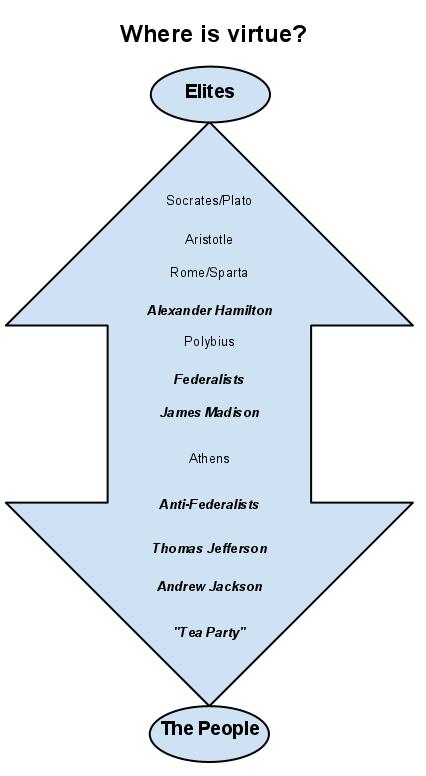
The virtue matrix: Elitism and Populism

American history moves in various cycles. For example:

  • isolationist ↔ interventionist (in foreign policy)
  • prudish/puritan ↔ permissive/liberal (sex)
  • progressive ↔ conservative (attitudes toward change)

But perhaps the most striking and consequential cycle is the one between elitism and populism.

The question here is about virtue. Who is most likely to be virtuous/corruptible? The common people, or the elites?

This question has an ancient pedigree. The answer a society gives at any given time in effect determines the kind of democracy it will practice and the kind of institutions it will build: It will shift power (or pretend to shift power) to the pole it considers more capable of virtue.

I’ll say more about all this in future posts (especially in response to a great biography of Andrew Jackson I just finished reading). But for now I just wanted to amuse myself with another little diagram. As ever, I’m not taking it too seriously, just trying to order my thoughts and invite yours.

Below, I’ve placed some of the figures that have appeared here on The Hannibal Blog over the past two years (each one has a Tag, or you can search for his name) along a spectrum.

Classical thinkers are in normal font, American ones in bold italics.

(Notice the centrality of James Madison, the primary architect of the Constitution. His answer was, in effect, to be agnostic on the question. Therein lies his genius and the strength of the constitution. So he represents the neutral value, 0)

So weigh in. You can also suggest where to place other thinkers, such as John Locke or Montesquieu, or modern pols such as presidential candidates, or foreign politicians.

Lesson from Athens: Democracy ≠ Freedom

Click for credits

One of the recurring themes here on The Hannibal Blog is the tension between two distinct concepts that we (in the West) usually conflate nowadays:

1) democracy and

2) freedom.

They often appear together, but they are not the same, and indeed they can on occasion become enemies. America’s founders understood this, and they distilled this insight in large part from their meticulous study of ancient (Attic and Roman) history.

Athens, as the first and to this day the “purest” democracy (James Madison’s term), offers one lesson about how democracy can threaten freedom: through the “tyranny of the majority”. (That is also Madison’s term, although Madison, with his incredible acuity, foresaw an even greater greater danger from the mixture of democracy with “factionalism”, which ancient Athens did not yet have.)

So here are my notes from Bettany Hughes’s The Hemlock Cup that pertain to this paradoxical relationship between democracy and freedom in ancient Athens. (The Hemlock Cup is the excellent biography of Socrates I recently reviewed here.)

1) Ostracism

It seems that whenever members of the species Homo Sapiens congregate, the groups they form tend to ostracize individual members. In the context of this dynamic, democracy is merely a way to administer the resulting injustice, as is evident from the word ostracism itself.

The ostraka (see picture above) were shards of pottery which the Athenians used as ballots to vote individual citizens out of their city, ie to exile them. The victims (among them illustrious ones, such as Aristides and Cimon) need not have done anything wrong or bad. It was enough that a plurality (with a minimum of 6,000 votes, according to some sources) were sufficiently pissed off at them.

The exile lasted ten years. Hughes (emphasis mine):

… ostracism came to be a handy way of eliminating the unsuccessful, or unpopularly successful, individuals. The piles of scratched ostraka in the Agora Museum in Athens are hard evidence of lives ruined; ‘Kallias’ is ostracised in c.450 BC, ‘Hyperbolus’ in 417–15 BC and another ‘Sokrates’, ‘Sokrates Anargyrasios’, in 443 BC….

An interesting twist is that the practice of ostracism was most popular during Athen’s most “enlightened” period, ie its Periclean Golden Age. Once Athens started losing the war against Sparta and flirted with oligarchic juntas — roughly from 415 BCE onwards — the practice gradually disappeared.

As Hughes says (emphasis mine):

… shamed by their defeats in war, confused by the freedom their own political system gave them, the Athenians from around 415 BC onwards chose oppression over liberal thinking. After c.415 BC there was no further need for ostracism – because now the state could harry and censor at will. Socrates’ death came at the end of more than a decade of intellectual and political persecutions. We must never forget that although Socrates is the most famous victim of Athenian oppression, there would have been scores – perhaps hundreds – more like him whose names have escaped the historical record.

2) Scapegoating

When something went wrong (plague, defeat, etc), the Athenians also picked some compatriots for permanent expulsion. (The word for such a victim was pharmakos, which is the root of our pharmacy. Go figure.)

This practice subsequently became known as scapegoating.

Scapegoating, democracy and religion formed a potent cocktail of institutions in Athens. Hughes:

I think it was no coincidence that Socrates was killed in May/June – the ancient month of Thargelion. Every year at this time, in an obscure ritual known as the Thargelia, two people – either male and female, or representing the male and the female by wearing a necklace of black and green figs respectively – were exiled from the city as scapegoats. Flogged outside the city walls, their expulsion was a symbolic gesture. The Athenians believed their sacrifice would prevent pollution and stasis from seeping through the city-state.

3) Demagogy

Our word democracy (= people power) is closely related to our word demagogy (= people leading). The two concepts were indeed very close in Athens. And the Athenians were quite aware that in a democracy it is not necessarily the best argument that wins, but the best oratory.

Thus Hughes quotes Thucydides (one of my ‘great thinkers’, for his ruthless depiction of Athenian “realism”), who reports a speech by one Cleon in the Assembly (emphasis again mine):

In speechifying competitions of this sort the prizes go to the spin-doctors and the state is the loser. The blame is yours, for stupidly encouraging these competitive displays … If something is to be done in the future, you weigh it up by hearing a good speech on the subject, and as for the past, you judge it not from your own first-hand, eye-witness experience but from what you hear in some clever bit of rhetoric … You all want to be the first to make a speech, and if you can’t do that, you try to sit there looking as though you are one step ahead of the speaker … you demand changes to the conditions under which you live, and yet have a very dim understanding of the reality of those conditions: you are very slaves to the pleasure of the ear, and more like the audience of a paid public speaker than the council of a city.

4) Leadership

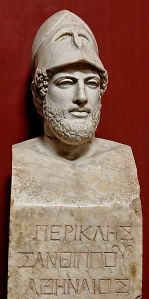
When democracies are unlucky, they fall prey to demagogues. When they are lucky, they have leaders. Athens, for a while, had such a leader: It was Pericles. Although he was technically no more than one among equals in the Assembly (this was a pure democracy, after all), his opinions held sway.

Pericles

Hughes (emphasis mine):

Pericles, because of his position, his intelligence, and his known integrity, could respect the liberty of the people and at the same time hold them in check. It was he who led them, rather than they who led him, and, since he never sought power from any wrong motive, he was under no necessity of flattering them: in fact he was so highly respected that he was able to speak angrily to them and to contradict them. Certainly when he saw that they were going too far in a mood of over-confidence, he would bring back to them a sense of their dangers; and when they were discouraged for no good reason he would restore their confidence. So, in what was nominally a democracy, power was really in the hands of the first citizen.

5) American parallel: populism vs elitism:

It is tempting, of course, to compare ancient Athens with America today. Try, for instance, to swap the words America/American with Athens/Athenian in this passage from Hughes:

This tension between oligarchs and democrats, between aristocrats and the people, charged Athenian politics and culture, and infected its very atmosphere. And Socrates would be both an exemplar and a victim of Athens’ great dilemma: in a true democracy, where power and responsibility are shared equally amongst all citizens, what is the place not just of the good, but of the very great? …

… Socrates goes further, he suggests that tyranny is spawned by the liberty of all in the demos. Here he is the first to suggest that liberty is an illusion fostered by the great to keep the many happy. Come then, tell me, dear friend, how tyranny arises. That it is an outgrowth of democracy is fairly plain….

The Alexandrian–nay, Gaussian–Solution

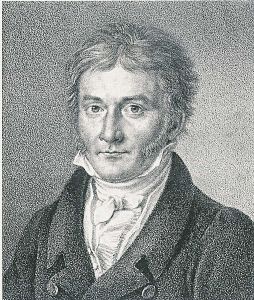
Carl Friedrich Gauss

A year ago, I wrote about “the Alexandrian solution” to the Gordian Knot. I saw this as a metaphor for all instances in which genius lies in espying the simplicity hiding in a complex situation.

It just occurred to me that Carl Friedrich Gauss was, at the age of 10, just such an Alexander the Great. (Alexander was young, too, of course. In espying simplicity, it seems to help to be young — ie, intellectually daring, unspoiled by the complexity of life, et cetera.)

In about 1787, the young Carl Friedrich sat in class when the teacher told the kids to find the sum of the numbers 1 through 100. In other words:

1 + 2 + 3 … + 100 = ?

Think of this as the Gordian Knot. The teacher assumed that the kids would be busy for a long time, practicing their addition skills. Gauss reacted just as Alexander would have (I take poetic license):

This is too f***ing boring. There must be a simpler way.

Did Gauss get nervous as the other kids pulled ahead adding numbers, while he was still at 1, searching for simplicity? I don’t know. But he found it:

He realized that the numbers came in pairs:

1 + 100 = 101
2 + 99 = 101
3 + 98 = 101

(and so on until:)

50 + 51 = 101

So the sum of the numbers is simply (simply!)

50 x 101, or 5,050

You might, if you’re a regular on The Hannibal Blog, be guessing that I’m much less interested in sums of numbers than in, shall we say, Gordian Knots and Alexandrian Solutions in general — meaning in other, preferably surprising, walks of life.

If you can think of any instances in which daring simplicity blasted through mind-numbing complexity, drop me a line.

Two other takes on Socrates + a lesson

Prostitutes could confidently ply their trade by slipping on customised little hobnail boots and casually strolling up and down the alleyways. In the dust their shoe-nails would spell out akolouthei – ‘this way’, or ‘follow me’.

Isn’t that a great little detail? When strung together densely in one single narrative, these details transport you to a place and a time, to Athens during the life of Socrates. Kudos to Bettany Hughes for achieving such intensity in The Hemlock Cup: Socrates, Athens and the Search for the Good Life.

And oh, what an Athens it was. This is the Athens of aromas and stink; of sweat, blood and sperm; of tanners pissing on their hides and Adonises oiling themselves for war games; of parades, assemblies and battles; of sex, slavery and domesticity; of democratic group-think, individual liberty and massacre; of humanity at its highest and simultaneously its lowest; of strutting health and vile disease.

Regarding disease, for example, is it not obvious that a plague such as the one that fell on war-torn Athens during Socrates’ prime must have influenced the subsequent events and the worldview of Socrates and his compatriots?

[W]ithin a year the disease danced its way through the caged population of Athens and across the hot streets; 80,000 died. At a cautious estimate, at least one-third of the city was wiped out. It had started in 431 BC.

Imagine one third of Americans, 100 million, dying in one year from a plague.

But we also need the lighter moments. For example, that time (beloved by artists, as above and below) when Socrates’s wife doused him with piss:

Xanthippe, raging after one argument with her maddening philosopher spouse, pours the contents of a bedpan over Socrates’ head; ‘I always knew that rain would follow thunder,’ sighs the philosopher, resignedly mopping his brow.

So Hughes accomplished something big: She brought that world-historical character, Socrates, to life. It’s a scandal how dull ‘philosophers’ (as opposed to historians) usually make Socrates. We needed this ‘biography’. She makes reading about Socrates easy and fun and personal. That is what I tried to do with Hannibal and the other characters in my own book.

(And, by the way, a reminder: Don’t ever assume that a thread on The Hannibal Blog has ended just because it slumbers for a few months. Both the series on Socrates and that on the Great Thinkers will continue. I have big plans for them.)

Another recent book on Socrates and the great philosophers is Examined Lives: From Socrates to Nietzsche by James Miller. It tackles a selection of thinkers, one per chapter:

  • Socrates
  • Plato
  • Diogenes
  • Aristotle
  • Seneca
  • Augustine
  • Montaigne
  • Descartes
  • Rousseau
  • Kant
  • Emerson
  • Nietzsche

Since three of my own favorites were on the list, I bought the book. (The three, each with his own tag here on The Hannibal Blog, are Socrates, Diogenes and Nietzsche.)

Miller, too, sets out to write a biography (as opposed to a philosophical essay). His conceit, if I may paraphrase it, is to examine the lives of those who examined their lives.

Put differently, he wants to see how various philosophers lived and whether they just ‘talked the talk or also walked the walk’. Did their lives reflect their love of wisdom (= philo-sophy), or where they hypocrites?

Socrates, in this exercise, comes off splendidly. He embodied the love of wisdom and lived accordingly, searching for the good and treasuring simplicity. From Miller:

Socrates prided himself on living plainly and “used to say that he most enjoyed the food which was least in need of condiment, and the drink which made him feel the least hankering for some other drink; and that he was nearest to the gods when he had the fewest wants.” … Abjuring the material trappings of his class, he became notorious for his disdain of worldly goods. “Often when he looked at the multitude of wares exposed for sale, he would say to himself, ‘How many things I can do without!’ ” He took care to exercise regularly, but his appearance was shabby. He expressed no interest in seeing the world at large, leaving the city only to fulfill his military obligations.

And, of course, he died for his principles.

Diogenes, whom I admire so much for his extreme simplicity/freedom, arguably became the caricature of this Socratic lifestyle:

While Diogenes regarded Plato as a hypocrite, Plato saw Diogenes as “a Socrates gone mad”—and by Plato’s standards, he certainly was.

Masturbating in public and living in a barrel can give you that kind of reputation.

Plato and Aristotle arguably started that other trend, that of the hypocrite philosopher, talking/writing sophisticated words while, one way or another, selling out in private life. By the time you get to Rousseau, the hypocrisy becomes hard to stomach (I’ll leave that for another post some day.)

Storytelling lesson: unity vs fragmentation

But that’s not what I was mainly pondering after reading these two books, one after the other. Instead, I was reflecting why one author succeeded in a big way, and the other possibly failed in a small way.

Hughes, in The Hemlock Cup, succeeded big. She tackled an intimidating subject (intimidating because Socrates is not exactly an under-covered subject) in an innovative way and rose to the challenge by presenting one single, unified tale, no part of which a committed reader would dare to omit or skip.

By contrast, Miller, in Examined Lives, put forth a list, then broke his narrative into discrete chapters for each person on the list.

There is a problem with such lists: Why this list, and not some other list? Why Augustine and not Aquinas? Why Descartes and not Spinoza? Why Montaigne and not Montesquieu? Et cetera.

The result is that the reader, as he progresses, is increasingly tempted to skip the chapters that don’t interest him to speed ahead to those chapters that do interest him. I confess that I did that. Life is short, and I was a bit bored on some pages.

A good author reins in his readers as a charioteer steers his horses. He has readers asking the questions he, the author, is asking, not some other question (such as: where is Hegel?).

What could Miller have done differently? He could have woven the various lives together so that each chapter was about a theme, not an philosopher, and the various philosophers that interest him reappear at the right places.

My choice

You should take this with a grain of salt, because I have a reason to be thinking such thoughts.

A few years ago, when I first contemplated the book I wanted to write, I also envisioned it as a collection of chapters about various individuals that interested me (around the theme of triumph and disaster being impostors). (Hannibal was to have one chapter, Scipio one, Einstein one, Roosevelt one, et cetera.)

When I pitched that to an agent, he suggested that a better (but also more challenging) book would thread the lives together into one unfolding story, so that readers would not be tempted to disassemble the book and cherry-pick among the chapters. That structure would also force me to do the hard work of actually teasing out the themes concealed in these lives.

I took that advice. You can soon (on January 5th) decide whether I succeeded at it or not. For now, I simply observe with fascination how other authors approach this choice.

Hannibal v Rome, the game

One of you (Thank you!) has pointed me to Hannibal: Rome vs Carthage, a game for connoisseurs of this sort of thing (available on Amazon, too). You can replay Hannibal’s strategy … and tactics, apparently. Cannae could go to the Romans, Zama to Carthage. (And we today might all have Carthaginian, instead of Roman, government buildings.)

Aside from all that, just savor the rather different visual interpretation of the general, vis-a-vis the one Riverhead expressed on the jacket cover of my book. 😉 Now that’s what I call a Carthaginian!

And for the history geeks: You notice the Hannibal above has both of his eyes. And the Alps are behind him. When he came out of the Alps, he did indeed have them both. He lost one of them to conjunctivitis seven months later, while wading through a fetid Etruscan (= Tuscan) swamp.

My Elephantine mistake

Copyright: Shoshani and Tassy 2004

I’ve been telling you something very wrong about Hannibal’s elephants all this time. Not deliberately, mind you.

Almost three years ago, when I wrote my post “about Hannibal’s elephants“, I was really just kidding around, as I was in the early stages of research for my book. The levity, I thought, was abundantly obvious from my treatment of the subject. I did not mean to imply that I had any idea of what I was talking about (although I sort of do now).

I was, you see, a blogger! (Ie, I was more interested in thinking out loud, and getting readers to correct me, than in pontificating authoritatively.)

To my surprise, that particular blog post keeps getting a lot of traffic. In fact, its traffic is increasing. I have no idea why, so I must guess that the Google gods are sending people its way (which should cast aspersions on Google’s algorithms, not on my post). Those of you who blog may have made the same discovery: those posts you think are most valuable are not at all the ones that attract the eyeballs, and vice versa.

So I will set the record straight in this post. But first, I’m delighted what the earlier post has already done: It has brought me many of my readers (mostly the silent, non-commenting type). One of you has even (hush, hush) hinted that you might write a children’s book about Hannibal’s elephants — and I have voluteered my own kids and me as the first readers.

Now: The first question is how many elephants Hannibal brought with him when he left Iberia to cross the Alps and attack Rome. I’ve read the number 37, but Serge Lancel, the late French historian who seems to know best, says 27 (on page 63 of his book). So I’m going with that. Personally, I don’t really care about the real number. It changes nothing in the story and the drama.

The second question — and the one I answered wrong — is: which kind of elephant?

The correct answer is the African Forest Elephant, or Loxodonta cyclotis:

Click for attribution

As it happens, we very recently (last year) discovered that these elephants were an entirely different species (as opposed to just a sub-species) of elephant. So you should imagine the (older) genealogical tree at the top with another twig on the third branch from the right, as this blog post explains.

The discovery comes via DNA analysis from Nadine Rohland, David Reich, Swapan Mallick, Matthias Meyer, Richard Green, et al., who summarize their findings here:

Our data establish that the Asian elephant is the closest living relative of the extinct mammoth… We also find that savanna and forest elephants, which some have argued are the same species, are as or more divergent in the nuclear genome as mammoths and Asian elephants, which are considered to be distinct genera… The divergence of African savanna and forest elephants—which some have argued to be two populations of the same species—is about as ancient as the divergence of Asian elephants and mammoths…

So it is those forest elephants that Hannibal brought with him. They were quite a bit smaller than the savanna elephants of Africa. So artists have, for millennia, exaggerated their size.

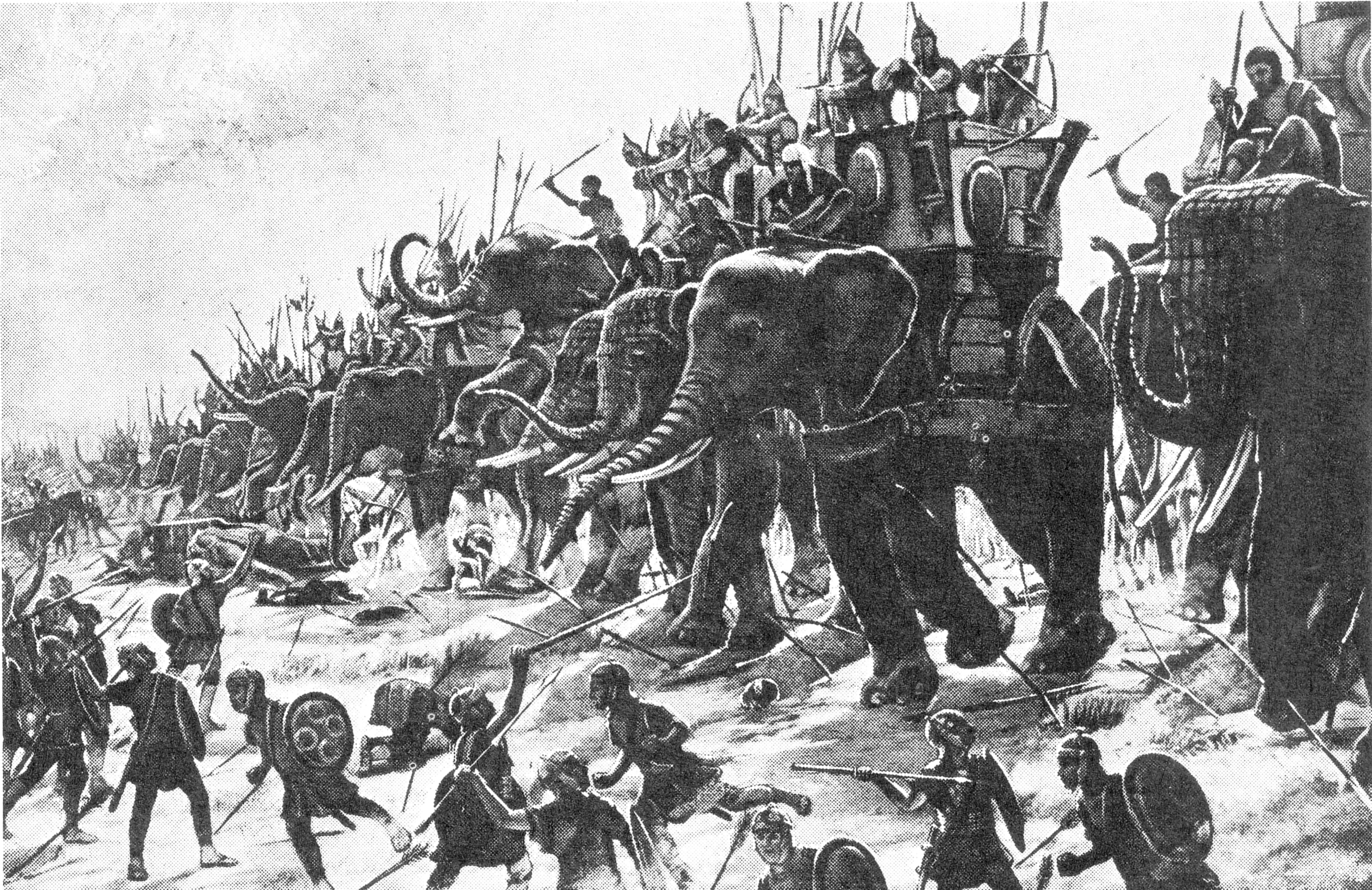
Or have they? Generations of boys reading about Hannibal must have imagined them just as the young Roman legionaries perceived them, which is roughly thus: