
Alexander meets a yogi: Who’s the hero?

Alexander the Great was busy conquering the known world once, when he saw, on the banks of the Indus river in today’s Pakistan, a naked guy sitting in the Lotus position and contemplating the dirt.

“Gymnosophists” (gumnos = naked, sophistes = philosopher) the Greeks called these men. We would call them yogis — as in: Patanjali, say.

“What are you doing?”, asked Alexander.

“Experiencing nothingness,” answered the yogi. “What are you doing?”

“Conquering the world,” said Alexander.

Then both men laughed, each thinking that the other must be a fool.

“Why is he conquering the world?”, thought the yogi. “It’s pointless.”

“Why is he sitting around doing nothing?”, thought Alexander. “What a waste of a life.”

Devdutt Pattanaik

Thus Devdutt Pattanaik tells the story in the TED talk at the end of this post. (Thank you to Thomas for the link. Was it Thomas?)

Devdutt used to be successful and bored (the two can go together) in the pharma industry until he decided instead to make a living out of his passion, which is comparative mythology, by applying myths and storytelling to business. Wow. That’s exactly what The Hannibal Blog (at least in part) tries to do.

But let’s get back to this specific little anecdote (which echoes another such encounter Alexander was said to have had). It makes a perfect transition in my thread on heroes and heroism from the Greek and Roman heroes of antiquity to the Eastern heroes of antiquity.

As Devdutt says, Alexander grew up with the stories of Hercules, Theseus and Jason, which told him:

  • you live only once, so make it count, and
  • make it count by being spectacular!

The yogi grew up on up on different stories — the Mahabharata (which I love) and Ramayana and so forth. His heroes, such as Krishna and Rama, were not distinct individuals who lived once and made it count, but different lifetimes of the same hero.

The yogi’s stories told him that:

  • you get to live — nay, must live — infinite lives, until you get the point, so
  • stop wasting your time by conquering things that have been and will be conquered countless times, and try to see the point.

To approach this in a slightly different way:

In my last post on Aeneas, I argued that he was “the first western hero whose internal journey is as important as his external journey.” Well, I put the word western in there for a reason: Because I was already thinking of Arjuna, to whom I must turn in a separate post.

Now watch Devdutt:

Bookmark and Share

My humor test in the lift

(This one may not work for you. But try to laugh with me anyway.)

Thirteen years ago, soon after I joined The Economist, I was riding down in the elevator (“lift”, according to our style guide) of our “Tower” at 25 St. James’s Street in London.

There were two or three of us. We were silent. Drab weather. Nothing to say.

Just before the door opened, one of the others turned toward me, with expressively furtive, even dirty or intimidating, body language. Was he about to flash open his trench coat? Confess to a crime? Attack me?

I have doubts about free trade,

he said, and ducked out into the drizzle and its pin-striped shadows.

Bookmark and Share

Finally: How most of us see TV news

Charlie Brooker

The Hannibal Blog thought that Michael Kinsley did a pretty good job critiquing bad writing in the news media. Now Charlie Brooker, a Guardian columnist and TV satirist, does an even better job critiquing television news.

It helps to be British, of course.

Watch:


Bookmark and Share

A tale of two cases: Dumas vs Sipple

Alexandre Dumas pere

I promised in the previous post to follow with two examples of the fascinating differences in American and European law (not to mention culture) when it comes to privacy and its component values, such as liberty, dignity, and honor.

Of the many cases in James Q Whitman’s excellent research into those two traditions, these two caught my attention:

  1. The 1867 case of Alexandre Dumas pere, which expresses perfectly the French (and thus continental European) philosophy on the matter of privacy, and
  2. the case of Oliver Sipple, a gay man who saved President Gerald Ford’s life in an assassination attempt in 1976, which expresses the American philosophy

1) Dumas

Alexandre Dumas père was the author of The Count of Monte Cristo and The Three Musketeers and other books. In his sixties, he had a steamy affair (as one did) with an actress and horsewoman from Texas who was almost half his age and (in)famous for mounting stages scantily clad by the standards of the time.

Dumas and his lover posed for several risqué photos. Nobody on Facebook today would bat an eyelid, but the babe was in her underwear, and even the old man was in states of relative undress. Dumas sold the rights to those photos to the photographer, as he later admitted in court. The photographer then published some of these photos.

Dumas, probably thinking of his musketeers who would have demanded a duel on the spot, sued. And — this is the interesting bit — the French courts sided with him.

In its decision, the court cited Dumas’ “right to privacy” which superseded the photographer’s property rights, even though Dumas had explicitly sold him those rights. Dumas, Whitman quotes the court as opining, had

forgotten to take care for his dignity, and [publication of the photos sufficed to] remind him that private life must be walled off in the interest of individuals, and often in the interest of good morals as well.

So there we have it: The French legal culture, following its ancient traditions, saw:

  • the honor of a high-status individual as the highest value at stake,
  • the “media” as the primary threat,
  • and commercial transactions in the marketplace as a vulgar aspect of liberty inferior to the dignity of the people involved.

2) Sipple

In 1975, President Gerald Ford came out of the St. Francis Hotel in San Francisco. A crowd had formed, and a woman, for whatever reasons, raised a gun to shoot the president. Oliver Sipple, a US Marine and Vietnam veteran, saw this and tackled the woman, so that the shot missed the president.

So he became a “hero“.

America’s press declared him so, and followed up with its usual fare, digging up every morsel of Sipple’s private life for the public. This was unfortunate, because Sipple was gay and, although he was living out of the closet in San Francisco, his family in the Midwest had no idea. Sipple wanted his homosexuality kept out of the papers and sued.

By now it should be clear how a continental European court would have ruled. But the American court gave priority to freedom of the press and of speech. Sipple eventually committed suicide.

So (referring back to the previous post) there again we have it: The American legal culture, following its ancient traditions, regarded:

  • liberty, defined as freedom from state tyranny as opposed to public humiliation, as the highest value,
  • an individual’s home as the only locus legitimately walled off from the public, and
  • public spaces and activities (such as San Francisco’s gay scene, or even the venue of an assassination attempt) as fair game.
Bookmark and Share

Privacy law: US “liberty” vs European “dignity”

These naked Germans are enjoying themselves in the middle of Berlin. I’ve been just as gleefully naked in Munich, Berlin and various other European places. To Germans and other continental Europeans this is a) fun and b) part of freedom. The word for public nudity, in fact, is Freikörperkultur (‘free body culture’), often abbreviated to FKK.

To Americans, of course, this tends to be awkward if not shocking:

“Don’t these Europeans have a sense of privacy?”

Then there is, for example, Monica Lewinsky and that whole thing with the president of the United States. A special prosecutor — nay, all of America — parsed every word of the country’s head of state, demanding to know exactly what these two had been up to in which closet — from “distinguishing characteristics” to stains on dresses and all the rest.

To Americans this was part of freedom — the free press and the right to hold government accountable.

To continental Europeans, by contrast, this was amusing at first, then awkward, then distasteful and finally undignified:

“Don’t these Americans have a sense of privacy?”

The Two Western Cultures of Privacy

So there you have it: two western cultures of privacy, each (being “Western”) deceptively familiar and yet incomprehensible to the other. Here are some questions, which fit perfectly into two of my threads here on The Hannibal Blog: the thread on America and the one on freedom.

  • What is privacy? What is to be kept private from whom, when, where and why?
  • And how does that interrelate with freedom and dignity?

James Q. Whitman

James Q. Whitman, a professor of comparative law at Yale, has written a profound article about exactly this. It is called “The Two Western Cultures of Privacy: Dignity Versus Liberty.” I recommend it. Here is the PDF.

For the rest of this post, I’ll try to describe the Atlantic culture clash and then the possible historical causes as Whitman sees them. In the next post, I’ll talk about two cases that are great examples of the two cultures. But first — and before you jump into the comments with your counterexamples (there are many) — note that Whitman himself admits that this is a matter of nuance:

The issue is not whether there is an absolute difference. Comparative law is the study of relative differences.

I. The clash

The conventional wisdom — with which I mostly but not totally agree — is that continental Europe has much stronger privacy laws than America does. In a long list of areas, Europe circumscribes what information can be circulated about people, whereas America hardly does so at all:

  • consumer data
  • credit reporting
  • workplace privacy
  • “discovery” in civil litigation (ie, rummaging around in the records of your opponents in a lawsuit)
  • the dissemination of nude images on the Internet
  • and so on.

As Whitman says,

I have seen Europeans grow visibly angry, for example, when they learn about routine American practices like credit reporting. How, they ask, can merchants be permitted access to the entire credit history of customers who have never defaulted on their debts? Is it not obvious that this is a violation of privacy and personhood, which must be prohibited by law?

By contrast, privacy is explicitly enshrined in European law (both national and EU law). For example, Article 8 of the European Convention on Human Rights protects “the right to respect for private and family life,” and the European Union’s Charter of Fundamental Rights features articles on “Respect for Private and Family Life” and “Protection of Personal Data.”

But Americans can counter with a different list to prove that it is actually Europe which allows the compromising of privacy:

  • those “private parts”! (= nudity)
  • baby names: Several EU governments restrict what parents can name their children!
  • Official ID cards/registration: In Germany, for instance, you have to register with the local police when you move to a new place.
  • Court-room use of evidence that Americans would consider illegally seized
  • phone tapping, which apparently happens much more often in Europe than in the US

So the question is: What’s going on here? How did these differences come about? As Whitman puts it,

Why is it that French people won’t talk about their salaries, but will take off their bikini tops? Why is it that Americans comply with court discovery orders that open essentially all of their documents for inspection, but refuse to carry identity cards? Why is it that Europeans tolerate state meddling in their choice of baby names? Why is it that Americans submit to extensive credit reporting without rebelling?

II. Causes: Liberty versus Dignity

Let’s first try to analyze the two cultures of privacy in terms of what each thinks must be kept private from whom and for what purpose.

a) Europe (= dignity)

European privacy laws aim to protect a person’s dignity. In practice, this means protecting the individual’s control over the use of his

  • image,
  • name,
  • reputation, or
  • information

So dignity is implicitly defined as control over one’s public image. You have a right not to be humiliated or embarrassed in public.

And who is the enemy/threat? Who would typically do the humiliating? Well, the press, or its new-media descendants today. Let’s just call them all the paparazzi.

b) America (= liberty)

American privacy laws, by contrast, aim to protect a person’s liberty. The word liberty is here defined in the traditional American (and quite narrow) sense of freedom from government tyranny. (Freedom can have many, many meanings: see here, here and here. ;))

Who is the enemy/threat in this culture?

Well, certainly not the press, whose freedom of speech is one of the things most in need of protection, even when that means that individuals (Lewinsky, Clinton) are being humiliated in public.

Instead, the enemy/threat is the state.

The locus of maximum protection, moreover, is not the public sphere (as in Europe) but the private sanctum of an individual’s home. The government must, to the greatest extent possible, be kept out of it. The police must (in most cases) not break in and search it. (This is true in Europe, too, of course, but the relative emphasis is stronger in America.)

In this culture, the right to privacy decreases as an individual moves further (physically or metaphorically) from his home. Once you’re in the workplace, in the subway, on the street, at the beach or otherwise in public, you’ve “asked for it.” Clinton, Lewinsky: you’re fair game!

Whitman puts the mutual incomprehension this way:

When Americans seem to continental Europeans to violate norms of privacy, it is because they seem to display an embarrassing lack of concern for public dignity—whether the issue is the public indignity inflicted upon Monica Lewinsky by the media, or the self-inflicted indignity of an American who boasts about his salary.

Conversely, when continental Europeans seem to Americans to violate norms of privacy, it is because they seem to show a supine lack of resistance to invasions of the realm of private sovereignty whose main citadel is the home—whether the issue is wiretapping or baby names.

Examples

Let’s take another look at the example of public nudity:

Europeans assume that you have a right to both nudity and dignity in public. So, for instance, the paparazzi (or neighbors) do not have a right to take a picture of you and then put it on the internet, because you must remain in control of your public image. It’s not even OK for others to stare at you. (I’ve gotten in trouble over that.)

This concept of private public nudity is entirely alien to American law. In fact, it sounds oxymoronic (perhaps even just moronic) to Americans. They assume that once you have left the sanctum of your home and entered a public space, and indeed metaphorically shed the “walls” of your mobile “home” in the form of clothes, you can no longer expect privacy. You have, as it were, asked for it.

Just one illustration: The US Supreme Court’s 1995 decision in Vernonia School District v. Acton.

The question before the court was whether high school athletes could be subjected to mandatory drug testing. Yes, they could, said the court, because — and this is the logic that confounds Europeans to the point of making them guffaw — athletes regularly shower together (naked, we assume), and by voluntarily exposing themselves, these athletes can therefore expect less privacy, which means it is OK to test their piss.

(This might also shed light on the debate we had when I proposed “shaming” people who text and drive by snapping pictures of them and publishing them on the web. It seems that we are “free” to implement my idea in America, but not in Europe, where this might compromise the dignity of the drivers.)

III. History

So where do these fascinating differences come from? The conventional answer is that Europe after the Fascist horror of the 1930s and 40s, and in particular Germany after the Nazis, corrected for the sheer indignity of those crimes against humanity by elevating human dignity to the highest value.

I happen to believe this is largely correct (Whitman does not, and in my opinion this part of his thesis is the weakest). For example, Germany’s constitution, written in 1949, explicitly starts with the phrase

Die Würde des Menschen ist unantastbar (The dignity of each human being is untouchable)

I pointed to this in my post on the different views of healthcare in America and Europe, and alluded to it in my post on the different attitudes toward prisoners. (European law protects the rights of prison inmates “to a degree almost unimaginable for Americans,” as Whitman puts it. The European in me is shocked by the prison conditions in America.)

But Whitman traces the origins of the differences between America and Europe several centuries further back, and this is the most fascinating part of his argument. So here, in brief, are the histories of privacy law in Europe (France and Germany) and America:

1) Europe

In Europe, the concept of dignity “descends” from that of honor and the so-called law of “insult” that accumulated over the centuries around it.

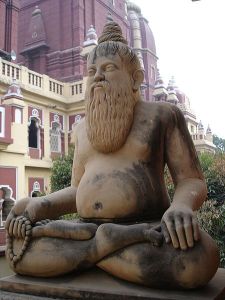
In a nutshell, what we are talking about here are a bunch of toffs dueling, as in the picture above. It was aristocrats and other high-status individuals who protected their honor (ie, their “public image”), both from the prying eyes of the press and from insult by others. Gradually, society lost its taste for cleaning up the gore after duels and encouraged the toffs to meet in court instead.

What Europe’s various revolutions, starting with the French one in 1789, did over time was to elevate more and more low-class individuals to the same “royal treatment.” Eventually, after World War II, all Europeans became entitled to it, just as all adult French and Germans, of whatever status, could now expect to be addressed by other adults as vous or Sie.

France

France and Germany, took subtly different paths to get to the same place: In France, the main body of law was written during the 19th century in response to famous artists and writers doing sexy things of a questionable nature. (I know this comes as a shock.) I’ll highlight one such case, involving the author of The Three Musketeers, in the next post. In most cases, whenever the dignity of a prominent individual was threatened after sexy photos of him or her were published, even when that individual had expressly sold the right to those photos (!), the courts opted to preserve dignity.

Germany

In Germany, also during the 19th century, the individuals whose cases drove the law forward were not so much lascivious artists but brooding philosophers. (Again, I know this comes as a shock.)

Influenced by Hegel, Kant and their ilk, the German lawyers wanted to prove the pre-eminence of free will. They went all the way back to ancient Rome and the law of my hero Scipio to re-interpret the Roman law of “insult” (injuria). From this, they constructed the concept of Persönlichkeit (personality or personhood), which is often used in the same contexts that Americans use liberty but with a twist.

In a nustshell: To be free meant, as Whitman puts it,

to exercise free will, and the defining characteristic of creatures with free will was that they were unpredictably individual, creatures whom no science of mechanics or biology could ever capture in their full richness…  The purpose of “freedom” was to allow each individual fully to realize his potential as an individual: to give full expression to his peculiar capacities and powers.

(Sounds a lot like Abe Maslow’s self-actualization, don’t you think?)

In any case, both the French and the German legal traditions put much less emphasis on the sordid American obsessions with consumer sovereignty and commercial freedom (credit reporting, for example) and much more emphasis on creativity and the presentation of self, of Persönlichkeit in all its eccentric splendor.

2) America

America, by contrast, embarked on the journey of privacy law with the Bill of Rights. And it focused on limiting state power. The Fourth Amendment specifically establishes the right against unlawful searches and seizures as the main expression of privacy.

Searching and seizing is usually done in one’s home, so right from the start, the concept of privacy resided there.

Of course, there have been American lawyers over the years who have tried to make American law more “European”. The main attempt was “The Right to Privacy” by Samuel Warren and Louis Brandeis in 1890. But these attempts never went far.

Property rights and/or freedom of speech almost always prevail in American courts over appeals to privacy and dignity. Whitman cites, for example, the Supreme Court’s decision in Cox Broadcasting Corp. v. Cohn and Florida Star v. B.J.F. In these cases, the media published the names of rape victims. In both cases the Supreme Court found that the First Amendment protected media outlets against suit. European courts would have been concerned with protecting the rape victims. Ironically, because those victims might once have been aristocratic toffs.

Bookmark and Share

Editorial/logistical tour de force

Some of you may be wondering why I’ve been a bit slow to respond to your comments this week.

It’s because our United States editor from London is visiting me in California, and I’m taking him from one meeting to the next — all day long, three days in a row.

My mission on these occasional editorial visits is to orchestrate an exciting local experience, so that my editor and I get in front of the most interesting people from different walks of life and talk freely and spontaneously about what’s on their minds. Our interview partners include the high and mighty and the obscure but insightful.

I’ve done this for editors when I was stationed in Hong Kong, in Silicon Valley, and now in L.A. It’s exhausting (the scheduling and logistics mostly) but fun. I’ve already filled a notebook.

Starting tomorrow night, I’ll again be quicker to reply to you all.

Bookmark and Share

The first “almost modern” hero: Aeneas

Aeneas

It’s time to tie together three of my threads:

So what role did Aeneas play in the history of hero stories? What sort of hero was he?

A revolutionary one, it seems to me. He was a classical Homeric hero (literally mentioned in Homer’s Iliad) whom Virgil made into a recognizable modern hero, but with one interesting twist that still alienates him from us today.

I) The “weak” hero

In the Aeneid, we first meet Aeneas (and first meetings are important) in the middle of a storm that Juno has orchestrated in the hope of killing him and his Trojans. As the wind and waves tear his ships apart (sinking 7 of the 20),

Aeneas on the instant felt his knees go numb and slack, and stretched both hands to heaven, groaning out: ‘Triply lucky, all you men to whom death came before your fathers’ eyes below the wall at Troy! Bravest Danaan [ie, Greek], Diomedes, why could I not go down when you had wounded me, and lose my life on Ilium’s [Troy’s] battlefield? (I, 131-139)

This is an astonishing departure, a brave literary innovation, in ancient storytelling. We could not imagine, say, a Hercules or Theseus, or even a Jason, in despair — frightened to death in the sense of wishing to die.

Right from the start, therefore, we understand that Aeneas’ heroism will not consist only of strength — expressed as the overcoming of enemies or monsters — but, more importantly, of an inner struggle with himself.

So Aeneas is the first western hero whose internal journey is as important as his external journey. Virgil thus invites us, his readers, to empathize with Aeneas more than we would ever empathize with Hercules, Theseus or Jason.

II) The tender hero

Virgil also wants us to empathize in another way: Aeneas is the first hero (aside from Orpheus, arguably) who is presented to us as a whole man, a man who not only has a public duty but also private loyalties to:

  • father,
  • son,
  • wife,
  • and even lover.

Hercules, Theseus and Jason also had parents, wives and offspring, of course. But their stories never dwelt on these relationships.

Aeneas carries his father and son out of Troy

By contrast, Aeneas’ proto-Roman deference and respect for his father, Anchises, and his tender nurturing of his young boy, Ascanius, are deliberately touching. Here is Aeneas as Troy burns and its inhabitants are being slaughtered by the Greeks:

‘Then come, dear father. Arms around my neck: I’ll take you on my shoulders; no great weight. Whatever happens, both will face one danger, find one safety’…. Over my breadth of shoulder and bent neck, I spread out a lion skin for tawny cloak and stooped to take his weight. Then little Iulus [another name for Ascanius] put his hand in mine and came with shorter steps beside his father… (II, 921-924)

Aeneas loses his first wife, Creusa, in the genocide of Troy, but he makes clear how painful this is for him. Having rescued his father and son, he goes back into the burning city to look for her:

I filled the streets with calling; in my grief time after time I groaned and called Creusa, frantic, in endless quest from door to door. (II, 999-1000)

Aeneas also feels tenderness for his lover Dido, even after their “break-up” and her eternal hatred. We see this as Aeneas descends to Hades to seek advice from his dead father. In passing, he sees the shade of Dido (who has committed suicide, as Aeneas has guessed but does not know). Aeneas

wept and spoke tenderly to her: ‘Dido, so forlorn, the story then that came to me was true, that you were out of life, had met your end by your own hand. Was I, was I the cause? I swear by heaven’s stars, by the high gods, by any certainty below the earth, I left your land against my will … And I could not believe that I would hurt you so terribly by going… (VI, 611-625)

This is an unusual classical hero — a man who is aware of the ramifications his actions have on others, and man who has compassion.

III) The hero without free will

But there is also a clue to the aspect of Aeneas that alienates him from us today. “I left your land against my will,” he tells Dido’s shade. This is true. The gods ordered him to leave Dido, because they had sketched out a larger mission for him, which was to found the Roman nation.

This was his duty, and Aeneas is still, above all, pius Aeneas, as he himself says. (Dutiful is a better translation than pious here.)

In fact, as Susanna Braund points out in her fantastic (and free) Stanford lectures on the Aeneid, Aeneas uses a more telling phrase:

I sail for Italy not of my own free will. (IV, 499)

There you have it: no free will.

Braund thinks that this is the reason why the Aeneid has not yet been made into a Hollywood film, even though we’ve long had to suffer Brad-Pitt-Achilleses and their like.

It seems that we like heroes to be strong and weak, tough and tender, but that we need to believe that they are free. Subtle but interesting. To be continued.

Bookmark and Share

“I sense an obsession…”

So I’m haggling with an editor of mine about the word count of the two pieces I am writing for the next issue of The Economist. Writers always want more words; editors want fewer words (they’d rather run more articles).

In this case, I lobbied passionately for one of the ideas, leading the editor, who happens to be the same one I’ve previously highlighted for her British humor, to comment that

I sense an obsession, and feel it may be good to indulge it.

With that, she upped my word count by 20%.

This is another instance not only of charm and British humor but also of good editing. Even if you are a writer editing yourself, it is good advice:

Sense your obsession, then indulge it. It may be infectious.

Bookmark and Share

Success vs popularity: genius or slut?

James Patterson

Using the example of James Patterson, an apparently über-successful author of whom I had never heard, Mark Hurst recently made me think once again about my definition of success.

To paraphrase and amplify Mark’s point, would you rather …

  • create something truly yucky — something that you’re secretly ashamed of because you have good taste and know better — which nonetheless becomes a blockbuster?
  • or something that you are proud of, something you consider sublime, even if relatively few people agree or even notice?

As Mark says, this dilemma could appear in any walk of life:

You could be creating websites or software, or writing books, or designing products, or teaching classes, or producing events, or seeing patients. Whatever the case, what would you rather result from that experience: to be popular, or to create something that you yourself would be happy to receive?

If you answer “I’d like to do both” you’re cheating. The conundrum presents itself to all creative types sooner or later precisely because they must, at least sometimes, choose between the two options.

How to sell 14 million books

Which brings us to Patterson, who sold 14 million (!) books last year, as this profile claims. He published 9 books last year, and will publish 9 more this year. In fact, he is a book machine, an assembly line, a conveyor belt.

Literally: He uses “co-authors” to do the actual writing and “manages” the process rather as the boss of, well, an assembly line does.

Patterson is no boor. He himself reads both light and heavy fare, including Joyce. But when it comes to his own books he takes the approach of an advertising man. In fact, he start as an ad man, at J. Walter Thompson. He personally wrote and produced the TV ads for his early books.

He takes a marketing approach to everything from the story and characters to the jacket design, which tends to be

shiny, with big type and bold, colorful lettering — and titles drawn from nursery rhymes (“Kiss the Girls,” “Pop Goes the Weasel,” “The Big Bad Wolf”), with their foreboding sense of innocence interrupted. “Jim was sensitive to the fact that books carry a kind of elitist persona, and he wanted his books to be enticing to people who might not have done so well in school and were inclined to look at books as a headache …  He wanted his jackets to say, ‘Buy me, read me, have fun — this isn’t “Moby Dick.” ’ ”

Take that, Melville.

Patterson also does scientific market research:

Instead of simply going to the biggest book-buying markets, he focused his early tours and advertising efforts on cities where his books were selling best: like a politician aspiring to higher office, he was shoring up his base. From there, he began reaching out to a wider audience, often through unconventional means. When sales figures showed that he and John Grisham were running nearly neck and neck on the East Coast but that Grisham had a big lead out West, Patterson set his second thriller series, “The Women’s Murder Club,” about a group of women who solve murder mysteries, in San Francisco.

In other words, he does not conceive a story and wait for an audience; he finds an audience and tailors a story for it.

In this way, he practically took over Little, Brown, once a respected literary publishing house, where he now has a dedicated staff that answers only to him. A former boss of Little, Brown

says she was continually surprised by the success of Patterson’s books. To her, they lacked the nuance and originality of other blockbuster genre writers …

Then again, she is the former boss.

Patterson’s style, you ask? The profile describes it as

light on atmospherics and heavy on action, conveyed by simple, colloquial sentences. “I don’t believe in showing off,” Patterson says of his writing. “Showing off can get in the way of a good story.” Patterson’s chapters are very short, which creates a lot of half-blank pages; his books are, in a very literal sense, page-turners. He avoids description, back story and scene setting whenever possible, preferring to hurl readers into the action and establish his characters with a minimum of telegraphic details.

Does Patterson mind that he is not considered, you know, literary?

“Thousands of people don’t like what I do,” Patterson told me, shrugging off his detractors. “Fortunately, millions do.” For all of his commercial success, though, Patterson seemed bothered by the fact that he has not been given his due — that unlike King or even Grisham, who have managed to transcend their genres, he continues to be dismissed as an airport author or, worse, a marketing genius who has cynically maneuvered his way to best-sellerdom by writing remedial novels that pander to the public’s basest instincts. “Caricature assassination,” Patterson called it.

How, then does he, explain his success? He makes his books

accessible and engaging. “A brand is just a connection between something and a bunch of people,” Patterson told me. “Crest toothpaste: I always used it, it tastes O.K., so I don’t have any particular reason to switch. Here the connection is that James Patterson writes books that bubble along with heroes I can get interested in. That’s it.”

Now, as a bonus for those of you who are not only reading a blog but writing your own:

“I have a saying,” Patterson told me. “If you want to write for yourself, get a diary. If you want to write for a few friends, get a blog. But if you want to write for a lot of people, think about them a little bit. What do they like? What are their needs? A lot of people in this country go through their days numb. They need to be entertained. They need to feel something.”

And isn’t that interesting? I once wrote that the first rule of good writing is not to care about your readers, but that it needs to be tempered with the second rule of good writing, which is to have empathy.

Patterson, it might seem, proves instead that empathy is all.

Oh, wait. That gets back to the dilemma. Are we talking about good writing or popular writing, and do we care?

Bookmark and Share

America’s veil of fear

A reader of The Economist, Tim Rooks, apparently an American now living in Berlin, just sent a letter in response to one of my recent pieces.

(The piece was about California’s prison overcrowding, itself an aspect of America’s incarceration rate, which is the highest in the world, surpassed only by the Soviet Gulag.)

An excerpt from the letter:

… since leaving the United States, I feel as if a veil of fear has been lifted. I am freer and safer than ever…

This caught my interest because the premise of my thread on America is that, like Mr Rooks, I often feel less free and safe in America than in any of the other places I have lived. And this, of course, is ironic, since many Americans claim or like to pretend that they have some special relationship with liberty.

It is also interesting because Rooks and I both seem simultaneously to be insiders and outsiders in America, and that tends to be a good vantage point for seeing that which is, as it were, hiding in plain view. (I, for instance, started my thread with two views from Hong Kong, here and here.)

Compare, for instance, what Jonah Lehrer says about outsiders:

Bookmark and Share