The English word enlightenment can have two quite different contexts:
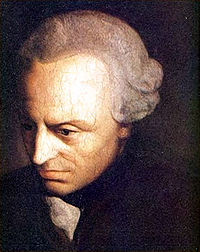
The (Western) Enlightenment of the 18th century. You know: Kant, Voltaire, Hume, reason, the American and French Revolutions and all that.
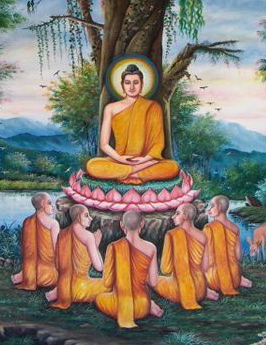
The (Eastern) Enlightenment that the Buddha, Patanjali, and various Zen masters and bodhisattvas have achieved through meditation and Yoga. Samadhi, nirvana, satori and all that.
Buddha illuminated
The two are completely different, of course. The former is largely a collective phenomenon, one in which ideas elevated all of society. The latter is largely an individual phenomenon in which one person, through sudden insight (Zen) or hard and prolonged work (Ashtanga Yoga), achieves inner peace and freedom.
In fact, the same exact difference came up when I talked about freedom: There is:
Anyway, what this means is mainly that the limitation lies in the English word Enlightenment. German, for instance, has two separate words:
The Western Enlightenment is called Aufklärung. The term was coined by Kant and means literally clarification (Auf-klär-ung = Up-clear-ing, for you fellow linguists. Incidentally, it can also refer to a young person learning about the birds and bees).
The Eastern Enlightenment is called Erleuchtung, which means illumination, often symbolized with the halo (ie, ring of light) on the crown chakra of the Buddha or Jesus.
Why I bring this up
That difference between Aufklärung and Erleuchtung came up in 2007 when I was talking with Michael Murphy, one of the two founders of the New Age retreat Esalen. I was interviewing him for a profile of Esalen in the Christmas Issue of The Economist that year. Murphy is now in his seventies and lives in Sausalito, so I went there to see him. We sat by the waterfront and talked about absolutely everything except what we were supposed to talk about. For instance, he was the first person other than my agent, parents or wife whom I told about my book idea, and that really got him going. It was the best kind of conversation.
Anyway, so Murphy and I talked about the two kinds of Enlightenment, and to my surprise this Irish-American aging Hippie delves into German etymology. But it was appropriate. An oversimplified summary of his life work–at Esalen and in his books–is that he tried to unite Aufklärung and Erleuchtung, West and East, in an effort to liberate our full “human potential”. Hence the Human Potential Movement, which he helped to found at Esalen in the 60s, when folks like Abe Maslow were teaching there.
Instinctively, that is what I also aspire to: Uniting the two kinds of Enlightenment in my life. You see it when I call Diogenes a “Greek Buddha” or Abe Maslow a “Jewish Buddha,” or when I draw parallels between the Second Law of Thermodynamics and Feng Shui.
Somewhere between East and West (though perhaps not in the “middle East”)–somewhere between reflection and science, eternity and progress, mythos and logos–there must be something worth finding. I’m sure of it.
I’ve mentioned that Hannibal lost one eye to some sort of infection as he crossed an Etruscan (= Tuscan) swamp in 217 BCE. For four days and nights his army waded through the fetid sewage, men and beasts excreting into it as they progressed, unable to sleep for lack of a dry spot to lie on except when the mules died and they could pile the carcasses into a mound and climb on top for a brief nap.
In any case, Hannibal must therefore be pictured one-eyed. Which means that my tagline for this blog has been wrong. Until today it read:
A blog about a book: Thoughts deep and shallow about triumph and disaster in life, through the eyes of Hannibal the Carthaginian
Fortunately, Paul H. pointed out the flaw, an inexcusable one for somebody like me who fancies himself a wordsmith.
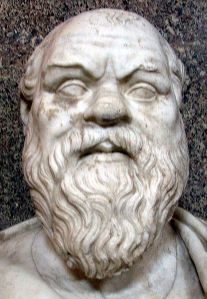
One of the most momentous conversations in history you’ve never heard about took place between Socrates and a man named Callicles, and is recorded in Plato’s Gorgias. It is a surprisingly moving portrayal of a man who tries to describe the world as it is but, upon prompting, reveals how much he yearns for the way it ought to be. Although it took place 2,400 years ago, the conversation is timeless and very modern. I think it describes many of us today.
The weak, the sheep, don’t like that, of course, so they get together and call what the strong do unjust. By implication, what they themselves do is just. Collectively as a herd, the sheep want to dominate the lions. So whereas nature is on the side of the strong and the lions, convention is on the side of the weak and the sheep.
Influence on Nietzsche
To many of you, this rings a bell. Yes, this is where Nietzsche got his ideas for his Genealogy of Morals. Nietzsche took his metaphors of lions, sheep, herds, slaves and so forth from Callicles, then spun his theory. It was that the sheep banded together to invert the natural concepts of good and bad, strong and weak, motivated by a festering rage for which Nietzsche used the French word ressentiment.
Relevance to Darwin
Socrates being Socrates, of course, he goes on to needle Callicles about the precise meaning of words in order to poke a hole in his argument. He asks Callicles to clarify the terms “better” and “stronger”. Are they the same?
Callicles has to admit that they are not. And off they go, debating what that means.
Today, of course, we know that Callicles was looking for a better word: not strong or good but fit. Not fit as in ‘toned from the gym’ but as in ‘survival of the fittest’. The fittest, according to Darwin, are not the strongest or the best but the most adapted.
The law of nature that Callicles refers to is therefore evolution. It is the tautological observation that those who are better adapted to the prevailing circumstances will leave more of themselves (ie, their genes) behind than those who are worse adapted.
Gibe at democracy
Callicles and Socrates go on to mock democracy (Athens was an even more direct democracy than America is today). Democracy to them is the inversion of nature, the herd of sheep ruling the lions, the weak dominating the strong, the inferior getting their revenge on the superior.
Yearning for what ought to be
But the dialogue between Callicles and Socrates becomes more moving than anything Nietzsche did with it. That’s because during the conversation it becomes clear that Callicles is a sophisticated and sensitive man who’s trying to describe how the world is while simultaneously being sad about it and yearning for how things ought to be.
He’s confused and bitter, about many things. He’s angry at Socrates for needling him, but also because he already foresees (correctly, of course) that the democratic herd of sheep will condemn the lion Socrates. And he hates himself for having to suck up to the herd, to the Athenians, to make his living.
He also hates seeing the fit succeed whether or not they are also good. In other words, he has the ideal of justice in his head as though it were an archetype. Like most of us, he’s frustrated. That’s all that Plato definitely establishes in this dialogue.
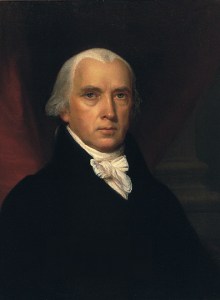
I have been researching James Madison for a little project that I am not yet entirely at liberty to disclose. And my research is reminding me to be extremely impressed–so impressed that he may just be my favorite founding father. He certainly belongs into my pantheon of the world’s greatest thinkers.
Madison, of course, was not only the fourth president but also, and more importantly, the “father” of the US Constitution. He was the one who took the official notes in the sweltering summer heat of Philadelphia in 1787, and the one whose “Virginia Plan” (which was delivered by the other Virginian delegate but conceived by Madison) formed the basis of the subsequent compromises that led to our constitution. He was 36 years old at the time, and as physically short as he was intellectually giant. Wouldst that America had a man of his ilk today.
I am about to sketch out his vision of freedom as succinctly as I can, but let me just say that if you have been reading the Hannibal Blog for a while, you won’t be at all surprised that I admire the man. Madison fits perfectly my tastes for:
the republican, as opposed to democratic, vision of liberal government, where both ‘republican’ and’democratic’ are properly defined.
Since it is that last point that is most likely to be misunderstood, let me drill into that part of Madison’s thinking. Here is how I understand his views on the matter:
Madison originally preferred to use the word republic to describe the new America they were building, as opposed to the word democracy.
“Republic”
Republic comes from the Latin res publica, which means ‘public thing’–in other words a country ‘owned’ by its people rather than by a monarch. Deriving from Latin, the word reminded educated men such as Madison of republican Rome (ie, Rome before its civil wars), which was so remarkably stable and moderate, and which so impressed Polybius.
Being a public thing, a republic implicitly contains the element that we would call democracy, but it is understood that this is a representative democracy, in which the people choose representatives who in turn decide the issues of the day in competition with other branches of the government. Governance, in other words, has a basis in the people but is removed from the mob.
Most importantly for Madison, minorities in this republic are protected from majorities. He recognized that the tyranny of majorities is perhaps the greatest threat to freedom (which liberal thinking is all about, after all).
Put differently and in modern lingo, Madison was the opposite of a ‘populist‘. If he were around today, certain ‘real-America’ Alaskans would attack him with demagogic effect for being elitist.
“Democracy”
Democracy, by contrast, comes from the Greek and means ‘rule of the people‘. The connotation to educated men such as Madison was therefore ancient Athens, during the Periclean era of the Peloponnesian War, which had a direct democracy as opposed to the balanced representative one.
As part of another project that I’m not totally at liberty to disclose yet, I am also looking into that Athenian democracy right now. And allow me to state clearly that it ended in chaos and failure, in pre-emptive wars (Sicily) that should never have happened and mob-mad injustices such as the trial of Socrates.
Direct democracy is of course alive and well today in western states including California. In a mindlessly populist culture, it is a popular idea. (Stuck in a debate? Just say “let the people decide!”) What that leads to I have described in The Economist.
I’m finding myself intrigued in the extreme by a figure from antiquity as colorful as Hannibal: Alcibiades. He is such a good character, he might be worth another book.
Why? Mostly because he was a (bad) student of Socrates‘, and indeed the perfect foil for the great old man:
Socrates: interested in justice. Alcibiades: interested in himself.
Socrates: tried to teach Alcibiades inner values. Alcibiades: tried (and failed) to sleep with Socrates
Let me give you an abbreviated and simplified biography of this man. (One reason why many people never learn to appreciate history is that many teachers get bogged down in boring detail. So let’s not make that mistake today.)
Alcibiades, his father having died young, was raised in the home of his uncle, Pericles, the greatest statesman of Athens, which was in turn the greatest power of Greece. Alcibiades was thus a rough equivalent of, say, a Kennedy heir in the 60s and 70s–a party boy in a powerful family.
On the eve of Alcibiades’ own entry into Athenian politics, Socrates took an interest and, using his customary Socratic irony (in which Socrates pretends to be less than he is), got Alcibiades to talk about what he wants Athens to do, in the process exposing him to be the confused young man that he was.
Alcibiades, being good-looking (and very much the ladies’ man, of which more in a minute) and charming, rose politically. He became a general in the Peloponnesian War, one of two to take a huge invasion army to Sicily in what was to be one of the dumbest pre-emptive strikes in history.
Just after they sailed, however, the Athenians discover that somebody had, apparently as a prank, broken off all the erect phalluses on the statues of Hermes, which was sacrilege. This was exactly the sort of thing that Alcibiades got up to when he was drunk, so he was presumed guilty. (Then again, he was such an obvious culprit that he may have been framed.) So the Athenians sent another ship after the invasion fleet to arrest their general and bring him home for trial.
Alcibiades did not like that idea and defected to … Sparta! The enemy. Because he was so charming, the Spartans accepted him, and Alcibiades helped them defeat the Athenians. But then it was found out that Alcibiades was sleeping with the wife of one of the Spartan kings, so he made a hasty exit.
Next he went to Persia, Athens’ other enemy. He charmed them, advised them …. (you get the pattern).
Such was his charm and charisma that, after having been a traitor to his native country so long, he then persuaded the Athenians to take him back! For a while, he became their general again. But then he fell out again and crossed back over the Hellespont to another kingdom.
He was sleeping with a girl there one day when his political enemies (he had amassed a few by then) surrounded the house. Alcibiades grabbed a dagger and, possibly naked, attacked. He died in a hail of arrows.
This appears to be a hot topic of research. Jag Bhalla (to whom The Hannibal Blog increasingly outsources the more intensive research into matters linguistic and narrative ;)) now points us to new theories by anthropologists who have apparently constructed the equivalent of genealogical family trees for humanity’s oldest stories.
Jamie Tehrani
Dr Jamie Tehrani, a cultural anthropologist at Durham University, studied 35 versions of Little Red Riding Hood from around the world. Whilst the European version tells the story of a little girl who is tricked by a wolf masquerading as her grandmother, in the Chinese version a tiger replaces the wolf. In Iran, where it would be considered odd for a young girl to roam alone, the story features a little boy. Contrary to the view that the tale originated in France shortly before Charles Perrault produced the first written version in the 17th century, Dr Tehrani found that the varients shared a common ancestor dating back more than 2,600 years.
He said: “Over time these folk tales have been subtly changed and have evolved just like an biological organism.” …
Dr Tehrani … identified 70 variables in plot and characters between different versions of Little Red Riding Hood…. The original ancestor is thought to be similar to another tale, The Wolf and the Kids, in which a wolf pretends to be a nanny goat to gain entry to a house full of young goats. Stories in Africa are closely related to this original tale, whilst stories from Japan, Korea, China and Burma form a sister group. Tales told in Iran and Nigeria were the closest relations of the modern European version.
(And once again, permit me to add paranthetically but immodestly that I am attempting in my forthcoming book to narrate just such an archetypal storyline about success, failure & reversal in life.)
Since success and the ways of losing as well as gaining it are one half of the manuscript I’m currently re-writing, I found myself pondering the famous Tall Poppy Syndrome.
I always assumed that all English-speaking people used the term, which refers to the quasi-socialistic perversion–or egalitarian instinct, depending on how you look at it–of cutting down anybody who stands out for merit, success and achievement. But apparently it’s mainly a UK, Aussie and Kiwi thing. Nick Faldo, for instance, has been tall-poppied.
Americans instead have the crab mentality. I like that metaphor because it’s vivid: Crabs really do pull other crabs back down if one of them tries to claw himself out of a bucket.
Scandinavians apparently have the Jante Law, after a fictional town called Jante in which the rules were:
Don’t think that you are special.
Don’t think that you are of the same standing as us.
Don’t think that you are smarter than us.
Don’t fancy yourself as being better than us.
Don’t think that you know more than us.
Don’t think that you are more important than us.
Don’t think that you are good at anything.
Don’t laugh at us.
Don’t think that anyone of us cares about you.
Don’t think that you can teach us anything.
So why the metaphor tall poppy?
Surprisingly, it turns out that two of “my guys,” Aristotle and Livy, were involved.
Aristotle (Politics, V.10) has the following passage:
Periander [a tyrant of Corinth] advised Thrasybulus [a tyrant of Miletus and his friend] by cutting the tops of the tallest ears of corn, meaning that he must always put out of the way the citizens who overtop the rest.
This is probably where Livy got the idea for his passage in Book I, 54 about the Roman tyrant Tarquin, who was asked by his son for advice on how to rule:
The king [Tarquin senior] went into the palace-garden, deep in thought, his son’s messenger following him. As he walked along in silence it is said that he struck off the tallest poppy-heads with his stick. Tired of asking and waiting for an answer … the messenger returned to [the land the son was now ruling] and reported what he had said and seen, adding that the king, whether through temper or personal aversion or the arrogance which was natural to him, had not uttered a single word. When it had become clear to Sextus what his father meant him to understand by his mysterious silent action, he proceeded to get rid of the foremost men of the State by traducing some of them to the people, whilst others fell victims to their own unpopularity. Many were publicly executed, some against whom no plausible charges could be brought were secretly assassinated.
A purge, in other words.
So the meaning has evolved. Whereas it used to refer to the powerful cutting down potential rivals, it now refers to the envious cutting down those whom they consider uppity. Quite a big shift. Disgusting all the way through. Worth contemplating.
One of the most important dialogues in all of literature, all of history is the so-called “Melian dialogue.” Its subject is power.
Its author was Thucydides, whom I’ve introduced before. He was a contemporary of Socrates, a general in the Peloponnesian War between Athens and Sparta, and of course the preeminent historian of that war. He is also considered the world’s first Realist.
I’m using that word in the context of International Relations and Political Science, as distinct from Idealism. All later Realists, from Thomas Hobbes to Machiavelli and Henry Kissinger, owe an intellectual debt to Thucydides.
1) Background
The dialogue is supposed to have taken place in 416 BCE, roughly in the middle of the long war between Athens and its allies (mostly the islands and ports around the Aegean) and Sparta and its allies (mostly the land-locked cities of the Peloponnese).
One life time earlier, the Athenians, Spartans and other Greeks together had kicked out several huge Persian invasion armies. This was the beginning of Athens as a superpower. Democratic and idealistic at first, Athens quickly became nakedly self-interested and arrogant and dominated its allies as though they were vassals. That alliance was called the Delian League, but it was really an Athenian Empire. Here is a map of it, before the outbreak of the Peloponnesian War:
If you click through to enlarge the map, you will see the tiny island of Melos in the southern Aegean, just outside the line demarcating the Athenian Empire. Melos was a Spartan colony but otherwise neutral. It was sort of a tiny Switzerland. It wanted to stay out of the troubles.
The premise of the dialogue is simple: The Athenians send a fleet to Melos and flatly demand that Melos bow to Athenian power and become a vassal or else be ethnically cleansed.
The Melians appeal to higher ideals (hence Idealism) such as justice.
In the course of the dialogue, excerpts of which I am about to give you, the Athenians and Melians use all the arguments that Realists and Idealists have been using ever since.
And then, Thucydides ends with one of the most abrupt–but, I believe, intentional and genius–codas in literature. But let’s wait till we get to that.
2) The dialogue
Notes:
You can read the full version here, but I have cut it for ease of use
Glossary: Lacedaemon = Sparta. (Laconia is the area around Sparta, whence “laconic”, since the Spartans didn’t apparently say more than necessary.)
Athenians: … we shall not trouble you with specious pretences … and in return we hope that you, instead of thinking to influence us by saying … that you have done us no wrong, will aim at what is feasible, holding in view the real sentiments of us both; since you know as well as we do that right, as the world goes, is only in question between equals in power, while the strong do what they can and the weak suffer what they must.
Melians: … you should not destroy what is our common protection, the privilege of being allowed in danger to invoke what is fair and right….
Athenians: … We will now proceed to show you that we are come here in the interest of our empire, and that we shall say what we are now going to say, for the preservation of your country; as we would fain exercise that empire over you without trouble, and see you preserved for the good of us both.
Melians: And how, pray, could it turn out as good for us to serve as for you to rule?
Athenians: Because you would have the advantage of submitting before suffering the worst, and we should gain by not destroying you.
Melians: So that you would not consent to our being neutral, friends instead of enemies, but allies of neither side.
Athenians: No; for your hostility cannot so much hurt us as your friendship will be an argument to our subjects of our weakness, and your enmity of our power.
Melians: Is that your subjects’ idea of equity, to put those who have nothing to do with you in the same category with peoples that are most of them your own colonists, and some conquered rebels?
Athenians: As far as right goes they think one has as much of it as the other, and that if any maintain their independence it is because they are strong, and that if we do not molest them it is because we are afraid; so that besides extending our empire we should gain in security by your subjection…
Melians: … if you debar us from talking about justice and invite us to obey your interest, we also must explain ours, and try to persuade you, if the two happen to coincide. How can you avoid making enemies of all existing neutrals who shall look at case from it that one day or another you will attack them? …
Athenians: … it is rather islanders like yourselves, outside our empire, and subjects smarting under the yoke, who would be the most likely to take a rash step and lead themselves and us into obvious danger.
Melians: … it were surely great baseness and cowardice in us who are still free not to try everything that can be tried, before submitting to your yoke.
Athenians: Not if you are well advised, the contest not being an equal one, with honour as the prize and shame as the penalty, but a question of self-preservation and of not resisting those who are far stronger than you are.
Melians: … to submit is to give ourselves over to despair, while action still preserves for us a hope…
Athenians:Hope, danger’s comforter, may be indulged in by those who have abundant resources … [But] you, who are weak … hang on a single turn of the scale…
Melians: You may be sure that we are as well aware as you of the difficulty of contending against your power and fortune, unless the terms be equal. But we trust that the gods may grant us fortune as good as yours, since we are just men fighting against unjust…
Athenians: When you speak of the favour of the gods, we may as fairly hope for that as yourselves; neither our pretensions nor our conduct being in any way contrary to what men believe of the gods, or practise among themselves. Of the gods we believe, and of men we know, that by a necessary law of their nature they rule wherever they can. And it is not as if we were the first to make this law, or to act upon it when made: we found it existing before us, and shall leave it to exist for ever after us; all we do is to make use of it, knowing that you and everybody else, having the same power as we have, would do the same as we do…
Melians: … we now trust to [the Lacedaemonians’] respect for expediency to prevent them from betraying the Melians, their colonists, and thereby losing the confidence of their friends in Hellas and helping their enemies.
Athenians: Then you do not adopt the view that expediency goes with security, while justice and honour cannot be followed without danger; and danger the Lacedaemonians generally court as little as possible.
Melians: But we believe that they would be more likely to face even danger for our sake … as our nearness to Peloponnese makes it easier for them to act, and our common blood ensures our fidelity.
Athenians: Yes, but what an intending ally trusts to is not the goodwill of those who ask his aid, but a decided superiority of power for action; and the Lacedaemonians look to this even more than others. … now is it likely that while we are masters of the sea they will cross over to an island?
Melians: But they would have others to send…
Athenians: … we are struck by the fact that, after saying you would consult for the safety of your country, in all this discussion you have mentioned nothing which men might trust in and think to be saved by. Your strongest arguments depend upon hope and the future, and your actual resources are too scanty, as compared with those arrayed against you, for you to come out victorious. … Think over the matter, therefore, after our withdrawal, and reflect once and again that it is for your country that you are consulting, that you have not more than one, and that upon this one deliberation depends its prosperity or ruin.
With that the Athenians left the Melians to make their decision. Let’s just summarize the dialogue briefly:
A: Cut through the crap: might makes right. Don’t waste our time. M: We have a right to invoke justice!
A: We would prefer to let you live, so submit! M: How exactly would submitting be in our interest?
A: Were you not listening? Because you would live!M: Why can’t we be neutral? We would not bother you.
A: Somebody somewhere might think we are weak. M: If you exterminate us, all other neutrals will hate you.
A: Let us worry about that. M: We are not cowards and we want to stay free.
A: For you it’s not about freedom but survival. M: We still have hope.
A: Hope is for the powerful. And you are not. M: The gods are on our side because our cause is just.
A: The gods are just like you and us: They do what power lets them. M: The Spartans will come to our aid.
A: No, they won’t. They know they would lose at sea. M: We think they would send somebody.
A: Enough of this silly nonsense. You make up your mind. Submit or die.
The Melians decided not to submit and to fight. Thucydides then describes at some length the Athenian siege. Eventually, the Athenians overpower the Melians.
And then, in perhaps the most abrupt final sentence in literature, Thucydides simply informs us that the Athenians
put to death all the grown men whom they took, and sold the women and children for slaves, and subsequently sent out five hundred colonists and inhabited the place themselves.
3) Analysis
Style: Thucydides writes the dialogue (admittedly, with my cutting I have accentuated this) a bit as Hemingway does: This is a staccato back-and-forth, not a treatise. We are not teasing out a subtlety of argumentation here. We simply have two sides who are talking past each other, and one side has power whereas the other does not.
Style: Any modern editor would have forced Thucydides to provide more “color” at the end, to make the true horror of the extermination more vivid. Thucydides has none of that. He wants the atrocity to be a mere afterthought. This is the way the world is, he is saying.
Content: Does Thucydides approve of the Athenians? We have no idea. Probably not. Who cares?, he is saying. This is reality.
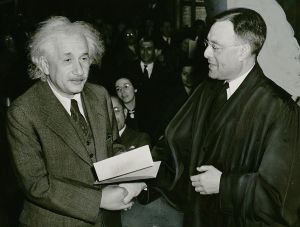
So, as I mentioned, I am currently refining the characters in my book as I write the second draft. One of the characters is Albert Einstein, one of my idols. I’ve mentioned how I admire his love of simplicity, his ability to wonder and be amazed, his irreverence and impudence. Here is another thing that I like about him (and that I happen to empathize with): his quintessential cosmopolitanism.
History’s first cosmopolitan ever, you recall, was Diogenes, the man who lived in a barrel and who, when asked where he was from, said that
I am a citizen of the world (cosmopolites in Greek).
Well, consider Einstein, who was:
Born German
Became Swiss, dropped German nationality
Became Austro-Hungarian (to get job in Prague)
Became German again (to get job/live with lover in Berlin)
Became American
was asked to be president of Israel
That’s six or so changes or “elaborations” on his nationality. He treated passports the way I treat them: as documents to be kept, discarded or renewed depending on either convenience or morality (eg, when he dropped German citizenship when the Nazis rose to power).
Einstein went a step further and supported a “world government.” I consider that naive but that is neither here nor there. The point is that the great man always saw
our great overarching humanity as well as
our colorful individuality,
and did not get distracted by the various forms of tribalist or nationalistic perversion/delusion.
Others might accuse me of not being “patriotic” about any particular passport-issuing entity. I say to them: I’m feeling just as powerful a connection to other people as you do, just one level above (humanity) or one level below (individuality) the one that you happen to be interested in.
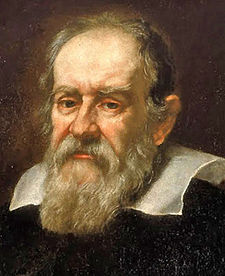
Four hundred years ago exactly, Galileo Galilei pointed his telescope at the moon and began, with his wonderfully open mind, writing down what he saw. Other people had done this before him. So why include Galileo in my pantheon of the greatest thinkers ever?
Two reasons:
He made us understand that our universe is much bigger than we could imagine.
He, in his human and fallible way, stood up for truth against superstition, ignorance and fear, otherwise known as… but I get ahead of myself.
I) The universe is bigger than we can imagine
It’s one of those many cases in science, and in all thought (think: Socrates, Plato, Aristotle), when a great contribution came from several people building on the work of one another. This is wonderful. We place far too much emphasis on the solitary genius.
In Galileo’s case, he built on the prior work of, among others,
Copernicus,
Tycho Brahe, and
Johannes Kepler,
in the process proving wrong the views of Aristotle and everybody else that the sun (and everything else) moved around the earth.
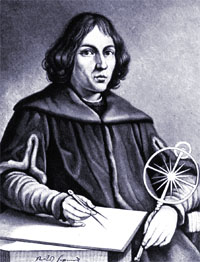
Copernicus
Copernicus was the first to realize that the earth in fact moved around the sun, which must count as one of the most revolutionary (pun intended) advances in our understanding of ourselves and our world. But Copernicus assumed (and why not?) that the orbit was a circle.
Tycho Brahe took things an important step further not so much by thinking as by measuring: the motion of Mars, in particular. He created data, in other words.
Kepler
Kepler, who was Brahe’s assistant, then looked at those data and realized that our orbit, and those of the other planets, could not be circular but had to be elliptical. (A colleague of mine wrote a good and quick summary of all this.)
And Galileo? He filled in a lot of the blanks with his telescope.
He saw the moons of Jupiter, realizing that they were orbiting another body besides the earth and the sun, which was a shocker.
He saw that Venus was, like earth, orbiting the sun.
He saw that the sun was not a prefect orb.
He saw that the Milky Way contained uncountable stars just like our own sun.
For Homo Sapiens, who was still coming to terms with the fact that the earth was round, all this was almost too much to bear. Our universe was vastly, unimaginably, bigger than the Bible had told us. How would we react to that news?
II) Those who seek and are open to truth will have enemies
This brings us to the church, or shall we say “religion” generally. The church hated Galileo and everything he said and stood for. He questioned what they thought they “knew”, which unsettled them, scared them, threatened them. But they had power. With Nietzschean ressentiment, they attacked him.
You can make anybody recant, and Galileo did. Sort of. In any case, he was declared a heretic and sentenced to house arrest for his remaining life.
In one of my all-time favorite ironies, the Catholic Church, having condemned him, decided–359 years later, in 1992, two years before I sent my first email!–that Galileo was in fact right. How? A committee had discovered this. Good job, guys.
And so, Galileo is still with us, inspiring many. As he discovered that our universe was incomprehensibly big, we are discovering, as another colleague of mine, Geoff Carr, puts it, that
the object that people call the universe, vast though it is, may be just one of an indefinite number of similar structures … that inhabit what is referred to, for want of a better term, as the multiverse.
And as Galileo had to confront the the mobs of ignorance, fear and superstition, so do we today. Here, remind yourself with this casual comment by an Arizona state senator (!), Sylvia Allen, Republican, that the earth is 6,000 years old:
Oh, and what about Aristotle? He was the one proved wrong, you recall. That’s OK, as I have argued. You can be wrong sometimes and still be a great thinker, provided you were genuinely looking for the truth.







 Hannibal and Me: life lessons from history