The hip, swinging world of lexicography

Erin McKean

Erin McKean

Words are alive, says Erin McKean in this TED talk below. She is a lexicographer, shares my geeky infatuation with words and will make equally gratuitous use of the bizarre ones.

Here she deplores the dictionary industry, which has been frozen in time. As a dictionary editor she no longer wants to be a

traffic cop

who “lets in the good words and keeps out the bad words.” Instead, she would rather be a

fisherman

who casts his net into the ocean of English to find what is there.

In another talk, she points out how worldview affects our relationship to language. Noah Webster–the Webster–apparently thought that all languages derive from Chaldean, since Noah–the Noah–spoke Chaldean and, well, he was the only one who survived the flood, wasn’t he?

(Also in that talk: Why “ass hat” is a great word, but not one that will make it into her dictionary. Defined as: Somebody who behaves as though he were wearing his ass as a hat.)

Herewith, the TED talk:


Bookmark and Share

What’s in a word: Rostrum

When you speak in front of people, you “take the rostrum“. Literally, you are “taking the beak”. The what? Why would you do anything so odd when everybody is watching?

It turns out that, like so much else in our lives, our phrase for pulpit or lectern–ie, rostrum–has everything to do with the story that forms the historical backdrop for the main characters in my forthcoming book. Recall that we left off describing the foolish and tragicomic cock-up that led to two world wars and then a genocide. Well, the first of those wars “produced” quite a bit of flotsam, which the Romans called rostra.

We are talking now about the 23-year-long First Punic War between Rome and Carthage that started in 264 BCE. This war was about the island of Sicily. Both the Romans and the Carthaginians rather wanted it. There was a lot of fighting on the actual island, but the most dramatic and spectacular battles were sea battles. In fact, one of these may have been the single largest naval battle in all of history, involving 200,000 sailors and soldiers!

If you’ve been reading The Hannibal Blog for a while, this might strike you as odd. Yes, Carthage was a great naval power, so that makes sense. But Rome was not. In fact, Rome had no navy at all at the start of the war.

Well, the Romans changed that. At one point, they captured a Carthaginian ship, studied it, and copied it again and again, until they had an entire fleet. This was the ‘reverse-engineering’ part.

517px-corvussvgNext came a bit of innovation. They added an ingenious weapon to their ships. This was the “raven” (corvus), a large swivel bridge that the Romans brought crashing down onto an enemy ship when they pulled up alongside of it. The two ships were then tied together as a large floating platform, and the Roman soldiers stormed across. In effect, the Romans had thereby found a way to turn sea battles into land battles, and they tended to win land battles.

Now to those rostra, or beaks: It’s what the Romans called the prows of galleys. After their first big naval victory, the Carthaginian ships were sinking or floating in the water in pieces, so the Romans fished out the prows, brought them to Rome and stuck them onto the speaker’s pulpit in the Forum, as in the image at the very top of this post.

It was the equivalent, you might say, of an Indian hanging the scalps of his enemies above his tent.

And so, ever since, speakers in Rome and elsewhere have been taking the beak.

Bookmark and Share

Learning history through language

As you know, I love language and I love history. So what would I think of a book that is not just a history of language but a language history–ie, world history as told from the point of view of its various languages? I would love it, of course.

The book is Empires of the Word: A Language History of the World, by Nicholas Ostler.

Fist bumps to Tom for recommending it first, and to Jag for reminding us. Language lovers unite! (Jag’s book on language is imminent.)

I will not try to summarize  559 pages, but do let me try to get you to think: What would you say determines which languages spread and which die out?

I bet some of you said conquest. Fair enough. Let’s review (this is a partial list!):

Languages successfully spread by conquest:

  • Latin in Gaul and Iberia
  • Arabic in Mesopotamia and northern Africa
  • German (meaning Saxon, Frisian, Jutish and Anglish) in Britain
  • Spanish and Portuguese in Latin America

So conquest is the answer, right? Well, let’s try:

Languages not spread, despite conquest:

  • Latin in Britain and the eastern Mediterranean
  • Arabic in Iberia, Persia and beyond
  • Mongol, and later Manchu, in China
  • Mongol (and Tartar and Hunnish) almost anywhere
  • German in France, Iberia, Italy or nothern Africa (meaning: Frankish in Gaul; Ostrogoth and Lombard in Italy; Vandal and Visigoth in Iberia; Vandal in northern Africa)
  • Dutch in Indonesia

My point here is simply that history and language are far from obvious and thus infinitely mysterious and fascinating. Unravelling the reasons for the rise and fall of the various languages is a great way to understand, really understand, history.

Bonus 1:

The Hannibal Blog has weighed in on Alexander the Great and on Patanjali, but I hardly thought it possible that the two might have been aware of each other. Well, along comes a footnote on page 245, in which I discover that Patanjali (who, incidentally, wrote a famous grammar of Sanskrit besides his Yoga Sutras), noted that Alexander’s phalanxes were getting awfully close when he wrote “The Greek has besieged Saketa.”

Bonus 2:

At last an easy and memorable explanation of the difference between pidgin and creole: When adults meet and do not share a language, they will communicate in pidgin; when their children turn this into a new language, it becomes creole.

Bookmark and Share

The Blogging Sutras

An old thread

An old thread

I’ve been using the term threads lately. Then Christopher asked me whether that meant simply topics, which it does. Immediately and instinctively, I heard alarm bells ringing in my head: Had I succumbed to a cliché or jargon?

I seem to have picked up the word thread from the blogosphere, for which it seems uniquely suited. Many bloggers weigh in on any number of topics. But organizing disparate posts within each topic becomes a challenge, given that a blog is one single stream of posts mixing all topics together. (Tags help, of course.)

So the word thread seems perfect. Why? Because it’s an old idea for, in effect, exactly that situation.

The Sanskrit word for thread is sutra. It comes from the same Indo-European root that gave us to sew. But ancient Yogis and Buddhists and Hindus began using it as a metaphor for stringing (sewing, threading) together aphorisms into a coherent and larger whole.

Hence Patanjali’s Yoga Sutras, or the much more famous Kama Sutras (excerpt above), or any number of other high-minded thought-constructs around a given topic of interest.

So, the term seems to fit. A post is really an aphorism, and a blog is really a clew of threads. (Feel free to cry foul if you smell a cliché, but it works for me. Indeed, I may rename this blog The Hannibal Sutra.)

Bookmark and Share

It’s all Greek to me

That’s what we say in English when we don’t understand something. (Probably thanks to Shakespeare, who had Casca saying to Cassius in Julius Caesar, Act I, Scene II, that “it was Greek to me.”)

But what do other people say–above all, ahem, the Greeks? Well, somebody has now mapped it.

Bookmark and Share

Fear and the English Language

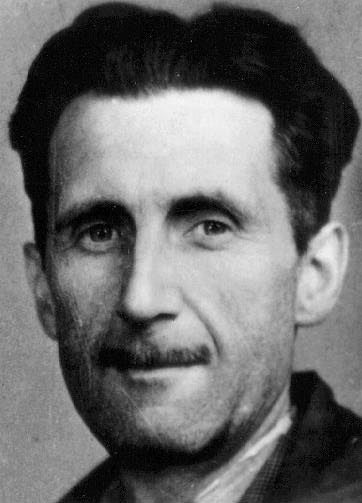
georgeorwell

Fear and the English Language is my attempt at a meaningful pun on George Orwell’s Politics and the English Language, one of the most important essays ever written.

You may remember that our own Style Guide at The Economist begins with Orwell’s six cardinal rules of good writing, taken from this essay. And now a reader of The Hannibal Blog has written, and shared with me, a very thoughtful Socratic dialogue based on this same essay (Orwell is Socrates in this dialogue, speaking to a student.) So I decided to re-read Orwell’s essay, which is always a good idea.

What is Orwell’s bigger point? Let me try to put it this way:

Thought + Intention → Words and Words → Thought + Intention

That’s why words are so important. They reflect thoughts and intentions. If your thoughts are jumbled, vague or absent, the words will come out badly, even if the intention is good. If your intention is insincere, the words will come out badly, even if you have a good thought. It also works in the other direction: If you get in the habit of using insincere or evasive words or talking nonsense, you will probably start thinking that way.

And so we can state, as confidently as Orwell did 63 years ago, that most of the words we read and hear by politicians, businesspeople, PR people, academics and celebrities are bad, embarrassingly bad.

Here are the two qualities common to this sort of language, according to Orwell:

The first is staleness of imagery; the other is lack of precision. The writer either has a meaning and cannot express it, or he inadvertently says something else, or he is almost indifferent as to whether his words mean anything or not.

Orwell makes fun of the sort of monstrosity that this led to in his day by “translating” a famous verse from Ecclesiastes,

I returned and saw under the sun, that the race is not to the swift, nor the battle to the strong, neither yet bread to the wise, nor yet riches to men of understanding, nor yet favour to men of skill; but time and chance happeneth to them all.

into “modern” English:

Objective considerations of contemporary phenomena compel the conclusion that success or failure in competitive activities exhibits no tendency to be commensurate with innate capacity, but that a considerable element of the unpredictable must invariably be taken into account.

What might that be today? Oh, pick your category. (You can come up with your own best worst phrase in the comments.) Let’s take the businessmen or PR people that I regularly deal with. They might turn Ecclesiastes into:

Whilst it is important to proactively leverage one’s core competencies, market conditions and timing largely determine what becomes a game-changer and what not.

Again, Orwell’s point is that

The whole tendency of modern prose is away from concreteness.

But why?

1) Laziness, often.

Speaking or writing clearly takes enormous effort because you first have to think, clarify and simplify. On the other hand, speaking or typing words, especially in hackneyed phrases you’ve heard others use thousands of times, takes vastly less effort and fills the time. Yesterday I was interviewing one of the people running in next year’s Californian gubernatorial race: what a torrent of words, in response to every question, and how little I had in my notebook at the end!

2) Fear or cowardice, more often.

This is the real answer, I believe. If you speak or write clearly you end up producing incredibly strong words. If they are noteworthy at all, they are sure to offend somebody. Are you up for that? Most writers are not, which is why they reserve their most honest writing for the grave, as Twain quipped. Usually, people want to speak or write without bearing any consequences. So, as Orwell says, you let your words fall upon the world

like soft snow, blurring the outline and covering up all the details.

This amounts to insincerity. You are really using words to hide. Typically, this is when the mixed metaphors and clichés come out. (By the way, I am not endorsing that American genre–you know who–of writers who see offending people as their niche. You can’t just be offensive, you still need a genuine thought.)

So: good writing, good language, good style comes down to, yes, having something to say and saying it as simply as you can, but above all to the great courage that this takes. That’s why good writing is so rare.

Bookmark and Share

Obama and I; Obama and me; Obama and … myself?

800px-barack_and_michelle_

Psst, are they cheering you and me or you and I?

So-and-so “graciously invited Michelle and I,” he says. “The main disagreement with John and I,” he begins. Obama, Obama. You and I need to have a word. (But which one?)

All of you know by now that I’m a lover of, yes, Obama, but also of language, words and style. On the spectrum between grammar fundamentalists and libertines, I am closer to the fundamentalists (in this and only this in life!).

So I side with Naomi Baron, a linguist whom I quoted in this story in The Economist decrying the “linguistic whateverism” that is taking over (American) culture. It would make snobs out of people who care about the difference between who’s and whose, it’s and its, I and me, like and as, and so forth.

And so we come to Obama. First–still speaking about grammar–he is of course vastly preferable to the alternative. (Check out these speech diagrams comparing Obama and Palin.) And even though he entered his presidency with a grammatical stumble, that was John Roberts’ fault, not his. (Steven Pinker called it “blowback” for Roberts’ fundamentalism, since the chief justice apparently could not bring himself to “split the verb” and thus mangled the oath of office.)

But Obama is no grammar saint either. Bloggers have been pointing it out, and now Patricia O’Conner and Stewart Kellerman, the authors of a forthcoming book about language, are opining about it in the New York Times.

One issue is subjects and objects; another is pomposity and naturalness. In turn:

I object

Nobody could possibly invite “Michelle and he” but quite a lot of people would love to invite “Michelle and him“. That is because the inviter is the subject and first couple are the objects (direct, in this case).

Nor could anybody give a fistbump to “Michelle and he”, although I would personally love to give one to “Michelle and him”. In this case the object is indirect (the fistbump being the direct object), but English doesn’t distinguish.

Oh puhleeze

Americans increasingly don’t see it that way, of course. To them you say the word me (him, her, them) whenever you’re being informal and the word I (he, she, they) whenever you’re being formal. Now that is pompous. It’s like eating a hamburger with fork and knife. It’s overcompensating, because a toff is watching.

Saying myself is not the answer, by the way. I cannot invite “Michelle and himself”, only “Michelle and him.” But, he could invite himself, although he is unlikely to be so presumptuous.

But it’s me

That brings us to the old chestnut: Which is correct: It’s me or It’s I?

The problem here is that the is is not an action verb but a linking verb.It is being linked to me or I, but neither it nor I are obviously the subject or object. So let’s see how other languages deal with the problem:

C’est moi. OK, the French think it should be it’s me.

Es bin ich. Oops, the Germans think it should be it am I.

Damn foreigners. They’re Old Europe anyway.

So the answer is that it doesn’t matter. And since there is the puhleeze factor to consider, I lobby for it’s me.

Now, I did say that is is not an action verb. There is of course one exception to that rule:


Bookmark and Share

On, overdoing; it–with punctuation (and such).

As you know, I like to keep you up to date from time to time on the debates that we at The Economist have internally about style. That’s because these debates can improve your writing too.

This has ranged from the use and abuse of single words (such as like) to the good and bad use of direct quotes and the benefits of disdaining reader expectations.

After our last issue closed, we had another round of these invariably edifying and witty debates. It was kicked off by our doyen of style, who sent this missive:

The paper would be easier to read if we used fewer brackets, dashes and semi-colons. These are all fine in moderation, but not in profusion. Brackets are often unnecessary. Try taking them out. Dashes can be confusing, especially if you have more than one set in a paragraph or, worse, in a single sentence. They can usually be replaced by commas. And semi-colons, particularly when used in narrow columns like ours, tend to make readers feel they are struggling through one interminable sentence. They are usually better replaced by full stops.

Another annoyance is the use of “the former” and “the latter”. This almost always obliges the reader to stop, go back and work out which is which.

We then had another evergreen debate, also of interest to all writers: How much knowledge should you assume your readers to have? From the same style guru:

Some section editors assume their readers are as familiar with their subject matter as they are. Tom DeLay, Nancy Pelosi and Rush Limbaugh were all mentioned in one piece this week without any explanation of who they were. Explanations can be tedious, especially in columns, and we sometimes strive too hard, describing General Motors, say, as a car company. But remember that not everyone knows as much as you do.

This made me smile, because I’ve often mocked us for saying things like “Microsoft, a large software company” (notice that it is not “the large software company”, since there are other software companies). Why not “America, a large country”?

As I was smirking, a colleague, tongue-in-cheek, pointed us all to no less an authority than our Wikipedia page, where we are taken to task for exactly this:

The newspaper usually does not translate short French quotes or phrases, and sentences in Ancient Greek or Latin are not uncommon. It does, however, describe the business or nature of even well-known entities; writing, for example, “Goldman Sachs, an investment bank”.”

Bookmark and Share

What’s in a word: “Liberal”

Adam Smith

As you may have noticed by now, I am a lover of words–to the point of pedantry–and it gives me indigestion to hear people abuse my little darlings. Americans are especially prone. For example, they are scandalously liberal with the word … liberal.

Traveling around America, we at The Economist get at least two questions in any gathering. 1) Why don’t we have bylines? 2) Are we liberal or conservative?

Folks, the way you (the Americans) ask that second question, it does not make any sense! You, unique among nations, did something quite uncivilized to this word, liberal. You unilaterally and wantonly changed its meaning, without telling the other 6.3 billion of us. You cannot do that! As The Economist has demanded before, it’s our word and “we want it back.”

Here is what liberal means: It comes from the Latin liber, free, and refers both to a philosophy and worldview that treasures individual freedom (as in Liberalism) and to the habits and learning befitting a free individual (as in Liberal Arts). That’s all.

The origins of liberalism go back to classical Greece (the “left leg” in this analogy of the Western Tradition as a “body”). It thrived during the Enlightenment, especially its Scottish flavor; found a permanent fan group when The Economist was founded; came under undignified attack in the past century; was defended valorously by people like my great-uncle Ludwig Erhard; became a whipping post in France (especially in the phrase “neoliberal”) for people who like to roll tractors through McDonald’s outlets; and now lives this bizarre American double life among barely literate TV-show hosts.

Liberal means: Tolerant, even enthusiastic, about the eccentricities of individuals and the diversity of lifestyles, as long as nobody is harmed. Hence, a modern Liberal is likely to support the right of gays to marry, as The Economist has done far longer than any other major publication that I’m aware of.

It also means being tolerant, even enthusiastic, about the willingness of individuals to take risks for gain, without any sour-grapes Collectivist outbreak of envy after the fact.

It means skepticism about huge efforts to change human nature; about naive faith in governments or companies always being “good”; about any attempt to subordinate the individual to society.

But Liberalism does not mean (as anti-Thatcherites in Britain once tried to imply) denial that there is such a thing as society.

And it does not mean (duh, really!) salivating over “big government”. Whatever that is called, it is not Liberalism.

Finally, is it the same as what Americans call Libertarianism? In theory, it comes close. In practice, not. American Libertarianism tends to attract a lot of loonies.

Liberals are not loonies. They don’t foam at the mouth. If you need an image, it is of a dour Scot like Adam Smith, pictured above. Slightly dull, but excited about the fun that others get up to. Sort of like The Economist.

Back to irony

For un-ironic activities and subversive earnestness

Wanted: For un-ironic activities

What a bizarre article in the New York Times about an alleged crisis of irony, to be blamed in large part on Obama.

As you may recall from my previous thoughts on irony, I’ve never been tempted to consider irony thriving in American life to begin with. But now to mourn its decline because of an outbreak of naive and gushing earnestness about the prospects of imminent world-saving by the new savior?

I briefly suspected that the article was being retro-ironic when it proposed to prove the irony crisis by counting the appearances of the word irony in newspapers, before, several laborious paragraphs later, conceding that this was just plain silly.

Now I suspect that it comes back to that widespread American confusion over what irony is (not). Towards the end of the article, somebody finally attempts to define irony as “the incongruity between what’s expected and what occurs” which “makes us smile at the distance.” How could that be in decline?

Last time, I defined irony as “the non-aggressive savoring of contradictions in life and people (others and yourself) and of turns of phrase that are slightly and adroitly off-key and thus meaningfully surprising. Irony is not merely saying the opposite of what you mean.”

So irony is worlds apart from:

  • Sarcasm: This really is simply saying the opposite of what you mean. Hence: the lowest form of humor.
  • Wit: quick, sharp and probably biting associations between dissimilar things.
  • Humor: an ability find things funny.
  • Satire: the art of ridiculing somebody in power (possibly using irony, sarcasm, wit or humor as weapons).

My hunch: Irony is alive and well, inherently in situations and naturally in Britons. The rest of us can keep practicing. 😉