Thoughts on human nature after Japan

They form orderly lines. They throw no tantrums. They do not loot or take advantage of their fellow sufferers. They bear what fate has presented them, even after watching loved ones swept away in brown sludge, even as radioactive clouds snow on them. They do so because of who they are, as individuals and as Japanese, and because they understand that however bad it gets, they must avoid making it even worse through their own actions.

Some 50 of them even stayed in the reactors until commanded to return, like modern samurai, fighting the splitting atoms so that less death may issue forth, knowing that they will suffer and die because of it. Radiation, too, is a divine wind, a kamikaze. In form less Homeric, more insidious, it yet demands the same of the samurai.

They are individuals, yes. But they are also members of a culture, and there is a shape to their response. Isn’t there always? People behaved differently in Port-au-Prince. And again in New Orleans. And in Christchurch.

I once happened to find myself living in Hong Kong during the SARS outbreak. It was a fascinating time. (This was one of the articles I wrote.) The virus largely hit the different “regions” of China — Hong Kong, Taiwan, Singapore and the mainland. And each place revealed itself to be not only “Chinese” but unique, in ways that surprised even those living there.

I recall (what not everybody there may perhaps now choose to remember) that in some of the Taiwanese hospitals, some (not all) of the nurses and staff fled the virus, yielding to their fear, abandoning those who had come there in need. For them, the individual and the family was all there was. There was no community, no neighborliness, no society. Yes, they were aware that they were thus making the situation worse, by spreading the virus. But worse-for-others did not count.

The Singaporeans responded as expected: with ruthless and relentless efficiency, cordoning off and quarantining with no regard for those being separated from loved ones, whether they were confirmed infected or not. The rules were draconian, but nobody broke them, nobody pleaded special treatment. The individual was entirely subordinated to the group, and Singapore suffered least as a result.

The mainlanders also showed their ruthless side. Uniformed cadres barricaded entire towns, cutting them off from the world as in an Albert Camus novel. But the un-uniformed mainlanders did not respect these rules as the Singaporeans accepted those of their government. Individually, many (though not all) tried to escape, evade, be the exception. Whereas the Singaporean authorities chose merciless truth to gain and keep credibility, by reporting every case, the mainland Chinese defaulted to their customary secrecy, and nobody believed anything at all. Singapore was harsh but trustworthy, the mainland simply harsh. And the mainland suffered the most as a result.

And then there were the Chinese of Hong Kong. How surprised we, the expats, were by their response. How surprised even the Hong Kong Chinese were. Each nurse and doctor and customs official and neighbor, it seemed, did his duty. And they, too, chose unforgiving truth, reporting every turn for the worse so that we believed them when they finally announced the turn for the better.

And yet the Hong Kong Chinese were not like the Singaporeans. In Hong Kong, they did make exceptions in their quarantines, they did wait before cordoning off housing blocks, because they balanced the suffering of the individuals inside against the interests of the society outside. Was it civic values picked up, unwittingly, from the former colonial master? Was it something else? Something made them different. Hong Kong suffered more than Singapore, but less than Taiwan and the mainland. And when it was over, everyone in Hong Kong was proud.

Last year, we debated the topic of heroism here on The Hannibal Blog. As usual when intellectuals debate anything, the subject recedes until everybody wishes it had never been forced into hiding. And yet we all intuited all along that you know heroism when you see it.

Attack as response to failure

Instantly notorious

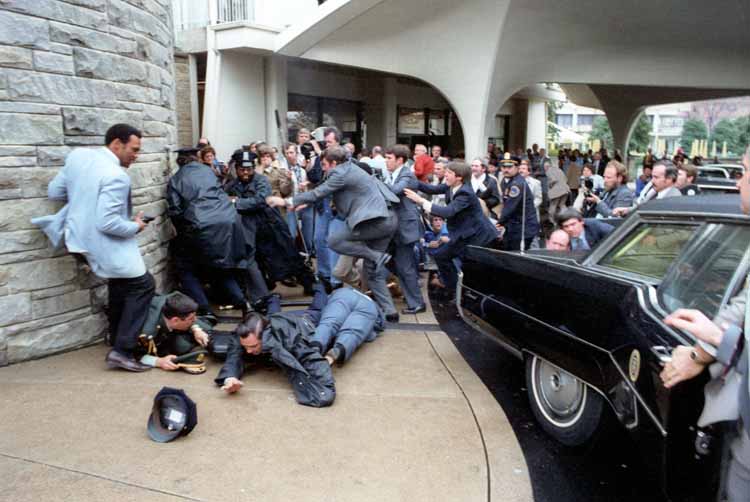
Jared Loughner may not be “crazy” or irrational at all. He might instead be utterly typical of people who attack politicians: For most of them, the notoriety that comes with such an attack, whether it ends in assassination or not, is a perceived solution to a specific psychological problem.

And that problem is the feeling of invisibility or anonymity that often follows failure.

This, at least, is the upshot of this story on NPR, which in turn refers to this study from 1999 in the Journal of Forensic Sciences. (Lainey, in a comment under the previous post, linked to a Wired article quoting the same report.)

That study examined the 83 people who had attacked public officials between 1949 and 1999, and found that the attackers

  • almost never had political reasons
  • had often experienced a big failure or reversal in the year before the attack,
  • often felt invisible as a result,
  • didn’t want to be “non-entities” or “nobodies”,
  • and saw the notoriety of being an assassin as the solution.

As one would expect from such a profile, the attackers often did not target one particular politician (as an attacker with political motives would), but first decided to attack, then searched for a target. To quote from the report,

assassins are basically murderers in search of a cause

Failure is, of course, one of the twin topics of my forthcoming book, the other twin being success. This, I must say, is a response to failure that had never occurred to me before. The more one learns about the human psyche, the more mysterious it becomes in its nether depths.

Texting, dying and killing

Yes, I remain obsessed with proselytizing about the the mortal dangers of distracted driving.

(That mainly means driving while using a cell phone in any way at all).

Today, just in time for New Year’s Eve irresponsibility, AT&T has released this documentary.

Bravo. I hope the whole industry — and society — responds.

Powerful mental image: The text messages, partial or complete, that a driver was typing as he or she died or killed.

Where r

LOL

Yeah

The Buddhism of Christmas

1973

Tis the season when my wife and I, as we behold our children reacting to packages and presents arriving in the mail, exchange knowing glances and mumble something about how “Buddhist” Christmas is.

Spouses, as everybody knows, use a sort of shorthand that is unintelligible (and thus usually misleading) to everybody else, so I will translate. It means something like:

Christmas, like all existence but perhaps more so, torments people through the subtle and insidious mechanism the Buddha first described.

Oh, and what was that mechanism?

As is my wont, I will get gratuitously intellectual about all that in a moment, but let’s start with the actual scenario.

Scenario

Christmas is a time when presents show up unannounced. This is otherwise known as stuff. Uncles, aunts, and other acquaintances send the stuff because, well, it’s Christmas and that’s what one does, whether anybody wants stuff or not.

So the packages arrive — in a household that contains children. In fact, the stuff is meant mostly for those children, and the children know it. How do the children react?

1973

Definition of “child”:

I have read enough academic papers to know that one must, whenever a text threatens to get interesting, interrupt with definitions. Herewith:

Child (noun; plural = Children): A human being who is exactly like an adult but has not yet had sufficient time to practice the adult skill of feigning indifference in most situations of ordinary life.

Back to scenario

Where were we? Oh yes, the presents that are arriving at the door. How do the children react, in the first instance and over the next hour or so?

Exactly as both the Buddha and his contemporary Patanjali (my favorite thinker) would have predicted:

  1. Child A, arriving first: A momentary thrill. ‘Here is something that promises to suspend my boredom. No, I wasn’t actually bored, but now I would be if I do not immediately rip this package open.’ Rips package open.
  2. Child B, arriving split second later: Another momentary thrill. Then: ‘But wait. Sibling has got a head start. She can’t have more thrill. It’s my thrill. Must have.’ Attacks package.
  3. A & B: Conflict. Hair pulling. Tears on A. Time Out for B.
  4. A, having played with toy (because it’s already open anyway, so what can you do?), loses interest. Returns to previous activity and temporary balance/bliss.
  5. B, emerging from Time Out, gets his turn with toy. Notices that A has lost interest and returned to previous activity. Also loses interest and returns to balance/bliss with A.
  6. New package arrives. Repeat cycle.

Sanskrit: duhkha and sukha

Both the Buddha and Patanjali in the Yoga Sutras (as far as I’m concerned, original Buddhism and authentic Yoga are exactly the same philosophy), describe our minds as causing us near-permanent discomfort in precisely the way these toys are tormenting my children.

The word both the Buddha and Patanjali use for this mental discomfort is duhkha.

T.K.V. Desikachar, a great yogi, translates duhkha as restricting or squeezing in this excellent book.

This is noteworthy, because duhkha is usually mistranslated as suffering. Thus, you’ve probably heard the first Noble Truth of Buddhism expressed as follows:

All life is suffering.

Well, actually, the Truth says that all life is duhkha. And suffering is a bad translation (with the effect of turning many Westerners off before they’ve even begun to absorb the rest), because, manifestly, not all life is suffering.

Duhkha is more subtle, so let’s investigate as we usually do: by looking into etymology.

Etymology of duhkha

The Sanskrit roots of duhkha relate to its Indo-Germanic nephews German and English as follows:

duh ≡ du(nkel) ≡ da(rk)

and

kha ≡ ka(mmer) ≡ cha(mber)

In other words, duhkha is, or feels like, a dark room, an oppressive space.

Its opposite is sukha, a happy, good or light space.

The goal of Yoga, Buddhism and all other Indian philosophy is to exit the dark room and enter the light room.

Remember that this entire time we are talking about our minds. Our mind constantly shoves us into the dark room (duhkha) by conjuring disturbances (called “fluctuations” in the Yoga Sutras):

  • distraction,
  • fear,
  • anxiety,
  • anger,
  • craving,
  • jealousy,
  • disgust
  • boredom
  • etc etc

This does not have to be very profound. If you’re a child, the arrival of a package suffices.

In the Bhagavad Gita, all these disturbances are represented by the Kauravas, the vicious cousins of my hero Arjuna.

The Kauravas of Christmas

Christmas is — aside from a time for cosiness, festiveness and so forth — an intense agglomeration and onslaught of mental disturbances.

For the kids, each package creates an expectation of thrill, quickly leading to a disappointment (= duhkha).

Or to a pang of jealousy (= duhkha).

Or simply to distraction from the activity the child had just been absorbed in (= duhkha).

And for the adults?

Definition of “adult”

Adult (noun; plural = Adults): A human being who is exactly like a child but has had ample time to practice the skill of feigning indifference in most situations of ordinary life.

Adults don’t run to the package and rip it open. They put it under the tree. And they don’t pull your hair when you’re opening your package.

But they walk around all December with that jingly-jangly music in the stores and those trees in the windows and they feel … that they should — shouldn’t they? — be somewhere special, with someone special, feeling special. And is the person next to me special enough, is all this special enough,….?

So they yearn, and they crave, and they’re lonely, and perhaps they envy or regret, and they’re in the dark chamber of duhkha.

Sukha

But there’s a jail break.

One strand of Buddhism/Yoga invites you to discipline your mind (ie, meditate) for years so that your mind becomes still, thus setting you free.

Another strand, called Zen, guffaws at the hilarious inside joke of it all and simply says: ‘Snap out of it — now!’

That can be easy, it turns out: You put away the packages and the toys, and you tickle the kids, and you all roll around under the tree, in the beautifully light, comfortable room of sukha.

1973

Patanjali in a lab coat

That modern science is somehow “catching up” with Eastern philosophy (logos uniting with mythos, as it were) is an old idea.

At least 25 years old, if you date it to Fritjof Capra’s The Tao of Physics, a good book then which could be even better if written now.

In my mind, this convergence redounds to, rather than detracts from, both science and Eastern philosophy. (It does, however, make the “Western”, ie monotheistic, religions look ever more outdated.)

I will state the premise thus:

The millennia-old traditions of India and China express in metaphorical language concepts that we are today corroborating in scientific language.

Definitions:

  • By “Indian” traditions I mean Vedantic philosophy and all its offshoots, from Yoga and Ayurveda to Buddhism.
  • By “Chinese” tradition, I mean Taoism and Chinese medicine.

(Zen, for example is thus included, for it is basically the Japanese form of the Chinese version of the Indian tradition of Buddhism.)

This premise yields a rich genre of research and inquiry. Here are three examples:

  1. one from within our bodies,
  2. one from the workings of our minds, and
  3. one from the entire cosmos.

1) In search of qi

A dear friend of mine is a successful Western doctor who is now also certified in Chinese medicine. In our conversations, we spend lots of our time “translating” Eastern concepts such as qi (prana in Sanskrit) into “Western” medical vocabulary.

Usually the medical vocabulary is less beautiful and less elegant but also less threatening to people in the Western mainstream, and hence useful. Qi, for example, is simply the (measurable) bioelectric energy in our bodies.

Once translated, seemingly occult claims by Eastern medicine offer themselves much more readily to scientific experimentation. The needles in acupuncture, for instance, are nothing but tiny antennas, which can receive, re-transmit and amplify electro-magnetic vibrations — in other words, qi. We should be able to measure this.

Ditto for the chakras. I’ve written before about how the chakras correspond to Western psychological concepts such as those of Abe Maslow. But in essence, they are simply the swirls of bioelectric energy you get in the ganglia along our spine where many nerves (ie, many little antennas) converge. Again, we should be able to measure and observe them.

2) The monkey mind of misery

You might recall that I awarded the prize of “greatest thinker” in world history to Patanjali, a contemporary of the Buddha in India and the author of the Yoga Sutras. His insight was that happiness, balance and unity (= yoga, loosely) are products of only one thing:

A still mind.

The rest of the Yoga Sutras are, in effect, an analysis of how things go wrong when our minds wander, and a manual of how to return the mind to stillness. (That’s all Yoga is, really.)

Buddhism and Zen aim to do the exact same thing. Our slightly modish concept of “flow” is also the exact same thing. Total absorption into any one thing = stillness of mind.

The opposite of a still mind is often depicted as a monkey mind in Eastern tradition. It makes us miserable.

Now two boffins at Harvard — Matthew Killingsworth and Daniel Gilbert — have developed an ingenious experiment using (what else?) an iPhone app.

(Thank you to Mr Crotchety for forwarding their article in Science Magazine.)

The app, at random moments, asks people questions such as:

  • How are you feeling right now?
  • What are you doing right now?
  • Are you thinking about something other than what you’re currently doing?
  • If yes, something pleasant, neutral; or unpleasant?

The huge sample of data shows, as Killingsworth and Gilbert put it, that

A human mind is a wandering mind, and a wandering mind is an unhappy mind.

Specifically, our minds (ie, the minds beings sampled) wandered about half the time (46.9%). And it did not matter what people were doing at the time! If they were doing pleasant things, their minds wandered just as much, and not necessarily to pleasant thoughts.

Furthermore, people were less happy whenever their minds wandered, even when they were thinking pleasant thoughts. (Obviously, unpleasant thoughts made them even more miserable than pleasant thoughts, but the point is that any mind-wandering discomforted them.)

And Patanjali said all that in the second sentence. 😉

(However, there is a fascinating twist — a benefit of mind-wandering — that touches on a subject dear to my heart: creativity. I’ll save that for a separate post.)

3) The cosmic parade of ants

In Indian tradition, there was not just one Big Bang. There have been infinitely many. That’s because the universe is born, expands, collapses and is reborn in an eternal cycle.

In metaphorical language,

  • each creation (or Big Bang) is the work of Brahma,
  • each expansion that of Vishnu, and
  • each collapse that of Shiva.

But these three are all part of the same underlying reality (Brahman). Metaphorically, Brahman is inhaling and exhaling, and each breath is its own spacetime, as Einstein might put it.

Because this is hard to grasp, even gods need reminding of it. Hence, for instance, the story of Indra and the Parade of Ants.

Indra

Indra was haughty and summoned a great architect to build a splendid palace. He kept adding requirements so that the architect was never done. Brahma (ie, also Vishnu and Shiva) decided to teach Indra a little lesson and appeared to him as a boy.

Boy: Will you ever complete this palace? After all no Indra has ever completed it before.

Indra: What do you mean, “no Indra”? There were other Indras?

Boy: Oh yes. When twenty-eight Indras have come and gone, only one day and night of Brahma has passed.

And just then, an endless parade of ants filed in and through the palace. Each one, said the boy, was once an Indra.

Our science currently tells us that our universe started (in earth time) 14 billion years ago. But now I read that Roger Penrose, a famous British mathematician, and V. G. Gurzadyan, a physicist, have found patterns in the microwave radiation generated by the Big Bang which suggest that

our universe may “be but one aeon in a (perhaps unending) succession of such aeons.” What we think of as our “universe” may simply be one link in a chain of universes, each beginning with a big bang and ending in a way that sends detectable gravitational waves into the next universe.

Our greatest tragedy

The human mind — our minds — cannot grasp relative risk. We cannot compare dangers and see them in proportion. Or rather, we constantly do compare them, and constantly get it completely wrong. This is our greatest tragedy.

We cannot overcome this tragedy because it is biological: The human mind (meaning, the nervous system in interaction with the endocrine system, which will be a new thread here anon) did not evolve to compare dangers. It evolved instead to respond effectively and immediately to the proverbial Saber-Toothed Tiger you see above — ie, to a few specific and spectacular dangers that presented themselves in the distant past of our species.

And what a pity, when all we need to do to make good decisions and policy is to do this back-of-the-envelope risk calculation:

 R(\theta,\delta(x)) = \int L(\theta,\delta(x)) f(x|\theta)\,dx

(I am kidding, of course. My point is that most of us cannot wrap our minds around the concept of risk, not to mention this equation, and therefore end up getting it wrong.)

____________________________________

So we get it wrong in ways big and small, disastrous and banal. Often the banal errors are the most disastrous ones.

A few anecdotal examples, chosen for their deceptive banality (with a few details altered or recombined to disguise or protect the individuals in them):

1)

While driving alone to the airport, a teenage girl texts her friend that she is nervous because she is afraid of flying.

2)

We’re at a Californian beach, applying top-notch sunscreen to our children, sunscreen that was shipped in by grandparents from Germany upon request because it is organic this and non-toxic that. But this particular sunscreen, being slightly easier to rub in, is marginally less non-toxic than one other alternative.

A friend therefore refuses our sunscreen, leaving her children completely unscreened, because of the risk of that residual toxicity.

After a fun beach outing, that friend cheerfully drives her children away, pulling out of the parking lot while talking on her cell phone.

3)

The parents at a preschool in Los Angeles, wanting to make the child’s “birthday dream” come true (a school tradition), deliver a truck load of snow to the school. For a couple of days, as the stuff melts under the Californian sun, the kids get to build snowmen, throw snow balls and so on.

Some months later, the family sends out invitations to an unrelated event. The invitations are digital as opposed to printed, and arrive via email rather than through the mail.  This is because the family is “green”.

4)

Sitting beside a tall and beautiful shelf which is not bracketed into a wall stud and which holds, among other things, a large flat-screen TV set, also not secured, a cosmopolitan individual in Los Angeles explains why she has chosen to avoid a particular travel destination for the time being.

The reason is the risk of a terrorist attack in that place.

_________________________

I could go on, but (knowing my readers) I imagine that you are already too busy thinking of your own examples.

Let’s not make the list longer, but instead pause to analyze what we have, and to infer some general themes.

I have not, before choosing these banal examples, “done the numbers”. That is to say: I have not calculated the various risks these people confronted. Instead — and this is open to fine-tuning and correction — I appraised these relative risks the way you estimate how many marbles are in a jar.

Situation 1)

Statistically speaking, even with shoe-bombers in this world, flying is one of the safest things you can do. You are usually safer in a plane than in your own house (especially if that house is the one in Number 4.)

By contrast, driving is surprisingly dangerous, even when your attention is focused on the road. But:

Situation 2)

Here is that risk again: driving distracted. The other risk — toxins from our (organic, imported) sunscreen is infinitesimally small and may not exist at all.

In this case, the two risks are not connected at all, except in the mind of the person perceiving them: She expends mental energy on the non-existent risk, and blithely ignores the large risk.

She also — and this is one aspect of Our Greatest Tragedy — has no sense of irony about the situation.

Situation 3)

This situation does not involve any risks to the children or parents, but represents a collective misperception and another missed opportunity for ironic self-reflection.

The carbon footprint of delivering a truck load of snow to a lawn in southern California is to that of sending out paper invitations as the Eiffel Tower is to a baguette. (Go ahead and calculate your own carbon footprint.)

Situation 4)

Who’s not afraid of terrorism? It is the perfect Saber-Toothed Tiger. All we need to do is think of September 11th.

By contrast, how boring is it to talk about bolting furniture into wall studs in homes near the San Andreas fault?

Well, I believe we’ve got that one backwards again. I looked into this because I once interviewed all sorts of geologists and building engineers when researching a piece for The Economist. The big one is a matter of when, not whether. It is likely to be of magnitude 8.1, or about 1,000 times as strong as the biggest earthquake most Angelenos can remember, with the waves amplified in the soft-rocked Los Angeles basin like those in the water of a swimming pool.

What happens when the Big One ruptures depends on 1) the time of day, 2) the depth and location of the rupture and 3) pure chance. But securing water coolers, TV sets, knife holders and so forth (all of which would turn into lethal projectiles) could make the difference.

______________________

Reflection

Why are we so atrociously bad at assessing danger? Maybe you can help me figure it out in the comments. Here are some observations:

1) Is the risk photogenic or familiar?

A Saber-Toothed Tiger is above all photogenic. It is frightening in a spectacular way. It taps into the neural patterns of our limbic system and mobilizes, hormonally, all our defenses.

Another example of a Saber-Toothed Tiger is the horrendous killing of a 12-year-old girl in California, Polly Klaas, who was kidnapped from her own home during a slumber party and later strangled. It shocked everybody who heard about it, and especially every parent. Californian voters quickly passed a sweeping new law, called “tough on crime”, with huge and unintended consequences.

By contrast, the best example of an un-photogenic and familiar threat, one that is not spectacular because it is commonplace, may be distracted driving. (And yes, I am indeed obsessed by this issue.)

It kills many Polly Klaases every year (about 6,000 people, ie twice as many as died on 9/11) and maims half a million, ie more than 80 times as many again.

But if a distracted driver runs through a Stop sign and over Polly Klaas who is riding her bike, the news report (if there is one at all) will not mobilize society into action. The event is too common, too familiar. It is not a Saber-Toothed Tiger.

So the laws against distracted driving will be lukewarm and ignored.

2) Over-confidence

One factor that seems to distort our risk perception is our perception of whether or not we are “in control”.

When flying, our control ends when we step onto the airplane. But when driving and texting, ‘I can handle it’. Others may run over and kill Polly Klaases but I can drive safely while texting, and I am important, so I must answer my friend’s text, asking ‘Wazzup?’

Well, I cannot. Because my species has brains that have not evolved for this situation. We all face the same cognitive limit.

3) The lack of irony

I already mentioned irony. I mourn its absence not just for aesthetic reasons. Irony actually seems to help us to readjust our relative risk assessments.

The humor seems to coincide with re-calculation, which then leads to insight: ‘I am being ridiculous. Let’s try this again.’

Steinbeck, grapes, wrath, success, writing

I) Grapes

Here I was the other day in California’s San Joaquin Valley, with a crop buddy, after a day of picking grapes. It was 105 Fahrenheit (40 Celsius). I was drenched in toxic pesticides, which I was unable to avoid while picking.

What on earth was I doing there?

Well, it’s part of a little literary project, something longer-term. Can’t say much more yet.

We happened to be standing a few hundred yards away from the location of a Depression-era government camp for migrant farm workers which became the basis of John Steinbeck’s fictional Weedpatch Camp in his unforgettable novel The Grapes of Wrath. This was the camp that took in the Joad family and gave them brief respite from their harsh existence.

Was my location a coincidence? Not entirely. Nor was it entirely planned. (Sometimes, “accidents” help in the creative process.)

In any event, I took the occasion to re-read The Grapes of Wrath and also to read a bit about Steinbeck’s writing of it.

II) Writing

In 1963 Steinbeck said:

I wrote The Grapes of Wrath in one hundred days, but many years of preparation preceded it. I take a hell of a long time to get started. The actual writing is the last process.

This fits my own experience: The actual writing (sadly) is almost an afterthought, the easiest and most pleasant and shortest part of conception.

(But Steinbeck wrote longhand, of course. His 200,000-word manuscript took up 165 handwritten pages of a lined ledger book.)

Steinbeck apparently wrote fast, paying little or no attention to spelling, punctuation, or paragraphing. All that was cleaned up later. That, too, fits my experience.

III) Anger

In a 1952 radio interview, Steinbeck also said something else:

When I wrote The Grapes of Wrath, I was filled . . . with certain angers . . . at people who were doing injustices to other people.

And six years later, he told a British interviewer:

Anger is a symbol of thought and evaluation and reaction: without it what have we got? . . . I think anger is the healthiest thing in the world.

I had to think about that for a minute. But then this also fit my experience as a writer. Anger is a great motivational spur. It focuses the mind and leads to energetic storytelling. And isn’t writing a wonderful channel for anger to be released? Way better than any alternative, methinks.

IV) Success

Also of obvious interest to me (given that I’m writing a book about success and failure being impostors) was what the mind-boggling success of The Grapes of Wrath did to Steinbeck.

Critics, agents, publishers — the whole world naturally wanted him, as one said,

to write The Grapes of Wrath over and over again.

(That reactive and retroactive instinct in publishing also strikes me as familiar.)

But Steinbeck refused, saying that

The process of writing a book is the process of outgrowing it… Disciplinary criticism comes too late. You aren’t going to write that one again anyway. When you start another—the horizons have receded and you are just as cold and frightened as you were with the first one.

In another interview, he said that

I have always wondered why no author has survived a best-seller. Now I know. The publicity and fan-fare are just as bad as they would be for a boxer. One gets self-conscious and that’s the end of one’s writing.

Here, of course, I have nothing to add (not having scored a best-selling success yet). But it does rhyme beautifully with what Amy Tan said on the same subject.

Below, by the way, you see my perspective as I was picking grapes: I was crouching below the vines, because the best bunches grow in the middle and underneath. (“Low-hanging” fruit are not necessarily “easily picked’ fruit, I discovered.) And that tractor constantly moves alongside you. Several times I almost had my feet run over, and it banged into my shins so often that I could barely walk at night.

The American joy deficit

The Americans,” he wrote (and it is your job to guess who he is),

strive for gold; and their breathless haste … is already spreading to the old Europe… Already one is ashamed of keeping still; long reflection almost gives people a bad conscience. One thinks with a watch in hand, as one eats lunch with an eye on the financial pages … the desire for joy already calls itself ‘the need to recuperate’ … ‘one owes it to one’s health’ — that is what one says when caught on an excursion in the countryside. Soon we may well reach the point where one cannot give in to the desire for a vita contemplativa [contemplative life] (that is, taking a walk with ideas and friends) …

Bookmark and Share

The beauty of Ashtanga Vinyasa

Pattabhi Jois

Pattabhi Jois

It should be obvious, but just to make it explicit: I love Ashtanga Yoga and still practice it as often as fatherhood and a day job allow. That’s about three times a week now.

My obituary in The Economist of Pattabhi Jois, the founder of this yoga style, actually reflected that, even though a lot of people have chosen to interpret it as critical.

(Good writing is about coloring in characters in all their rich complexity, not about churning out hagiographies, as I hope I made clear when I wrote about the creation of this piece.)

Anyway, I came across these old videos of Jois teaching some of his students. And I was struck by the sheer aesthetic beauty of the flowing postures.

Here are excerpts from the first (or “primary”) series. There are nowadays six never-changing series of postures (one for each day of the week, with Saturday being a rest day).

And here are excerpts from the “intermediate” series. I find that this usually gets a laugh out of people: If this is intermediate, then what is advanced?

The students in the video, by the way, have since aged and become yoga celebrities in their own right. They are:

(Here are other posts in my thread on Yoga.)

Bookmark and Share

The ability to sustain disappointment

Anything that you remember decades after the fact is noteworthy ipso facto. Even if you attached no particular importance to the event at the time, your memory somehow decides subsequently that it was important.

To my own surprise, for example, I regularly remember a moment that occurred about fifteen years ago. Somehow I had allowed myself to be hired out of a Masters program at the London School of Economics to one of the big American investment banks in London. To people who know me, this was funny then and remains funny now.

One reason I joined this bank may have been (who knows what I was thinking) that they claimed to have a good training program in New York. So they flew a bunch of us to New York for a few months.

All of this (save the night-time recreational activities in New York) was and remains entirely forgettable. I could not tell you a single thing I learned in that training program.

Except one thing that my memory later filtered out:

Once, one of the bank’s honchos came to address us, the trainees. He wanted to impart some wisdom to us about success at the bank and, presumably, in life.

The single biggest factor, he said, is an

ability to sustain disappointment.

Bookmark and Share