Olivia on ideas and writing

Olivia Judson

Olivia Judson, a science writer and New York Times blogger, used to be a colleague of mine at The Economist in London when I started there in the late 1990s. She then left and went on to do lots of very interesting things. This always thrilled me vicariously because it offered proof that there is indeed life after and outside of The Economist.

So I enjoyed reading her final blog post, in which she muses about her writing process as she leaves to take a book sabbatical. It’s a good read for any writer, whether the subject is science or not.

(Thanks to Dan Braganca over at the Renaissance Roundtable for the heads-up.)

About her job, Olivia feels rather as I feel about mine:

It’s like owning a pet dragon: I feel lucky to have it, but it needs to be fed high-quality meat at regular intervals . . . and if something goes wrong, there’s a substantial risk of being blasted by fire.

Which is in part why she’s decided to take some time off:

to ensure a supply of good meat in the future [by] reading, reflecting, and replenishing my stash of ideas.

Ahhh. Replenishment. I have my moments of yearning for that, too.

She also talks about how she gets and nurses ideas and writes. And again, I might have used the exact same words for myself:

For me, ideas are capricious. They appear at unpredictable (and sometimes inconvenient) moments — when I’m in the bath, falling asleep, jumping rope, talking to friends. They are also like buses — it’s never clear when the next one will come, or how many will arrive at once. So it’s important to catch them when they do appear: to that end, I have a list. It’s not well-organized — my desk is littered with scraps of paper and post-it notes, covered in scrawls like:….

The only difference for me is that I recently disciplined myself to move my list from scraps of paper to a Google Doc, which I share with my editor and colleagues so that they can see, whenever they please, what my list looks like at a given moment. (However, they never remember actually to look, so perhaps I’ll end up back on paper.)

She also touches on some of the things that I like to talk about here on The Hannibal Blog, such as the issues of length in writing and the risks of investigating and developing story ideas without knowing whether they will work:

having an idea is one thing; developing it is another. Some ideas look great from the bathtub, but turn out to be as flimsy as soap bubbles — they pop when you touch them. Others are so huge they can’t easily be treated in 1,500 words or less, or would take two or three months to prepare. Still others — luckily — are just right. But I don’t usually find out which is which until I begin to investigate them.

Best of luck, Olivia.

Bookmark and Share

How Muhammad created Europe

Historians are still arguing about why and how (and even when) the Roman Empire fell — and by extension why, how and when the “Middle Ages” and “Europe” (ie, northwestern Europe as we understand it) began.

One theory is that the answer is to be found, somewhat surprisingly, not in northwestern Europe but on the opposite side of the former Roman Empire. This story-line involves Muhammad, Islam and the Arab conquests in the century after Muhammad’s death in 632. The stages of those conquests you see in the map above.

In this post, I want to introduce that thesis to you and the one it tried to replace.

I do this not in order to endorse either thesis, but in order to celebrate the elegant and imaginative beauty of the thought processes of the two historians who produced them.

These two thinkers are

  • Edward Gibbon and
  • Henri Pirenne,

and I am hereby including them into my pantheon of the world’s greatest thinkers.

(Which reminds me: Scientists and philosophers are currently over-represented on my list, so I am also retroactively including the historians Herodotus, Polybius, Livy and Plutarch. Thucydides is already on the list.)

And at the end of the post, I’ll ponder what this eternal debate about Rome tells us about intellectual theorizing in general.

My source, besides the books of Gibbon and Pirenne, is Philip Daileader’s excellent lecture series on the Early Middle Ages.

I) Edward Gibbon

Edward Gibbon

Gibbon was a typical specimen of the Enlightenment. He hung out with Voltaire, considered religion (and especially Christianity) a load of superstitious poppycock, trusted in human reason and was enamored by the classics.

Being a man of independent means, he was able to devote all his time and energies to investigating what he considered the great mystery of antiquity. Why did the Roman Empire fall?

The result was an epic work of beautifully written English prose called The Decline and Fall of the Roman Empire. The first of its six volumes came out in the year of America’s Declaration of Independence.

The book was so powerful that its thesis turned into what we would call a meme. Ask any semi-literate person today why the Roman Empire fell and he is likely to answer something like this:

Barbarians invaded → Rome fell

Gibbon’s thesis in more detail

Charlemagne

In brief, Gibbon believed that the Roman Empire was

  1. in part a victim of its own success, having prospered so much that its citizens had become soft, and
  2. in part a victim of Christianization, which replaced the pagan warrior ethic with an unbecoming concern for the hereafter.

As Gibbon famously said, Rome’s

last remains of military spirit were buried in the cloister.

This corrosion of morals or values, according to Gibbon, left the Western Roman Empire (Diocletian had divided it into two halves, east and west, for administrative purposes) vulnerable to the blonde hordes from the north.

And thus, federations of Germanic tribes crossed the Rhine and Danube and ransacked the Roman Empire, eventually sacking Rome itself and deposing the last (Western) Roman emperor in 476.

The Ostrogoths and Lombards took Italy, the Visigoths took Spain and the Franks took Gaul (→ Francia, France).

Within a few generations, one Frankish family, the Carolingians, seized power. Under Charlemagne (= Carolus Magnus, Karl der Grosse, Charles the Great), the Carolingians then united much of western Europe, an area that happens to overlap almost perfectly with the founding members of the European Union.

In the nice round year of 800, Charlemagne, the king of Francia, became a new Emperor. He sparked a small cultural and economic recovery (the “Carolingian Renaissance”), but his descendants bickered about inheritance, and the Carolingian empire split into what would become France, the Low Countries and Germany.

And there we have it: “Europe”.

II) Henri Pirenne

Henri Pirenne

Like Gibbon, Henri Pirenne was a man of his time. But that time was the late nineteenth and early twentieth century. Historians now felt that “moral” explanations of history were a bit woolly and preferred to think in terms of impersonal, and primarily economic, forces rather than great individuals or events.

And this led Pirenne, a Belgian (and thus a Carolingian heir), to a very different, and extremely original, thesis. The title of his monumental book, Mohammed and Charlemagne, essentially says it all.

The Pirenne thesis begins with a view that, first of all, nothing noteworthy “fell” in 476. Who cares if an emperor named, ironically and aptly, “little Augustus” (Romulus Augustulus) was deposed in that year? Roman civilization went on exactly as before. To most Europeans, nothing whatsoever changed.

That civilization was

  1. urban
  2. Mediterranean and
  3. Latin in the West

The Germanic tribes in fact came not to destroy but to join this civilization. They had entered the Roman Empire long before 476 to live there in peace, but were forced repeatedly to move and fight. When they eventually deposed the Romans, the Barbarians settled in the Roman cities and gradually adopted Latin (which was by this time, and partially as a result, branching into dialects that would become Catalan, Spanish, French etc).

Most importantly, the Mediterranean (medius = middle, terra = land) remained the center of this world, and trade across its waters enriched and fed all shores, north and south, east and west.

So what changed?

What changed was that Muhammad founded Islam, united the Arabs and then died. Suddenly, the Arabs poured out of the desert and conquered everything they encountered.

Look again at the map at the very top. In effect, the Arabs conquered the entire southern arc of the former Roman Empire until Charles Martel (Charlemagne’s grandfather) stopped them near Poitiers in France.

The Arabs thus split the Mediterranean in two. Suddenly, the “Mediterranean” was no longer the center of the world, but a dividing line between two worlds.

Ingeniously, Pirenne then inferred the rest of his thesis from archaeological finds: In the years after the Arab conquests, papyrus (from Egypt) disappeared from northwestern Europe, forcing the northerners to write on animal hides. Locally minted coins disappeared, too. Gone, in fact, was everything that was traded as opposed to produced locally.

The Arabs, Pirenne concluded, had blockaded and cut off northern Europe from the rest of the world. Europe thus became a poor, benighted and involuntarily autarkic  backwater.

This, finally, amounts to the “fall” of Roman civilization in northwestern Europe. Roman cities, administration and customs disintegrated. Europe becomes a small and isolated corner of the world.

It is within this then-forgettable corner that the Carolingians rise and create “Europe”. As Pirenne famously said:

Without Islam, the Frankish Empire would have probably never existed, and Charlemagne, without Muhammad, would be inconceivable.

III) So who was right?

I promised to ponder what this debate might say about intellectual theorizing in general. Well, here goes:

1) Nobody needs to be wrong

As it happens, neither Gibbon nor Pirenne have ever fallen out of favor. Both are still considered to have got much of their interpretation right. The caveat is merely that their theses are considered … incomplete.

We encountered such a situation when talking about Newton and Einstein. Einstein in effect proved Newton “wrong”, and yet we have never discarded Newton, just as we won’t discard Einstein when somebody shows his thinking to have been incomplete.

2) Progress = making something less incomplete

Although both Gibbon’s and Pirenne’s theses were incomplete, they add up to an understanding that is less incomplete, so that others can make it even less incomplete.

This, in fact, is what has been happening. Subsequent historians have wondered why, if their theories were true in the West, the Eastern Roman (ie, Byzantine) Empire did not fall for another millennium.

Regarding Gibbon: The East, too, faced Barbarian invasions (from the same tribes). And the East was even more Christian than the West. So something must be missing in Gibbon’s explanation.

Regarding Pirenne: The East, too, was cut off from the south by the Arab conquests (though perhaps not as much).

IV) One possible omission: depopulation

So, even though both Gibbon and Pirenne, may well have been right, that there had to be at least one more factor: disease.

Perhaps it was smallpox arriving from China, and later plague. Perhaps it was something else. (The theory of massive lead poisoning is now discredited. Again: They had lead pipes in the East and the West.)

Whatever the disease(s), the population of the Roman Empire collapsed. And the West, which had fewer people than the East to begin with, became largely empty.

Its cities were deserted. Rome’s population was 1 million during the reign of Augustus but 20,000 by the time of Charlemagne. People used the Roman baths of northern cities as caves. New city walls were built with smaller circumferences than older city walls.

Fields and land lay fallow, too. We know this because taxes were levied on land (not labor), and tax revenues fell due to agri deserti, “abandoned fields”.

Viewed this way, both the Germanic invasions that Gibbon focussed on and the Arab invasions that Pirenne focussed on were perhaps not a cause but a symptom of the fall of Rome. It seems likely that the Germans and Arabs showed up because there were few people blocking their way, and conquered for that same reason.

If we ever find out the complete answer, it will be because Gibbon and Pirenne pointed us in the right direction.

Bookmark and Share

Perhaps not one for The Economist

Credit: CLUI.org

The Center for Land Use Interpretation (CLUI) is a fascinating and provocative outfit and has so much to say — albeit in an oblique way — about America, as I said in the previous post.

Who else would study, with the same quasi-scientific rigor and implicit irony, the following?

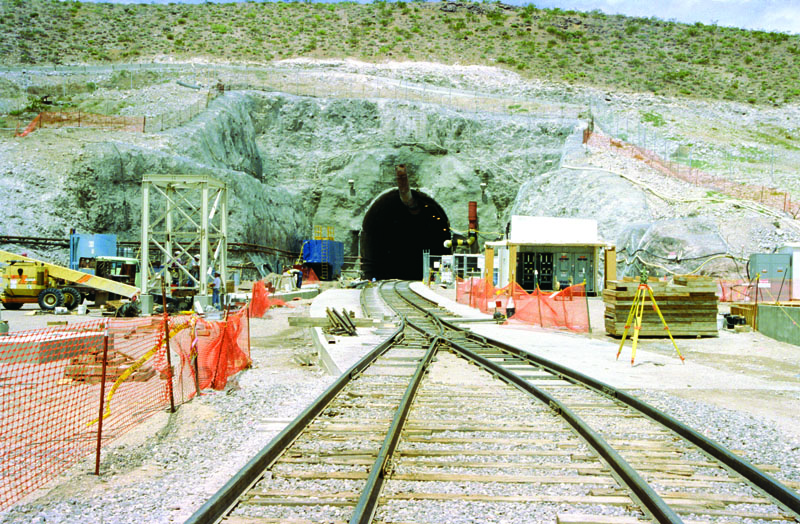
  • Yucca Mountain (above), America’s preferred dumping ground for nuclear waste,
  • Cathedral Canyon (below), a random crack in the desert turned into religious shrine,
  • Emergency training centers such as Del Valle, California (all the way at the bottom), and
  • the thousands and thousands of other non-obvious but telling places in America

And yet, we decided not to run a piece on it in The Economist. At least for the time being.

Why?

Credit: CLUI.org

I decided to let you peak into the process because I think it might give you a useful glimpse into

  1. writing, and
  2. The Economist

Specifically, the issue involved all of the writerly themes that you guys and I have been writing about:

Here is what happened

After my visit to the CLUI, I did indeed write a draft, at about 700 words, for our US Section. And I sent it off.

I had an unsure feeling. I felt that I had not done justice to the CLUI or the places I had chosen as examples.

1) Length

Our pieces in The Economist are short, and they are best when they compress complexity into a dense and yet simple and forceful narrative. The CLUI, however, seemed to need the opposite: not to be compressed but to be expanded and developed. It seemed to need length.

2) Momentum

Worse, I had not spotted an underlying narrative in the CLUI (or the Museum of Jurassic Technology, for that matter) at all. This, in fact, is my criticism of the CLUI: They are so meticulous about their neutrality that they forget to do storytelling.

In fact, the Center’s name is a misnomer. It is not the Center for Land Use Interpretation but the Center for Land Use Observation. The interpretation is what is missing.

3) Voice

So I felt that to do this justice, I would have had to make it a humorous-but-profound story about a search for something elusive.

When you’re searching in vain, the story is about doubt, uncertainty, futility. Not things that The Economist is naturally good at, even though I excel at them personally. 😉

4) The First  Person

To be really fun, moreover, a search narrative would have to be about me, the searcher. Me looking for answers and getting confused. Me on a CLUI bus in the desert with other searchers…

The First Person: Definitely not something that The Economist is naturally good at. 😉 😉

(Since we have no bylines, we also have no First Person. It is banned. The most you might see is “As your correspondent took his seat…”. Yuck.)

Conclusion: This really wanted to be a New Yorker piece.

A few weeks later, I got an email from my editor. He essentially said the same thing:

The problem with the piece as it stands is that it poses a lot of questions, but does not answer them. I appreciate that that is part of the philosophy the point of the CLUI, but it doesn’t really satisfy as a US section article. It reads too much to me like a long list of interesting and not-so-interesting places…

What is it, in fact, that we learn about American culture from the landscape, other than its uses are many and various? That America (like every other country) cherishes, abuses and neglects its physical space? …

I think this piece could benefit from being longer… Such a longer and more narrative piece would not, I think, work in the US section.

In a way, this was reassuring: My editor and I had come to exactly the same conclusion independently.

There was another upshot: Another editor had read it and expressed interest in a longer and more narrative version for our Christmas Issue, the one occasion every year when we really let our writerly hair down.

Did I want to expand the piece for the Christmas issue?

Opting for easy

This is when experience kicked in (13 years at The Economist now).

My experience told me that it was time to move on.

I did a risk-benefit analysis. I could sink a lot more time and effort into this story in the hope that a forceful narrative might emerge out of it. Or I could write the many easy and obvious stories that were offering themselves to me like streetwalkers.

In case you’re wondering, there is pressure on us to perform. We’re supposed to write something in every issue, on average. In fact, the last sentence in that same email from my editor was:

PS: that said, I am therefore in the market for a piece from you next week! Can you call me on the mob once you’re up and about?

And so I moved back into streetwalker alley, where it has been easy pickings and obvious stories since.

How judge ye?

Credit: CLUI.org

Bookmark and Share

America seen through non-obvious places

Courtesy CLUI.org

This picture says a lot about the American character.

Or does it?

The question, rather than the answer, may be the point. That, at least, seems to be the premise of the Center for Land Use Interpretation, which allowed me to use this and the other pictures in this post.

The Center is one of the strangest entities I know of. You might ask, what is it?

Let’s start with what it is not, despite the general sound of its name. It is

  • not a government agency,
  • not a think tank, and
  • not a lobby.

Well, then, what? After struggling to answer this question (which is what this post is about), I will venture these two options:

  • a deliberate mystery designed to make Americans aware of their peripheral vision, and possibly
  • an inside job, which is to say an incredibly cunning and subversive satire of America.

But that’s for you to judge. Let’s start with the facts:

The Center is located at 9331 Venice Boulevard in Los Angeles. Outwardly, this is a nondescript block on a slightly depressing thoroughfare of the sort that the city is infamous for. Inside, however, it may be the strangest block in America. For the Center shares a building with the Museum of Jurassic Technology (of which, more in a moment) which is at 9341 Venice Boulevard, just one door down.

The contents of the Center include a vast database of pictures, descriptions, videos, maps and other information about American places. Furthermore, the Center occasionally organizes bus tours to some of those places. This can look as follows:

Courtesy CLUI.org

But that still tells you nothing. Why should this be interesting?

Well, trustworthy sources had brought it to my attention, so I went there for a visit.

Anthropogeomorphology

I chatted with Matthew Coolidge, the Center’s founder, while gazing at a multimedia exhibit (ie, a video) of a stretch of California highway that I’ve driven on many times. It was slightly surreal and yet hypnotic.

“You seem to be drawn to drab, banal or ugly places,” I said to Matthew.

“What is ugly?,” he probed. Calling something ugly is judging, and judging distracts from observation.

My source had prepared me to expect subtle irony, so this was perhaps it. If so, Matthew played his role perfectly. He spoke dispassionately, like a scientist — “anthropogeomorphologist”, is the delightful word he used.

He said, more or less, that the Center’s mission is to make people aware of surroundings they usually try to ignore because they seem un-noteworthy. Office parks. Garbage dumps. Deserts. Highways.

“It’s like negative tourism,” as a friend of mine had put it. In other words, the places of interest are not the obvious ones (Disneyland, The Golden Gate Bridge, et cetera) but all the others. That leaves a lot of places.

For example, America’s vast empty places.

Americans do strange things in them.

Sometimes, for example, (as at the Nevis Range in Nevada) they bomb or nuke them for practice:

Courtesy CLUI.org

Strangely beautiful, isn’t it? Almost like art.

Other times, the places are eerie. Towns like St. Thomas, Nevada, for example. It is usually invisible, having been submerged under Lake Mead, the nation’s largest reservoir, when the Hoover Dam was built. But St. Thomas re-appears during droughts, emerging like a ghost town or haunted museum from the waters:

Savoring contradictions

As my source put it, most people who go on the Center’s tours or sojourn in its database soon find that the “juxtapositions accumulate force.” Whatever they might have thought about America before, they are tempted to re-examine it.

But what might the conclusion be? This is what kept bothering me.

Both Matthew and his Center are militant about not having an explicit point of view.

As Ralph Rugoff, an art curator and director of London’s Hayward Gallery, puts it, this “flagrant nonpartisanship” is “slightly suspicious”.

If you are at all like me, it is also unsatisfying.

The Museum of Jurassic Technology

Matthew must have sensed my dissatisfaction when we stood together, for he suddenly asked me: “Have you been next door yet?”

Next door is of course the Museum of Jurassic Technology.

“Not yet,” I answered. “What is it about?”

“The less you know the better,” Matthew answered.

“Are they connected to you?”, I asked.

Matthew seemed to suppress a smirk: “No.”

Suddenly, a female voice wafted to my ears from behind us. “Connected only in spirit,” she said.

I turned, and beheld Matthew’s partner. I had never noticed her entering the room, but there she sat. She was patting a black cat.

Patting a black cat.

I went next door.

A few meters and seconds later, I entered the Museum. I was about to make my voluntary contribution into the money jar when somebody said: “Are you the journalist?”

“I am a journalist,” I answered.

“They said you should go in free,” came the reply.

How did “they” beat me, I wondered. Clearly, there had to be an internal door. I entered.

The museum is — how to put it — disconcerting.

It was dark and clammy. There were — or seemed to be, I can no longer tell — disquieting noises. One exhibit is a model of American trailer parks. Another, about “mouse cures”, consists of two dead mice on toast, with the explanation that this sort of thing was once said to have cured bed wetting and stammering in children. Another exhibit featured “salted teeth.” So it went.

The Museum baffled me even more than the Center next door.

Finally, I pieced together a narrative for myself:

The Museum seemed to be a meta-museum: a museum that mocks museums. It communicates bemusement at the human tendency to put things behind glass and stare at them, and at our underlying ignorance combined with confident superstition.

How, then, was it “connected in spirit” to the Center, as the lady with the black cat had said?

It had to be that the Center comments on America as the Museum comments on humanity, and that both, realizing that they are inside jokes, know that they must never explain the punch line.

Somewhat disconcerted, I left and began contemplating whether and how I might turn this into a story for The Economist, as I had intended. What that led to will be the subject of the next post.

Bookmark and Share

The ability to sustain disappointment

Anything that you remember decades after the fact is noteworthy ipso facto. Even if you attached no particular importance to the event at the time, your memory somehow decides subsequently that it was important.

To my own surprise, for example, I regularly remember a moment that occurred about fifteen years ago. Somehow I had allowed myself to be hired out of a Masters program at the London School of Economics to one of the big American investment banks in London. To people who know me, this was funny then and remains funny now.

One reason I joined this bank may have been (who knows what I was thinking) that they claimed to have a good training program in New York. So they flew a bunch of us to New York for a few months.

All of this (save the night-time recreational activities in New York) was and remains entirely forgettable. I could not tell you a single thing I learned in that training program.

Except one thing that my memory later filtered out:

Once, one of the bank’s honchos came to address us, the trainees. He wanted to impart some wisdom to us about success at the bank and, presumably, in life.

The single biggest factor, he said, is an

ability to sustain disappointment.

Bookmark and Share

Hair in politics

Credit: Bloomberg

Here is a little relief on the light side, reblogged from my post on The Economist’s Democracy in America:

NO SOONER had Carly Fiorina won the Republican nomination to challenge Democrat Barbara Boxer for her Senate seat than the race became hair-raising. Probably unaware that a microphone was on, Ms Fiorina relayed “what everyone says” about Ms Boxer, which is, of course: “God, what is that hair. So yesterday.”

Hair has factored in politics at least since the Roman Republic. The enemies in the Senate of an up-and-coming young general, Publius Cornelius Scipio, tried to derail his rise by implying that he grew his hair un-Romanly long, in the Greek style that seemed soft and suspicious; Scipio went on to defeat Hannibal anyway and, balding, became Rome’s saviour. Julius Caesar was famously touchy about his receding hairline. And Julian the Apostate, Rome’s last pagan emperor, grew a shaggy beard to make an anti-Christian statement which became so controversial that Julian wrote a satire called Misopogon, “The Beard Hater”, in his own defence.

Hair remained political for the Holy Roman Emperors, from Charles the Bald to Frederick I Barbarossa (“red beard”). In the modern era, Kaiser Wilhelm II twirled his mustache just so. China’s top Communists have always amazed with hair that is ink-black at any age. Ronald Reagan’s was impressive, though he is now arguably outdone by Mitt Romney, who during the 2008 campaign warned fellow Republican Mike Huckabee “Don’t touch the hair.”

Women have it harder. Their hair, above all Hillary Clinton’s, is more analysed and yet they are not supposed to bring it up, lest they seem petty or catty. This was the charge against Ms Fiorina last week. Please. “My hair’s been talked about by a million people,” responded Ms Fiorina defiantly. Of late, that’s because she lost all of it while fighting and beating breast cancer. Her hair is now growing back. It is a short, strong statement.

Bookmark and Share

There are no heroes

Elie Wiesel (courtesy David Shankbone)

Heroism. What a simple and innocent concept.

My idea — how simple and innocent of me — was to explore the concept of heroism by re-telling the great and timeless stories of heroes from the past. (So it was really just an excuse to do some good storytelling.)

Well, it turns out that nothing about the idea is simple or innocent.

With a self-deprecating smirk, I therefore postulate the Kluth Uncertainty Principle from the well-known realm of Quantum Intellectualism. The law says this:

The more thoroughly you examine an idea — any idea — the more quickly it seems to disappear, leaving behind only a vague sense that you are crazy.

This, moreover, we call learning.

I) The problem of context

In this thread, the idea of heroism probably started fading — ie, we started learning — when Chris intervened in our fantastic debate about Joan of Arc.

Before we knew it, we were re-examining our notions about gender (or should that be sex?), then our notions about heroism, and then our notions about Jungian archetypes.

Chris has now (heroically?) taken up the thread on his own blog, and this promises to get interesting.

As Socrates might do, Chris begins by … complicating matters. He

  • questions whether we can known anything at all about stories from the past,
  • reminds us that all stories (and heroes) were born in a specific context, and
  • suggests that we cannot willy-nilly import stories into our own context without damaging them.

I can’t wait to see where this goes. That said …

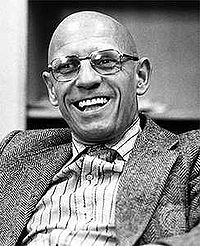
Foucault

… this does remind me of my college days, when everybody was suddenly studying Foucault one year — or was it Derrida?

A few beers into our keg parties, we usually agreed that words (“signifiers”) really only had meaning (“signifieds”) within a context, and out of context we could not know what those meanings were. The underlying logic never sounded quite as good the next morning.

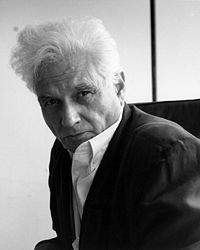
Derrida

Most of us, over the years, grew out of all that (Foucault, Derrida, keg parties…). But it was a good time.

So let us proceed, but with caution.

II) Elie Wiesel

Which brings us to Elie Wiesel, a hero of sorts just for surviving the Holocaust with dignity (rather like Viktor Frankl).

Jim M., in that same great debate about Joan of Arc, pointed us to a site that takes a very different approach toward heroism. Here, heroes are to be understood simply as role models.

As in: Do something admirable → Become a hero

And on this site, we find an essay by Elie Wiesel in which he dismantles the very concept of heroism:

I am deeply skeptical about the very concept of the hero for many reasons and I am uncomfortable with what happens in societies where heroes are worshipped. As Goethe said, “blessed is the nation that doesn’t need them.” To call someone a hero is to give them tremendous power. Certainly that power may be used for good, but it may also be used to destroy individuals. Which societies have proven to be the most fertile fields for the creation of heroes, and have devised the most compelling reasons for hero worship? Dictatorships.

This is a fascinating point of view. It would never have occurred to the ancient Greeks, for example.

The Greeks did not live in dictatorships and yet viewed their heroes as ideals toward which to aspire. But to Wiesel, heroes do not inspire but rather intimidate us ordinary people.

Then there is the devastating problem that heroes are often unheroic. What do we do about that? As Wiesel asks,

Is a hero a hero twenty-four hours a day, no matter what? Is he a hero when he orders his breakfast from a waiter? Is he a hero when he eats it? What about a person who is not a hero, but who has a heroic moment?

Between the lines, you can probably read Wiesel demanding what Chris is demanding: context.

III) More definitions

Wiesel then attempts various definitions of heroism, as we have been doing in this thread.

1)

Here is his first:

In my tradition, a hero is someone who understands his or her own condition and limitations and, despite them, says, “I am not alone in the world. There is somebody else out there, and I want that person to benefit from my sacrifice and self-control.” This is why one of the most heroic things you can do is to surmount anger, and why my definition of heroism is certainly not the Greek one, which has more to do with excelling in battle and besting one’s enemies.

Aha! Now Wiesel is sounding a lot like the yogi who met Alexander the Great: Heroism as self-control, as inner peace, as conquest over anger and fear.

The Indians, however, went one step further than Wiesel and used the “Greek” battle image of heroism as a metaphor for the internal heroism Wiesel describes, and that gave us the hero Arjuna.

2)

Clearly unsatisfied, he tries again:

If I had to offer a personal definition of the word, it would be someone who dares to speak the truth to power. I think of the solitary man in Tiananmen Square, who stood in front of a column of tanks as they rolled in to quash a peaceful protest, and stopped them with his bare hands. …

Speak truth to power: Isn’t that what Theseus did (the Minotaur representing power) or even Jeanne d’Arc (the English)?

Wiesel seems to be backtracking from his opening thesis, that he is “sceptical about the very concept of the hero.” It appears that he cannot help himself — ie, that the hero is, after all, … an archetype;)

3)

Wiesel tries a third definition. This time he “gets modern” on us, which is to say he brings it home, makes it small, makes it un-Greek:

Maybe heroes can simply be those people who inspire us to become better than we are. In that case, I find my heroes among my friends, family, and teachers. …

Sure. We’re all heroes. Sort of.

Do you see where I’m going with this? Wiesel follows the same exact arc of reasoning that we have been following in our debate here. And he always ends up, as we do, in the same cul-de-sac. He opens his essay by saying he does not believe in the concept of the hero, but then cannot let it go. If it’s not there, what’s not to let go? Something is there, and he’s not satisified until he finds it.

4)

So Wiesel tries a fourth definition (by my count):

When I was a child, my heroes were always anonymous wanderers. They experienced the wonder of the wider world and brought it to me in my small village. These men were masters. A master must give himself over to total anonymity, dependent on the goodness of strangers, never sleeping or eating in the same place twice. Someone who wanders this way is a citizen of the world. The universe is his neighborhood. It is a concept that resonates with me to this day.

Did you spot it? It’s the yogi again. Or perhaps the Zen master, or Lao Tzu. Wiesel, in other words, is trying another variant of the Arjuna definition.

5)

My biggest suprise was to learn from Wiesel that Hebrew does not have a word for hero.

But there is a concept that Wiesel thinks comes close, so this may be his fifth and final definition. This is the Hebrew tzaddik:

A tzaddik is a “righteous man,” someone who overcomes his instincts. In the ancient texts, this would mean sexual instinct, the life force, but of course it can be extended to all the emotions connected to that force: jealousy, envy, ambition, the desire to hurt someone else–anything, essentially, that you want to do very much. There is a story about a tzaddik that says a great deal to me about the character of the true hero. This man came to Sodom to preach against lies, thievery, violence, and indifference. No one listened, but he would not stop preaching. Finally someone asked him, “Why do you continue when you see that it is of no use?” He said, “I must keep speaking out. In the beginning, I thought I had to shout to change them. Now I know I must shout so that they cannot change me.”

Now, I don’t know about you, but for a man who is “sceptical about the very notion of the hero,” for a man who insists on seeing the hero in his proper context, Wiesel, in his meandering musings, has traced a remarkably similar path to ours in this thread.

Sounds like an archetype to me.

Bookmark and Share

Roman Jefferson v Carthaginian Hamilton

Thomas Jefferson

I’ve mentioned a few times just how much our Founding Fathers were influenced by — and saw themselves as heirs to — republican Rome. That’s why both our federal and state buildings tend to look like Roman temples.

Two excellent books I’ve been reading lately have brought home to me just how direct that influence was for specific Founding Fathers such as Thomas Jefferson. Not only did Jefferson “inherit” certain Roman political ideals (as he understood them) but he also adopted the hatreds and propaganda of republican Rome. This meant:

  • Rome = good = America
  • Carthage = bad = Britain

Here Jefferson talks about Britain (from Richard Miles, Carthage Must Be Destroyed):

Her good faith!The faith of a nation of merchants! The Punica fides of modern Carthage.

Punica fides means Punic faith. The Romans and Jefferson used the term ironically to mean faithlessness.

The Romans looked down on the Carthaginians (who were Phoenician traders) as merchants, and Jefferson inherited that attitude as well. (Napoleon, too, condescended to the English as “shopkeepers.”) Romans and Americans, Jefferson implied, were above such corrupt Carthaginian and British habits as commerce and banking.

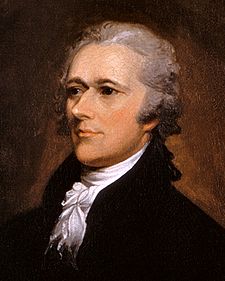
Alexander Hamilton

When Jefferson, Madison, Monroe and other “republicans” (they deliberately named their faction to evoke republican Rome) began their hysterical conspiracy to bring down Alexander Hamilton, who in their fantasies had British and monarchical leanings, one of Hamilton’s friends warned him thus (from Ron Chernow, Alexander Hamilton, p. 391):

Delenda est Carthago, I suppose, is the maxim adopted with respect to you.

Delenda est Carthago means Carthage must be destroyed. It was the infamous phrase with which Cato the Elder ended every speech he gave until Rome indeed decided to destroy Carthage.

So to Jefferson, Hamilton was a sort of Hannibal?

Much more about all this in later posts. But you can already infer where my sympathies would have lain in this Founding Father soap opera.

Bookmark and Share

The Economist’s new home page

I’ve mentioned here and there how The Economist has been — really, really, honestly, totally, prove me wrong! — entering the internet era. 😉

Well, you should finally start to see some changes.

Our new home page will go live at the beginning of July. You can see a mock-up here, and you can take tell the web designers what you think about it here.

Bookmark and Share

The importance of the first reader

Eliza Hamilton

Every writer has, or ought to have, a more or less special first reader. For me it is my wife.

My wife is the first person to see every article I write for The Economist and every draft of my book manuscript. (I don’t show her my blog posts or emails, obviously, which may explain why those are so much worse.)

This is a very important and intimate relationship. The first reader is, in effect, the first editor, and also the sanity test, the acoustics check, the aesthetic focus group and the umpire of taste.

The first reader must be so confident of the underlying relationship as to be above flattery and fear of (lasting) repercussions.

Both writer and first reader must protect their credibility. My wife is probably most impressed with me when she gives a brutal but vague critique of something I have written … and I come back to her shortly after, having done even more brutal violence to my own words. This is known as “crucifying your darlings,” and it is what gives me credibility.

So it is fun to learn how the great writers of the past viewed that relationship.

Molière apparently tested his writings on his nurse to get her reaction. And Alexander Hamilton, my favorite Founding Father as well as by far the most prolific writer among them, had his wife, Eliza Hamilton. (Get ready for a new thread on Hamilton soon!)

On page 508 of this fantastic biography of Hamilton (recommended by Thomas Stazyk), Eliza recollects, 40 years after the fact, how her husband wrote George Washington’s famous farewell address. (Yes, most of “Washington’s” writings are in fact Hamilton’s.)

He was in the habit of calling me to sit with him that he might read to me as he wrote, in order, as he said, to discover how it sounded upon the ear and making the remark, “My dear Eliza, you must be to me what Moliere’s old nurse was to him.” The whole or nearly all the “Address” was read to me by him as he wrote it and a greater part, if not all, was written by him in my presence.

I probably appreciate more than most people how important Eliza Hamilton therefore was for American and world history.

Bookmark and Share