Spontaneity and order


Hayek


Ten years ago, I began a piece in The Economist about Hong Kong with a paragraph that was, in this particular context, intended to be surprising:

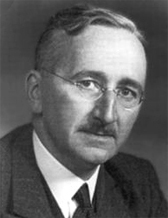
FRIEDRICH VON HAYEK and Walter Eucken parted company over the issue of power formation in the private sector. Hayek, a leader of the Austrian school of liberalism, believed that keeping government small was enough to preserve competition. Eucken, who founded the school’s German branch, felt that anyone with excessive power, whether a government or a company, could threaten economic freedom. It is a pity that neither was alive this week to analyse the case of Hong Kong….


Eucken (click for credits)


Our local readers in Hong Kong quite enjoyed this framing of what they considered their “little” hometown business controversies, since they don’t usually see their city connected to the big debates among Western intellectuals.

I, however, was fascinated by precisely those local controversies, for two reasons:

  1. I consider Hong Kong the freest place in the world (and thus worth studying), and
  2. I have a personal connection to that debate between Hayek and Eucken, which I’ll tell you about at the end of this post.

Liberalism vs Libertarianism

What reminded me of all this was a post the other day by one of my colleagues about the two isms, Liberalism and Libertarianism. He concludes that the difference is basically about the precise role of government and

which approach is likeliest to lead to the most freedom.

So, because I’ve been parsing Liberalism here on The Hannibal Blog for a couple of years now, I thought I’d add a “continental” twist for those of you who are connoisseurs of all things liberal.

Between Freiburg and Vienna


Mises (click for credits)


For a lot of “Anglo-Saxons”, in my experience, the first surprise is that that there is a continental twist at all. Surprise turns into shock when the twist turns out to be specifically Germanic. Could Germans really have much to say about freedom?

Well, yes, a whole lot. The liberal tradition is long and deep in the German-speaking countries. Obviously it suffered a near-death experience during the Nazi years, but then it came roaring back in the post-war years.

More to the point, a lot of what we now tend to think of as “Anglo-Saxon” ideas actually have an intellectual pedigree that goes back to these “Germanic” (mainly German and Austrian) thinkers.

Ludwig von Mises (above) was the first giant of the so-called “Austrian School”, and in turn influenced the even more gigantic Friedrich von Hayek. Hayek in turn influenced Milton Friedman, who in turn influenced Ronald Reagan and Margaret Thatcher, thus re-branding Austrian Liberalism in the minds of many people as an “Anglo-Saxon” thing.
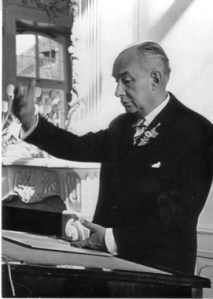
 

Rüstow


Walter Eucken, on the other hand, founded the so-called “Freiburg School” of Liberalism (after the university town where they hung out), which included liberal thinkers such as Alexander Rüstow (above) and Wilhelm Röpke (below).


Roepke


How spontaneous is order?

The first and most important thing to understand about all these thinkers is that they were friends. They liked each other’s company and liked debating one another. They viewed themselves not on opposing sides of anything, but on the same side: the side of individual freedom (which is what all classical Liberals agree on).

The subtlety that kept them busy (and I deliberately oversimplify) had to do with order. The Latin for order is Ordo, so the Freiburg School eventually even called themselves Ordoliberals.

Order, as opposed to anarchy, is necessary for individuals to be free. The question, however, is whether or not order comes about spontaneously.

Option 1: Yes

If the answer is Yes, as the “Austrians” basically believed, then the conclusion has to be that we simply need to keep government out of the equation entirely.

The “market” (and this could apply to more than material things — ie, ideas, culture, etc) will then “order” itself spontaneously, though competition. The prerequisite is merely the rule of law.

Option 2: Jein

The Ordoliberals did not counter that the answer is No. Instead, I would call their answer Jein (a contraction of Ja and Nein in German). Yes, markets can spontaneously create order. But that order is not always stable. Worse, that order could be of a sort that robs individuals of liberty.

What they had in mind were cartels, tycoons, cabals, and anybody else who amassed an unhealthy amount of power.

So whereas the “Austrians” worried almost exclusively about excessive government power, the Ordoliberals worried about all excessive power, whether in the private or public sector.

This led the Ordoliberals to the conclusion that government must, yes, stay limited, but must also supplement the “spontaneous” ordering of markets with “corrective” ordering. Government had to crack down hard on cartels and monopolies, for example.

My personal interest

I mentioned a personal connection to the debate. Well, I wrote my Master’s thesis at the London School of Economics about it (or rather, about an obscure aspect of it). My dad had once written his PhD thesis about another obscure aspect of it. And that was probably because his uncle and godfather was somebody by the name of Ludwig Erhard (“Uncle Lulu“). Here they are in the sixties, Lulu on the left, dad on the right:
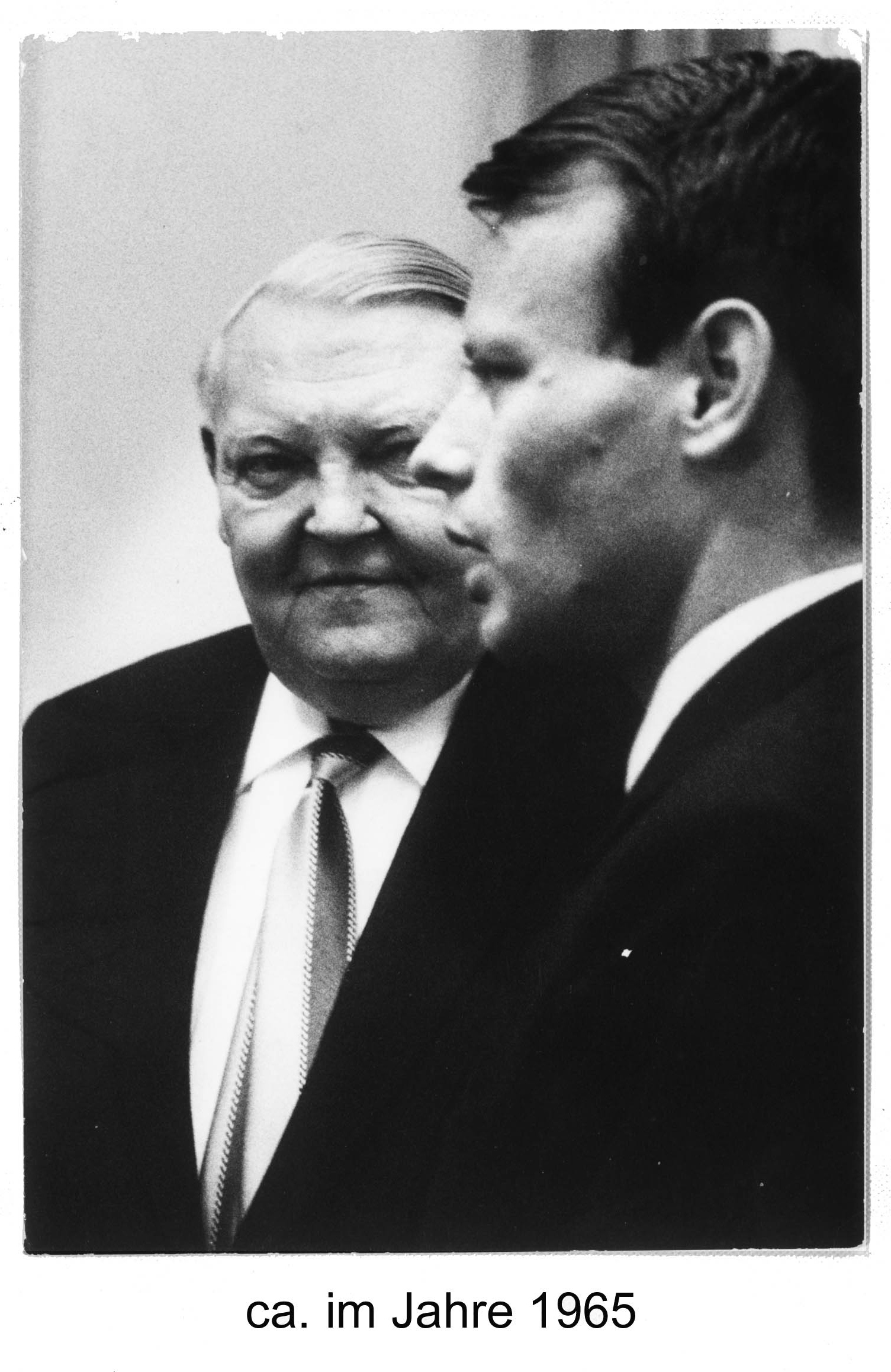
And if Hayek influenced Ronald Reagan and Margaret Thatcher, and thus “Anglo-Saxon” policy, the Ordoliberals shaped Ludwig Erhard and thus post-war West German policy, for Uncle Lulu was West Germany’s first economics minister and then its second chancellor.

Postscript: Liberal v Libertarian (again)

So back to those two isms.

In essence, I think that Libertarians trace their evolution back to the Austrians featured here, and Liberals to the Ordoliberals.

However, those Austrian and Ordo-Liberals themselves, if we were able to bring them here today, would be puzzled by the debate. They would abhor some of the intellectual excesses committed in both names, and remind us that they were originally almost indistinguishable.
Nisht geshtoygn un nisht gefloygn

Climbing, flying ...

For the time being, I have a new favorite phrase:

Nisht geshtoygn un nisht gefloygn

It’s Yiddish and means “didn’t climb up and didn’t fly.” (The German spelling would be nicht gestiegen und nicht geflogen.)

OK, but so what?

Well, it’s a very witty and slyly subversive way of saying

Bullshit,

and I feel that we all could use new and innovative ways to express this necessary reaction to so much in life.

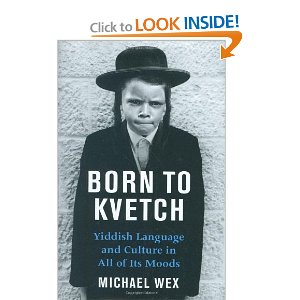
You can read about the historical and linguistic context of the phrase here. Basically, it’s what Jews, living in an overwhelmingly Christian society, said to each other to mean Bullshit. It was implicitly understood among them that the individual who neither climbed nor flew was, well, you know…

Let everybody make a fuss, the phrase seems to imply, but we don’t necessarily have to buy into it.

And yet, the phrase is also obscure enough to give its user deniability should he need it. The mainstream Christians were not likely to be offended about somebody saying that something neither climbed nor flew. It’s really an inside joke, nudge nudge.

PS: This post is not about you, or him

Usually, when the subject of religion comes up, I get a spike in traffic and everybody blows a fuse. This post is not even tagged religion. Instead, it is once again about intellectual conformity.

As you know, I value non-conformity but simultaneously appreciate how difficult it is to be non-conformist constructively, as Socrates illustrated.

So this great phrase might suggest the solution: to be non-conformist and simultaneously non-confrontational, and to have a bit of fun all the while.

Next time you hear that talking head on cable TV going on about, oh, death panels and what not, next time you feel overwhelmed by the truthiness and non sequiturs all around us, join me in a cavalier smirk and mutter

nisht geshtoygn un nisht gefloygn.

Bookmark and Share

When a dog is not a Dogge

As you know by now, I am an amateur etymologist (ie, one who is probably wrong most of the time). And when I’m not tracing words from Western languages to Sanskrit, I like to ponder the languages I know best, which are English and German.

And it’s the little quirks that I enjoy.

Thus, for instance, it is no surprise at all that most Anglo-Saxon words in English have the same, or a very similar, root as their German equivalents:

  • arm = Arm
  • finger = Finger
  • (to) begin = begin(nen)
  • (to) bring = bring(en)
  • and so on.

Slightly more interesting is the subtle but cumulatively substantive change in connotation of certain words that once (in the fifth century) were the same:

Thus:

  • come = kom(men), and
  • become = bekom(men)

But (and this has caused much humorous confusion), bekommen in German now means get, not become. Keep this in mind next time you hear a German tourist inquiring of his waiter whether he might please become a hot dog.

And here is the one that really puzzles me. Etymologically, it is obvious that

  • dog = Dogge, and
  • hound = Hund

Except that something strange has happened.

Dog is the generic English word for the entire species. But Dogge is the specific German words for just one breed within that species, the one English speakers call … the Great Dane (thus dragging a third Germanic nation into this).

Hund, meanwhile, is the German word for the species, whereas hound is a somewhat more specific English word for a type of dog used for hunting, such as this one:


Divided by a common language, as Churchill might have said once again, had he also known German.
Bookmark and Share

On English (and other dialects of Sanskrit)

I mentioned en passant in the previous post that the Sanskrit word vira, hero, is related to the Latin vir, man, and thus to our virtue and virility. And, of course, to the Modern Hindi vir, brave. (Thank you, Susan.)

Well, that sort of thing brings out the language geek in me, and I can’t help myself. There is something beautifully mysterious in this common Indo-European heritage (pictured above just after the fall of the Western Roman Empire) of our Western languages and this Eastern Ur-language, Sanskrit. It is like visiting very distant relatives and suddenly seeing a nose, a toe, a tilt of the head or an allergic sneeze that is exactly like your own and makes you imagine the stories of the past that unite you.

So indulge me in some word play.

The easiest way to compare languages is by counting to ten in them. Look how incredibly similar most of these word roots have stayed across millenia and continents:

Sanskrit
Latin French German English

ekam
unus un eins one

dve
duo deux zwei two

trini
tres trois drei three

catvari
quattuor quatre vier four

panca
quinque cinq fünf five

sat
sex six sechs six

sapta
septem sept sieben seven

astau
octo huit acht eight

nava
novem neuf neun nine
dasa decem dix zehn ten

But the real magic starts when you compare more meaningful words, because then you see not only their etymology but the genealogy of concepts and meanings (this used to be a hot field, called philology, and is how Nietzsche arrived at his philosophy about the evolution of morals).

Maya

Since I used the word magic, let’s start there. It “comes from” the Sanskrit word maya, whence the Latin magicus, French magique, German Magie.

Of all these, the Sanskrit word is by far the most interesting and nuanced and deep. It points to a philosophical and religious concept. Maya means magic in the sense of cosmic illusion, the metaphysical head-fake that our senses play on us. We think we exist in our mortal bodies in this changing world, but if we pierce the magic (maya) by making our minds completely still, we realize that there is only pure energy (Brahman) and our soul (Atman) merges into this void.

Bonus: Compare that last word, Atman (soul) with the German atmen (breathe).

Yoga

Yoga not only means, but is the root of, union. But it gets more interesting. Yoga is also related to the Latin junctio, French joindre, English join.

Its Germanic descendants resemble it even more closely: German Joch, English yoke. (English, as is its wont, gets the root twice, once via Saxon and once via Norman French.)

A yoke at first does not seem very yogic. But if you think about it, that’s a matter of technological connotation. We yoke an ox to a cart, thereby imprisoning him. But in yoga, you yoke (connect, join, unite) your breath to your mind, thence to your soul (Atman), and thence to one-ness or union (Brahman), thereby liberating yourself.

Maharaja

Maharaja means great king in Sanskrit. So it has two words: maha (great) and raja (king). Now recognize:

  • maha → Latin magnus (great), French majeur, German macht (might), English might & major
  • raja → Latin rex/regina (king/queen), French roi, German Reich/reich/reichen (empire/rich/reach), English rich, reach, regal, royal

And so it goes on and on and on…

Bookmark and Share

“Sex” or “gender”?

I began the previous post with a parenthetical slur on Americans (of which I am half-one), propping myself up on two creaky stereotypes:

  1. that Americans can’t (really) speak English, and
  2. that political correctness is in part to blame.

Specifically, the issue was which of these two words was correct in the specific context:

  • Sex, or
  • Gender

Well, I thought I might regale you once again with the opinion of Johnny Grimond, our (The Economist‘s) doyen of usage and author of our official Style Guide, in which style quite often becomes a window into a very British, ironic and sophisticated worldview. Here is Johnny on the matter:

Gender is nowadays used in several ways. One is common in feminist writing, where the term has a technical meaning. “One is not born a woman, one becomes one,” argued Simone de Beauvoir: in other words, one chooses one’s gender. In such a context it would be absurd to use the word sex; the term must be gender. But, in using it thus, try to explain what you mean by it. Even feminists do not agree on a definition.

The primary use of gender, though, is in grammar, where it applies to words, not people. If someone is female, that is her sex, not her gender. (The gender of Mädchen, the German word for girl, is neuter, as is Weib, a wife or woman.) So do not use gender as a synonym for sex. Gender studies probably means feminism.

See also Political correctness

That said, I seem to remember reading somewhere–and I wish I knew where–that Sandra Day O’Connor started using gender instead of sex when she got to the Supreme Court, because she was worried that the word sex would conjure up all the wrong images in her (male) colleagues’ minds during deliberations.

Bookmark and Share

The Economist’s coequal humo(u)r

From time to time, I like to regale you with tiny anecdotes from our daily routine at The Economist, especially when they display our quirky side.

For instance, an editor might remark, as she anglicizes an acronym I use, that a word “either has to look odd to us [Brits] or odd to them [Yanks], and we opt for them.”

Well, this week I woke up on Monday to get a message from our editor-in-chief that he would quite like a three-page (3,000-word) Briefing on California’s water wars, since the piece that was meant for that slot was not ready to run this week. Due to the inhumanely inconvenient times zone I am in (ie, California, when my bosses are in London), this meant I had to deliver the piece the following day (Tuesday) for London to be able to wake up to it on Wednesday and publish it on Thursday, ie today. This is the piece.

So I wrote the piece in quite a hurry and sent it. Then, on Wednesday, I worked with the fact-checker and map guy, Phil Kenny. He came up with a great map, the clearest depiction of California’s water infrastructure I have yet seen:

CA Water map

The editors are then supposed to send me the “subbed” (jargon for edited) “copy” (jargon for text) and, this being The Economist, forgot to do so. So I went to a yoga class. By the time I came back, it was late at night in London.

In our process, a correspondent sends his article to a section editor, who subs the piece and then sends it on to the editor-in-chief or a deputy, who then sends it through to a “night editor“.

I had heard that our night editor last night was Johnny Grimmond, the author of our style guide. Johnny guards our quaint British usage as Cerberus, the three-headed dog of the underworld, watches over Hades. You can call him, as you can call me, a pedant, and we would be proud of it.

I immediately knew that Johnny would pounce on one particular phrase of linguistic interest. The water legislation currently being negotiated in California contains a very important phrase that is also ugly and stupid in a characteristically American way. Which is to say that, in the same way that Americans gave the Anglophone world the word proactive (why not active?), the legislators in Sacramento now want to impose on the state’s environmentalists, farmers and urban water users

co-equal goals.

While doing my interviews for this story, I had kept a straight face every time the phrase came up, because I am keen not to appear, you know, loony or snippy. In my article I refrained from any overt pedantry. But I knew that Johnny, in the safety of his London office in the wee hours, would not. His cursor, I was sure, would find the pompous American redundancy faster than you can swat a greasy Hamburger with a cricket bat.

And so I asked a colleague with access to the system to send me the copy. My eyes skipped over the paragraphs until they alit on the one in question. I started grinning even before I read the new sentence:

The details of the legislation negotiated so far are complex, but its main feature is a phrase, “coequal goals”—though how coequal goals differ from equal ones is not clear.


Bookmark and Share

Uniting the two kinds of enlightenment

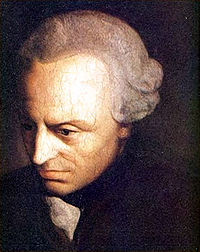
Kant clarified

Kant clarified

The English word enlightenment can have two quite different contexts:

  1. The (Western) Enlightenment of the 18th century. You know: Kant, Voltaire, Hume, reason, the American and French Revolutions and all that.
  2. The (Eastern) Enlightenment that the Buddha, Patanjali, and various Zen masters and bodhisattvas have achieved through meditation and Yoga. Samadhi, nirvana, satori and all that.
Buddha illuminated

Buddha illuminated

The two are completely different, of course. The former is largely a collective phenomenon, one in which ideas elevated all of society. The latter is largely an individual phenomenon in which one person, through sudden insight (Zen) or hard and prolonged work (Ashtanga Yoga), achieves inner peace and freedom.

In fact, the same exact difference came up when I talked about freedom: There is:

  1. the (Western) Enlightenment view of freedom: Latin liberLiberalism, Liberty, and
  2. the Existentialist and Eastern views of freedom (moksha in Sanskrit).

Anyway, what this means is mainly that the limitation lies in the English word Enlightenment. German, for instance, has two separate words:

  1. The Western Enlightenment is called Aufklärung. The term was coined by Kant and means literally clarification (Auf-klär-ung = Up-clear-ing, for you fellow linguists. Incidentally, it can also refer to a young person learning about the birds and bees).
  2. The Eastern Enlightenment is called Erleuchtung, which means illumination, often symbolized with the halo (ie, ring of light) on the crown chakra of the Buddha or Jesus.

Why I bring this up

That difference between Aufklärung and Erleuchtung came up in 2007 when I was talking with Michael Murphy, one of the two founders of the New Age retreat Esalen. I was interviewing him for a profile of Esalen in the Christmas Issue of The Economist that year. Murphy is now in his seventies and lives in Sausalito, so I went there to see him. We sat by the waterfront and talked about absolutely everything except what we were supposed to talk about. For instance, he was the first person other than my agent, parents or wife whom I told about my book idea, and that really got him going. It was the best kind of conversation.

Anyway, so Murphy and I talked about the two kinds of Enlightenment, and to my surprise this Irish-American aging Hippie delves into German etymology. But it was appropriate. An oversimplified summary of his life work–at Esalen and in his books–is that he tried to unite Aufklärung and Erleuchtung, West and East, in an effort to liberate our full “human potential”. Hence the Human Potential Movement, which he helped to found at Esalen in the 60s, when folks like Abe Maslow were teaching there.

Instinctively, that is what I also aspire to: Uniting the two kinds of Enlightenment in my life. You see it when I call Diogenes a “Greek Buddha” or Abe Maslow a “Jewish Buddha,” or when I draw parallels between the Second Law of Thermodynamics and Feng Shui.

Somewhere between East and West (though perhaps not in the “middle East”)–somewhere between reflection and science, eternity and progress, mythos and logos–there must be something worth finding. I’m sure of it.

Bookmark and Share

Spunky language in the search for truth

Yesterday I gave an example of bad–meaning squeamish, cowardly and therefore intentionally obtuse–writing. Today I came across an example of good–meaning courageous, irreverent and therefore clear and authentic–language.

It comes in the form of a spunky almost-ninety-year-old Welsh lady named Elaine Morgan. She took the stage at TED and clearly and humorously laid out her case that we descend not from apes that stood up because they left the trees and went onto the savannah (the mainstream paradigm) but rather from aquatic apes. The video is below.

A few things, before you watch:

  • Her theory is fascinating, but whether or not it convinces you is not my point. Most people are not convinced.
  • My point is the clarity of her language that comes from her courage, the corollary of my view that bad writing/expression comes from fear.
  • Worth noting: Morgan’s talk contains humor and sprezzatura, which often accompany courage but never cowardice.
  • She nods to Thomas Kuhn, whom I declared one of the runners-up for the title of greatest thinker ever. Kuhn, remember, was the guy who described how scientists will disregard any evidence (and messenger) that does not fit their paradigm until that paradigm collapses entirely. It is her way of saying to her audience: Snap out of it and open your minds!
  • Listen to her point about how to treat “priesthoods”!
  • Finally, think about how she would react if new evidence came to light that proved her theory wrong but advanced our understanding. Would she be upset? Or would she celebrate?


Bookmark and Share

Bad writing about white oral sex

A while ago, using George Orwell’s classic essay on language, I opined that:

Good writing = clear thinking + courage

with the implication that

Bad writing = confused thinking

or, more interestingly,

Bad writing = clear thinking + cowardice

Well, I was thinking about this today when reading a phenomenally badly written article in the Science section of the New York Times. It is a case study not only in writerly cowardice but its more petty form: squeamishness.

The article starts meekly enough with the headline that

Findings May Explain Gap in Cancer Survival

The background is a genuine conundrum, which is that

  1. cancers of the throat and neck have been increasing and
  2. whites survive more often than blacks.

The obvious question is: Why the difference? It could be late diagnosis for blacks, lack of access to health care by blacks, different treatment for blacks or something else.

Well, it’s something else! And this ought to be the big, screaming headline of the article, except that the article never says it! Since the article does not, I will write the simple, plain-English sentence that is missing:

Whites have more oral sex than blacks, and therefore get infected with a virus that causes more of them to have cancer, but of a less lethal sort.

There you have it: The two most explosive subjects in America, sex and race, both in the same sentence. Naturally, any editor of the New York Times will seek cover. I say: Cowardice! Squeamishness!

The result is some cryptic and off-putting verbiage that buries the central insight underneath impenetrable code. It is exactly the sort of intentionally obtuse language that George Orwell mocked.

Look at how the hints are buried in the text:

The virus can also be spread through oral sex, causing cancer of the throat and tonsils, or oropharyngeal cancer.

Or:

The new research builds on earlier work suggesting that throat cancer tumors caused by the virus behave very differently from other throat cancers, and actually respond better to treatment. And the new research suggests that whites are more likely than blacks to have tumors linked to the virus, which may explain the poor outcomes of African-Americans with HPV-negative tumors.

The research does actually establish the crucial link, but you would hardly know it from sentences such as this:

The results were striking: the TAX 324 patients whose tumors were caused by the virus responded much better to treatment with chemotherapy and radiation. And they were also overwhelmingly white. … While about one-half of the white patients’ throat tumors were HPV-positive, only one of the black patients had a tumor caused by the virus, Dr. Cullen said.

Towards the end, the writer dares venture the following hypothesis:

This suggests that the racial gap in survival for this particular cancer may trace back to social and cultural differences between blacks and whites, including different sexual practices, experts said.

Excuse me. “Social and cultural differences … including different sexual practices”?!

This would not happen at The Economist. If I wrote such claptrap, I would get laughed out of the room.

Bookmark and Share

The spoken and the written word

Socrates_teaching

So Socrates loved good conversations, which he called dialectic, and disdained bad conversations, which he called eristic, as I described in the previous post of this series on Socrates. But that actually opens up lots and lots of fascinating and difficult issues.

For instance: the relative value of the spoken and the written word.

Since I happen to write words for a living, I spend quite a bit of time pondering this, as you might imagine.

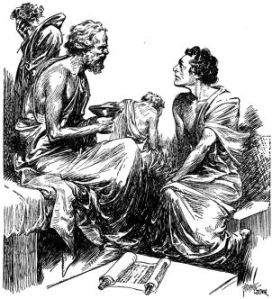
Socrates never wrote a single word. He did not believe in it. Why waste your time killing words (since to write them down was, to him, to kill them) when you could send them back and forth in intimate conversation such as the scene (with him on the left) above?

His student Plato was more schizophrenic on the point. He agreed with Socrates but also, obviously, felt that he should write things down to make them immortal, to reach more people, to make Socrates’ wisdom ‘scalable’ in our lingo. So he compromised, you see: He “wrote” by transcribing … conversations!

One generation on, and we get to Aristotle, who clearly did not agree at all, and wrote what we would consider genuine philosophical treatises. No qualms about the written word at all!

Why did Socrates disdain the written word?

He sort of tells us in one of his (ie, Plato’s) dialogues, the Phaedrus. He takes several shots:

  • He tells a legend from Egypt, in which a god gives a king the gift of writing as an aid to memory. The king, however, observes that writing things down is likely to be a remedy for reminding, at the expense of remembering, and thus will lead to less wisdom, not more.
  • He then compares writing to paintings, which “remain most solemnly silent” whenever you question them, and just say the same thing over and over, stupidly and dumbly. People wise and ignorant alike will look at them and understand and misunderstand them. And they (the words/pictures) cannot talk back, defend themselves, explain themselves.

So text has several problems, in Socrates’ opinion:

  1. It is not a conversation, not dialectic, because it cannot go back and forth and climb toward something higher, such as a truth.
  2. An author has no control over what idiots or assholes might read his text, whereas somebody in oral conversation does control with whom he speaks.
  3. Words outside of their original context (ie the intention of the person using them, and the way a listener might hear them) can mean anything, and thus nothing at all.

Ultimately, Socrates disdained writing for a subtler reason that unifies all these points: It’s just not what life is about!

Instead, life is about communing with others and discovering yourself and truths in conversation. Not about recording this or that, or propagating this or that. Socrates believed that you can’t find yourself when you write, only when you converse.

Where does that leave us writers?

In a tight spot, it would seem.

Then again, we have moved on 2,400 years, and few things are becoming clearer. Here is how I would converse with Socrates on the matter if he were to visit us today:

The need for conversation…

First, I would tell him that he is mostly right, even and especially for writers. Only a tiny part of “writing” consists of typing words–5%, if I had to guess. The other 95% consists of living, experiencing, interviewing, discussing, talking, reading what others have written, and so on. The ideas and stories that end up on pages don’t come out of nowhere. They still come out of conversations.

… but also for order

But writing, which should never replace conversation, has something to contribute: order. Real conversations–and Socrates’ own dialogue with Phaedrus is a great example–run all over the place, like foals on a meadow. That’s the fun. But it can also be frustrating when you want structure and discipline about one particular issue. Writing can simply be a way of forcing yourself to structure the thoughts that came up in conversations.

Why not written conversation?

This is one bit that Socrates overlooked. You can converse in written form.

Some of the greatest conversations in history have been exchanges of letters. Just think of Voltaire and Frederick the Great.

Today there is a fascinating technological twist. In 400 BCE, it was impossible to imagine ‘place-shifting’ (via tele-phony, far-hearing) or time-shifting conversations. But time-shifting is exactly what we do when we …. blog!. I write words, and those then turn into conversations in the comments below, or on other blogs that link to them. So the words are not dead at all. They can talk back. Writing can be conversation.

Indeed, by time-shifting the back-and-forth of a real conversation, the dialectic can become better. All of the people who talked to Socrates must have felt, a few hours later: “Doh! If only I had said…..” Well, now it’s possible to take a moment to think–without the distractions of, say, a famously ugly face such as Socrates’, or body odor, or wind, or sun–and then to come back with a clearer thought.

The inevitability of context

But Socrates was right on at least one point: The written word without context, as provided by conversation, is treacherous. Just take this notorious example, which we call the 2nd Amendment:

A well regulated Militia, being necessary to the security of a free State, the right of the people to keep and bear Arms, shall not be infringed.

Does that mean that a people has the right to keep an armed militia, or that every shmuck in the people individually has a right to bear everything from a pocket knife to nukes, whether there is a militia anywhere to be seen or not?

Socrates would find the author and … converse!

Bookmark and Share