New thread: Heroes and heroism

Hercules

I’m announcing a new “thread” on The Hannibal Blog: Heroes.

I’ve already written lots about heroes, of course:

And I’ve discussed how the hero or heroine is an archetype at the heart of almost any story, and thus crucial to storytelling. (This is why the new thread will overlap a lot with that on storytelling.)

Why a new thread on heroes?

Because I think there is a lot to say about them. As always with my threads, I have no idea where we will end up, but I’m quite curious to find out. I have a vague sense that I will discover quite a bit, from you more than from myself, as we get deeper into the thread.

A very tentative outline of future posts in this thread might run as follows:

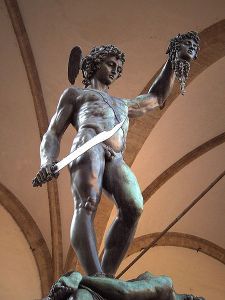
Perseus

First, the classical heroes of antiquity:

  • Hercules
  • Theseus
  • Perseus
  • Jason
  • Achilles
  • Odysseus
  • Aeneas

Then, some non-Western heroes, including my favorite:

  • Arjuna

(For the yogis among you, did you know that the Sanskrit word for hero is vira, as in the yoga poses virasana and virabhadrasana? It is related to Latin vir, man, and thus virile, virtue…)

Then some fictional heroes and heroines from our folk-tales, our movies, modern literature. Then some real-life heroes. And eventually, some anti-heroes, who are really modern heroes. (Albert Camus’ Meursault in The Stranger jumps to mind.)

Feel free to nominate heroes in the comments that you’d like to have discussed.

I’m interested in what makes these various heroes and heroines heroic, what makes them timeless. Why did some heroes enter our collective unconscious, and others not?

About threads

For those of you who are new to The Hannibal Blog, a thread is simply a mini-series of blog posts, not necessarily sequential or coherent, united by a common tag or category on the right. By clicking on the tag of a thread you get a list of all the posts in it, in reverse order.

And threads never really end. So all the previous threads–such as those on the great thinkers, storytelling, Socrates, Hellenism, Carthage, stuff, America, freedom, et cetera–will go on.

Bookmark and Share

Me against Gray Davis

Well, this should be fun.

An amicable, edifying and ultimately futile debate (the sort The Hannibal Blog loves) in January, between, on one side:

  • Kevin Starr, the preeminent historian of California (and a preferred source of mine), and (see Update below).
  • Sharon Waxman, distinguished journalist and author,
  • Bobby Shriver, Renaissance man and Kennedy/Schwarzenegger clan member, and
  • me

and, on the other side,

  • Gray Davis, the former governor of California, and
  • Van Jones, Obama’s former “green czar”, and
  • Lawrence O’Donnell, cable-TV analyst and, more importantly, father of The West Wing, the most intelligent TV series ever.

My team will argue that, yes,

California is the first failed state.

The other guys will argue the opposite.

Then the audience will annoint the winners.

Feel free to suggest debate strategies/arguments (for either side!) in the comments.

Bookmark and Share

Writing in a Procrustean bed

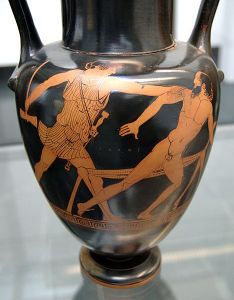
That stud on the vase is supposed to be Theseus, the Athenian hero who went on to slay the Minotaur, dealing with a ruffian named Procrustes.

Procrustes was famous for his bed. He invited passers-by to spend the night and to lie* in his bed. The bed was always too short or too long. So Procrustes “adjusted”, not the bed, but the guest as he was sleeping. He either stretched the guest (Procrustes = ‘the stretcher’) or cut off his legs.

Theseus eventually dealt with Procrustes by making him, Procrustes, fit his own bed. So there.

But from this myth we have the great term Procrustean bed. It applies whenever we force something into a size or a result (as with statistics) that is not natural and thus incorrect or inelegant.

I was thinking of the Procrustean bed once again while writing my piece for The Economist this week.

You recall my musings on the subject of a text’s optimal length, and how important it is neither to go under or over it. Well, in most print media, and certainly in The Economist, lengths are fixed in advance. What determines wordcount is the line count in the page layout of the print edition, which is done before the editor even has the “copy” (article) in question.

In my 12 years at The Economist I have, as you might expect, become very good at writing ‘to length’–ie, at delivering copy that fits exactly (thus evading any Procrustean tendencies by editors). Often I even enjoy the discipline of that constraint.

But it increasingly strikes me as bizarre, indeed unsustainable: We invariably cut good stuff out of articles, add unnecessary words to ‘turn lines’, or even entire paragraphs to fill a page when a chart shrinks. Sometimes this means sacrificing color and detail, or even logical connectors. Other times it means adding noise to signal.

And what happens next? People read the print edition, then pulp it. So much for the beautiful page layout.

But the same text survives forever online, where it faces no obvious layout constraints. Thus, all posterity reads a suboptimal text, stretched or amputated as Procrustes’ guests were.

The ancients (Homer, Virgil, etc) did not have this problem. They (or rather, their slaves) wrote on scrolls, which scroll as our web pages do, into infinity if necessary. Perhaps our evolving media habits will take us back to that future.

Bookmark and Share

Tudor sex and beheadings made complicated

Henry VIII

I’m reading Wolf Hall by Hilary Mantel right now. It’s a historical novel about the efforts by Henry VIII of England and Anne Boleyn to annul Henry’s marriage to Catherine of Aragon, his first wife, so that he and Anne could marry instead and–so it was hoped–produce male heirs.

The rest, you might say, is history. What stood in Henry and Anne’s way was the Catholic Church, ie the pope, so Henry had to “fire” the church and start a new one, the Church of England, whence sprang Anglicanism and its offshoot, Episcopalianism.

The new marriage, however, was not, ahem, ideal and Henry went on to have a few more wives, while Anne, and an awful lot of other people, lost their heads.

In short, it is a fantastic topic, a fantastic story! The sort I love, because it is simultaneously:

  1. grand and important, and
  2. riveting and engrossing.

    If it were entertaining but trivial, I probably would not bother, because life is short and I want to spend it on important things. If it were important but boring, I also might not bother, because, well, life is short and I want to minimize my pain.

    Anne Boleyn

    So by being important and riveting, Mantel’s topic is exactly like the events that I chose as the main storyline in my own forthcoming book, ie the Punic Wars that led to the rise of Rome and the fall of Carthage. And this is one reason why I chose to read Wolf Hall. I wanted to see Mantel’s storytelling.

    The other reason is that the book won the Man Booker Prize, one of the most prestigious awards in the English-speaking world. I distrust prizes, but at the same time they do promise to make our lives easier by pre-winnowing some of the wheat from the chaff. Others have taken their cue from the prize and are heaping more praise. So I started reading.

    What a disappointment

    I’m half-way through the book now, at page 200-and-something, and boy, is it hard work.

    I read, I get confused, I go a few pages back to see if I missed something, discover that I did not, struggle on, get tired, fall asleep, try again the next day.

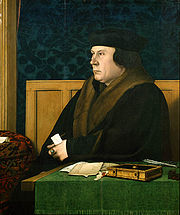
    Thomas Cromwell

    Here are the problems, as I see them:

    1. Who the heck is speaking? Dialogue is difficult to write and separates great writers from mediocre ones. Mantel tells the story through the eyes of Thomas Cromwell, an influential lawyer and wheeler-dealer behind the scenes. She therefore makes him a default he in the story. The problem is that there are lots of other hes (ie, men), and when several men are talking, we don’t know which he is thinking, talking, doing whatever he is doing. This sounds banal, but it is annoying. It does not help that everybody is named Thomas (that’s not Mantel’s fault, of course).
    2. Who are all the people and why should I care? Mantel assumes that I already know all the characters, the chief ones being Cardinal Thomas Wolsey, Thomas More, Thomas Cranmer, Jane Seymour, the Dukes of Norfolk and Suffolk and so forth. As it happens, I love history and have indeed heard of most of them before, but my knowledge of this era has got rusty. I wanted it to be Mantel’s job to re-introduce me to these people so that I don’t have to make an effort.
    3. What is the historical context, ie the import? Mantel assumes that we already know the interrelationships and geopolitical constellations between the Holy Roman Empire; the papacy; the French, Spanish and English kingdoms; and so forth. As it happens I do, sort of, know about these matters–at least more so than Mantel can expect from most readers–and it still does not suffice.

    Thomas Wolsey

    So I took time out and resorted to … Wikipedia. Yes, I did. I spent a good hour last night reading all the main characters’ entries, as well as brushing up on why, say, the Archbishop of York had less power than the Archbishop of Canterbury or who the heck a “Lord Chancellor” was again, and other matters that Mantel does not deign to make clear.

    Hilary: Is that what you want your readers to do–go to… Wikipedia????

    As it happens, it worked and Wikipedia did give me the context I need. But what an indictment of Mantel’s storytelling technique. The whole premise of books like this is that you get the history and the humanity, the importance and the drama, at the same time.

    Hilary, you seem to be too busy being ‘literary’–with complex points of view, revisionist interpretations and what not–to hold me by the hand. You were supposed to make it easy for me. You did not.

    Bookmark and Share

    Virgil as editor: a she-bear licking her cubs

    Virgil

    Virgil, the great poet of the Aeneid, has already appeared on The Hannibal Blog for his amazing capacity to inspire authors ancient, medieval and modern. And he will appear a lot more anon.

    But today let me simply relate to you a little anecdote about Virgil’s method of writing. It comes from Lecture I, Minute 45, of this excellent iTunes U course on the Aeneid.

    Virgil worked, as all ancient poets (eg Homer) would have done, by speaking verse out loud while a slave or two transcribed his words.

    His style was to come up with perhaps 20 or so lines a day, but then to edit, cut, change those lines relentlessly until only about 3 lines were left at the end of the day.

    Some ancient literary critic commenting on this self-editing said that Virgil was like

    a she-bear licking her cubs.

    To those of you who are writers: Isn’t that a great metaphor?

    Now excuse me. I have some cub-licking to do.

    Bookmark and Share

    “Sex” or “gender”?

    I began the previous post with a parenthetical slur on Americans (of which I am half-one), propping myself up on two creaky stereotypes:

    1. that Americans can’t (really) speak English, and
    2. that political correctness is in part to blame.

    Specifically, the issue was which of these two words was correct in the specific context:

    • Sex, or
    • Gender

    Well, I thought I might regale you once again with the opinion of Johnny Grimond, our (The Economist‘s) doyen of usage and author of our official Style Guide, in which style quite often becomes a window into a very British, ironic and sophisticated worldview. Here is Johnny on the matter:

    Gender is nowadays used in several ways. One is common in feminist writing, where the term has a technical meaning. “One is not born a woman, one becomes one,” argued Simone de Beauvoir: in other words, one chooses one’s gender. In such a context it would be absurd to use the word sex; the term must be gender. But, in using it thus, try to explain what you mean by it. Even feminists do not agree on a definition.

    The primary use of gender, though, is in grammar, where it applies to words, not people. If someone is female, that is her sex, not her gender. (The gender of Mädchen, the German word for girl, is neuter, as is Weib, a wife or woman.) So do not use gender as a synonym for sex. Gender studies probably means feminism.

    See also Political correctness

    That said, I seem to remember reading somewhere–and I wish I knew where–that Sandra Day O’Connor started using gender instead of sex when she got to the Supreme Court, because she was worried that the word sex would conjure up all the wrong images in her (male) colleagues’ minds during deliberations.

    Bookmark and Share

    The Economist’s women and men

    Down under in Melbourne, Solid Gold Creativity has embarked on an intriguing investigation into sex (or “gender”, as the Americans among you might prefer in this context) in journalism.

    She found that only 27% of the articles in The Monthly, an Australian magazine, were written by women. Counting only “major” articles, defined as those longer than 3,000 words, 20% were written by women.

    With a research assist from Phillip S Phogg, she then turned her attention to America, where she found that women wrote:

    • 27% of the articles in The Atlantic Monthly, and
    • 30% of the articles in the New Yorker.

    (Both of those are five-issue averages.)

    So, naturally, I offered to supply the relevant metrics for The Economist.

    At first, I started counting the articles in our current issue by author’s sex. (You out there cannot know who the authors are, of course, because we don’t have bylines, but I have an internal list to aid me.) Then I realized that this doesn’t give a good picture, because we are too small. If one or two people are on holiday, that skews the numbers. Then a freelancer writes the odd piece; or somebody writes a big piece and a box to go with it; or several people collaborate on one story, and on and on.

    So instead I counted the editorial staff, both total journalists (ie, correspondents + editors) and editors. (I defined as editors only colleagues who actually edit a section in the magazine or a part of the website, not those who have editor as part of their title on their business card.)

    Here is what I found:

    Of the 84 journalists (I tried to correct for those on sabbatical, those half-retired, and so forth) 19, or 23%, are women.

    Perhaps more interesting: Of the 21 editors, 8 are women, or 38%.

    In other words, those women who do work at The Economist have twice the chance to become an editor that men at The Economist have. Innaresting, ain’t it?

    And if I had excluded the website from the numbers and counted only the magazine, the share of women would have gone up both among total journalists and editors.

    That said, the percentages are still well below 50%.

    Now, I quite like something that Solid Gold Creativity said in her comments:

    … I’m not so interested in the “reasons” for this absence of female thinkers/writers. I can always think up a hundred reasons why something is one way or another. My interest is not “why”; my interest is what’s so…

    In that spirit, let’s find out more…


    Bookmark and Share

    California: inmates (voters) run the asylum

    The World in 2010, our (ie, The Economist‘s) annual sister publication, is now out. This is a magazine in which we and our invited guests take shots at prognosticating the coming year.

    My piece is this one on the Constitutional Convention that California is all but certain to call in 2010.

    For you regular readers, this (ie, other constitutional conventions) is what I was researching in September when I eulogized James Madison.

    On a more general note: Those of you who go to The Economist‘s website a lot might already have started noticing some changes. There will be more over the coming month or so. These changes have been long in the making and were partially cooked up at our powwow last year.

    One great thing is that, even though much of the site will be behind a subscriber wall, all incoming links will in future take you directly to the article, whether or not you are a paying subscriber. This means I can keep sending you there. 😉


    Bookmark and Share

    Stupid yoga, smart yoga, and life

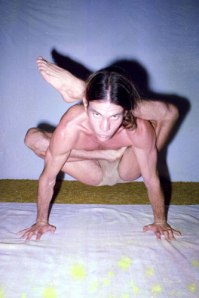
    David Williams, 1970s

    That’s David Williams, who went to India in the 1970s and met Pattabhi Jois, becoming the first non-Indian to learn Jois’ entire system of asanas (postures), now called Ashtanga.

    Today he lives in Maui, halfway up to its spectacular volcanic crater, and that’s where my wife and I caught up with him a few years ago. We were in Maui and called him. He said ‘come over’. We went to his house. He showed us some pictures of himself in pretzel positions during the 1970s and 80s.

    Then he chased out his three Bernese mountain dogs and we threw down our mats in his garage, where he taught us Ashtanga yoga for the next couple of hours. Later, we went to get some Vietnamese food and heard his yarns from yonder.

    He told us a lot that day that my wife and I still talk about. With his thick Carolinian drawl, David is simultaneously wise and funny. One issue that he has strong opinions about is hurting yourself.

    Western yogis today–the kind you see with tight Prana pants stretched around their firm buttocks, mat under one arm, Starbucks Venti Latte in the other–hurt themselves a lot. All the time, in fact. I have hurt myself.

    ‘Of course,’ you say. ‘Yoga is stretching, so sometimes you overdo it and hurt yourself.’

    Wrong!

    As David put it to us: If you went to a ‘real’ yogi on some Himalayan mountain top and told him that you had injured yourself, he would not understand. He would look at you as though you were crazy. It would sound as stupid to him as it would sound to your pastor if you told him that you had hurt yourself praying.

    The dumbest and most dangerous “yogi” in the world

    Which brings me to this article in the New York Times about “yoga competitions” and to a man named Bikram Choudhury. I wrote about Bikram in The Economist a few years ago, but that was in the Business section and I had to give it that kind of slant. Today, let’s talk about something more important.

    Bikram is an extremely smart businessman–he has made Bikram, a specific series of asanas in a hot room, into a big brand.

    He is also an unbelievably stupid and dangerous “yogi”. He’s not a Yogi at all, really. And you need look no further than this nonsense about ‘yoga competitions’, which–surprise!–was his idea. He and his wife want to make yoga an Olympic sport, in fact.

    Introducing: Satya and Ahimsa

    As regular readers of The Hannibal Blog may remember, yoga is really about stilling your mind, as Patanjali described it.

    Yes, in order to do that, you might want to prepare yourself physically–ie, with asanas–because, as the Roman poet Juvenal said, mens sana in corpore sano, a healthy mind in a healthy body. But you want to spend just as much time and effort on the other seven of the eight limbs (= Asht-anga) of yoga.

    The first, and most urgent, of these limbs is yama, or ethical guidelines. And two of these are:

    • satya, truthfulness, and
    • ahimsa, non-violence.

    Now let me explain to you what, for most people, happens in the first five minutes in a Western yoga studio:

    1. They look around at all the other, fitter, slimmer, lither bodies and get competitive. Their ego (one of the naughty things that Patanjali warned us about) flares up. They lie to themselves: ‘I can do what he can do; I can get into Lotus.’ By lying, they have already dropped satya, and are thus no longer eligible to move on to a higher limb such as asana. They should really leave the room.
    2. Having lied to themselves (and the others in the room), they now become violent toward their own bodies. They pull, push … and hurt. Thus they have dropped ahimsa as well. Now they really should leave the room. But they never do, because everyone else is doing the same thing.

    Back to David…

    So save yourself some time, money and above all hurt and ignore Bikram. Please.

    Instead, find yourself a real yogi, such as David.

    When my wife and I met David, he no longer looked like the dude in the 1970s picture above. He looks like a middle-aged guy with long hair–less boring but otherwise as physically imperfect as the average guy his age. And yet (why “yet”?), he loves yoga as much as ever. That’s because he decided years ago that stretching is not what yoga is about.

    He wrote an open letter about it. He begins:

    … First, and foremost, I hope you can learn from me that in your practice, “If it hurts, you are doing it wrong.”…

    Eventually, he gets to this issue of competition (or even comparison):

    …I am occasionally asked if someone is “good at Yoga.” I quickly respond that the best Yogi is not the one who is most flexible, but the one who is most focused on what he or she is doing… It is with some sadness that I have observed people “competing with their Yoga practice.”…

    After all, he continues, what good is yoga is you only do it while you’re young and fit–ie, “good”–and then stop when you get older and stiffer?

    … The key is being able to continue practicing Yoga for the rest of your life. … those who continue are the ones who are able to figure out how to make it enjoyable… The others, consciously, subconsciously, or unconsciously, quit practicing. It is my goal to do everything I can to inspire you to establish your Yoga practice not just for the few days we are together, but for the rest of your life….

    …My goal is to convey the idea that the greatest Yogi is the one who enjoys his or her Yoga practice the most, not the one who can achieve the ultimate pretzel position… what is really important is what is invisible to the observer, what is within each of you….

    … and onward to life

    Now take everything that David and I have said above and replace the word yoga with … whatever you please.

    How about sex? Do you ruin your enjoyment of it by competing or comparing yourself? Do you sacrifice satya and ahimsa to pretend that you’re a superwoman/superman? Do you “quit”, or want to quit, when you get older and less responsive?

    How about friendship? Are you competing with others and comparing yourself based on how popular you are? Are you investing in acquaintances merely to nurse your “network”, even at the expense of other, real, friendships?

    How about… [insert whatever is on your mind]

    If that sounds familiar, you have sacrificed satya and ahimsa and are not ready to move on to the higher stages of being alive (= yoga). When you rediscover satya and ahimsa, in a garage in Maui or wherever else, you remember what you’ve been missing.

    Bookmark and Share

    The White Rose: German heroes

    In a recent conversation, I brought up the White Rose–die Weiße Rose–and was reminded that most of you (being Anglophone) have probably never heard of them. But you must know them. Now you will.

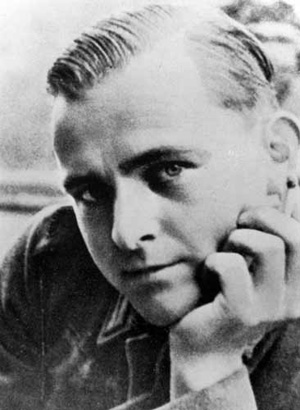
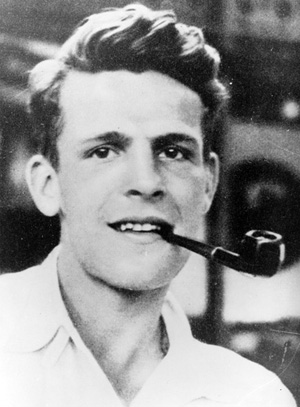
    They were a smallish group of students and one professor at the University of Munich during the Nazi era who defied and spoke out against the Nazi horrors. The middle petals of the Rose were Hans Scholl (above left) and his sister Sophie (middle) and their friend Christoph Probst (right). The group lasted less than a year until, in 1943, they were caught, “tried” and beheaded.

    This summary does not do justice to them, however. They are, to me and to all post-war Germans, synonyms for goodness, courage, humanity. They are romantic, having lived Bohemian lives of pipes and poetry. They saw crimes against humanity and resisted, knowing that this would cost them their lives. At a time when conformity turned an entire nation into a murderous mob, they remained individualists, becoming heroes of all mankind.

    The Leaflets

    Alexander Schmorell

    The Geschwister Scholl (siblings Scholl) and their friends watched with increasing horror what the Nazis said and did in the 1930s and early 40s. Then Hans Scholl and his friends Alexander Schmorell und Willi Graf were sent (nobody had a choice) to the eastern front in 1942 where they witnessed German atrocities in Poland and either saw or heard about the Warsaw Ghetto. Many Germans soldiers did, but these three were different: They decided not to stay silent but to fight the evil, which was their own regime.

    Hans Scholl

    They returned to Munich, where Sophie, Hans’ younger sister had moved to study biology and philosophy. She became friends with Hans’ friends. Never knowing whom they could trust, they formed their group, printing leaflets in secret back rooms and sending them by mail all over Germany.

    They managed to print only about 100 copies of the first leaflet. (You can read an English translation of all six leaflets here, but I’ve chosen excerpts from the German and translated them in my words. Pictures courtesy of the Gedenkstätte Deutscher Widerstand):

    Willi Graf

    … Is it not true that every honest German today is ashamed of his government? And who among us can even guess the extent …?

    … If the Germans, without any remaining individuality, have indeed become a heartless and cowardly mob, yes, then they deserve to perish…

    Goethe talks about the Germans as a tragic people, like the Jews and Greeks, but today it seems that the Germans are a shallow, mindless herd of followers (Mitläufern) whose marrow has been sucked out and who, bereft of their core, allow themselves to be led into their extinction. It seems so, but it is not so; instead, each individual–after slow, insidious, and systematic rape–has been put into a moral prison, and only once he was captive did he become aware of his dilemma. Few understood the the menace, and their reward was death….

    Each individual, as a member of Christian and Western civilization, must therefore rise up in this final hour and resist, as much as he can, against this scourge on humanity, against Fascism and every system like it. Resist passively, resist, resist wherever you are … Never forget that each people gets the government it deserves…

    Christoph Probst

    They then quoted Friedrich Schiller talking about Lycurgus and Solon (ie, ancient Greece) and Goethe, clearly reminding their readers of the previous heights of their civilization, the starker to contrast it with its present lows.

    In the second leaflet, they begin to inform the Germans of what they had seen on the eastern front, so that none might later say (as many would) that they “didn’t know”:

    … the fact that, since the conquest of Poland, three-hundred-thousand Jews have been murdered in a bestial way. Here we see the most dreadful crime against the dignity of man, a crime that compares to no other in the entire history of mankind…

    … Nobody can pretend he was not guilty. Everyone is guilty, guilty, guilty! But it is not yet too late to wipe this ugliest monstrosity of a government off the face of the earth, in order not to become even more guilty….

    .. the only and highest duty, indeed the holiest duty, of each German is to eradicate these [Nazi] beasts….

    They then quoted Laozi and closed with an exhortation to copy the flyer as many times as possible and to distribute it (in effect, demanding martyrdom from each reader).

    In the third leaflet, they exhort:

    … The foremost concern of every German must not be the military victory over Bolshevism but the defeat of the National Socialists ….

    before describing how people should resist:

    … Sabotage of the military-industrial complex; sabotage in all Nazi gatherings, rallies, festivities, organizations…. Sabotage of all scientific pursuits to further the war, whether in universities, laboratories, research institutes … Sabotage of all Fascist cultural events…. Sabotage of all the arts that serve National Socialism. Sabotage of all writings and newspapers in league with National Socialism….

    They ended by quoting Aristotle on the subject of tyranny and again exhorted readers to copy and distribute.

    Sophie Scholl

    From the fourth leaflet:

    … Every word that comes out of Hitler’s mouth is a lie. When he says peace he means war, when he says the name of the almighty he means the power of evil, the fallen angel, Satan. His mouth is the stinking throat of hell…

    They also assured readers that they took addresses randomly from phone books and did not write them down anywhere, then ended with:

    … We will not be silent, we are your bad conscience; the White Rose will not leave you alone! Please copy and spread.

    In the fifth leaflet:

    … Are we to be a people forever hated and outcast by the world? No! Therefore resist these Nazi subhumans! Prove with your deeds that you think different!

    They end with an amazingly prescient vision of post-war Germany and Europe, predicting a federalist Germany, a unified and peaceful Europe, and freedoms of association, speech and press.

    In early 1943, after the German army was wiped out at Stalingrad, they produced their sixth and final leaflet, with their biggest print run yet–about 3,000 copies. They again mailed it all over Germany.

    … Freedom and Honor! For ten years, Hitler and his thugs have twisted, raped, perverted these two beautiful German words…. They have shown what freedom and honor mean to them by destroying, throughout the past ten years, all material and spiritual freedom, all morality in the German people….

    This time they went further. For three nights, they stealthily went out and painted the walls of the university quarter: “Down with Hitler!” “Freedom!”

    Then Hans and Sophie (whom Hans had tried to keep out of the group in order to protect her but who had become passionately involved) decided to carry stacks of leaflets into the university to distribute them while lectures were in progress. This was reckless and the other members did not know about it.

    Hans and Sophie stuffed a big suitcase full of leaflets, took it to the university and put stacks on window sills and in front of lecture halls. Just as the bell rang and students were about to spill out, they threw a big pile from the very top of a staircase into the light-filled atrium (where they are immortalized today, see left). A janitor saw them and alerted the Gestapo.

    The guillotine

    Four days later, Hans, Sophie and Christoph were “tried”. Hans and Sophie asked that Christoph be spared because he was married. The request was denied. On the same day the guillotine fell on their young necks.

    Hans was 24 years old; Christoph 23; Sophie 21.

    Their houses were searched and letters and addresses discovered. Soon after, Alexander Schmorell and Willi Graf, as well as their professor, Kurt Huber, were also caught and beheaded. Alexander and Willi were 25; Professor Huber almost 50.

    Just before Hans was brought to the guillotine, he yelled out of his cell, echoing through the walls of the prison:

    Long live freedom!


    Bookmark and Share